
Topline
States along the northern U.S. border will have a shot at seeing the northern lights Friday night, with the National Oceanic and Atmospheric Administration forecasting similar auroral showings for part of the weekend.
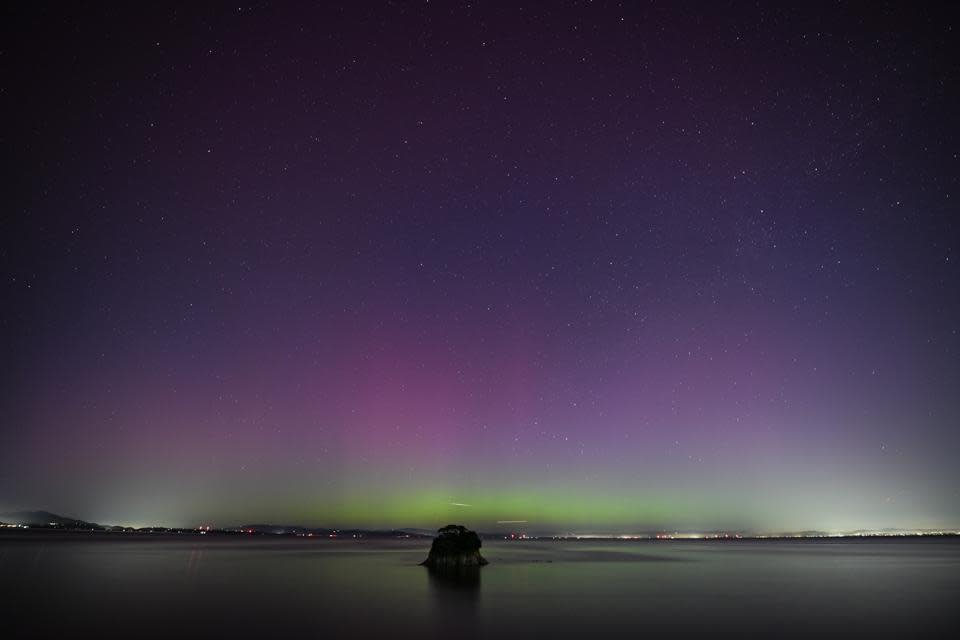
Friday’s viewing line incorporates parts of 10 states along the northern border. (Photo by Tayfun Coskun/Anadolu via Getty Images)
Anadolu via Getty ImagesKey Facts
NOAA issued a Kp index of four on Friday night, meaning active auroral activity could be in store for some states.
The curved viewing line reaches as far south as the middle of South Dakota, providing higher chances of seeing the northern lights the further north people are from that point.
Observers will also have a chance at seeing the aurora borealis Saturday night, which also has a Kp index of four and an identical viewing line.
Get Forbes Breaking News Text Alerts: We’re launching text message alerts so you’ll always know the biggest stories shaping the day’s headlines. Text “Alerts” to (201) 335-0739 or sign up here.
Where Will The Northern Lights Be Visible?
States within Friday’s viewing line (see map below) include Alaska, northern Washington, northern Idaho, the majority of Montana, North Dakota, northern South Dakota, most of Minnesota, the northern half of Wisconsin, the Michigan Upper Peninsula, northern parts of the Michigan Lower Peninsula and northern Maine.
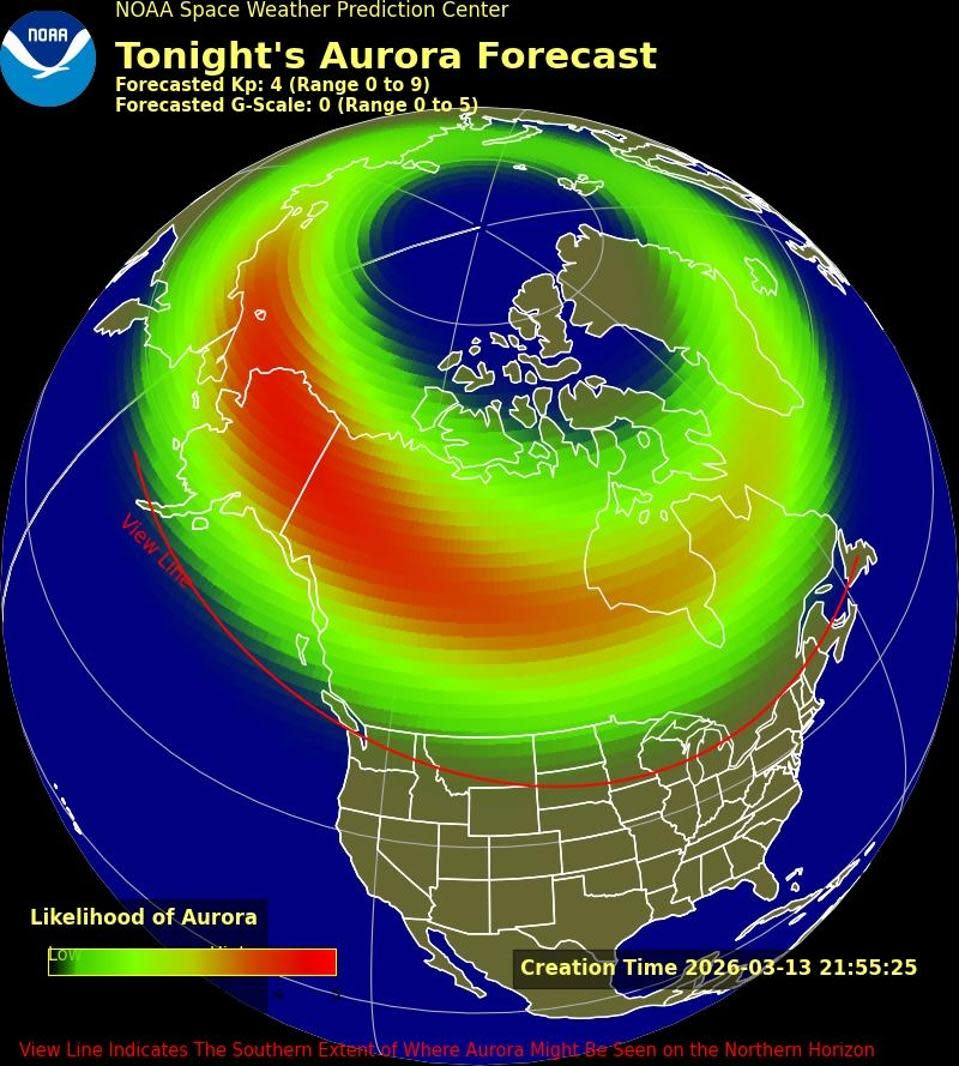
Friday’s viewing line.
NOAAWhat’s The Best Way To See The Northern Lights?
Between the hours of 10 p.m. and 2 a.m., observers should try to catch a glimpse of the northern lights in a place with little to no light pollution. Minimal moonlight and high vantage points can also improve auroral visibility for viewers.
What’s The Best Way To Photograph The Northern Lights?
Observers with traditional cameras should use wide-angle lenses when snapping photos. Tripods, low apertures and night mode can also help when taking photos with smartphones, which should avoid using flash.
Key Background
Auroral showings have rocketed in recent years, primarily being triggered by the peak of the sun’s 11-year solar cycle. The peak creates coronal mass ejections and solar flares that contribute to strong northern lights showings. The increased auroral activity is expected to taper off after 2026 as the displays move further back to higher latitudes.
Further Reading
Aurora Dashboard (NOAA)