
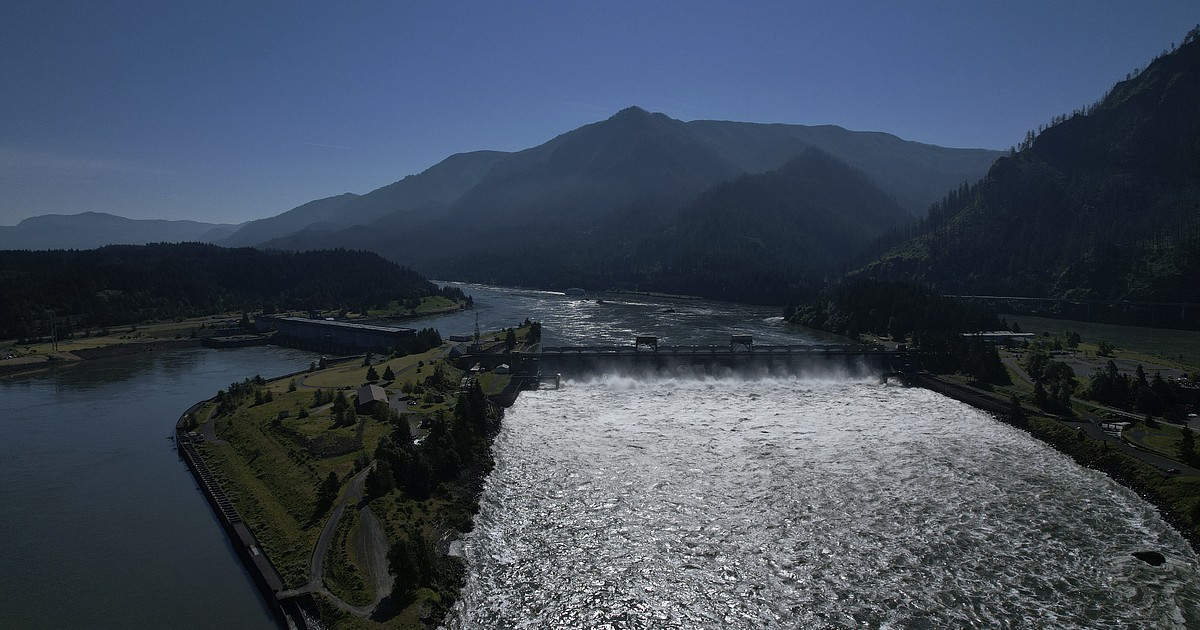
New measures aimed at restoring endangered salmon populations in the Columbia River Basin could cause downstream repercussions for electric customers in Northwest Montana, according to Flathead Electric Cooperative officials.
A majority of the utility’s power comes from a suite of federal hydroelectric projects on the Columbia River and its tributaries, some of which have been embroiled in decades of litigation.
Several conservation groups filed suit against the government in 2001, alleging that the management of eight dams on the Columbia and Snake rivers directly jeopardized the survival of endangered species of salmon and steelhead.
The most recent movement in the case came in February, when a federal judge in Oregon partially approved a preliminary injunction filed by the plaintiffs. The mandate requires operators to increase the amount of water circumvented around the dams via spillways and lowers the requisite water level of reservoirs above the dams during the spring and summer.
Both measures aim to ensure a consistent supply of swift cold water for migrating salmon, but the changes also mean less water will be available for hydropower generation. That could lead to spikes in the cost of wholesale power, said Katie Pfennigs, the community relations manager for Flathead Electric Cooperative.
“It costs more to run a system that you’re not generating as much power from,” she said. “When our costs go up, our members’ rates go up.”
Bonneville Power Administration markets hydropower from 31 federally operated dams in the Columbia River Basin to utilities across the Pacific Northwest. Under Flathead Electric Cooperative’s nonprofit model, power purchased from Bonneville is resold to members at the wholesale price.
Pfennigs estimated that members’ rates could increase by about 2% to 3% due to price fluctuations in wholesale power under the new court order.
“This is one of a number of cost pressures that we’re facing in the utility world right now,” she said.
Demand for electricity has increased with the Flathead Valley’s booming population, while energy-intensive infrastructure like data centers strains regional energy supplies.
Bonneville, meanwhile, has made few improvements to the transmission infrastructure it owns, including lines that transfer power across Northwest Montana. An investigation by Oregon Public Broadcasting and ProPublica found that the agency’s reluctance to invest in new transmission infrastructure has caused a bottleneck in the construction of wind farms, solar projects and other energy generators that could help meet growing electricity demands in the Northwest United States.
Even if more energy generators come online, Pfennigs expressed doubt that they would provide the same benefits as the hydropower the Pacific Northwest has relied on for decades. Hydropower — specifically hydropower produced by federally operated dams — is currently the cheapest form of renewable energy available.
It is also more flexible than solar or wind energy. There is no way to control when the sun shines or the wind blows, but operators can alter how much water is released through a dam to match changing energy demands.
“It’s about when, not so much how much,” said Pfennigs.
She said the preliminary injunction could constrain operators’ ability to respond to peaking energy demands during winter storms and other extreme weather events.
U.S. District Judge Michael Simon found utilities’ concerns about grid reliability uncompelling.
“The federal defendants have, for years, maintained a safe and reliable power system and dam operations with nearly the same spill levels as ordered here, and with the same reservoir levels from 2025,” he wrote in his opinion on the case.
The order permits agencies to deviate from the spill and reservoir level requirements during power generation emergencies.
Simon determined that, by comparison, the unchecked operation of the dams would likely cause irreparable harm to salmon and related species of fish.
“Although people have debated various definitions of ‘jeopardy’ and whether mitigation actions are sufficiently ‘certain’ to occur, the abundance of these salmonids has dwindled to near extinction levels,” wrote Simon. “One of the foundational symbols of the West, a critical recreational, cultural, and economic driver for Western states, and the beating heart and guaranteed resource protected by treaties with several Native American tribes is disappearing from the landscape.”
Daily Inter Lake Politics & Natural Resources Reporter Hailey Smalley can be reached at 406-758-4433 or [email protected].
Independent, local journalism is essential to keeping Northwest Montana informed and connected. If you value the reporting from the Daily Inter Lake, please consider supporting our work at dailyinterlake.com/support.