
At his passing in 2019, Stanley Tigerman had been one of the city’s most influential architects for almost 60 years. The Chicago native worked for Skidmore, Owings & Merrill and George Fred Keck during the 1950s before nabbing two architecture degrees in as many years from Yale’s School of Architecture and then putting out his own shingle in 1962. A new book recently published by his alma mater, “Stanley Tigerman: Drawing on the Ineffable,” presents drawings from every phase of his career chosen from among more than 2,000 items donated by the architect to Yale.
For those of us who knew Stanley — and he seemed to know everybody — he could be an exasperating force of nature. But three things were never in doubt: his devotion to Chicago, his dedication to architecture and his sense of humor that extended to all things architectural and otherwise. The book captures this sensibility well.
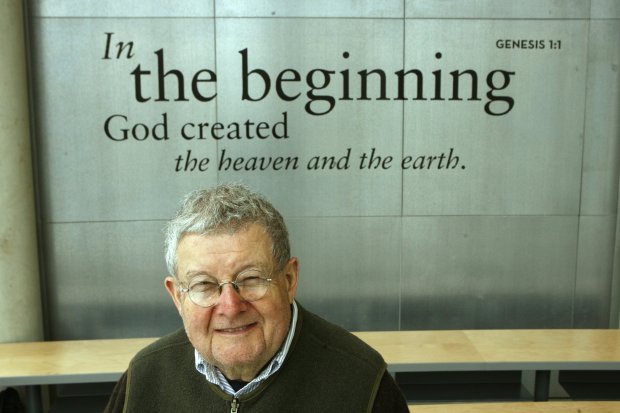 Architect Stanley Tigerman on Oct. 10, 2007, in the chapel at the then-new Pacific Garden Mission. (Chris Walker/Chicago Tribune)
In the years following Ludwig Mies van der Rohe’s death in 1969, large offices like Skidmore, Owings & Merrill and Perkins & Will dominated the Chicago architectural scene. But Tigerman led a small office revolution during this period, spawning a group of young practitioners including Larry Booth, Jim Nagle, Tom Beeby and Stuart Cohen who transformed architectural culture and practice in the city. While building was always of paramount importance, drawing played a crucial role in this endeavor, shown in galleries and publications that brought attention to these then-young architects and their ideas.
Tigerman began sketching cartoons in his youth and continued this mode of drawing until his final days. Dubbed “Architoons,” these were a genre uniquely his own, spinning narrative tales about his projects, the places he visited and his philosophical musings. Idiosyncratic and highly personal winged soldier/angel characters fly through many of his imagined landscapes that often incorporate his varied projects, built and unbuilt.
Drawing has always had an important role in the creation of architecture — both as a means for architects to work out their ideas before building and as the conduit between these ideas and the team that realizes them in material form. But the medium has evolved throughout history, never more so than in recent decades with the introduction of digital tools that can rapidly render complex forms. But Tigerman remained a non-digital practitioner until the end.
But not every drawing in the book is by Tigerman’s hand. Many were produced by employees in his office under his direction, and the variety of styles reflect the ever-changing cast of collaborators. The book doesn’t just rely on the drawings and their academic dissection (it has that, too); it also contains numerous anecdotes from Tigerman associates including Margaret McCurry, his wife and business partner from the late 1970s until the end of his life.
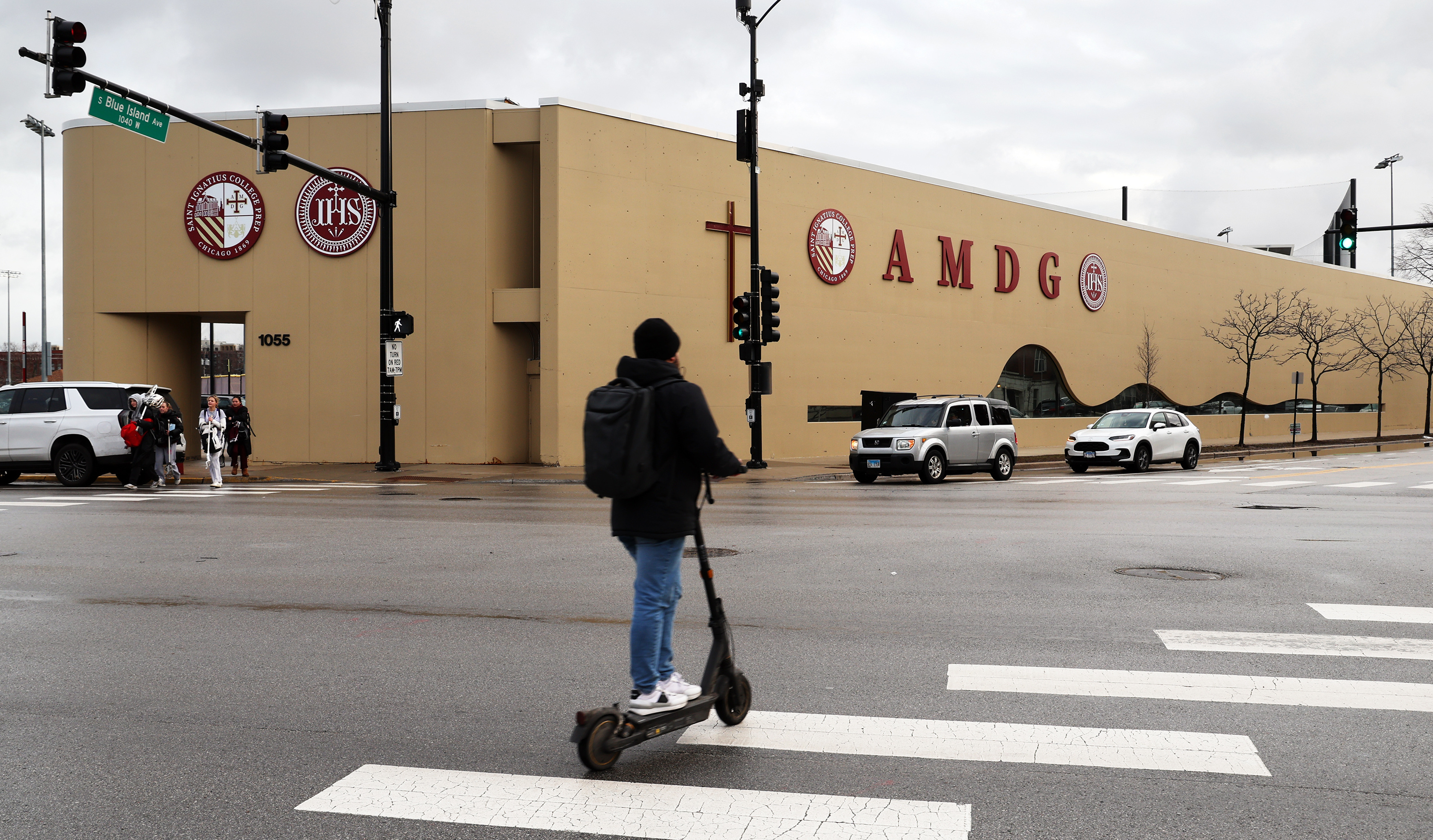
Regional Library for the Blind and Physically Handicapped building at 1055 W. Roosevelt Road in Chicago, March 11, 2026. It was designed by architect Stanley Tigerman. (Terrence Antonio James/Chicago Tribune)
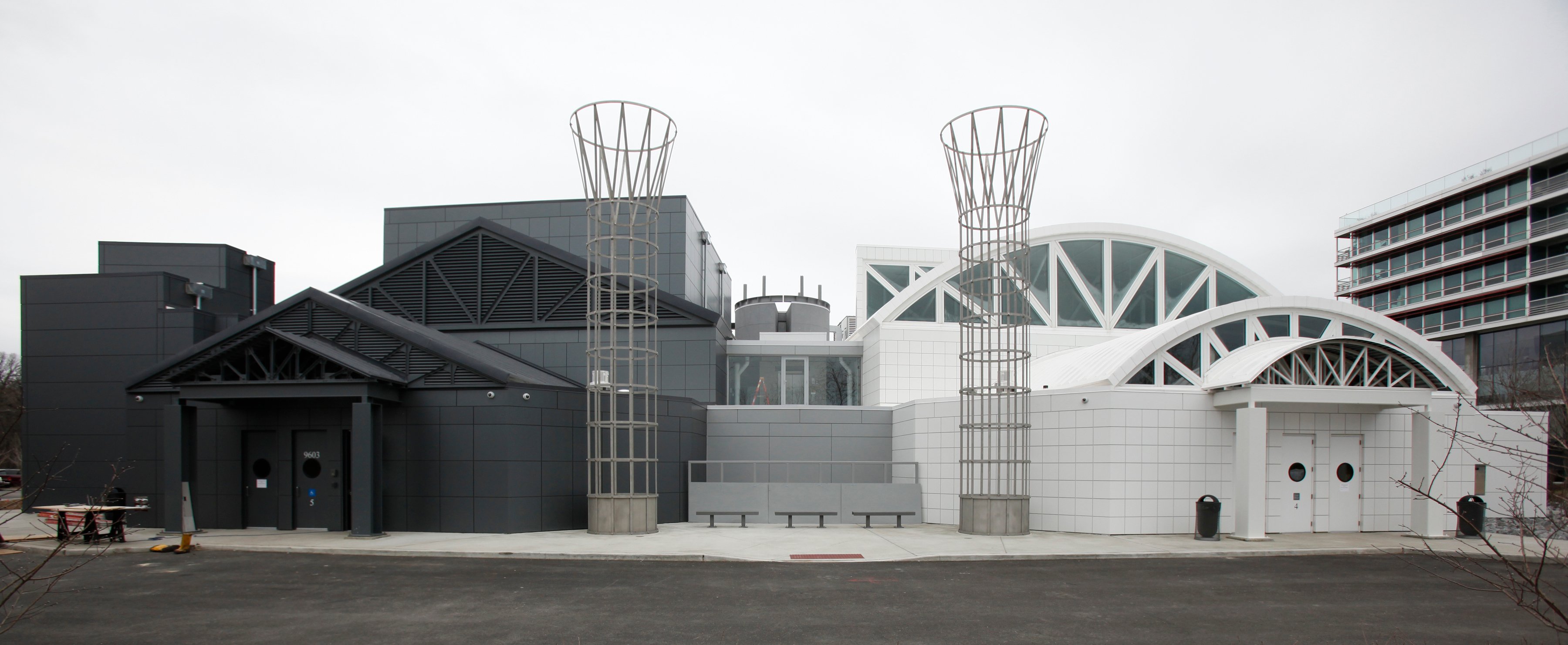
The Illinois Holocaust Museum and Education Center in Skokie in 2009. (Chris Walker/Chicago Tribune)

The Anti-Cruelty Society in Chicago in 2011. (Alex Garcia/Chicago Tribune)
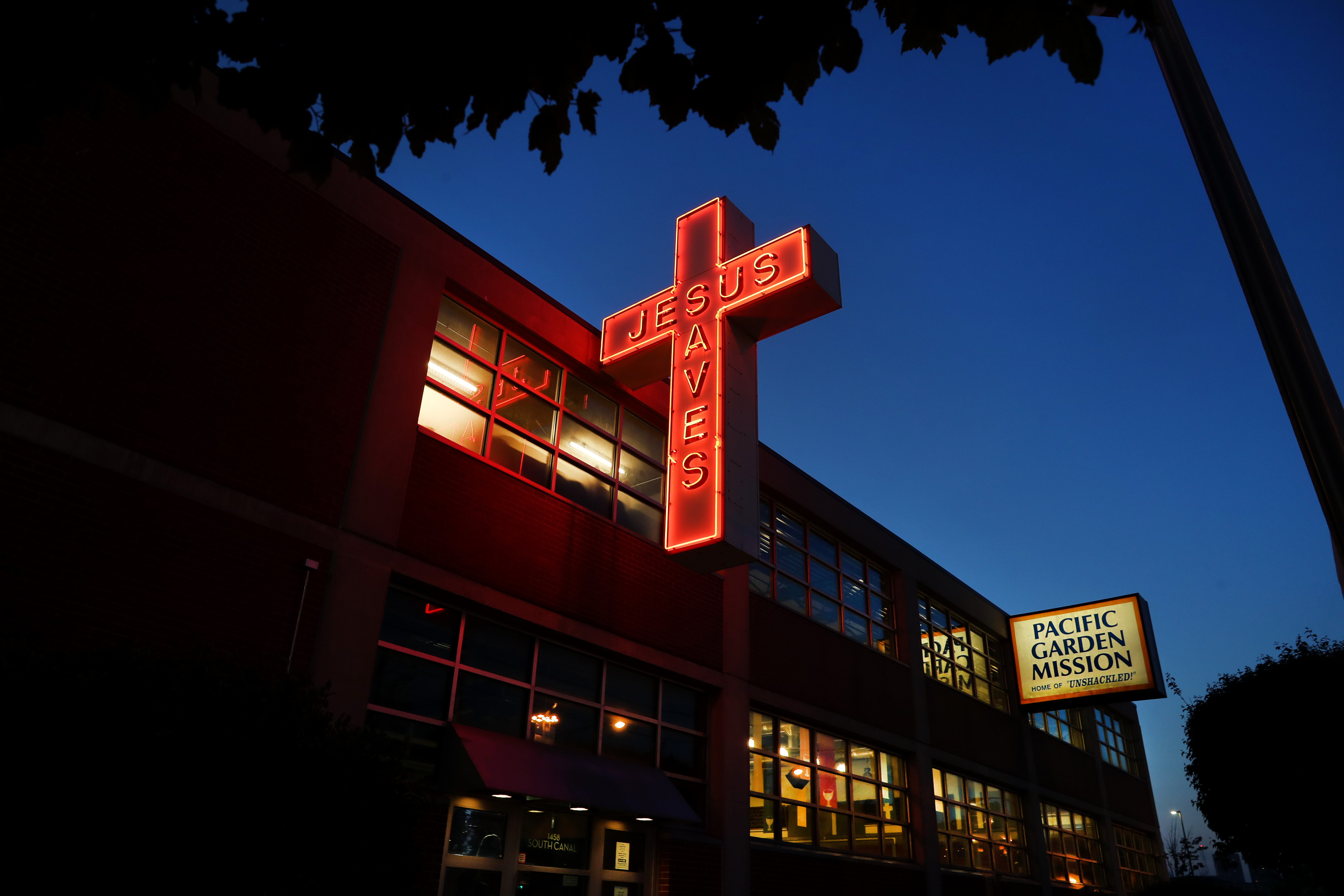
The Pacific Garden Mission, 1458 S. Canal St. in Chicago, May 15, 2019. (Chris Sweda/Chicago Tribune)
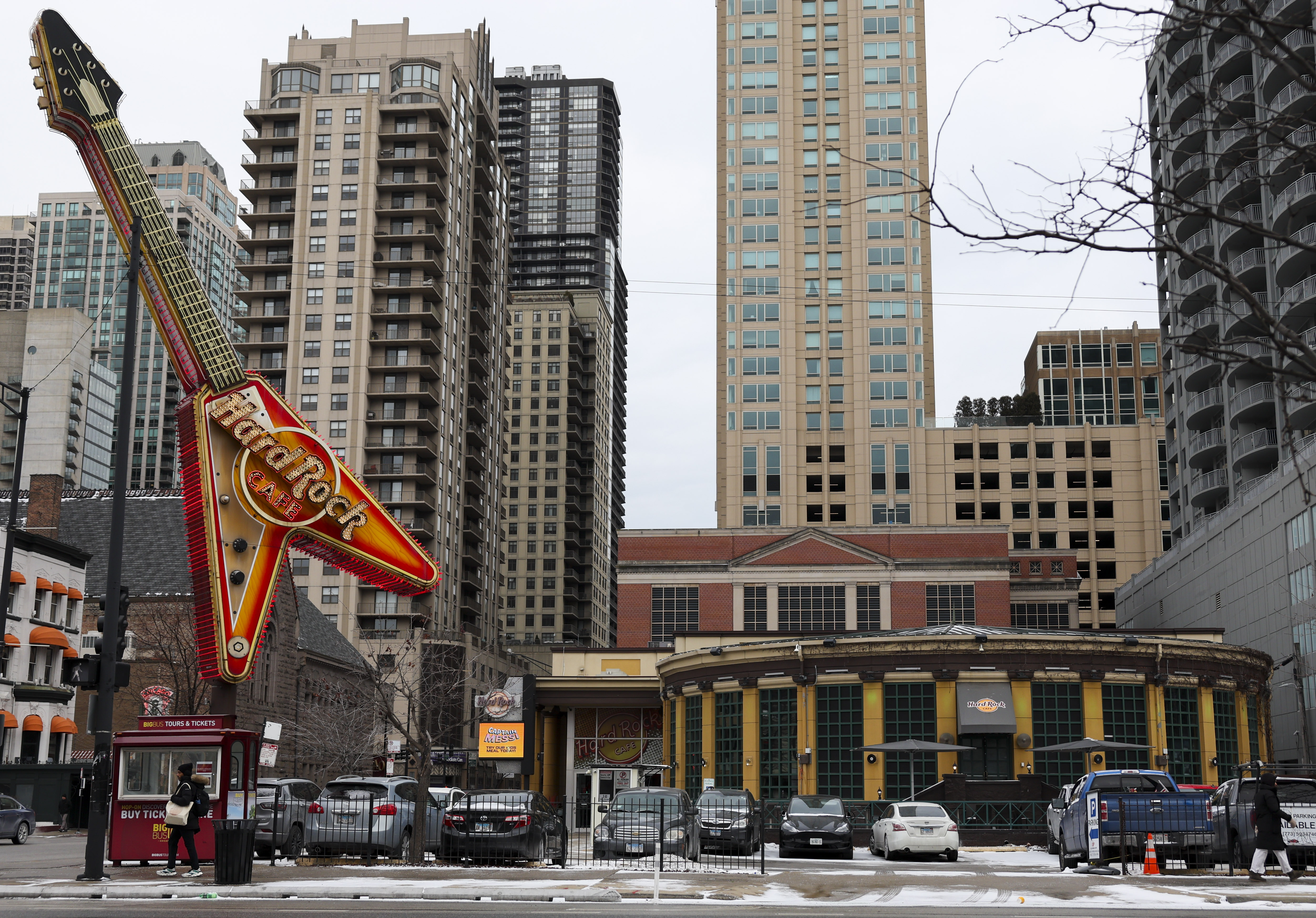
The Hard Rock Café, Jan. 22, 2025, just before it closed. (Eileen T. Meslar/Chicago Tribune)
Show Caption
1 of 5
Regional Library for the Blind and Physically Handicapped building at 1055 W. Roosevelt Road in Chicago, March 11, 2026. It was designed by architect Stanley Tigerman. (Terrence Antonio James/Chicago Tribune)
A full chapter is devoted to the now-demolished Commonwealth Edison Power House in Zion. There’s a direct formal relationship between the ComEd project and Tigerman’s own petite weekend house in Lakeside, Michigan, and the building he created for Archeworks at 625 N. Kingsbury. The book displays many examples of working drawings, the technical documents that the architect prepares to guide construction. While Tigerman never made these drawings himself, nor were they ever used for publication, he oversaw their production, and they reflect a high degree of draftsmanship in their preparation. And Tigerman designed more than buildings. A section on objects includes studies for several tea services, dinner plates (one featuring self-referential tiger paws ringing the dish) and jewelry.
Happily, much of Tigerman’s built work is in the Chicago area. His Mies van der Rohe-inspired Boardwalk Apartments (1974) at 4343 N. Clarendon was an early (and particularly large) project that builds on Mies van der Rohe’s minimalism. The substantially altered Illinois Regional Library for the Blind and Physically Handicapped (1978) at Roosevelt and Blue Island was an important project whose distinctive long curving window replicates the service counter inside that aided navigation for the building’s physically challenged users. Two rounds of unfortunate renovations have destroyed many of that building’s formal innovations.
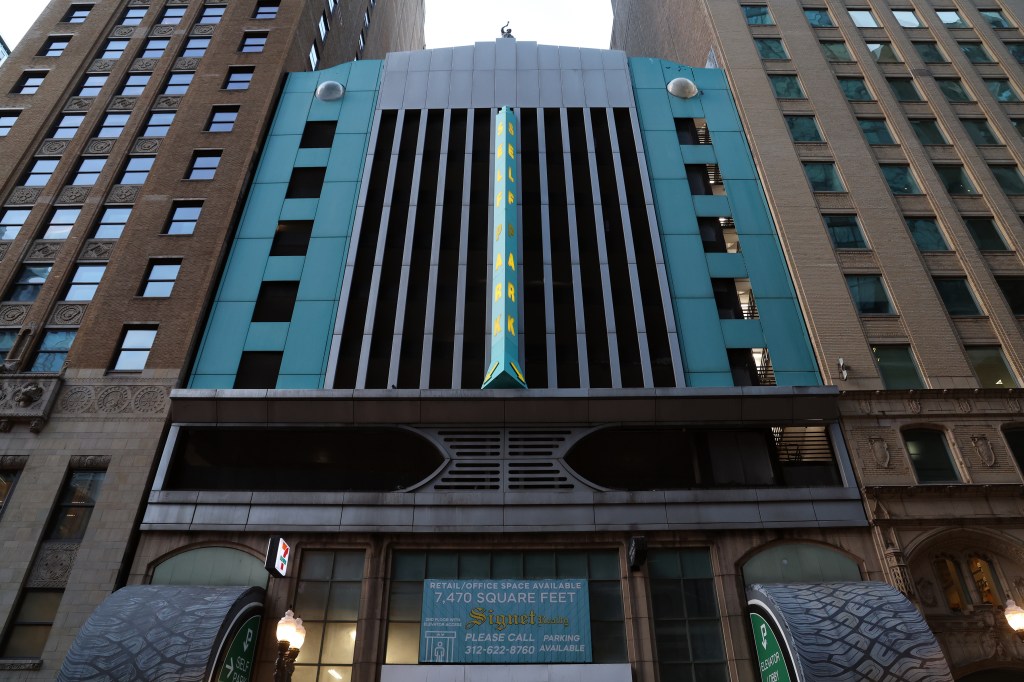
The Anti-Cruelty Society (1982) at LaSalle and Grand was designed to encourage pet adoption by placing as many animals as possible in wide windows surrounding the domestically scaled front entrance. The now-shuttered Hard Rock Café (1985) at Clark and Ontario demonstrates Tigerman’s contrarian streak by wrapping a rock ‘n’ roll-themed burger joint in a classical French orangery. The Lake Street Self Park (1986) at 60 E. Lake St. renders a midblock parking garage as a memorably oversized car grill. Possibly his most substantially constructed building is the Commonwealth Edison Substation (1989) at Dearborn and Ontario, another classically inspired structure that sits next to the earlier Hard Rock Café. His last years of practice were devoted to two major projects that revolved around Tigerman’s long-standing social concerns: the sturdy and utilitarian Pacific Garden Mission (2007) on Canal and 14th and the iconographically freighted Illinois Holocaust Museum and Education Center (2009) in Skokie.
But Tigerman’s built legacy is in peril. Despite his fame and enduring influence, none of his buildings enjoy landmark protection. The Power House in Zion has already been demolished. The Library for the Blind and the Anti-Cruelty Society have been substantially altered. The Hard Rock Café is vacant. And Archeworks, the custom-built home for the socially conscious design school he founded with Eva Maddox, is up for sale.
There is a need to save and preserve as many of these structures as possible. Chicago architecture has always had just a few leading lights at any given time. In the last years of the 19th century and early years of the 20th, it was Louis Sullivan, Frank Lloyd Wright and Daniel Burnham. Mies van der Rohe arrived in the years before World War II and was widely influential through his distinctive glass and steel buildings and through his role as the director of the architecture school at the Illinois Institute of Technology. Harry Weese and Bertrand Goldberg provided formal direction after Mies van der Rohe. But for the latter decades of the 20th century and the first two of the 21st, the city’s most influential architect was Tigerman.
Books like “Stanley Tigerman: Drawing on the Ineffable” will preserve traces of the architect.
But Chicago needs to do more.
Edward Keegan writes, broadcasts and teaches on architectural subjects. Keegan’s biweekly architecture column is supported by a grant from former Tribune critic Blair Kamin, as administered by the not-for-profit Journalism Funding Partners. The Tribune maintains editorial control over assignments and content.
Submit a letter, of no more than 400 words, to the editor here or email letters@chicagotribune.com.