
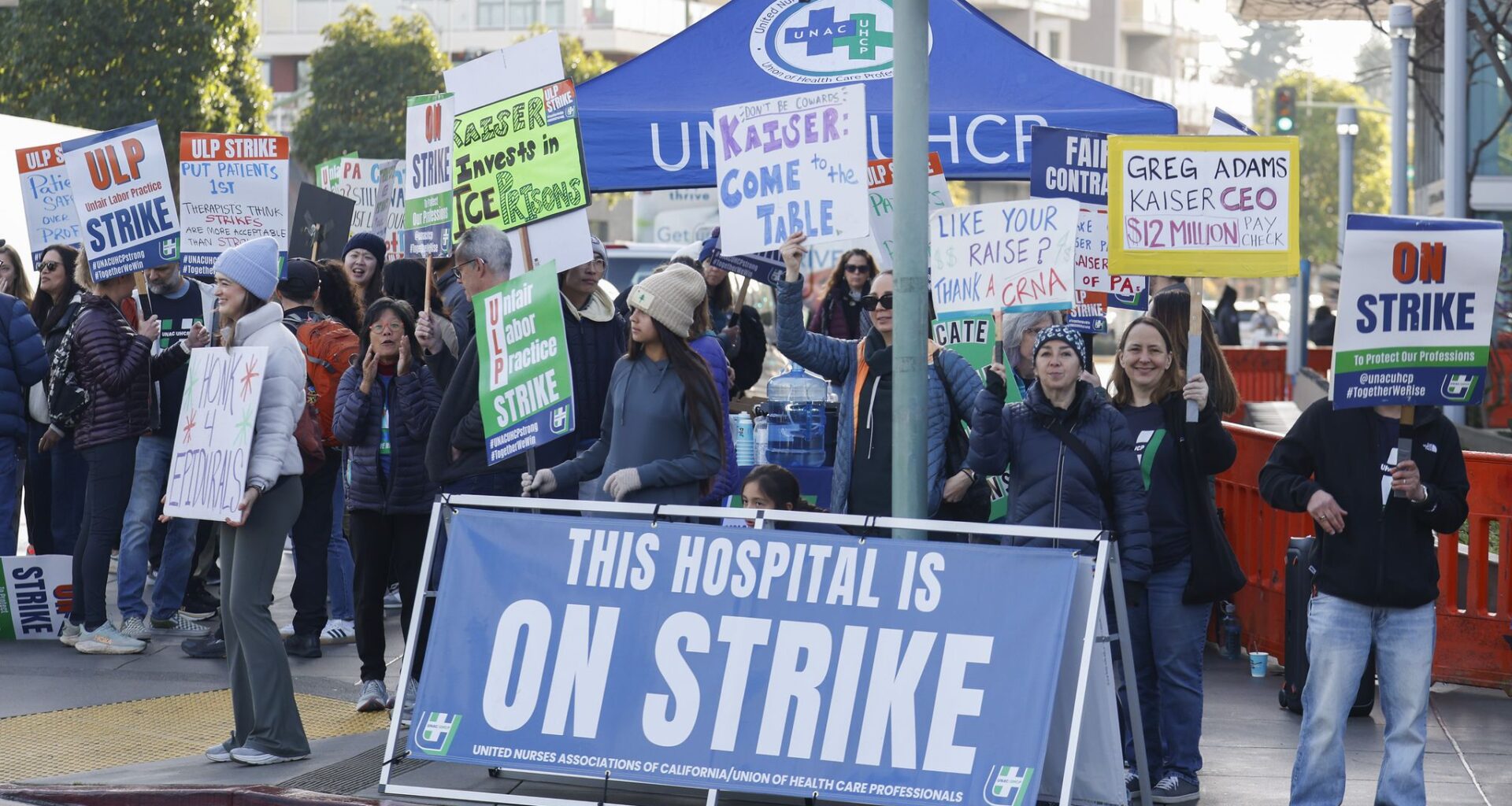
Thousands of Kaiser Permanente nurses plan to strike Wednesday at several locations across Northern California, including in the Bay Area, in solidarity with mental health workers who are slated to strike the same day.
The California Nurses Association said more than 23,000 of its members will participate in a one-day sympathy strike starting Wednesday at 6 a.m. and ending Thursday at 6 a.m. The nurses’ union is joining the National Union of Health Care Workers, which represents Kaiser therapists and social workers, in their strike to protest Kaiser’s use of artificial intelligence.
Members of both unions plan to picket outside Kaiser Oakland Medical Center, Santa Clara Medical Center, Santa Rosa Medical Center, Sacramento Medical Center and Fresno Medical Center.
NUHW announced its one-day strike earlier this month, saying Kaiser is trying to use AI to replace the work of therapists and thus reducing the quality of patient care.
NUHW therapists’ contract with Kaiser ended in September and the sides are negotiating a new contract, NUHW said.
Kaiser said the unions are “pushing a false narrative” that Kaiser wants to replace care teams with AI.
“Our objective is to reach an agreement with NUHW that honors our clinicians and allows space for the potential of technology that can support them and help our members,” Kaiser said in a statement. ” Many AI tools have the potential to help our clinicians spend more time focused on serving our members and patients.”
In the event of a strike, Kaiser hospitals and medical centers will remain open, the provider said. Some members may need to reschedule non-urgent appointments and elective surgeries. If this is necessary, Kaiser will let members know in advance.
More than 31,000 Kaiser Permanente nurses and health care professionals returned to work Feb. 23 after a four-week walkout — which their union called the largest open-ended nurses strike in U.S. history. The strike, which began Jan. 26 and disrupted some services across California and Hawaii, ended after the United Nurses Associations of California/Union of Health Care Professionals said there had been “significant movement” in contract negotiations over staffing, wages and working conditions.