
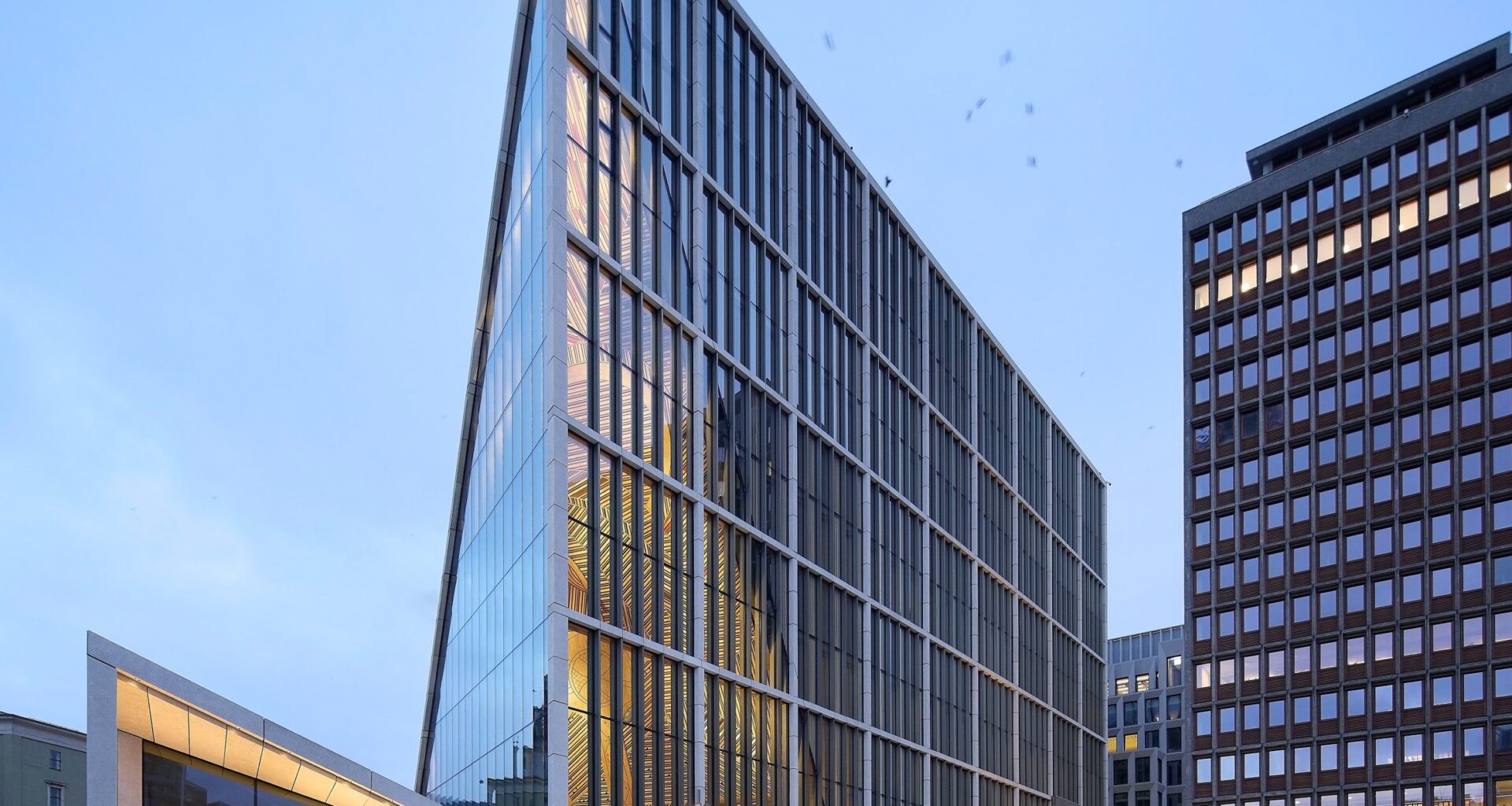
Norwegian studio Nordic Office of Architecture has created a collection of interconnected ministry buildings for the New Government Quarter on the site of the 2011 terrorist bombing in Oslo.
Nordic Office of Architecture collaborated with local studios Haptic, Scenario, and I-d Interiørarkitektur & Design to create a masterplan that consolidates the government ministries into a “single, flexible campus”.
The development is situated on the site of the Regjeringskvartalet government quarter, which was severely damaged during a terrorist attack in 2011 that killed eight people. This informed the studio’s approach aimed at creating a campus that is simultaneously public-facing and secure.
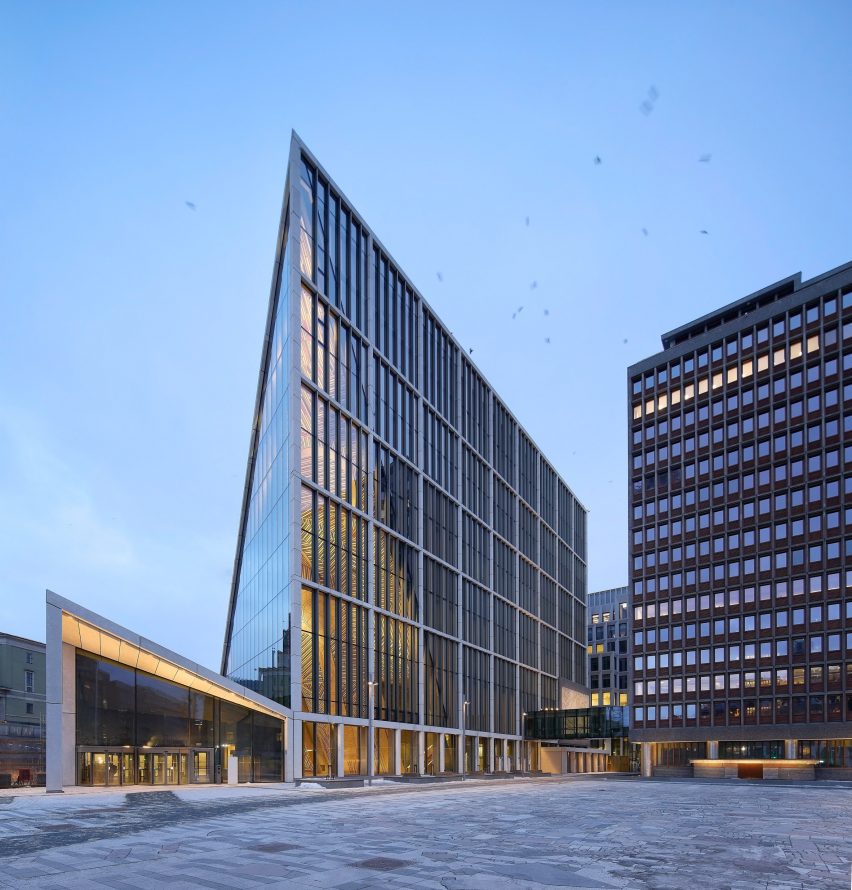 Nordic Office of Architecture has created the New Government Quarter in Oslo
“The New Government Quarter is conceived as a ‘design for democracy’, reopening the heart of Oslo’s political centre while uniting the ministries in an open yet secure civic landscape,” said Nordic Office of Architecture founding partner Gudmund Stokke.
“It creates a cohesive campus that reconnects with the city through new public routes, green spaces, and architecture that symbolises transparency, resilience and national identity,” he told Dezeen.
“Security is embedded discreetly into the landscape and building forms, through integrated barriers, controlled vehicle access and clear sightlines to avoid overt fortification,” added associate partner Fredrik Haukeland.
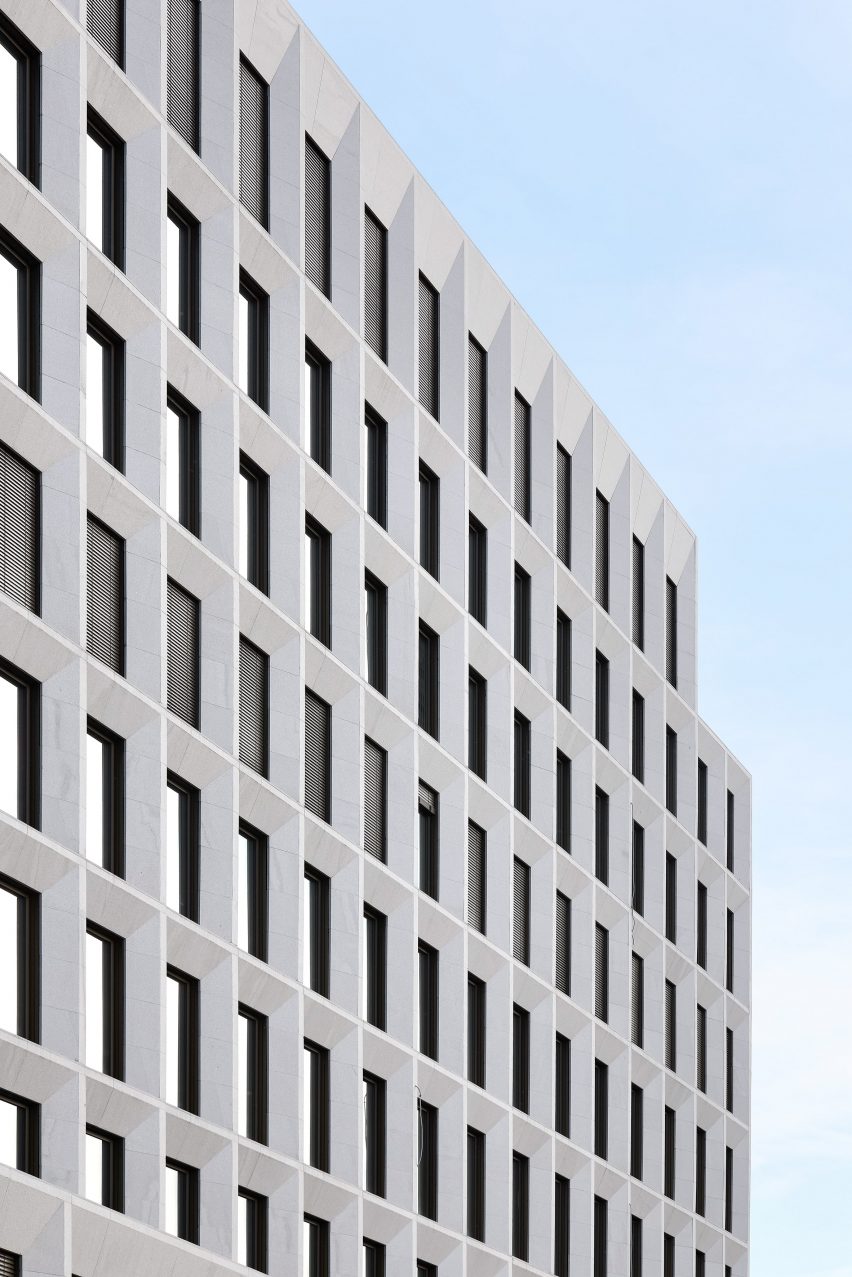 It comprises seven interconnected ministry buildings
The campus encompasses five new buildings and two restored buildings built largely from locally-sourced Larvikite stone and timber.
Three of the seven buildings have been completed as part of the project’s first phase, alongside a series of interconnected public spaces.
Uniting the buildings internally are a network of bridges, atria and shared areas, dubbed the Collaboration District, that connect the ministries on the first floor and facilitate circulation between the buildings.
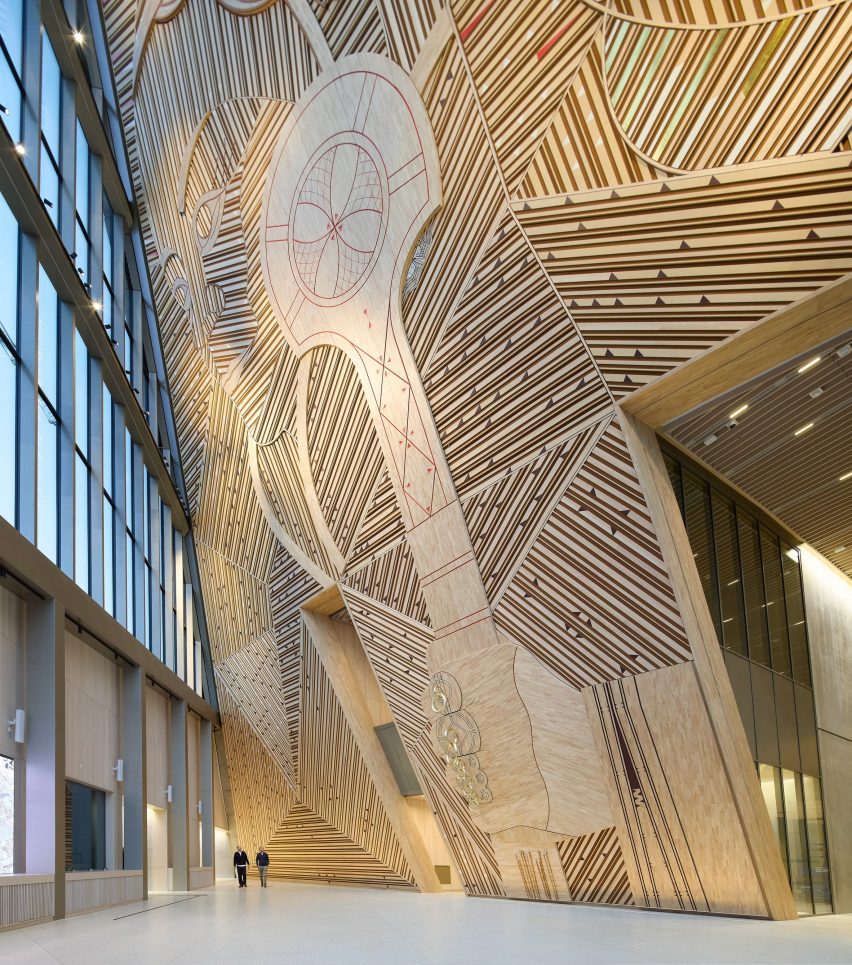 A 51-metre-tall atrium is adorned with an artwork by Outi Pieski
According to the studio, the newly-built A-Block and restored Høyblokken were designed as the campus’ “front line”, with their forms intended to symbolise different eras of Norway’s political history.
“Each building reflects the architectural language and political ideals of their respective periods,” said Nordic Office of Architecture studio partner Knut Hovland.
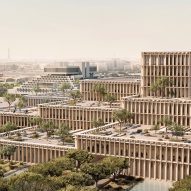
Frida Escobedo designs HQ with “subdued monumentality” for Qatar Ministry of Foreign Affairs
“Their juxtaposition shows the evolution of Norwegian governance, representing the post-World War era and the establishment of the social democracy with equality for all,” Hovland continued.
Defined by its angular and gridded form complete with expansive glazing, A-Block opens up to a 51-metre-tall atrium adorned by a monumental, birch-lined artwork by artist Outi Pieski.
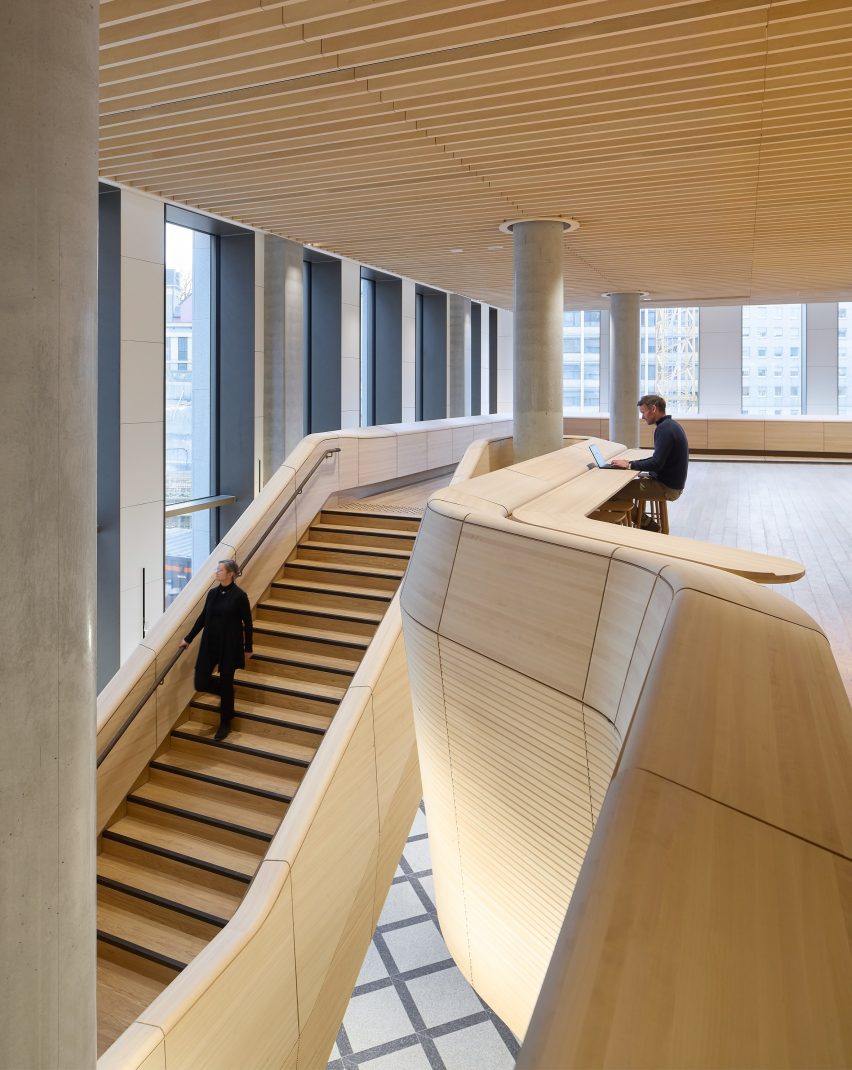 The D-Block features a sculptural timber staircase
Glazed bridges link the A-Block to the adjacent Høyblokken building, which has been fitted with wood-lined interior.
Meanwhile, behind this, the newly-built D-Block will sit alongside three buildings that are yet to be completed to form a “quieter backdrop” for the campus.
Beyond its rhythmic facade, D-Block features a sculptural timber staircase crafted with local builders to achieve its double-curved form.
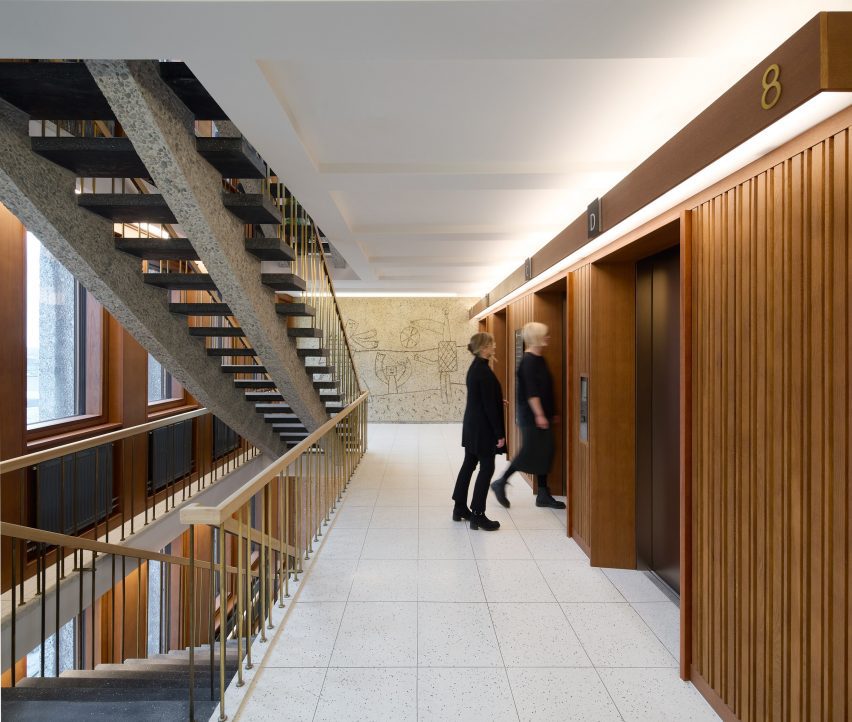 The buildings are connected by first-floor bridges
Other spaces set to be completed as part of the development include the 22 July Centre, a public museum and learning space dedicated to the attacks in 2011.
Additionally, two existing plazas have been revitalised and will be complemented by the Regjeringsparken park designed with landscape architects SLA and Bjørbekk & Lindheim.
Elsewhere, Frida Escobedo has designed a bayside headquarters for the Qatar Ministry of Foreign Affairs and Shalom Baranes has presented an updated design of the proposed White House ballroom.
The photography is by Hufton+Crow.