
NEED TO KNOW
NASA astronaut Butch Wilmore didn’t know if he and fellow astronaut Suni Williams would survive when their space capsule experienced mechanical failures during a test flight in June 2024
Despite his momentary “dread,” he and the rest of the crew were able to dock at the International Space Station, which prompted an unexpected 286-day stay in space
He opens up about the experience, and more, in his new memoir Stuck in Space
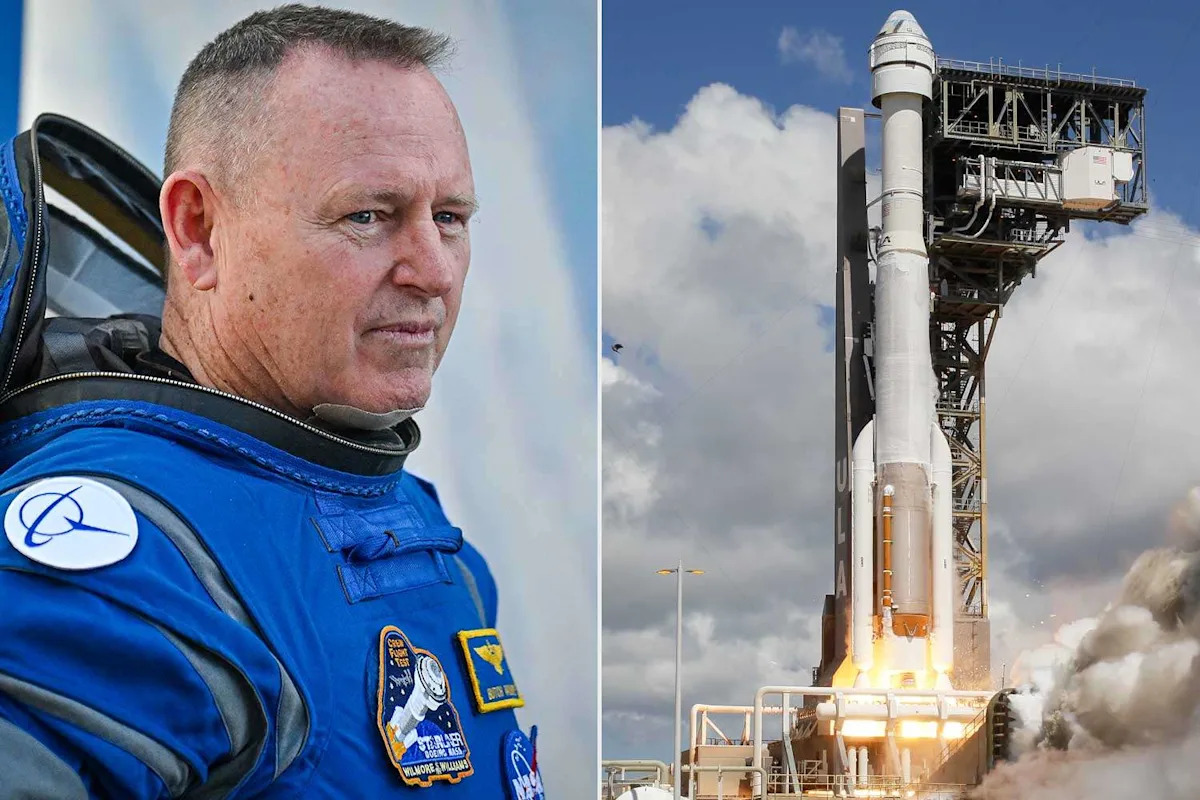
When the “impossible” happened as his space capsule approached the International Space Station on June 6, 2024, NASA astronaut Barry “Butch” Wilmore was momentarily overcome. The fourth thruster had failed and he knew his crew would die if they didn’t dock.
“I cannot even begin to convey the feeling of dread that momentarily overwhelms my emotions. It’s simply unbelievable,” Wilmore, who would go on to spend an unexpected 286 days in space, wrote in his memoir, Stuck in Space, out on Tuesday, March 17.
Speaking with PEOPLE, he puts it plainly: “Fear is not your ally, it’s your enemy in those scenarios.”
For a few moments, the astronaut thought of his family back on Earth —”memories of Deanne and our girls now flash through my thoughts,” he wrote— and how he responded when the space shuttle Columbia broke up during its descent to Earth in 2003, killing all seven astronauts on board.
“I think of the partially charred helmet and boot I retrieved from that East Texas field. The pieces had fallen tens of thousands of feet,” he recalled.
Then he concentrated on the task at hand: controlling the aircraft.
“Certainly all of those thoughts race through your mind,” he tells PEOPLE. “But you compartmentalize and get rid of them because you got to focus on what’s going on at the moment.”
In June 2024, Wilmore and fellow NASA astronaut Suni Williams set off to test the Boeing Starliner spacecraft.
The mission was supposed to last for eight days, but their stay at the ISS kept being extended following the identification of “propulsion system anomalies” while the capsule was in orbit, according to a recent report from NASA following an independent investigation.
Despite the family moments he missed, Wilmore was thankful for one last trip in space before his retirement in August 2025.
“It’s an absolute privilege to be able to serve your country in this fashion in space,” says the dad of two. “There’s only a handful of people… in the history of any nation, the globe, [who have] had the privilege of doing this.”
A deeply religious man, Wilmore recounts how his faith helped guide every major decision he’s made in life, from joining the U.S. Navy to marrying his wife, Deanna, as well as navigating hardship. “I don’t care what happens in this life,” says Wilmore of the contentment he receives from his faith. “There’s nothing, no entity can take away my internal hope. And that brings comfort that surpasses everything.”
In his memoir, Wilmore recounts multiple near-death experiences while serving in the Middle East before joining NASA in 2000. Over the next 25 years, he flew four different spacecraft, spending a total of 464 days in space, according to NASA.
The years of experience prepared him to respond when his final space mission went awry.
Fortunately, the spacecraft was eventually able to connect to the ISS with great effort — but of course, then came the next unexpected part of the mission: their stay in space would now be much longer than anticipated.
“If we do dock, I don’t think we’re going to be able to come back on the spacecraft,” he says of his mindset at the time, emphasizing that in order to make sure what happened “doesn’t happen again,” the capsule needed to be studied back on Earth.
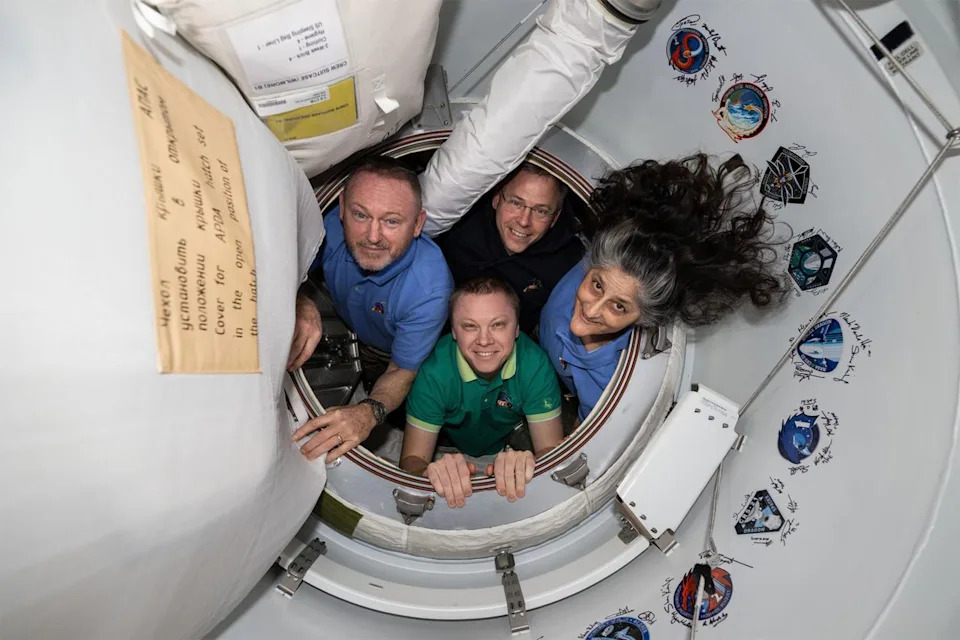
Butch Wilmore, Nick Hague, Suni Williams and Aleksandr Gorbunov.
Credit: NASA
By August 2024, NASA announced that the capsule would return to Earth without Williams and Wilmore. The pair wouldn’t come back home until the following March.
In a report released by NASA in February 2026, the agency officially declared the botched test flight as a “Type A” mishap. It’s the same classification that the Columbia and Challenger space shuttle disasters received, according to CNN.
Credit: Astronaut Provided/Nasa/Planet Pix via ZUMA Press Wire/Shutterstock
“The Boeing Starliner spacecraft has faced challenges throughout its uncrewed and most recent crewed missions,” said NASA Administrator Jared Isaacman in a statement last month. “While Boeing built Starliner, NASA accepted it and launched two astronauts to space. The technical difficulties encountered during docking with the International Space Station were very apparent.”
He added that it was important to be straightforward about mistakes made.
“Beyond technical issues, it is clear that NASA permitted overarching programmatic objectives of having two providers capable of transporting astronauts to-and-from orbit, influence engineering and operational decisions, especially during and immediately after the mission,” Isaacman said. “Today, we are formally declaring a Type A mishap and ensuring leadership accountability so situations like this never reoccur.”
Never miss a story — sign up for PEOPLE’s free daily newsletter to stay up-to-date on the best of what PEOPLE has to offer, from celebrity news to compelling human interest stories.
Wilmore says he was relieved to hear that the incident had been reclassified, something he fiercely advocated for with NASA administrators.
“I’m grateful that all those changes were made,” he says. “These classifications dictate what happens in the future, and that’s why it’s important.”
Stuck in Space: An Astronaut’s Hope Through the Unexpected is available now.
Read the original article on People