
Home » CRUISE NEWS » Cozumel travel breaking news: latest Royal Caribbean project unlocks powerful new public beach access for everyone
Published on
March 18, 2026
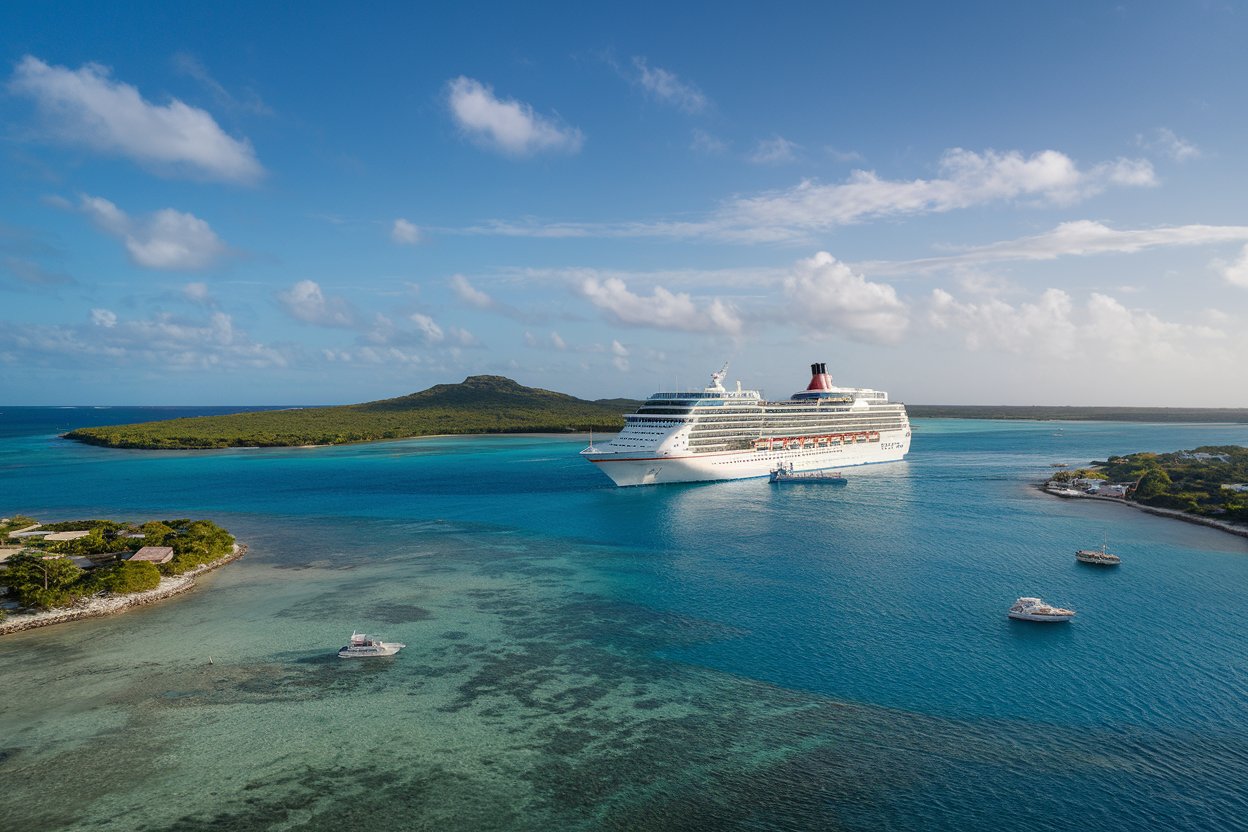
Image generated with Ai
For island families who grew up heading to the shoreline with coolers and kids in tow, and for independent travellers who dream of a simple day by the sea without price tags or barriers, the news from Cozumel’s southern hotel zone feels surprisingly hopeful: a major cruise line is promising not to close off the coast, but to open it up in a new and safer way. As Royal Caribbean pushes ahead with its Royal Beach Club Cozumel development, the company has pledged to create an upgraded public beach access route that aims to serve local residents, independent visitors and cruise guests alike—without cutting off anyone’s right to reach the sand.
Cozumel travel update: what Royal Caribbean’s new public access really means
In an official announcement, Royal Caribbean said it will build a brand‑new public access path in the Zona Hotelera Sur as part of its Royal Beach Club Cozumel tourism project, while the current access point will eventually be relocated to this improved corridor. The cruise company describes the move as a way to fix long‑standing issues at the existing entrance, including heavy traffic conflicts, limited or confusing signage and poor lighting that has made early‑morning and late‑night use uncomfortable and, at times, unsafe.
Until construction is complete and the new road and facilities are fully operational, the existing public access will remain open, so locals and visitors are not suddenly cut off from the shoreline. Royal Caribbean says it will begin work as soon as it secures all required regulatory and environmental permits from Mexican authorities, aligning the project with national and local standards for coastal development.
Mexican beach access law: why this project matters for public shoreline rights
Under Mexican federal rules, beaches and the adjacent Federal Maritime Terrestrial Zone (known as ZOFEMAT) are considered public, and reforms have reinforced the principle that access to these areas cannot be unjustly blocked or restricted. Even where hotels, beach clubs and other businesses hold special concessions over parts of the shoreline, authorities have stressed that there must be legal public access points, and local enforcement actions in Quintana Roo have targeted developments that attempted to fence off beaches.
In that context, Royal Caribbean’s decision to not only maintain but upgrade public access in Cozumel’s South Hotel Zone positions the Royal Beach Club project as a high‑profile test of whether large tourism investments can expand, rather than shrink, the ways ordinary residents and non‑cruise travellers reach the coast. Advocacy around beach access in Quintana Roo has grown in recent years, and local observers will be watching closely to see how the new pathway functions in practice once it opens.
Travel experience upgrade: safer roads, better signage and shared spaces
Royal Caribbean says the redesigned access route will feature improved road layouts that separate local traffic from beach‑bound vehicles more clearly, upgraded lighting along the path and clearer wayfinding so that visitors can find the beach without risky U‑turns or last‑second lane changes. For people arriving on scooters, in taxis, on bikes or on foot, these basic changes could mean a far calmer and safer approach to the shoreline, particularly at sunrise and after dark.
Advertisement
Advertisement
Coverage of the project notes that the public access path will connect the hotel zone directly to the beach next to Royal Beach Club Cozumel, creating a shared beachfront area where locals, independent travellers and cruise visitors can all enjoy the water, even as premium club facilities remain reserved for paying guests. The design is intended to ensure that opening the shore to more people does not undermine the private amenities that fund the development, such as pools, cabanas and signature dining spaces.
Balancing exclusive beach club travel with local community needs
Royal Caribbean’s wider Royal Beach Club Cozumel concept focuses on curated beach‑day experiences for cruise passengers, including multiple beaches, pools, restaurants, swim‑up bars and water activities. At the same time, the company has framed the public access project as a way to keep Cozumel’s natural beauty “open and welcoming” to the broader community, signalling an effort to avoid the perception that cruise infrastructure exists only for ship guests.
Advertisement
Advertisement
Travel reports highlight that visitors using the new public route will be able to access the sand and nearby coastal areas without paying club‑level prices, while club‑only zones inside the Royal Beach Club remain reserved for guests who book those experiences. If the balance works, Cozumel could emerge as an example of how exclusive beach clubs and public shoreline rights can coexist, rather than compete.
Sustainability and SEA the Future: Cozumel’s role in Royal Caribbean’s strategy
The company is positioning the Cozumel public access initiative as part of its global SEA the Future sustainability program, which focuses on preserving oceans, supporting communities and delivering better experiences for guests. This includes commitments to work within environmental permit frameworks, reduce impacts on sensitive coastal ecosystems and design infrastructure that can handle visitor flows without overwhelming local services.
In Quintana Roo, where debates over hotel‑driven beach privatization, erosion and overtourism have intensified, the way Royal Caribbean implements its Cozumel project may become a benchmark for future coastal developments. Success would mean safer access, clearer respect for public shoreline rules, stronger local partnerships and a more transparent model of how major cruise investments can support, not sideline, host communities.
Human side of Cozumel’s new access: what this could feel like on the sand
For Cozumel residents who have watched parts of the coastline become harder to reach over the years, the promise of a well‑marked, safer public access route offers something simple but powerful: the chance to keep sharing weekend beach days, birthday swims and quiet evening walks with the same ease their parents once enjoyed. For travellers, especially those who prefer to explore beyond organized excursions, the new access could turn a quick taxi ride into a relaxed walk toward a Caribbean shoreline that feels more shared, more welcoming and more in tune with the island’s community than a gated resort ever could—an experience that might linger long after the sunburn fades and the cruise ship sails away.
