
Louisiana health officials expect about 21,000 people in the state will lose Medicaid coverage when new work requirements for the program take effect next year, a projection that is lower than estimates from outside groups of far larger coverage losses.
The rule that certain people receiving Medicaid demonstrate they are working, in school, in job training or volunteering to keep their coverage was part of the recently passed federal law H.R. 1, also known as the “One Big Beautiful Bill.” In Louisiana, about 1 in 3 people rely on Medicaid for health care coverage.
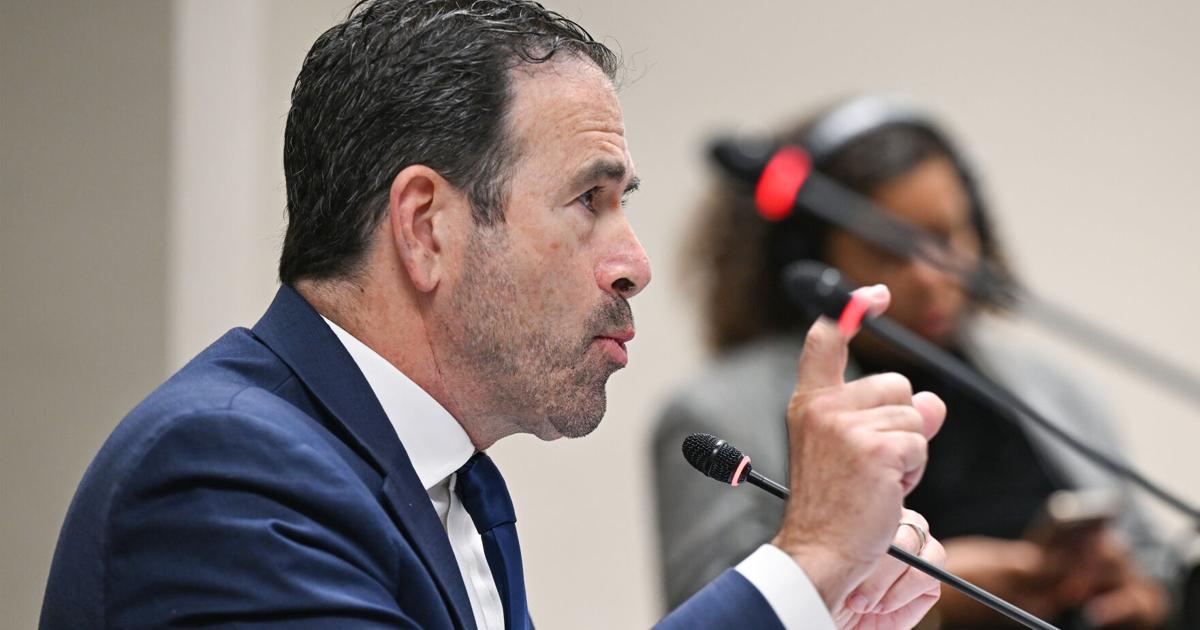
The state health department’s estimate, announced at a budget meeting Monday, is based on how many people the requirements apply to and how many people are already meeting work requirements, said Health Secretary Bruce Greenstein, who called some sharply higher estimates “the absolute worst-case scenario.”
Some of those analyses, drawing on national data and past state experiences, estimated coverage losses in Louisiana could reach tens of thousands more — in some cases over 100,000 people — if people who are eligible for Medicaid lose coverage because of paperwork issues.
The state is already seeing a sharp decline in Medicaid enrollment following the end of pandemic-era protections, which kept people from being kicked off the program until April 2023.
Louisiana’s Medicaid rolls grew from around 1.5 million in February 2020 to 1.9 million in March 2023, then dropped to 1.4 million by November 2025, according to federal data compiled by Kaiser Family Foundation.
That decline leaves enrollment 6% below pre-pandemic levels, making Louisiana one of a relatively small number of states with fewer enrollees than before COVID.
How the state calculated its estimate
In an interview, Greenstein and Medicaid Director Seth Gold said about 320,000 of 1.51 million Louisiana Medicaid enrollees would fall into the group required to meet the work requirements, meaning they are not exempt through disability, age or having young children.
To get to their estimate, state officials subtracted people who are already meeting the requirements or are expected to qualify for exemptions. About 132,000 people are already working, based on wage data. About 18,000 meet similar requirements through SNAP, and others may qualify for exemptions based on medical conditions.
After those adjustments, officials estimate roughly 125,000 to 130,000 people may need to take an additional step to verify work, training or volunteer activity.
The state then applied national estimates of how many people typically comply with similar requirements to arrive at the projected 21,000 people who could lose coverage.
Greenstein said the state expects losses to be lower than in earlier work requirement experiences in other states, such as Arkansas, because Louisiana plans to rely more on automatic verification. There were several logistical issues with Arkansas’ set-up, such as a website that was only operable from 9 a.m. to 5 p.m.
“We just don’t think that extrapolating the Arkansas experience is worth much more than extrapolating the performance of the Flintstone’s family car to a Tesla today,” Greenstein said. “It’s not even apples and oranges. It’s like pebbles and and fruit.”
The state plans to expand outreach, including through social media, to make sure people understand the new requirements and deadlines. Louisiana is working with its workforce development system to provide job placement, resume assistance and training programs.
“The goal is not to get rid of people from Medicaid,” Greenstein said. “It’s to help Louisianians move from dependence to independence.”
Michael Karpman, a researcher at the Urban Institute who has authored reports on the work requirement impacts, described a loss of 21,000 as “very optimistic.”
“It’s lower than the coverage loss that we project under our high-mitigation scenario,” Karpman said, referring to modeling that accounts for states taking key steps, like automatic verifications, to keep people from falling off the Medicaid rolls unnecessarily.
In an analysis released in April, the Urban Institute estimated up to 132,000 adults in Louisiana would lose Medicaid under work requirements. National estimates from the Congressional Budget Office said the requirements would result in 4.8 million people without health insurance by 2034.
Karpman said the work requirement will result in people who still qualify losing coverage because of stricter paperwork policies.
“Many people are projected to lose coverage even though they are working or or could potentially qualify for an exemption,” Karpman said.
Efforts to automate
Louisiana plans to verify eligibility and work activity using existing data sources, including wage data and medical claims, to reduce the need for people to submit paperwork.
Officials said about 40% to 50% of Medicaid renewals are already completed automatically using existing data.
Under the new system, information about income or medical conditions could be pre-filled during the renewal process. For example, wage data could be used to confirm employment, and medical claims could be used to identify people who qualify for exemptions.
If the state already has that information, beneficiaries would not need to take additional steps.
Officials said the work requirement will also be built into the standard application and renewal process, rather than requiring separate monthly reporting.
‘We worry about everyone’
Research from the post-COVID period has shown that many people lose coverage because of administrative issues rather than ineligibility, including missed notices or difficulty completing paperwork.
In Louisiana, sometimes that’s because a person moves around a lot or is displaced because of a hurricane.
Greenstein said the state is trying to stop that from happening through automation. But it’s not clear how many people might drop off who still qualify, he said.
“We don’t know the answer, to tell you the truth, and it’s concerning,” Greenstein said. “We worry about everyone on the program.”
Officials said more detailed information about how the program will work will be released over the next year as the state prepares for its start in January.
Staff writer Meghan Friedmann contributed to this report.