
The WNBA and its player union reached a tentative agreement on a new collective bargaining agreement after more than a year of negotiations, the league and union announced early Wednesday morning.
WNBA commissioner Cathy Engelbert said in a short statement that the two sides had “aligned on key elements of a new CBA,” while WNBPA vice president Breanna Stewart described the deal to reporters in New York as “transformational.”
Advertisement
The verbal agreement term sheet will be sent to the players and the WNBA Board of Governors for a vote.
As part of the reported agreement, the WNBA salary cap will jump from $1.5 million to $7 million, per ESPN’s Shams Charania, who provided additional details on the reported deal.
The monumental news comes eight days after the passing of the March 10 suggested target date the WNBA gave for the season to start on time. Over the past week, the two sides have held marathon bargaining sessions in Manhattan to iron out the sticking points in negotiations, namely revenue sharing.
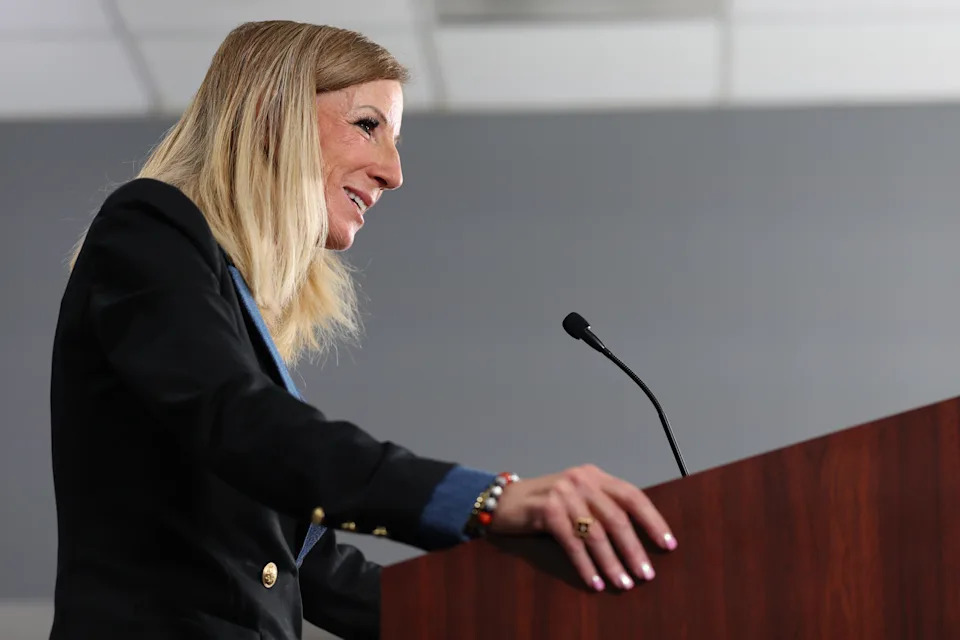
WNBA commissioner Cathy Engelbert had been at odds with players during negotiations, but the two sides came together in the early hours of Wednesday morning to celebrate a new deal. (Photo by Ian Maule/Getty Images)
(Ian Maule via Getty Images)
“This is historical for women’s sports,” WNBPA president Nneka Ogwumike said, via the AP’s Doug Feinberg. “I told Cathy it’s not just for the players that are entering the league or the players that aren’t already here. We’re just really grateful to be able to come to a deal. We’re proud of ourselves.”
Advertisement
[Yahoo Fantasy Bracket Mayhem: Make your picks for $50K in total prizes]
Engelbert said training camp and the 2026 season will start on time, with the league scheduled to begin its 30th season on May 8.
“We still need to finalize a formal term sheet, but the progress made in these discussions marks a transformative step forward for players and the league,” Engelbert said. “It underscores a shared commitment to the continued growth of the game.”
Players opted out of the previous CBA in October 2024 to advocate for a revenue-sharing structure that would tie their salaries to the business. They centered it as their No. 1 priority, including wearing “Pay Us What You Owe Us” T-shirts at All-Star, and into the heat of tense negotiations.
Advertisement
After blowing past the initial CBA deadline last year, the league and players union entered a “status quo” period and continued negotiating after the second deadline extension expired on Jan. 9. A moratorium deal days afterward put free agency on hold, and the sides met in person on Feb. 2 for the first time in the new year. Since then, the union and league have traded proposals while cracks emerged in the player contingent. In mid-December, players voted nearly unanimously to authorize the WNBPA executive committee to vote to strike.
Engelbert said repeatedly that the league wants players to make more, and they would, but there were disagreements on how that would look. There was a revenue-sharing model in the previous CBA, but it was structured differently than the players wanted this time around. For the first time in history, the league made enough money in 2025 to trigger revenue sharing. During negotiations, the league offered deals based on percentage of net revenue, whereas the union used gross revenue and included expansion fee monies in its offers.
Prioritization, team-provided housing, retirement and family planning benefits, facility standards, and core designations also became touchpoints.
With the deal, the league will avoid a work stoppage that would have been the first in its history. The WNBA turns 30 when play begins in 2026, but will first enter into a busy, condensed offseason with negotiations behind it.
Advertisement
The attention now turns to a two-team expansion draft for the Portland Fire and Toronto Tempo. The terms of the draft were part of collective bargaining; existing teams were not able to prepare their lists without guidelines. Three more teams will join by the end of the decade.
There will also be a crunch on free agency. Qualifying offers and core designations were delivered from Jan. 11-20 a year ago, and player negotiations could begin on Jan. 21. That timeline will have to shift later in the year in what will be a bonanza of a free agency period. All but two players not on rookie contracts are free agents, to best take advantage of the new CBA.