
It’s been a while since we’ve broken out the Cap Court gimmick. The idea here is that we pick five players and try to figure out if they have a bad contract from a team perspective. Too much money, too much term, that sort of thing. We make the case for and against, and find a few comparables to help us. Then we deliver a verdict.
Nice and simple. Or at least it’s supposed to be. But now that the salary cap’s upper limit is growing again, and growing quickly, does anyone have a bad contract anymore? Aside from the obvious misfires nobody’s debating, just about every deal out there could be defended with a shrug and a mumbled “cap’s going up.”
BEAT OUR EXPERTS
Predict how you think the tournament will
play out. Can you beat one of our experts?
It’s enough to make it tempting to hang a Spirit Halloween sign on the old cap courtroom. But this is still one of my favorite recurring bits, and we haven’t tried it all season. So let’s give it a shot. Five more names, five more contracts and five more verdicts. Can we find a guilty verdict among them? We’ll find out, and we’ll start with one of the biggest names out there …
Igor Shesterkin, New York Rangers
The details: Shesterkin is in the first year of an eight-year extension that carries a cap hit of $11.5 million. The deal runs through 2033, at which point Shesterkin will be 37.
The case that it’s a bad contract: It’s the richest contract any goaltender has ever had, to start with. And it’s not all that close — not counting Carey Price’s expiring deal that’s sitting on LTIR, Shesterkin is on the books for $1.5 million more than the next active goalie (Sergei Bobrovsky), and $2 million more than the next goalie whose deal isn’t up this summer (Andrei Vasilevskiy, who has two more years).
At that rate, you could argue Shesterkin should be winning the Vezina every year to justify his deal. But he’s only won it or even been a finalist once, and that was four years ago. Connor Hellebuyck has won the last two, and he makes $8.5 million on a deal he signed a year before Shesterkin’s. Is Shesterkin better than Hellebuyck? Maybe, based on this season. There’s at least a case to be made. Is he 35 percent better? If not, this looks like a bad deal.
The bigger issue here isn’t that one star makes a lot of money — sometimes the market needs to be reset, and when somebody such as Kirill Kaprizov comes along and does it, you have to wait a bit to see how it all shakes out. The problem is that Shesterkin signed his deal in 2024, and so far, his rising tide hasn’t lifted any boats. Of the goalies who’ve signed since, only three —Lukáš Dostál, Adin Hill and Logan Thompson — got even half his cap hit. And without any other stars in their prime needing new deals any time soon, it looks like Shesterkin will be head and shoulders above everyone else for years to come.
And again, he’ll be 37 when his deal expires. Of the top 50 goaltending seasons of the last decade in terms of goals saved above average, only two — by Pekka Rinne and Marc-Andre Fleury — came from a goalie aged 35 or older. The Rangers are all but certainly going to eat at least a year or two of seriously declining play. That’s fine when the term gets you a discount, but that obviously didn’t happen.
The case that it might be OK: It’s not Shesterkin’s fault that comparables such as Ilya Sorokin or Jake Oettinger had already signed before he reset the market. And while he’s not going to win the Vezina every year, he’s clearly one of the best and most consistent goalies in hockey. Somebody has to be the highest-paid goalie, and Shesterkin has as strong a case as anyone. That’s why the Rangers paid up.
As for the term, it’s scary until you remember how often these sorts of deals end up sitting on LTIR somewhere. We already mentioned Price, and even Shea Weber is still technically on the books. If it goes badly, the Rangers will have ways out.
But it may not go badly. Put it this way: Other than Shesterkin, the two richest goaltending deals in terms of cap hit were Price in Montreal at $10.5 million and Bobrovsky in Florida at $10 million, both on max-length term. Do you think either of those teams regrets those contracts? And if not, is Shesterkin at a higher number but a smaller percentage of the ceiling really that big a problem?
Key comparables: Nobody, which is the issue.
Except … is it? We’re comparing Shesterkin to his fellow goalies, which is fair. But it’s at least possible that goalies are collectively underpaid. If you point out that Shesterkin makes less than Elias Pettersson, Kyle Connor and Mitch Marner, and as much as William Nylander, Erik Karlsson and Martin Necas, he starts to sound like a bargain, right?
The ruling: The “are goalies underpaid” debate is a whole other topic, and maybe we should save it for a day when Jesse Granger is free to make the case for his brethren. I’m going to say this contract is risky, but not bad, at least not yet. Five years of elite goaltending probably pays it off, and one year in, we’re off to a solid start. If his play dips faster than the cap goes up, it gets dicey. But so far, the Rangers can live with it.
Evan Bouchard, Edmonton Oilers
The details: Bouchard is in the first year of a four-year extension that carries a cap hit of $10.5 million. It will expire in 2029, when he’ll be 29.
The case that it’s a bad contract: Bouchard has the offensive numbers to justify his deal. The question is whether the rest of his game is good enough, or whether his defensive shortcomings hold him back from ever being a truly elite blueliner.
Or to put it more directly: Should a guy who’s worth $10.5 million be getting left off of Team Canada in favor of the Colton Paraykos or Travis Sanheims of the world? At the very least, he’s certainly not one of the five best defensemen in the league, which is an issue given he’s the fifth-highest paid.
The case that it might be OK: The game is played at both ends of the rink, and both elements matter. In the last three years, Bouchard trails only Cale Makar and Quinn Hughes in blue-line scoring. Are those guys good? I heard they might be good.
Besides, Bouchard isn’t some past-his-prime veteran being paid well into his mid-30s. He’s barely into his prime, and his defensive game should continue to improve. And if for some reason it doesn’t, it’s not like the Oilers are on the hook forever.
Key comparables: Among guys in their 20s, Bouchard’s cap hit is a bit behind Rasmus Dahlin’s $11 million and well ahead of Zach Werenski, Noah Dobson, Adam Fox and Charlie McAvoy, all at $9.5 million. But maybe the most interesting comparable is the closest: Thomas Harley, who’ll carry a $10.6 million hit on his new max-length deal when it kicks in next year. Harley’s a different kind of player, but his deal suggests that Bouchard helped establish a new level for top-pair defensemen in their mid-20s.
The ruling: The term makes this one interesting. It protects the Oilers in a sense, since they have an exit ramp in sight. But they may not want that, because if Bouchard does live up to his deal, then there won’t be much surplus value to mine for Edmonton as the cap goes up. For now, I don’t love this one but I don’t think I can call it truly bad.
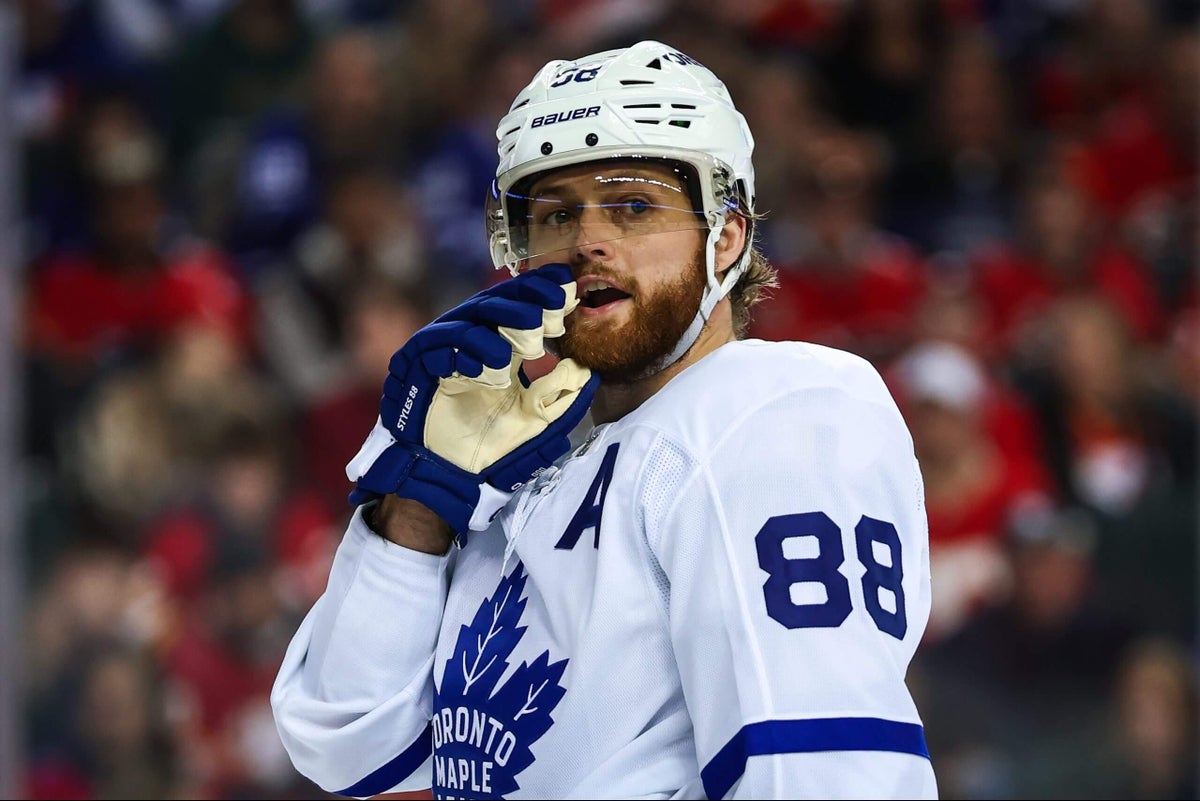
William Nylander, Toronto Maple Leafs
The details: Nylander is in the second year of an eight-year deal that carries a cap hit of $11.5 million. He’ll be 36 when it expires in 2032.
The case that it’s a bad contract: The Toronto Maple Leafs signed it. Next.
OK, we can go a little deeper here. Nylander has emerged as a legitimate star in Toronto, is on pace to record his fifth straight season of 80-plus points, and still has a shot to get to 40 goals for the fourth straight campaign. Those numbers are good, but are they $11.5 million good? Given Nylander’s offense is really all he brings — he’s not physical or especially interested in defense — it’s up for debate.
He’s never finished higher than fifth on postseason All-Star voting, and has just one fifth-place Hart vote to show for his entire career, so it’s fair to say he’s viewed more as a complementary piece than a franchise player.
This being the Leafs, we also have to talk about Nylander’s playoff resume. While he’s established a reputation for being the only member of the Core Four who comes through in the spring, the numbers only partially support that. He scores at a 71-point pace in the playoffs, which is actually less than the much-maligned Marner and the same as Auston Matthews.
The case that it might be OK: Offense might be all Nylander brings to the table, but it’s a tough skill to find and one worth paying for. His 412 points since the start of the 2021-22 season rank 13th among forwards, just behind Kaprizov, which is elite territory.
And while his laid-back persona might not play well in some markets, you could make the case that it’s perfect for the Toronto spotlight. At the very least, he was willing to commit to a max-length deal with the Leafs instead of the shorter contracts Marner and Matthews insisted on.
Key comparables: His old pal Marner makes $12 million in Vegas. Mikko Rantanen is at the same number, as is Kyle Connor. Nylander is even with Necas, and a bit ahead of David Pastrnak and Artemi Panarin. But he’s way ahead of names such as Mark Stone, Matthew Tkachuk and Nikita Kucherov. (Yes, we know.)
The ruling: It’s closer than Nylander fans might like to think. But at the same time, if he became a UFA this summer, it’s fair to assume he gets at least this much, if not more. On a team that suddenly has some cap room to work with, it’s not a bad contract.

Adrian Kempe is a good two-way player, but does he live up to his contract? (Kyle Ross / Imagn Images)
Adrian Kempe, Kings
The details: Kempe has a max-length extension kicking in next year that carries a cap hit of $10.625 million through 2034, when he’ll be 37.
The case that it’s a bad contract: As of today, Kempe is in line to be the league’s 19th-highest-paid player next year by cap hit. Would you rank him as one of the league’s 20 best players? What about the top 50? He was closer to the top 75 in our preseason tiers list, and his production hasn’t exactly taken a giant step forward this year.
Let’s come at it from another angle: Shouldn’t a forward have come close to cracking 80 points at least once in his career before he gets eight figures? Or maybe get so much as a single vote for any award at all?
The case that it might be OK: Since we just pointed out the tiers list, let’s quote from it: “In the three seasons since Kempe’s Tiers debut, only 18 regular NHL players have scored more all-situations goals per 60. There, he’s tied with Matthews and a tick ahead of Nathan MacKinnon.”
And unlike some of the players around him on that cap hit list, Kempe is a good two-way player. And with Anže Kopitar retiring, it’s not like the Kings are struggling to find room for his deal.
Key comparables: Somewhat amusingly, the two players right below him among forwards are Jonathan Huberdeau at $10.5 million and Aleksander Barkov at $10 million, which certainly covers both extremes of the cap value spectrum. Huberdeau is actually the only other forward in the league whose cap hit is over $10 million but below $11 million, so comparables here don’t help us much.
The ruling: I’m going to call it a bad contract. Is that because I’ve realized I need at least one “guilty” for this column to work and I’m running out of options? Maybe. Does it help that I’m an East Coast writer who hasn’t actually watched a Kings’ game since 1993? Potentially. I’m willing to be wrong here, and if I am, then we’ll see him the next time we do Cap Court Appeals Edition.
Seth Jones, Panthers
The details: Jones is finishing the fourth year of an eight-year deal that carries a cap hit of $9.5 million. It expires in 2030, when he’ll be 35.
The case that it’s a bad contract: First of all, let’s be clear on what the court is looking at today. This isn’t about whether the Panthers should regret trading for Jones; they won a Cup with him, so that would be a tough case to make even if they end up having sent Chicago a future Vezina winner and a high pick. This is about planting a flag right now and just looking forward. And from that perspective, this one looks dicey.
Jones is already 31, but that feels low considering how long he’s been around. He just crossed the 900 games mark, meaning he’s actually played more NHL hockey than greybeards such as Chris Tanev and Radko Gudas. He’s had his ups and downs, and while he’s been a good fit in Florida, he hasn’t had a Norris vote since 2020. And thanks to injuries, this will be the third straight year he doesn’t reach 70 games.
In other words, he took advantage of a shiny new toy scenario in Chicago to get paid at his absolute peak and is unlikely to ever look like that player again, even in Florida. Maybe the contract was good at one point, and maybe the Panthers are happy to have it, given Jones was part of a Cup run. But going forward, it’s not great.
The case that it might be OK: Sorry, what? I was just watching this clip. Or maybe it was this one. Or was it this one? Were you saying anything important?
Key comparables: You can use all the $9.5 million guys from the Bouchard section, and maybe mix in Jakob Chychrun at $9 million and Darnell Nurse at $9.25 million.
The ruling: When everyone else on the team is playing for peanuts, you can afford to pay a bit of a premium on a guy or two. It’s bad, absolutely, but the Panthers shouldn’t care.