
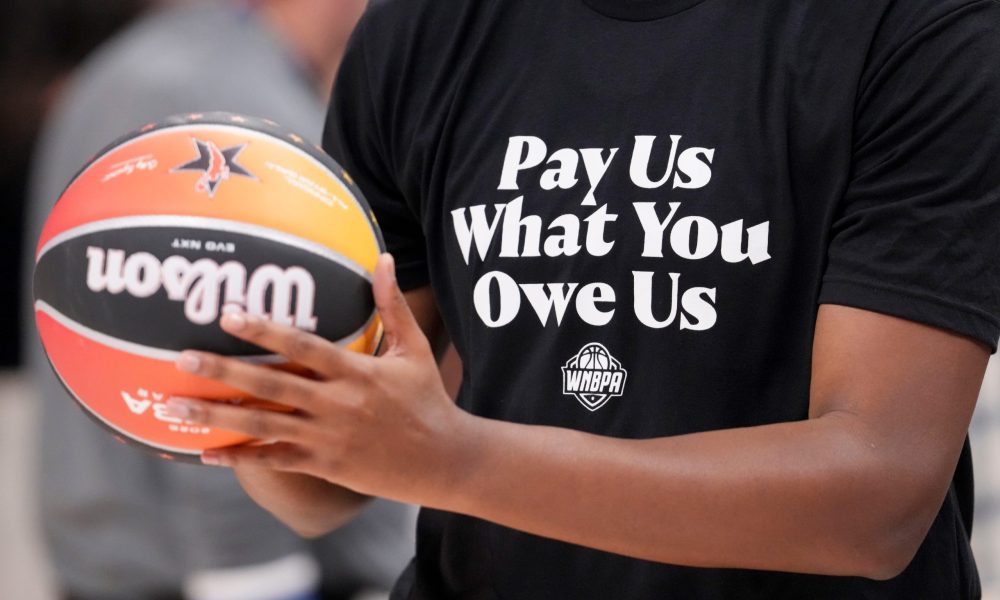
The proposed deal, which still requires formal ratification, would for the first time tie player salaries directly to league revenue growth. It also represents a dramatic shift from the current system and signals a new era of investment in the sport.
According to ESPN’s Shams Charania, the salary cap would jump to $7 million per team, up from $1.5 million. The agreement also includes an average revenue share of nearly 20% for players, a supermax salary starting at $1.4 million, and an average salary projected around $600,000. Minimum salaries would rise above $300,000.
Details of a landmark WNBA collective bargaining agreement, per ESPN sources:
– New salary cap starting at $7 million, up from $1.5 million
– Average revenue share of nearly 20% across deal
– Supermax starting at $1.4M
– Average salary in range of $600K, minimum above $300K
— Shams Charania (@ShamsCharania) March 18, 2026
The Mercury — one of the WNBA’s flagship franchises — could be positioned to leverage the increased cap space to retain star talent and compete more aggressively in free agency. In recent seasons, roster construction has often relied on difficult financial trade-offs. A higher cap and revenue-linked system would remove those constraints and allow teams to build deeper lineups.
Phoenix has ranked among the league’s most engaged markets, and the financial growth reflected in the agreement aligns with rising attendance, sponsorships and media visibility. The new structure reinforces the connection between that growth and player compensation — something players like Alyssa Thomas, Satou Sabally and Kahleah Copper have strongly advocated for.

Las Vegas Aces play the Phoenix Mercury in Game Four of the WNBA Finals at Mortgage Matchup Center on Oct. 10, 2025, in Phoenix. © Rob Schumacher/The Republic / USA TODAY NETWORK via Imagn Images
While still below men’s leagues, the gap in minimum salaries is narrowing measurably.
For players who have long balanced domestic play with overseas opportunities — including many who have played for the Mercury — the new system could allow more athletes to remain in the United States year-round, strengthening team continuity and fan connection.

Washington Mystics’ Brittney Sykes (20) holds a sign Saturday, July 19, 2025, during the WNBA All-Star Game at Gainbridge Fieldhouse in Indianapolis. © Grace Smith/IndyStar / USA TODAY NETWORK via Imagn Images
If finalized, the deal would mark a significant step forward for the league, one increasingly aligned with its growth and its audience.