
Photo-Illustration: Stevie Remsberg; Photo Getty Images
Candace Parker has always played the long game. A generational talent who didn’t just dominate women’s basketball, she expanded what it could look like, feel like, and demand. From her early days under coach Pat Summitt at the University of Tennessee to WNBA championships, Olympic gold medals, and a career defined as much by instinct as by impact, Parker built a legacy rooted in discipline, visibility, and quiet defiance.
Now, post-final buzzer, she’s translating that same precision into a new era. These days, she wears the hats of analyst, investor, mother, and architect of what comes next for women’s basketball. At a moment when the sport is finally receiving the attention it has long deserved, Parker isn’t just watching the shift, she’s helping shape it. For Parker, getting it done has never simply been about doing more. It’s about doing everything with intention and knowing exactly what’s worth showing up for.
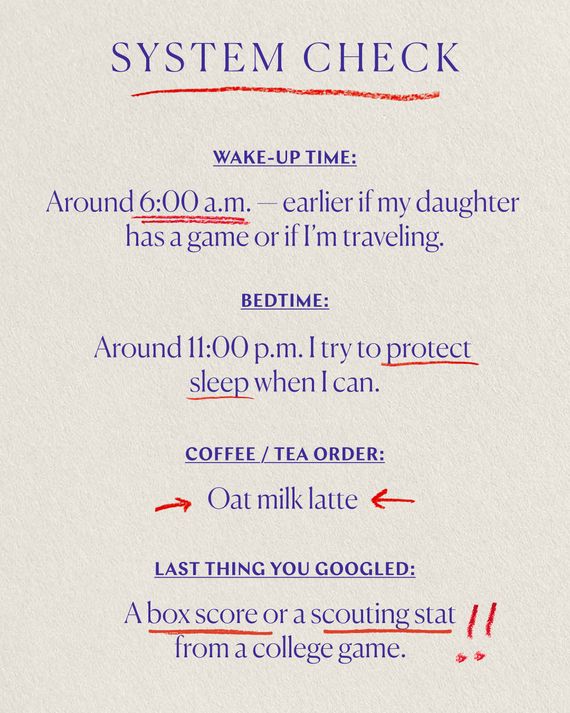
On a week like this, what does your actual rhythm look like?
My days usually start around 7 a.m., depending on when my boys wake up, but the first priority is always my family. Before anything work related begins, I check in with my daughter and sons and make sure our morning feels calm and connected. Even if it’s just breakfast or getting ready for the day, that time together grounds everything that follows. Once the house is moving, I take a few quiet minutes for myself — coffee, a stretch, a quick mental reset, mapping out the day. When you’re balancing motherhood with media and business, how you start matters. If the foundation at home feels right, everything else flows better.
From there, it’s production calls, catching up on games, meetings, sometimes travel. But no matter how packed it gets, everything comes back to family. That’s what keeps me centered.
You’re juggling broadcasting, business, and motherhood. What’s the system that actually keeps it all moving?
Preparation and accountability. As a player, you can’t fake the work, and that doesn’t change when the job changes. I approach everything with that same mind-set. Whether it’s broadcasting or business, I want to show up ready. Pat Summitt taught me that discipline early. The little things — being early, doing the extra work, staying consistent — are what carry you through every phase of your career.
Walk me through your prep before you go on air. What does ready actually mean to you?
Film is everything. I start by watching recent games to understand rhythm and how teams are actually playing right now. Then I go deeper: matchups, rotations, coaching tendencies. But what I’m really looking for is nuance. What’s happening off the ball? Who’s making the defensive rotation that doesn’t show up in the box score? Having played the game, I also lean on relationships and instinct. My goal is always the same: help viewers see the game the way players see it.
On a night before a big on-air day, how do you wind down without losing focus?
Preparation brings me calm. I’ll go through notes, rewatch clips, think through story lines — not just stats, but context. Then I try to slow things down. Travel and media can get hectic, so having even a small routine helps — stretching, catching up with family, stepping away from screens. Once I know I’ve done the work, I can relax. That’s the part that lets me show up fully.
What’s the part of the job that people don’t see but defines everything?
The preparation and the pressure to get it right. People see the broadcast but not the hours behind it: studying, talking with producers, researching. And once you’re live, that’s it. No redo. So the rule is simple: Trust your work. If you have prepared, you can speak with clarity and confidence.
It’s March Madness, and women’s basketball feels like the main event. What are you most excited about right now?
The confidence. This generation walks onto the floor knowing they belong. When I was coming up, we were still fighting for visibility. Now you’re seeing packed arenas; millions watching; and players who grew up studying the WNBA, Olympic teams, and global basketball. The skill level is incredible, but what’s really shifting is the connection. Fans know these players now, their stories, their personalities. That’s what grows the game.
It feels like the world is finally catching up to how good women’s basketball has always been.
What does it feel like, personally, to watch that shift happen in real time?
It’s exciting, and, honestly, overdue. My generation always believed in what the game could become, even when the spotlight wasn’t there yet. And the generations before us laid that foundation. Seeing the investment, the visibility, the energy now — it’s rewarding. But there’s still more to build.
What’s on your personal checklist for saying “yes” to a deal in women’s sports?
First, it has to move the game forward. If I’m putting my name on something, it needs to have real impact. Second, respect — fair investment, real partnership, understanding the value of women athletes. And third, long-term vision. The best partnerships aren’t just about today, they’re about building something sustainable.
When everything is loud — media, expectations, travel — what brings you back to yourself quickly?
Family. Being around people who know me outside of basketball and media resets everything. Even a small moment or one conversation can shift your perspective.
On the most packed days, the ones that feel like a full-court press, what’s nonnegotiable for you?
The basics. Hydration, sleep when I can get it, and movement, even if it’s just a quick stretch. Confidence in what I’m wearing and how I show up matters too. I keep Degree Clinical 5X in my routine because it’s built for high-pressure moments — on-camera, traveling, running between everything. Knowing that part is handled lets me focus on everything else.
Stay in touch.
The latest in style, self, culture, and power in your inbox.
Vox Media, LLC Terms and Privacy Notice