
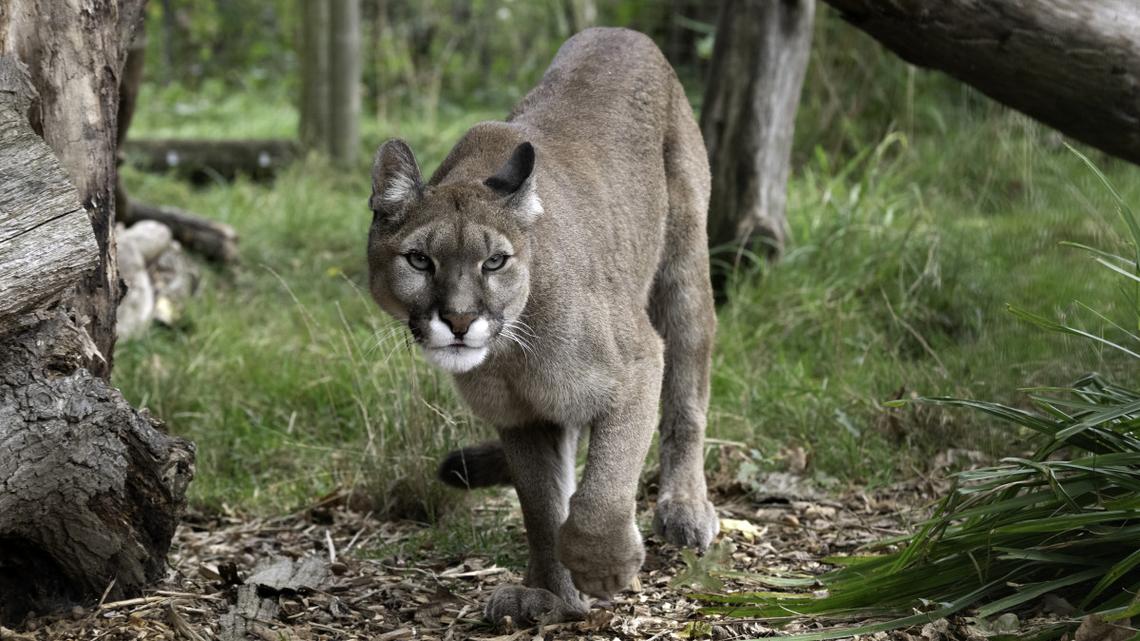
As the weather warms, encounters between wildlife and pets can become more common.
In early March, a cougar attacked a family’s dog in the yard of their Whatcom County home.
Video from a doorbell camera early Saturday, March 7 shows the big cat trotting down the Sudden Valley driveway with the small dog in its mouth, then quickly climbing a tree across the street, McClatchy Media previously reported. Seconds later, a man is seen throwing rocks at the mountain lion, which drops the dog.
Area residents have been reporting cougar sightings since December.
What kinds of predators are native to Washington state? What steps can you take to protect your pets?
Here’s what to know:
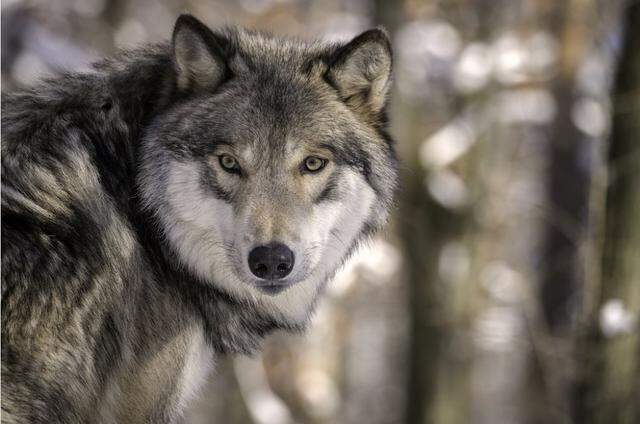 Wolves are considered “predatory wildlife” in Washington state. National Park Service What predators can be found in Washington state?
According to the Washington State Department of Fish and Wildlife, some wildlife species can be “potentially dangerous” or cause problems, especially when humans enter in the picture.
Cougars, wolves and grizzly bears are considered “predatory wildlife” under state law, the state wildlife agency said.
“The conflicts that occur with black bears, cougars, coyotes and moose — in both residential and recreational areas — are the ones most often reported to WDFW with concerns for human safety, pets, livestock or property damage,” the state Fish and Wildlife Department said.
According to the Burke Museum, other predators commonly found in Washington include lynxes, bobcats, coyotes, wolverines, badgers, raccoons weasels and skunks.
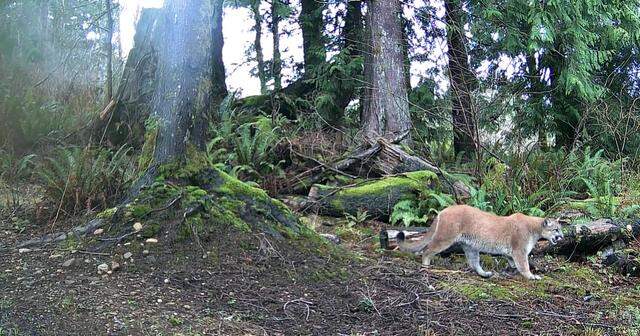 A screenshot from video taken by a trail camera shows a cougar walking near the Galbraith Mountain parking lot along Samish Way outside Bellingham, Wash., on Jan. 13, 2026. Adam Morvee Courtesy to The Bellingham Herald Why am I seeing more wildlife right now?
“Human population growth has led to habitat loss and fragmentation,” leaving wildlife fewer ways to pass safely between habitats, the state Fish and Wildlife Department said in its “Guide to Coexisting with Cougars in Washington.”
As cougars and other carnivores travel through areas populated by people, Fish and Wildlife said, that can result in the “increased vulnerability of unprotected small livestock and pets” and the possibility of those domestic animals becoming a “natural food source” for wild critters.
In the spring, you are more likely to see wildlife as they’re “arising from winter sleep, migrating (and) breeding,” The National Wildlife Federation said. “With warmth, plants grow and food becomes more abundant.”
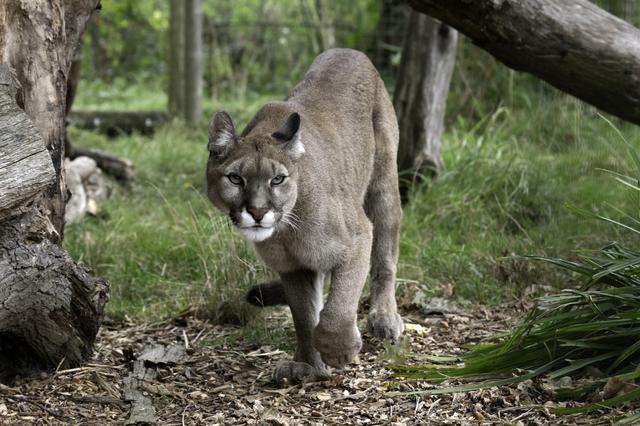 A mountain lion walking in the wilderness. Stock Photo via Getty Images How can I keep my pets safe from wildlife?
There are several things you can do to keep your pets, livestock and other animals safe from a potential wildlife attack, experts say.
That includes limiting food sources by securing trash cans, picking up fallen fruit, taking down bird feeders and thoroughly cleaning barbecue grills, the city of Port Angeles said on its website.
“Wild animals are naturally fearful of humans, but when we intentionally or unintentionally provide access to food and water sources, their behavior can change,” the city said. “This leads to interactions and potential conflicts between humans, pets and wild animals.”
The Washington State Department of Fish and Wildlife shared its “top tips for coexistence” with wildlife in a Feb. 25 Facebook post.
They include:
Don’t feed wildlife: This can cause animals to lose their natural fear of humans and spread disease.Secure your trash: Use bear-resistant cans or keep garbage in a locked garage or shed.Bring pet food inside: Leaving bowls out can tempt wildlife.Manage bird feeders: Keep areas clean and remove feeders when “uninvited guests” stop by.Keep pets supervised. Keep cats indoors and dogs on leashes.
Fish and Wildlife recommends keeping livestock in enclosures such as barns, horse stalls, kennels and coops.
“Fully enclosed carnivore-resistant enclosures to shelter animals from dusk to dawn are the most effective way to protect domestic animals when sharing the landscape with carnivores,” the state agency said in its cougar guide.
You can also install fencing and other barriers and “use scare tactics, such as scarecrows, motion-sensor lighting or noise-making devices” to deter wildlife from entering your property, the city of Port Los Angeles said.
You should keep a close eye on your pets when they’re outside, according to Mark Jordan, associate professor of biology at Seattle University and a co-director of the Seattle Urban Carnivore Project.
That includes bringing your pets inside at night, staying with them when they go outside to use the bathroom and leashing dogs on walks, Jordan told Seattle public radio station KUOW in April 2025.
Pet owners should also stay wary of predators in the sky.
In addition to coyotes, raptors including hawks, owls, and eagles can be a threat to cats and small dogs, Jordan said, although the risk from those critters is lower.
How can I report a wild animal encounter?
If you’re experiencing an emergency involving “dangerous wildlife,” call 911, the Washington State Department of Fish and Wildlife said.
To file a non-emergency complaint, call 360-902-2936 dial toll-free at 877-933-9847 or email WILDCOMM@dfw.wa.gov.
You can also submit a report online at wdfw.wa.gov/about/enforcement/report.
In addition, you can report wildlife encounters to the Seattle Urban Carnivore Project,
A collaboration with Woodland Park Zoo and Seattle University, the project explores “how mammalian carnivores live and interact with people” in urban and suburban areas.
The project tracks these species:
Black bearBobcatMountain lionCoyoteOpossumRaccoonRiver otterRed fox
Loading…
Related Stories from Bellingham Herald

The Bellingham Herald
Julia Hawkins joined The Herald as a service journalism and general assignment reporter in December 2025. She earned a bachelor’s degree in journalism at Western Washington University in Bellingham.