
Video above shows family leaving court after verdict reached.Ibraheem Yazeed was found guilty of murder and felony murder in the 2019 killing of Aniah Blanchard.Because the jury did not find him guilty of capital murder, the possibility of the death penalty was removed. He could face life imprisonment without parole when sentenced on May 7. The jury has been released.Blanchard was abducted from an Auburn gas station, with her body found a month later in Macon County. At the time of Aniah’s death, Yazeed was out on bond for a prior violent offense, leading to the creation of ‘Aniah’s Law,’ which prevents violent offenders from being eligible for bond. Yazeed has pled not guilty.The trialAfter six days of testimony, the jury heard closing arguments on Tuesday and rebuttals from both the prosecution and defense. The jury spent Wednesday deliberating. During closing arguments, the prosecution told jurors that 19-year-old Aniah Blanchard made a bad decision by allowing Yazeed, whom she met in the parking lot of a gas station, into her car, but emphasized that this did not justify her murder. The defense pointed out the lack of DNA evidence linking Yazeed to Blanchard’s car and suggested Antoine Fisher as a possible killer, noting that he led authorities to Blanchard’s body a month after her murder.Prosecutors called about 40 witnesses over six days of testimony, while the defense did not call any witnesses. The defense filed a motion arguing the state failed to meet its burden of proof, but the judge denied the motion. Testimony on the final day came from three expert witnesses: a forensic anthropologist who helped recover and examine Aniah Blanchard’s remains, the chief medical officer for the Alabama Department of Forensic Science, who also assisted in the examination process, and an FBI agent specializing in tracing phone records.The trial began with emotional testimonies and video evidence presented in court. During opening statements, the prosecution discussed video evidence showing Yazeed in Blanchard’s SUV late on the night of October 23, 2019. Several prosecution witnesses testified, including a prostitute who was with Yazeed just before Blanchard disappeared and a cashier at the Chevron where the victim and defendant were caught on video.The most emotional testimony came from Aniah’s older brother, Elijah, who was the last to see her alive when she dropped him off at his Auburn home after they traveled together to Winfield for a funeral. He testified that he told her to go straight home and call him when she got there, but that call never came.Watch coverage of jury selection below.In the courtroomThe courtroom was packed with family and friends, as well as some individuals who did not know the victim or the defendant but feel connected to the case. The jury, consisting of 12 jurors and four alternates, was selected for the trial. Aniah’s mother sat with her father in the courthouse, and the prosecution asked the family not to speak on camera during the trial but requested prayers. This is a developing story and will be updated as information becomes available. Stay updated on the latest stories with the WVTM 13 app. You can download it here.
TUSKEGEE, Ala. —
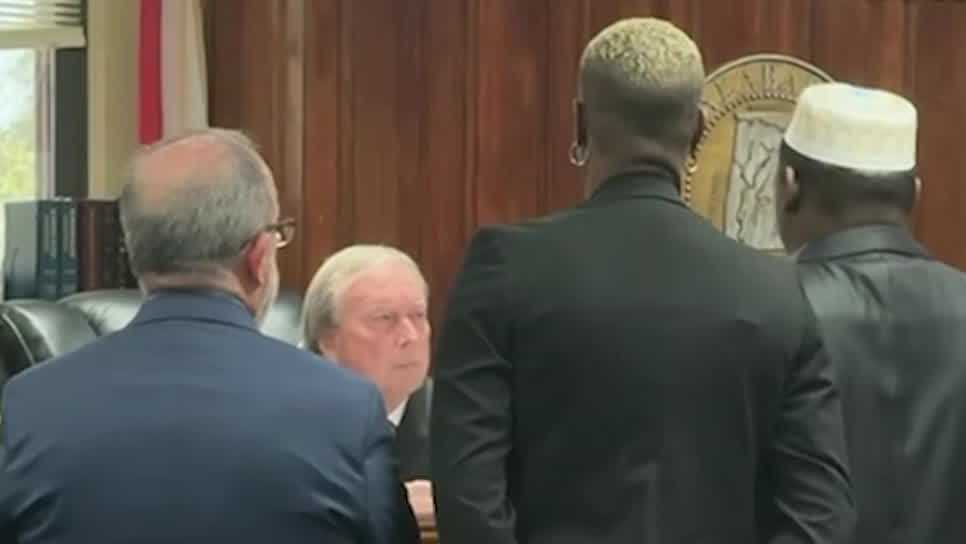
Video above shows family leaving court after verdict reached.
Ibraheem Yazeed was found guilty of murder and felony murder in the 2019 killing of Aniah Blanchard.
Because the jury did not find him guilty of capital murder, the possibility of the death penalty was removed. He could face life imprisonment without parole when sentenced on May 7. The jury has been released.
Blanchard was abducted from an Auburn gas station, with her body found a month later in Macon County. At the time of Aniah’s death, Yazeed was out on bond for a prior violent offense, leading to the creation of ‘Aniah’s Law,’ which prevents violent offenders from being eligible for bond. Yazeed has pled not guilty.
The trial
After six days of testimony, the jury heard closing arguments on Tuesday and rebuttals from both the prosecution and defense. The jury spent Wednesday deliberating.
During closing arguments, the prosecution told jurors that 19-year-old Aniah Blanchard made a bad decision by allowing Yazeed, whom she met in the parking lot of a gas station, into her car, but emphasized that this did not justify her murder.
The defense pointed out the lack of DNA evidence linking Yazeed to Blanchard’s car and suggested Antoine Fisher as a possible killer, noting that he led authorities to Blanchard’s body a month after her murder.
Prosecutors called about 40 witnesses over six days of testimony, while the defense did not call any witnesses. The defense filed a motion arguing the state failed to meet its burden of proof, but the judge denied the motion.
Testimony on the final day came from three expert witnesses: a forensic anthropologist who helped recover and examine Aniah Blanchard’s remains, the chief medical officer for the Alabama Department of Forensic Science, who also assisted in the examination process, and an FBI agent specializing in tracing phone records.
The trial began with emotional testimonies and video evidence presented in court. During opening statements, the prosecution discussed video evidence showing Yazeed in Blanchard’s SUV late on the night of October 23, 2019.
Several prosecution witnesses testified, including a prostitute who was with Yazeed just before Blanchard disappeared and a cashier at the Chevron where the victim and defendant were caught on video.
The most emotional testimony came from Aniah’s older brother, Elijah, who was the last to see her alive when she dropped him off at his Auburn home after they traveled together to Winfield for a funeral. He testified that he told her to go straight home and call him when she got there, but that call never came.
Watch coverage of jury selection below.
In the courtroom
The courtroom was packed with family and friends, as well as some individuals who did not know the victim or the defendant but feel connected to the case.
The jury, consisting of 12 jurors and four alternates, was selected for the trial. Aniah’s mother sat with her father in the courthouse, and the prosecution asked the family not to speak on camera during the trial but requested prayers.
This is a developing story and will be updated as information becomes available. Stay updated on the latest stories with the WVTM 13 app. You can download it here.