

Get Rhode Map
A weekday briefing from veteran Rhode Island reporters, focused on the things that matter most in the Ocean State.
Most reforms to date have focused on pricing practices and transparency. But the bill in Tennessee, which has also been mirrored in other states, goes further, attempting to separate the entities that negotiate drug prices from those that dispense them.
Tennessee state Senator Bobby Harshbarger, a pharmacist and Republican who sponsored this latest bill, told the Globe the legislation addresses a “structural conflict in the pharmacy marketplace.”
“This legislation separates pharmacy benefit managers from owning or controlling the pharmacies they reimburse or steer patients toward,” Harshbarger said in a statement. Pharmacies that own PBMs would need to divest from them to comply with the legislation, he said, but “it does not eliminate PBMs, close pharmacies, or reduce access to medications.”
 A customer visits a CVS pharmacy in Miami, Florida. Joe Raedle/Getty
CVS argues that kind of separation is not feasible. A spokeswoman said there is no obvious buyer for its pharmacies in Tennessee.
“When Rite Aid filed for bankruptcy, CVS Pharmacy was one of the only pharmacies to buy and operate closing Rite Aid stores” in Tennessee, said company spokesperson Amy Thibault. “It is unlikely another pharmacy could or would buy 134 CVS pharmacies, or the others impacted by the bill.”
This bill is “bad for Tennessee, for the more than 1.5 million patients we serve, and for the more than 2,000 colleagues who will lose good paying jobs,” added Thibault.
Legal experts said having PBMs and pharmacies owed by the same company restricts price competition and hurts consumers.
“When one company is negotiating drug prices and owns the pharmacy that fills the prescriptions, they have the ability to control both ends of the transaction,” said Robert Tsigler, an attorney of the Law Offices of Robert Tsigler in New York, who has years of experience on both sides of the courtroom involving federal and regulatory matters in New York and New Jersey.
But Greg Lopes, a vice president for the Pharmaceutical Care Management Association, a national trade association representing pharmacy benefit managers, called the Tennessee bill “dangerous for patients’ health” and said the policy would not actually lower drug prices.
Lopes pointed to a study by Moiz Bhai, an economics professor at the University of Arkansas at Little Rock, that suggested bills like the one in Tennessee could force mass pharmacy closures, increase drug costs nationwide by nearly $32 billion, and lead to 44,000 more hospitalizations. Bhai told the Globe that the Pharmaceutical Care Management Association funded the study.
Tennessee is not the only state moving to separate pharmacies and PBMs.
Last year, Arkansas passed a first-in-the-nation law to prohibit PBMs from having an ownership interest in a pharmacy. CVS filed a lawsuit to block that law, which the company said would have shut down 23 of its stores. The law has been stayed because a federal judge granted a preliminary injunction to stop its implementation.
New York, Vermont, Texas, and Indiana all have serious legislative efforts to sever PBMs from pharmacy ownership underway. Louisiana commissioned a formal study, and bipartisan federal legislation has existed in both chambers.
“This has become a mainstream position, not a Tennessee-specific discussion,” said Kelly Prymicz, the vice president of MacroHealth, a Washington-based company that works with insurers and health systems.
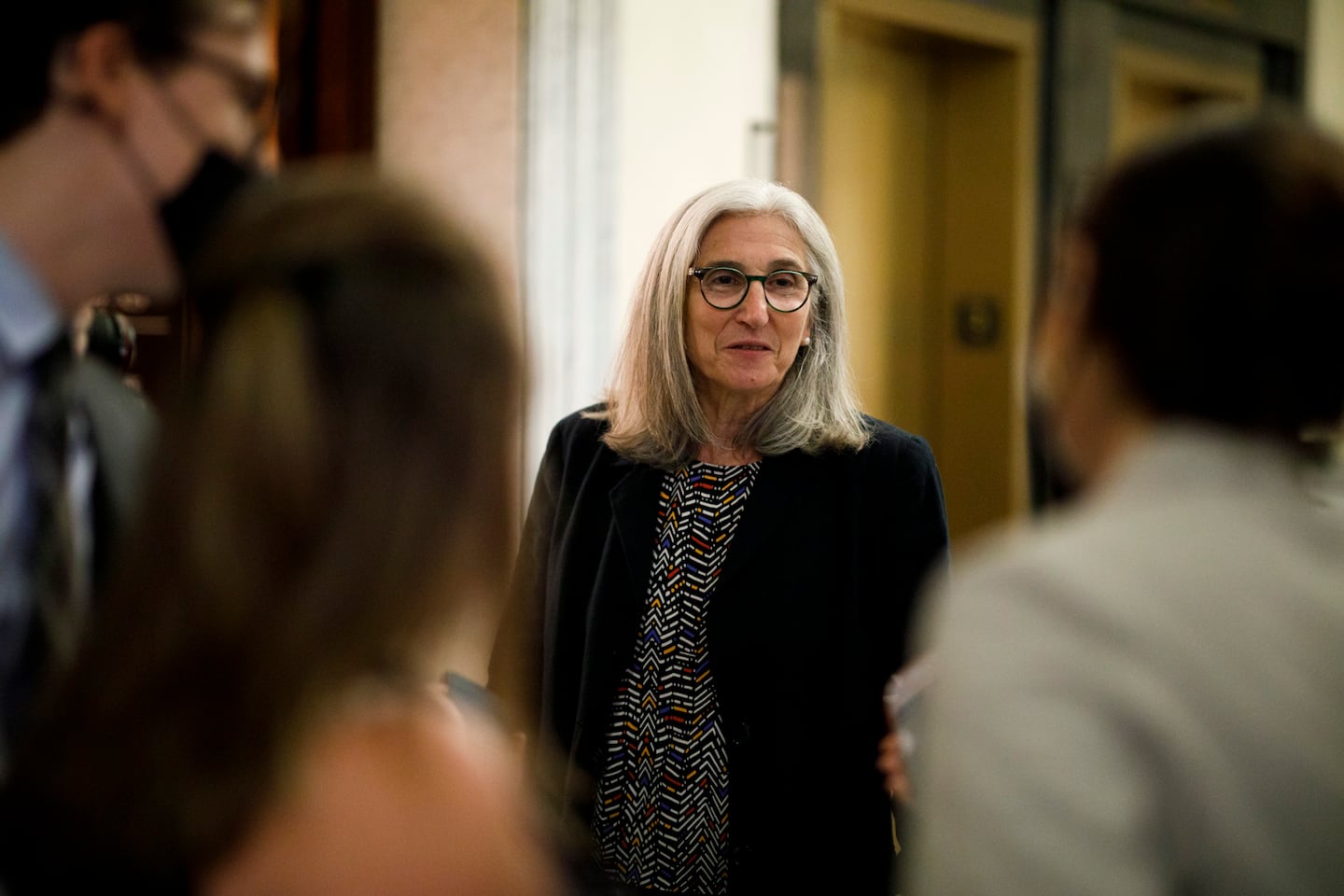 Massachusetts state Senator Cindy F. Friedman, the chairperson of the Health Care Finance Committee, believes the Tennessee bill is “an interesting proposal.”Carlin Stiehl for The Boston Globe
Massachusetts state Senator Cindy F. Friedman, the chairperson of the Health Care Finance Committee, believes the Tennessee bill is “an interesting proposal,“ her spokesperson, Stephen Acosta, said in an email Wednesday.
”From her point of view any legislation that would reduce the impact a PBM has on a patient’s wallet is worth looking at, especially as we see everything PBMs are doing with fees, assessments, and hidden clawbacks,” he said.
In late 2024, the House Judiciary Committee opened an investigation into possible anticompetitive practices by CVS Caremark, seeking to examine the company’s relationship with pharmaceutical hubs, third-party online services designed to streamline patient access to complex specialty medication and increase price transparency. Earlier this year, the committee announced it found that CVS Health may have violated federal antitrust laws by threatening independent pharmacies to keep them from using money-saving services outside Caremark.
The “big three” PBMs — CVS Caremark, Cigna’s Express Scripts, and UnitedHealth’s OptumRx — control roughly 60 percent of the market. A Federal Trade Commission report released in January found that those three companies had generated billions of dollars in revenue by hiking the cost of certain medications, including those used to treat heart disease and cancer.
PBMs have drawn bipartisan scrutiny as the Trump administration, Congress, and states are looking for ways to lower prices on prescription drugs. Over the last decade, lawmakers have devoted significant attention to the business practices of PBMs, and in the last year, 63 bills overhauling the industry passed in 18 states, according to the National Conference of State Legislatures. However, none of the reforms that focus on separating pharmacies and PBMs owned by the same company have been enacted.
“While threats of CVS pharmacy closures are challenged with assertations of fear-mongering, the implications of this bill are really unknown,” said Catherine Cooke, a research professor at the University of Maryland’s School of Pharmacy.
Rhode Island, where CVS is headquartered, is taking a much softer approach. Lawmakers this year have introduced a package of bills that focus on the transparency, oversight, and the state study of drug costs. But the package lacks any sort of reform around CVS’s business model.
When asked why Rhode Island would not go as far as the bill in Tennessee, Senate President Val Lawson told the Globe, “We’re not exploring that at all.”
In fact, Lawson said CVS representatives were given a heads up before lawmakers introduced the bills, and members of her policy team discussed the contents with them.
“I think it’s beneficial to both parties,” Lawson said of Rhode Island’s PBM legislation.
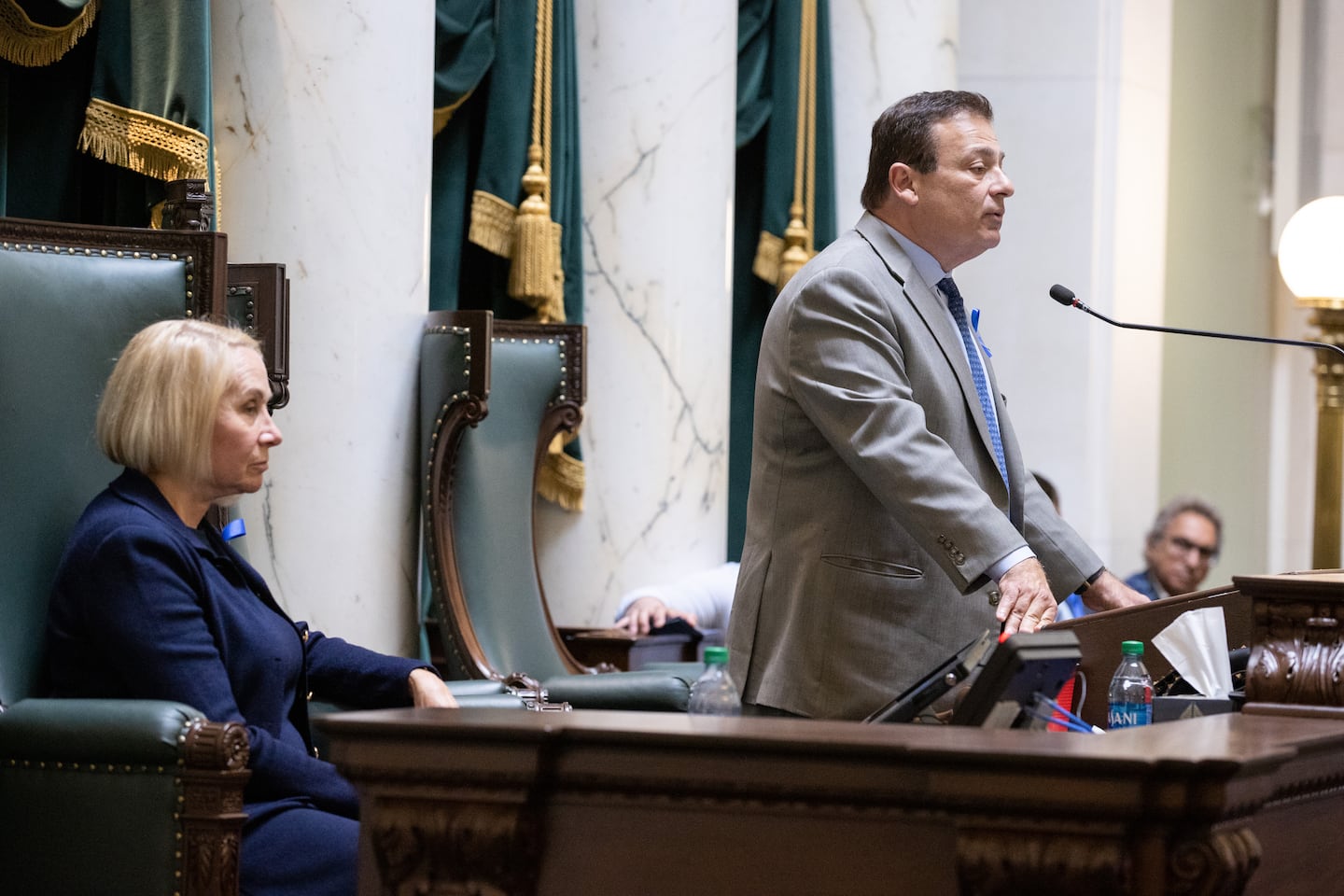 In his capacity as a private attorney, Rhode Island Speaker K. Joseph Shekarchi filed a class-action lawsuit in US District Court of Rhode Island on Wednesday on behalf of Roofers’ Unions Welfare Trust Fund, alleging that CVS operated a RICO enterprise as it relates to the corporation’s PBM contracts. Matthew Healey for The Boston Globe
Rhode Island Speaker K. Joseph Shekarchi, who is also a full-time attorney, filed a class-action lawsuit in the US District Court of Rhode Island on Wednesday on behalf of Roofers’ Unions Welfare Trust Fund, alleging that CVS operated a RICO enterprise as it relates to the corporation’s PBM contracts.
The complaint claims CVS operated PBM contracts “that falsely and/or misleadingly conceal Caremark’s side agreements with the drug companies that participate in the PBM Fraud Enterprises to give favorable formulary placements in return for bribes and kickbacks to Defendants through Zinc.” Zinc Health Services is a group purchasing organization established in 2020 by CVS to help negotiate drug rebates with manufacturers on behalf of Caremark.
Shelly Bendit, a CVS spokesperson, said Thursday that the lawsuit did not have any merit.
“CVS Caremark is committed to lowering prescription drug costs for our clients and their members through negotiations with pharmaceutical manufacturers,” said Bendit. “We intend to vigorously defend against these claims.”
But the debate playing out hundreds of miles away could have outsize implications for CVS, and the patients who depend on its pharmacies.
“CVS is a billion-dollar-a-year PBM with vast operations across the US,” said Kent McKinney, a health care economist at Columbia University and former executive at Johnson & Johnson.
Losing its Tennessee stores “would not produce the doomsday scenario they claim that it will,” said McKinney. “But if the bill ignites interest across the county or if there is federal legislation, that would be a problem for them.”
Alexa Gagosz can be reached at alexa.gagosz@globe.com. Follow her @alexagagosz and on Instagram @AlexaGagosz.