
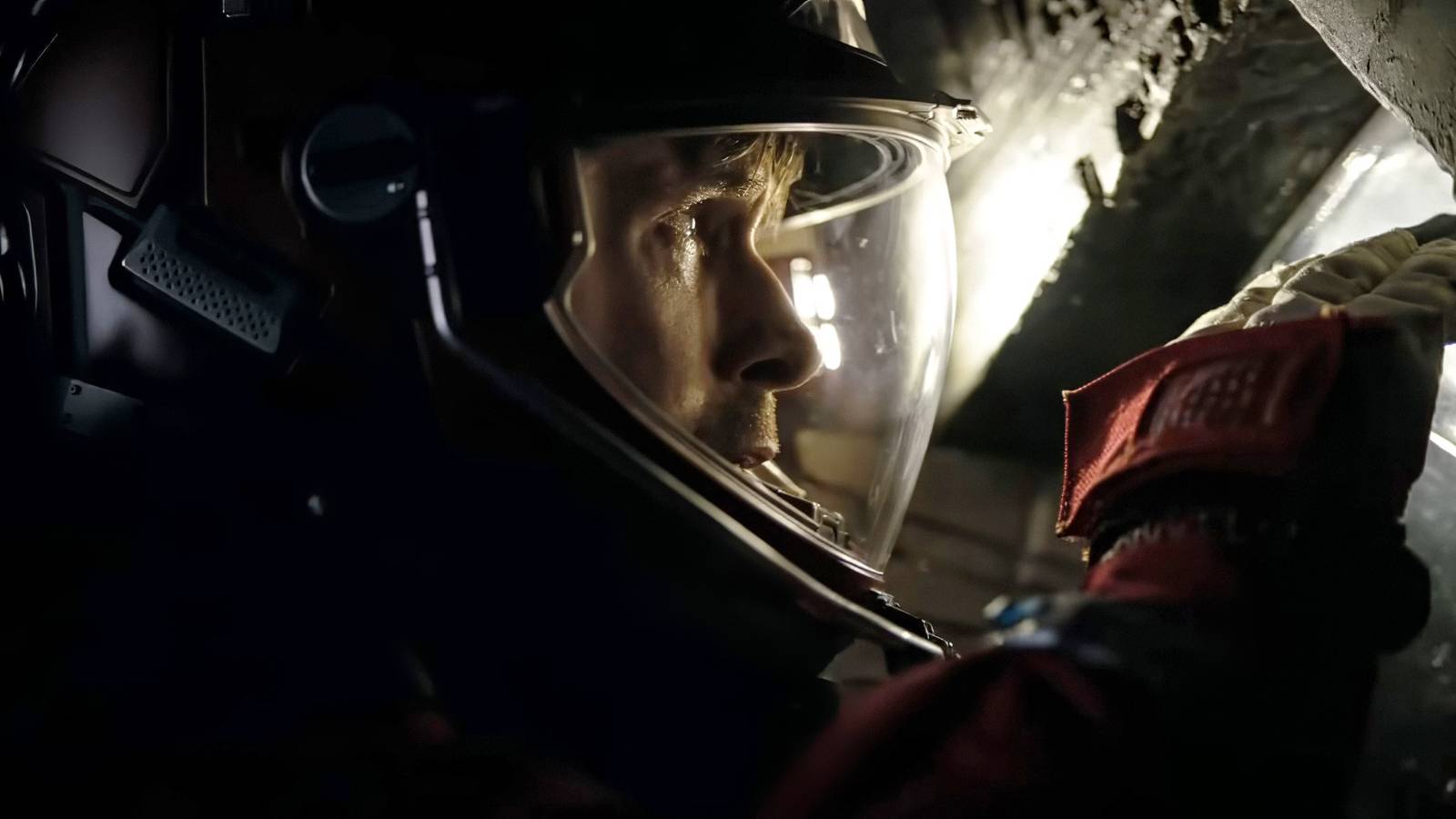
Phil Lord and Christopher Miller’s science-fiction thriller Project Hail Mary sticks surprisingly close to the book it’s adapting, a thriller about a lone astronaut trying to save Earth from apocalypse. But the novel of the same name, written by The Martian author Andy Weir, does have some wrinkles that inevitably had to be left out of the movie. Weir and screenwriter Drew Goddard tell Polygon that they only really miss one of them.
“Drew and I both agree that the biggest thing we had to give up for time — I mean, it’s already a pretty long movie — was nuking Antarctica,” Weir says.
In Project Hail Mary, scientists discover an interstellar organism eventually labeled “astrophage” has spread to the sun and is eating its energy, resulting in a catastrophic cooling of Earth. A planetary task force sends a team of astronauts to the distant Tau Ceti system to explore why its star isn’t infected, and the mission’s sole survivor, Ryland Grace (Ryan Gosling in the movie) meets an alien named Rocky who’s on a similar mission for his own homeworld. Where the movie focuses on their friendship, the book spends more time on the Earthside lead-up to the space mission.
That includes sequences that are in the book but not the movie where scientists work on developing the ship for the Tau Ceti trip, build a giant astrophage-breeding farm in the Sahara desert to power the ship, and try to slow Earth’s cooling by setting off nuclear bombs in Antarctica. Blowing up the Antarctic ice pack is meant to release trapped methane and water vapor into the atmosphere, creating a greenhouse effect to heat the Earth.
“The scene where they realized they have to nuke Antarctica — I thought that was such a bold story choice,” Goddard says. “It suggested the desperation that we found ourselves in. It spoke to the larger themes. I loved it, but we didn’t have the screen time to do it. We realized that the soul of this movie is Grace and Rocky, so first and foremost, that’s what has to be on the screen. So some of the things that happened on Earth, we had to cut.”
“It would have been pretty cool in a cinematic setting, to be able to show a bunch of nuclear explosions going off, and an ice shelf collapsing into the ocean,” Weir says. “It could have been really awesome. But you can’t have everything in the book. You have to pick the most critical story elements. And you did not need that scene to convey this story, so it had to go.”
Goddard, who also scripted the adaptation of The Martian, and worked on the screenplay for the 2013 film adaptation of World War Z, among many other projects (Buffy the Vampire Slayer, Angel, Cloverfield, The Cabin in the Woods) says the adaptation still preserves more of Weir’s novel than most book-to-film translations.
“I think if I made a list of my 10 favorite things in the book, I got nine of them on the screen,” he says. “I really did. And that’s a pretty good average. Usually it’s about six. And it wasn’t like anyone made me cut it. It wasn’t like the studio did it. I was the one that was like, ‘I think we got to cut it, guys.’ But I’m still sad about it. A lot of those scenes that happened on Earth that are in the book, I’m still sad about. But I know they exist in the book, and no one can ever take those scenes away from us book-lovers.”