
Headed down Interstate 55 near Baton Rouge, Edward Bush drove through a swirling cloud of haze last weekend.
“It looked like a fog,” said Bush. “Like a greenish-yellow dust storm.”
But Bush, a horticulture professor of 39 years with the LSU AgCenter, recognized it for what it was: the peak of a heavy pollination season, driven largely by Louisiana’s live oaks.
“It’s just nature doing what it does,” said Bush.

A car is covered with live oak tree pollen in Uptown New Orleans Thursday, March 19, 2026. (Staff photo by David Grunfeld, The Times-Picayune | NOLA.com)
STAFF PHOTO BY DAVID GRUNFELD
Pollen levels in south Louisiana are climbing into the high range this month, driven largely by tree pollen from oak, cedar and other early bloomers.
Forecasters currently rate tree pollen in New Orleans as very high to extreme, with overall pollen counts trending moderate to high in recent days.
‘Full-on misery’
For Bush, that means it’s likely time for a daily dose of Zyrtec over the next three weeks to treat mild allergies. But for some Louisiana residents, it can be much worse, said Dr. John Carlson, an allergist-immunologist at Ochsner Health.
“Tree pollen is causing full-on misery right now,” Carlson said.
The Owen/Butler Memorial Fountain photographed with oak trees during peak pollen season at City Park in New Orleans, Thursday, March 19, 2026. (Photo by Sophia Germer, The Times-Picayune)
STAFF PHOTO BY SOPHIA GERMER
Carlson has seen some cases of what’s known as vernal keratoconjunctivitis, a severe allergic condition affecting the eyes, most often during spring.
Symptoms include intense itching, light sensitivity, swelling and thick discharge, and in serious cases, damage to the cornea that can affect vision.
In people with pollen allergies, the reaction is driven by the immune system mistaking the pollen for a harmful invader.
“Your immune system believes that all the misery it inflicts on you is completely justified, because it thinks that you’re being attacked by parasites,” said Carlson.
Oak trees grow in City Park in New Orleans, Thursday, March 19, 2026. (Photo by Sophia Germer, The Times-Picayune)
STAFF PHOTO BY SOPHIA GERMER
When there are high levels of pollen in the air, it can also cause irritation for people who aren’t allergic, in the same way that their eyes would be irritated if they were in a dust storm.
“There’s so much pollen in the air that you can have an irritant effect,” Carlson said. “It’s grit. It’s just floating through the air, landing in the eyes.”
What’s causing the increase in pollen?
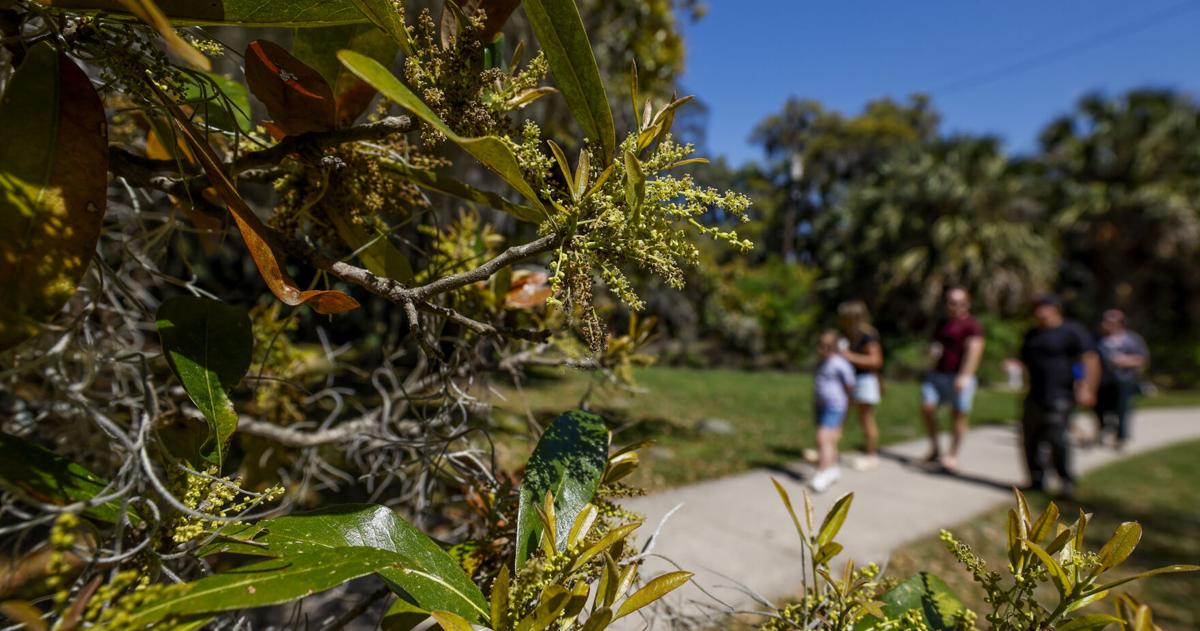
Right now, live oaks and other trees are releasing pollen as part of their reproductive cycle.
The powdery grains come from the male structures of the plant and are carried by wind to fertilize the female parts, which will eventually produce acorns.
In a region like south Louisiana that is thick with live oaks and other pollinators, that process can produce massive amounts of airborne pollen all at once.
“You have so many trees pollinating at the same time that you get extremely high concentrations,” Bush said.
Oak trees grow in City Park in New Orleans, Thursday, March 19, 2026. (Photo by Sophia Germer, The Times-Picayune)
STAFF PHOTO BY SOPHIA GERMER
Weather plays a role in how intense the season feels. Windy conditions across the state in recent days have helped carry pollen farther and keep it suspended in the air.
Temperature swings from cold to warm, which Louisiana has seen in recent weeks, can also concentrate pollen into shorter, more intense bursts. Over time, the increase in carbon dioxide in the atmosphere may lengthen pollen seasons and result in more pollen produced by individual plants.
Rain can offer temporary relief by washing pollen out of the air, but it’s a short-lived reprieve since it also encourages more plant growth.
What can people do?
For many people, over-the-counter treatments can manage symptoms, Carlson said.
Steroid nasal sprays are effective, but have to be used daily, said Carlson, and take about three days before they work. If you need immediate relief, an antihistamine spray available without a prescription called Azelastine can act quickly.
The two types of sprays can be used together, he said.
For eye symptoms, over-the-counter drops containing olopatadine can provide relief.
People experiencing severe eye pain, sensitivity to light or vision changes should seek medical care, as there may be damage to the eye that needs stronger treatment.
The current surge is expected to last a few more weeks, with peak oak pollen season in Louisiana typically easing by mid-April. And while it’s irritating, it’s also typical, and it’s what allows plants to grow.
“You gotta remember, it’s a good thing, right?” Bush said. “It’s Mother Nature doing its job.”