
I noticed the shift first in the pauses.
A hesitation before someone spoke in class. A glance exchanged when conversation drifted toward immigration raids, anti-trans legislation, or the quiet dismantling of diversity initiatives across the state. The way voices dropped when someone said oppression, as if we were all instinctively lowering the volume at once.
I have come to understand stress through the language of nervous systems. Fight. Flight. Freeze. Regulation. Repair. The small cues that tell you something has shifted before anyone names it. Breath shortening. Shoulders rising. Tone sharpening. A body bracing even before the mind has caught up.
Over time, our classroom began to feel like that.
 Art by Lindsay Oncken
Bodies do this under stress. And sometimes institutions seem to follow the same pattern.
I’m part of the leadership team for Counselors for Social Justice. It grew from the feeling that some of what we were carrying did not have a place in our coursework. We host social events, advocacy conversations, and book clubs, and bring in voices that rarely make it into our syllabi. We are trying to widen the room so that what shapes our lives, and our clients’ lives, is not treated as peripheral to our education.
When our flyers were removed from departmental spaces without notice, we adapted. We shifted to digital communication so we could continue offering community and connection. We kept meeting. We kept building space.
Then we were told that emails sent through our program listserv and any communication in classes would require prior approval.
On paper, it looked neutral. In my body, it did not feel neutral.
I began rereading emails before sending them. Softening language. Removing phrases that might feel too strong. I noticed classmates asking whether something might be too political. Too much.
No one explicitly said we could not speak. But we began to measure.
That is what contraction feels like.
Outside the university, the air was already heavy. I sat with clients who were afraid of detention and deportation, who were carrying the weight of headlines in their chests. Classmates told me they were waking up in panic. Professors across the state were being fired.
Institutions do not exist outside of the climates that shape them. They absorb it. They metabolize it. And when the environment feels unstable, they often respond by narrowing internally.
In some rooms, professors allowed the tension to exist without smoothing it over. They stayed with discomfort. They trusted us to hold complexity. In those spaces, my body softened.
In others, something contracted. I felt something catch in my throat before speaking. I edited myself in real time. I weighed how much of myself was permissible.
Counseling has never been abstract for many of us. It is braided with survival, with family history, with the right to exist without fear. Sometimes it looks like gathering passports late at night when immigration raids begin appearing in the headlines again. Sometimes it is the quiet tightening in a body when a police car slows nearby. Sometimes it is sitting with clients whose families are living with the possibility of detention or deportation and recognizing that their fear is not theoretical. In those moments, the language of social justice stops sounding like ideology. It becomes a way of naming the conditions people are living inside.
And yet I began to notice how visibly uncomfortable those words made some people. The discomfort did not erupt. It recalibrated. It appeared in reminders about professionalism, in suggestions to reframe messaging, in appeals to neutrality.
White supremacy in professional spaces rarely looks like overt hostility. More often, it shows up as the instinct to stabilize. To reduce risk. To preserve hierarchy. To keep the room from feeling too charged. It feels reasonable. It feels calm. It feels procedural.
Calm can look a lot like safety, but it doesn’t always feel that way.
Over time, I began to question my own perception. I would replay conversations in my head, searching for the moment I might have imagined something that was not there. Each time harm was explained rather than acknowledged, something in me shifted.
This is what racial battle fatigue often feels like from the inside. Not constant crisis, but the slow erosion of certainty. The energy it takes to keep scanning the room. The rehearsal of sentences before speaking them aloud. The slight rise of shoulders you do not notice until someone points it out.
When harm is consistently explained rather than acknowledged, you begin negotiating with yourself. Was that disproportionate? Did I overstep? Should I let it go?
Systemic gaslighting does not always arrive as denial. Sometimes it arrives as steady reinterpretation. As the absence of space to name impact and remain in relationship long enough to repair it.
Trauma in institutional spaces is often less about the initial rupture than about what follows. It is the lack of acknowledgment. The way the room moves on while your nervous system is still trying to settle. It is rupture without repair.
Nervous systems do not calm because a policy is clarified. They calm when impact is honored. When someone stays. When there is room to say, I see what happened, and it matters.
Without that, the body adapts. It braces earlier. It softens its edges. It anticipates containment.
After a while, you stop noticing how much you’re bracing because it begins to feel ordinary.
The moment the pattern became undeniable unfolded during a class discussion on racism and racial battle fatigue. We had been talking about how harm accumulates in bodies, how systems shape what people can carry and what they cannot. When I began connecting the reading to what our student organization had experienced, it felt like a natural extension of that conversation. I had barely said the name of our group, CSJ, before I was stopped by my professor.
“This isn’t the place for that.”
It wasn’t shouted, but the room drew in on itself. You could feel the air change. What had been a conversation about structural harm shifted toward boundaries and appropriateness. There were explanations about misunderstanding, about administration, about processes I was told I didn’t fully understand.
Her voice rose. Mine stayed steady.
As students began responding, she became visibly emotional. At one point, she said she could feel her nervous system becoming dysregulated. Tears came. The energy shifted again, from discussion to something fragile and charged. Some students tried to steady the moment. Someone suggested we take a break.
When she stepped out, it did not feel like a pause in dialogue. It felt like something had ruptured.
The formal class was over.
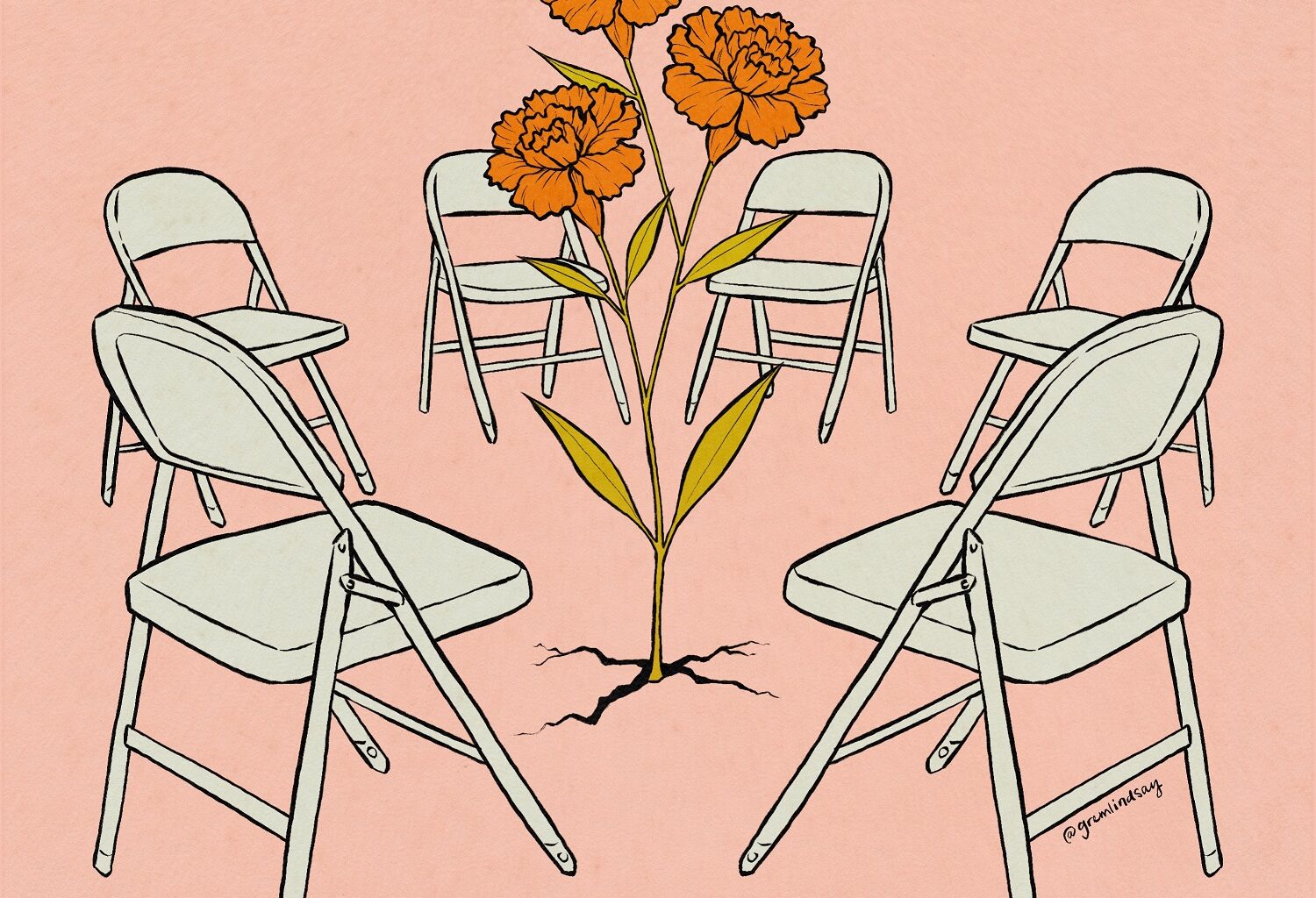
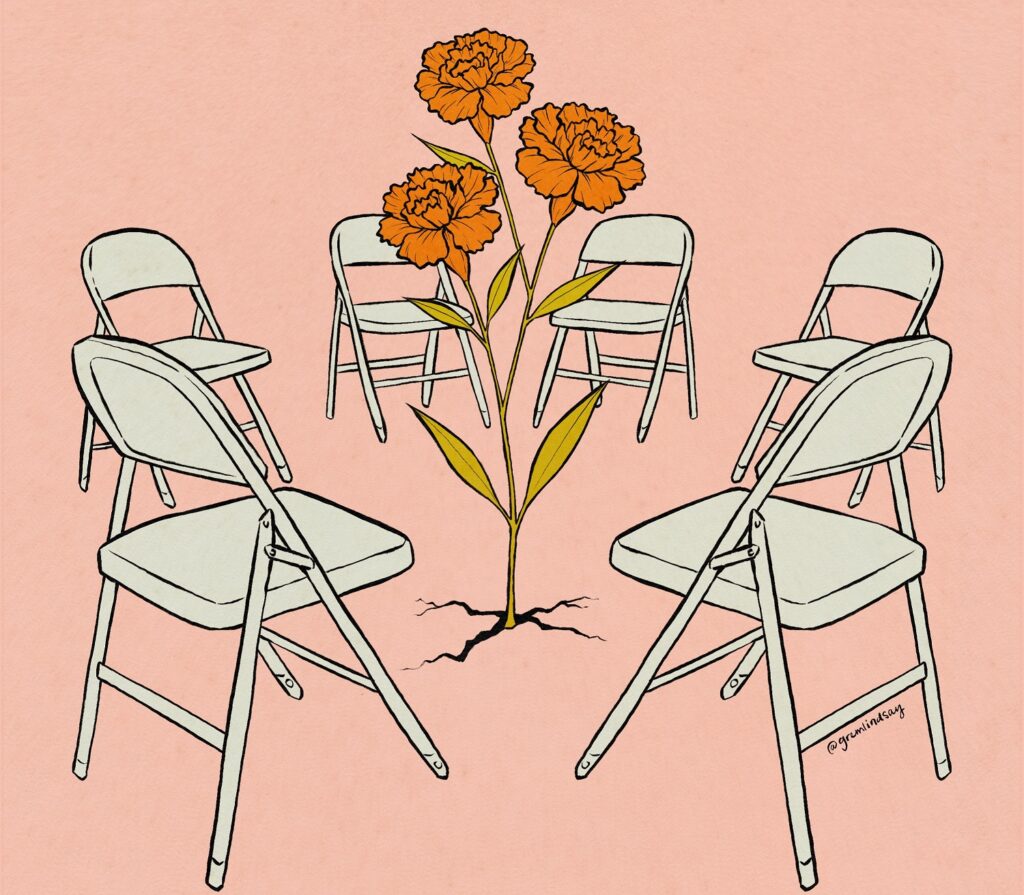
Students began sharing that they wanted space to talk and to show up, not just for me but for one another. I remember taking a breath and asking if we could pull our chairs into a circle before we left.
No one objected. We moved the chairs deliberately, scraping them across the floor.
The air was still fragile, but it felt different now. Open in a way it hadn’t been moments before. Students began speaking quietly, then more steadily. People named the history of racism in the program. They spoke about feeling silenced, about the exhaustion of constantly calculating how much of their lived reality a classroom can tolerate. White students named their surprise at how quickly the room had narrowed. Students of color named how familiar that narrowing felt.
There was no authority at the center of that circle. No one restoring order. We were trying to understand what had just happened to us.
It struck me then that students are not afraid of hard conversations. We want to be clinicians who can sit with structural harm, who can hear what our clients carry without shrinking the room. We are willing to be uncomfortable if it means staying honest.
The next morning, an email arrived. It was measured and composed. It clarified policy and outlined procedure. Reading it, I could feel how the previous day had already been translated into something administratively stable. There was no mention of rupture. No acknowledgment of what had happened in our bodies.
The room had activated, and almost immediately it began stabilizing itself. By the time the message reached our inboxes, everything had been folded back into order.
When institutions respond to critique by closing ranks rather than staying in the conversation long enough to face it, students absorb that lesson. They learn how quickly conversations narrow, how much emotion is tolerable before steadiness becomes the priority. They learn to regulate themselves in advance.
Eventually, they graduate. And before long, they’re sitting across from clients of color who carry racial battle fatigue in their bodies, who have been told repeatedly that what they are experiencing is misunderstanding rather than harm.
If counselors are formed in environments where structural critique narrows the room, they may narrow the therapy room in the same way. They may move too quickly to teaching clients coping skills. They may individualize what is systemic. They may reach for neutrality when what is needed is witnessing.
Not because they mean to harm. Often, they don’t even realize it’s happening.
This is one of the ways institutional silence turns into clinical harm. Not through dramatic prejudice, but through repetition. Through the quiet replication of rooms that narrow instead of widen.
When something is not allowed space in training, it often struggles to find space in therapy. Clients feel that contraction even when no one names it. They sense when a counselor shifts toward steadiness instead of staying with what hurts.
Justice is not extra. It is part of how we keep one another safe. If voice becomes conditional in training, it has a way of becoming conditional in practice.
Healing does not begin with neutrality. It begins with being able to say what is happening. People come to us carrying the impact of very real harm, not abstractions or hypotheticals, but harm that has shaped their nervous systems, their relationships, even their sense of worth. Many arrive already exhausted by systems that question their reality or minimize what they have endured.
In counseling, our work is not to tidy that reality. It is to witness it. To help give language where it has been stripped away. To steady courage where it has been eroded. To hold a person’s humanity as sacred when the world has repeatedly asked them to apologize for it.
The body feels the difference between being managed and being met.
And if we grow used to rooms that narrow, we may not recognize when we’ve begun narrowing them ourselves. But when people choose to stay in the room, to name harm and remain in relationship long enough to face it honestly, the room can widen again.
***
Mad in America hosts blogs by a diverse group of writers. These posts are designed to serve as a public forum for a discussion—broadly speaking—of psychiatry and its treatments. The opinions expressed are the writers’ own.