
This summer, Cordillera will become the second community in the nation to install a new European wildfire technology designed to detect fires right when they start.
As a community with one main entry and exit route — one of 26 in Eagle County — it is crucial to the safety of Cordillera residents that fires be caught and put out early.
“Forty-five minutes or an hour is all the difference for us,” said Trevor Broersma, Cordillera Metropolitan District’s general manager.
There are 10 staffed fire engines in the Eagle River Valley at any given time.
“If Cordillera were to take a big fire, we need more like 100 fire engines to even make a meaningful impact. A community like Wildridge, 200 engines,” said Hugh Fairfield-Smith, division chief of wildland for the Eagle River Fire Protection District. “We have to get to these fires as quick as possible, otherwise we don’t have enough people.”

Support Local JournalismDonate
In August, Eagle Valley Wildland firefighters found a new technology that will make all the difference.
“We’re now buying minutes when seconds count,” Fairfield-Smith said. “We’re getting there three, four, five times faster than we normally would because of the early sensor.”
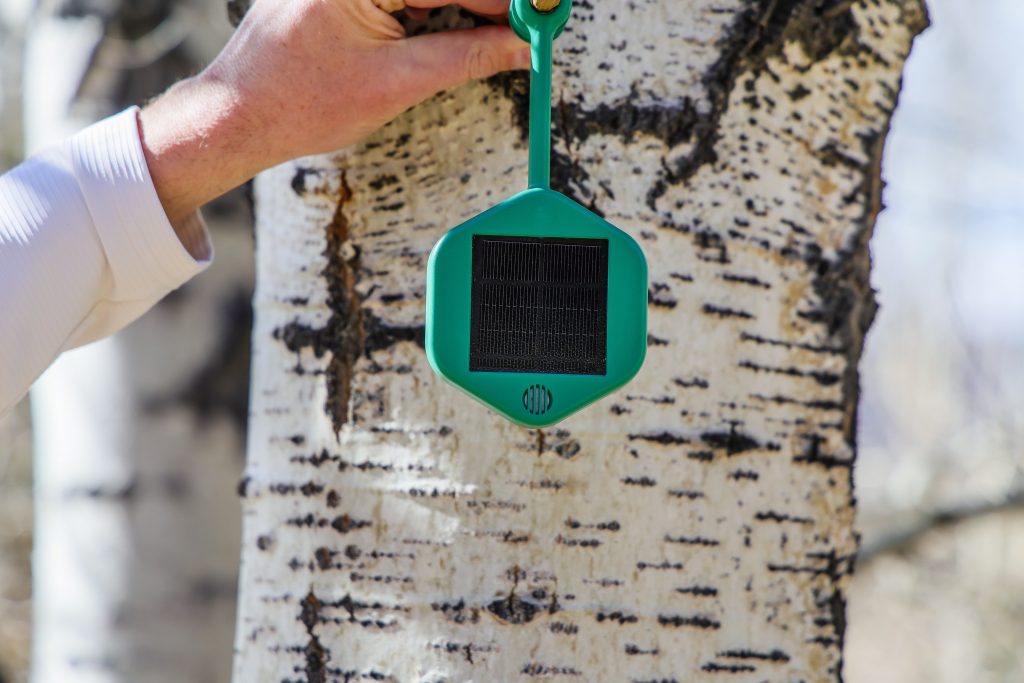 Cordillera is installing 1,100 Dryad Networks sensors between April and August to detect wildfires earlier.Chris Dillmann/Vail Daily
What is the sensor?
The early sensors come from a German company called Dryad Networks. Each solar-powered sensor, about the size of a cell phone, hang from a white oak stake drilled into a tree or a pole and can detect several fire-related signals, including temperature, humidity and air pressure, along with levels of hydrogen and carbon monoxide.
This gives the sensor the ability to identify a fire when it is still in the smoldering stage, before it becomes an open fire.
When a wildfire camera spots a fire or when someone sees a fire and calls 911, “typically that fire will have been burning for at least 25 to 30 minutes, and in many cases, especially in high timber forests, in the duffy components, like needles and timber litter, it can burn for days before it has the right conditions to come out,” Fairfield-Smith said. “A perfect example of that is the Sylvan Lake Fire. The lightning strike that started that fire hit six days prior to us even knowing about that fire, and when it happened, it escalated very quickly.”
The Dryad sensors can detect a fire “before you can even see smoke,” Fairfield-Smith said.
Cordillera purchased 1,100 Dryad sensors for between $300,000 and $400,000. The sensors will be installed throughout the metro district’s 3,500 acres of open space between April and August. With this summer poised to be a particularly wildfire-prone season, the technology could not come at a better time.
Should a fire start, the sensors, through a cloud-based network, will pinpoint almost exactly where it is located, enabling firefighters to go right to the scene.
The number of sensors going off will drive firefighters’ response. The more sensors alerting, the more firefighters will go to the scene.
If a fire were to grow, the sensors will tell firefighters in which direction it is moving.
Cordillera leads wildfire mitigation, detection efforts
Cordillera and Eagle Valley Wildland have been partners since the wildfire-specific agency was founded in 2018.
The partnership has added close to 25 miles of fuel breaks within Cordillera, protecting both the metro district itself and the surrounding communities.
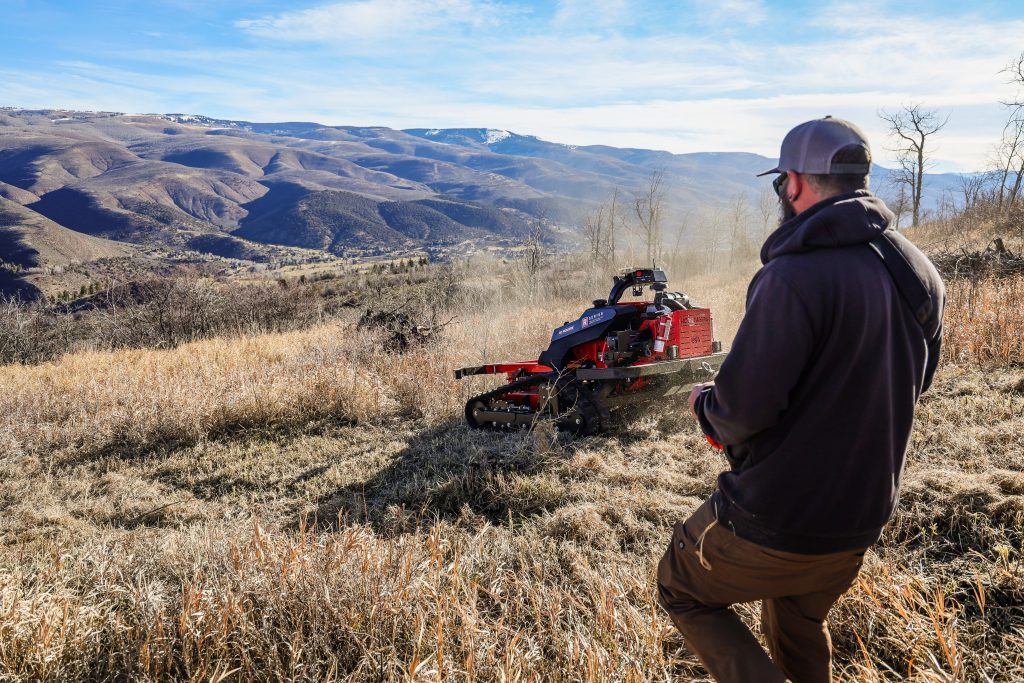
This winter, Cordillera purchased a remote operated mower to maintain the fuel breaks that Eagle Valley Wildland put in, allowing staff to stay safe while keeping the community safe, as well. “I can do the work of nine staff members with that machine,” Broersma said. “It will pay for itself in three weeks.”
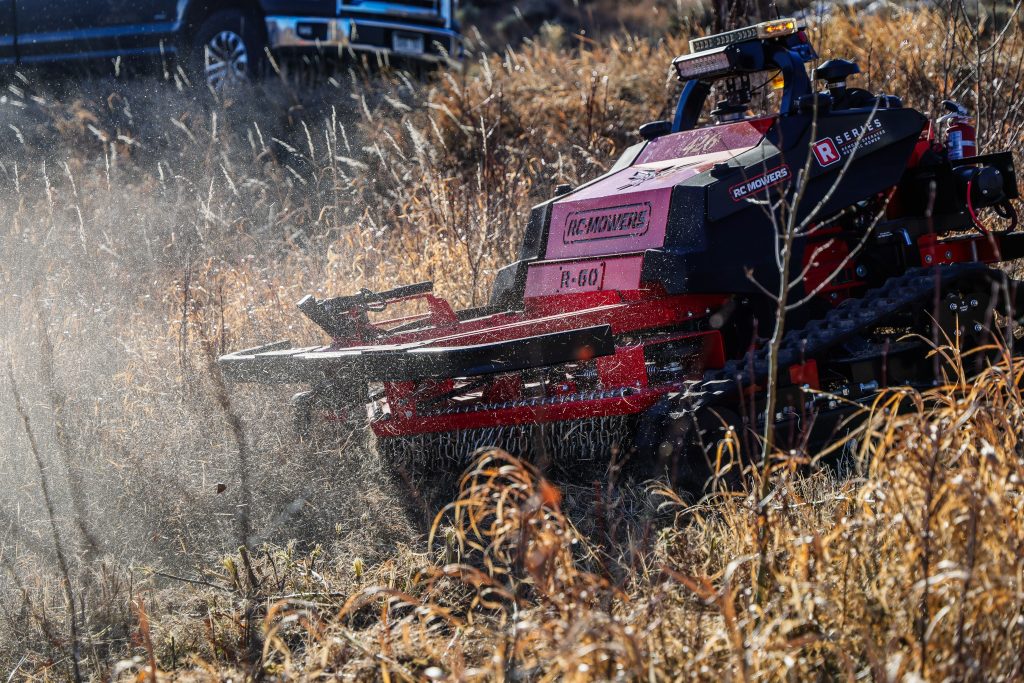 The remote control mower knocks down tall grass during wildfire mitigation Wednesday in Cordillera. The operations would normally start in May, yet with the extremely dry winter the work has already begun.Chris Dillmann/Vail Daily
Cordillera is also working on having all of its 800 homes undergo a home hardening assessment, which give homeowners direct instructions for how to reduce their wildfire risk.
The Dryad sensors are Cordillera’s latest proactive step in protecting itself from wildfire. The number one cause of fire starts in Cordillera is lightning strikes in remote areas, which can be hard to spot and even harder for firefighters to find.
Previously, during high fire risk times, Cordillera’s public safety staff would watch the hillsides with binoculars, looking for fire starts. Fire starts were also called in by homeowners on hikes and wranglers riding around the area’s hillside.
The Dryad technology, which will be attached to trees throughout Cordillera’s open space, acclimatizes in the forest for two weeks after installation and then “monitors any fluctuations in the environmental conditions, i.e. the byproducts of combustion from a smoldering fire,” said Micah Rader, area wildfire manager with Eagle Valley Wildland.
While the sensors cannot be placed too close to homes, or they might alert to someone running their smoker or a similar activity, the latest generation, which will be installed in Cordillera in August, can be trained to understand baseline smoke levels, like those coming from other large fires in the West.
“It’s learning and adapting to the environment to give us the most real time updates so that … we don’t have false alarms,” Fairfield-Smith said.
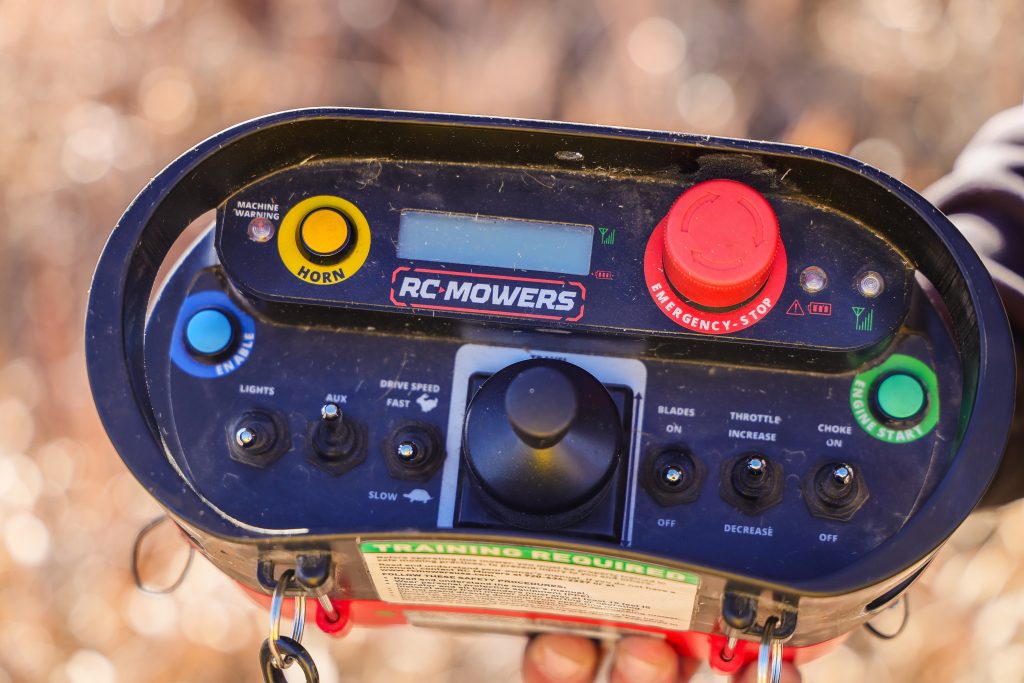 The remote control used to operate Cordillera’s new remote-operated mower for wildfire mitigation.Chris Dillmann/Vail Daily
Cordillera may pave way for rest of county
Most wildfire-related technology is “fine,” Fairfield-Smith said. But the Dryad sensors are different.
Fairfield-Smith is so convinced of the effectiveness of the sensors that he has drawn up a plan to bring them to the entire Eagle River Valley.
“Our intent is within the next three years that there is a sensor all the way around Eagle County,” Fairfield-Smith said. “We would be the first county in the nation to have early wildfire detection system around every part of the community, at least in the valley corridor.”
The Dryad sensors can also be used to coordinate a response from an even newer technology: Fire suppression drones. These drones are designed to fly in a swarm of approximately five to the general area of a fire, reported by people or by sensors, confirm the presence of a fire with thermal imaging and video, and start putting water and foam on the fire.
The drones can fly anywhere, and travel faster than a truck, to confirm a fire start or begin fighting a known fire. This buys time for firefighters to get to the area and launch a larger effort against the fire.
Fairfield-Smith intends to lead a fundraising campaign to bring the drones to Eagle County in 2027 through the Eagle River Fire Protection District. “It would be an absolutely critical to (wildland firefighting) success,” he said.
Despite their effectiveness, the sensors (and eventually drones) will not replace firefighters. Rather, they give firefighters the tools they need to get out ahead of fires. “It just makes their job hopefully safer,” Broersma said.
“We desperately need more wildland firefighters. That’s one of the most critical things,” Fairfield-Smith said.
Los Angeles has 400 or 500 staffed fire engines available within a 45-minute radius, Fairfield-Smith said. “For us, we have maybe 12 within 45 minutes,” he said.
If a fire is growing quickly, it takes a minimum of an hour and a half for outside counties to get to Eagle County to help. “In a big event, it could be 36 hours before we have a fully staffed adequate response to protect the community appropriately,” Fairfield-Smith said.
Technology like the early detection sensors and drones can make the difference between a fire that grows to a devastating size and one that is put to bed while still small.
“The whole point of early warning and early suppression is keeping these fires small to prevent them from becoming a catastrophic fire,” Rader said.