
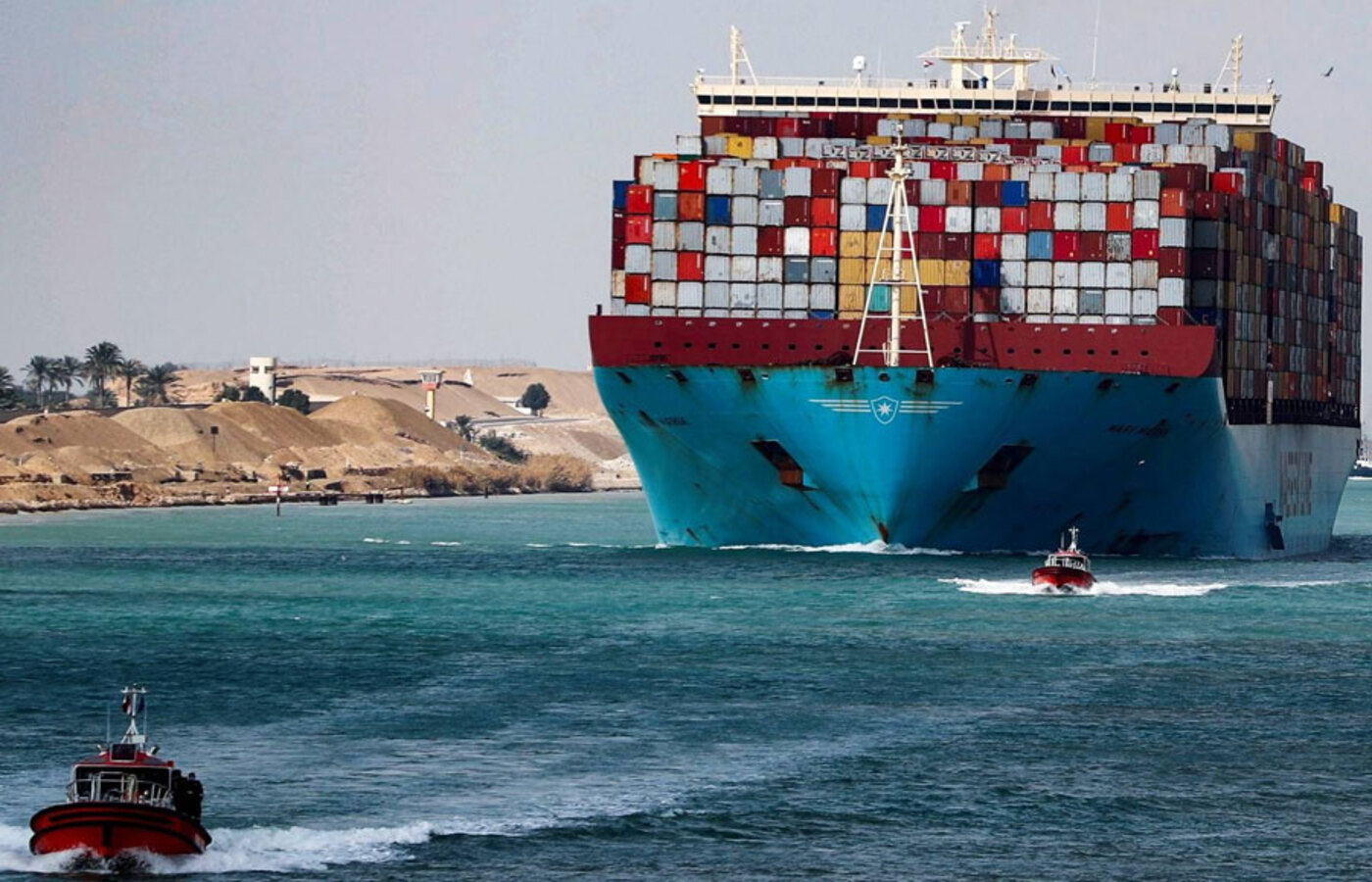
When wars erupt in faraway places, their consequences rarely stay put. Since February 28th, a sharp escalation of conflict in the Middle East has begun to ripple across global trade routes. For Ethiopia, a landlocked country tethered to the outside world by a narrow maritime corridor, those ripples risk becoming waves.
Maritime trade is not merely important to Ethiopia; it is existential. Nearly all of its fuel, fertiliser and industrial inputs arrive by sea. Its exports—gold, coffee and other commodities—depart the same way. For decades, the Red Sea has offered the shortest and cheapest route linking the country to global markets. Handling between 12 and 15 percent of global trade and roughly 30 percent of container traffic, the corridor is among the busiest on earth.
It is now, effectively, closed.
Following the latest escalation involving America, Israel and Iran—and the subsequent disruption around the Strait of Hormuz—commercial shipping through the Red Sea has slowed to a trickle. Major shipping firms, including MSC, Maersk and Hapag-Lloyd, have pulled back operations, unwilling to expose vessels and crews to mounting risks.
For Ethiopia, this is less a geopolitical drama than a logistical chokehold.
Merid Woldeyohannes, a finance and investment expert, captures the immediate concern: “An increase in fuel prices will inevitably impact overall logistics costs and operational capacity.” The implications stretch far beyond logistics. With roughly a quarter of federal spending already devoted to fuel, even modest price increases threaten to widen fiscal strains considerably.
Shipping costs are already rising. From March 2nd, emergency surcharges of up to 2,000 US dollars per container have been imposed. These costs, as ever, will not linger with global carriers. They will cascade down supply chains—onto importers, retailers and, ultimately, households. Inflation, already a persistent concern, may yet find fresh momentum.
Analysts argue that Ethiopia is not merely exposed to the crisis but uniquely vulnerable to it. Abdurrahman Said, a political analyst specialising in the Horn of Africa, warns of compounding risks: “The security and political instability looming over the Red Sea will inevitably have severe negative impacts.” He notes that threats from Yemen’s Houthi militants have further destabilised the corridor. “Following these threats, the Red Sea through which 10 percent of global trade passes has been thrown into turmoil. Consequently, major shipping companies are withdrawing. Given the complex web of political interests in the region, this is a profound danger for all nations dependent on this route.”
Should the conflict drag on, Ethiopia’s troubles could deepen. Gulf markets, key destinations for its exports, may contract. That would deliver a double blow: rising import costs paired with weakening export revenues.
Some see limited room for manoeuvre. Merid points to commodity markets as a partial buffer: “For instance, the concurrent rise in global gold prices one of Ethiopia’s key exports could potentially be managed to offset the increased fuel import bill.” He also advocates rationing scarce resources—prioritising essential imports and tightening domestic consumption.
Yet such measures amount to damage control rather than solution.
Matyos Yetsermu (PhD), a lecturer in logistics and supply chain management at Addis Ababa University, describes the Red Sea as a vital artery under stress. “Any security threat along this route forces cargo ships to alter their course,” he explains. “The recent Houthi attacks and resulting operational disruptions drive up insurance premiums and freight costs for all vessels.”
The alternative route—around the Cape of Good Hope—is longer, slower and significantly more expensive. For wealthier economies, this is inconvenient. For Ethiopia, it is debilitating.
There is, too, a strategic paradox. As disruptions intensify, the Red Sea and the Horn of Africa become more geopolitically valuable. Ports and logistics corridors attract heightened interest from global powers. But that attention does little to ease Ethiopia’s burden; if anything, it inflates the cost of access.
Meanwhile, foreign powers are acting decisively to secure their own interests. France has announced naval deployments to safeguard commercial shipping. Others may follow. The Red Sea, long a theatre of competition, risks becoming something closer to a battleground.
Markets are already reacting. By March 2026, CMA CGM, a major French shipping firm, had reversed plans to resume Red Sea transits, opting instead for costly diversions—a telling signal of the risks involved.
Ethiopia, for its part, has little control over these dynamics. It finds itself exposed to forces far beyond its borders, yet deeply embedded in their consequences. Fuel shortages, rising prices and strained public finances are no longer hypothetical risks; they are emerging realities.
The world’s gaze may remain fixed on the conflict itself. But for Ethiopia, the more consequential story is unfolding elsewhere—in disrupted supply chains, rising costs and an economy forced to navigate an increasingly hostile global system.
The war may be distant. Its effects are not.