
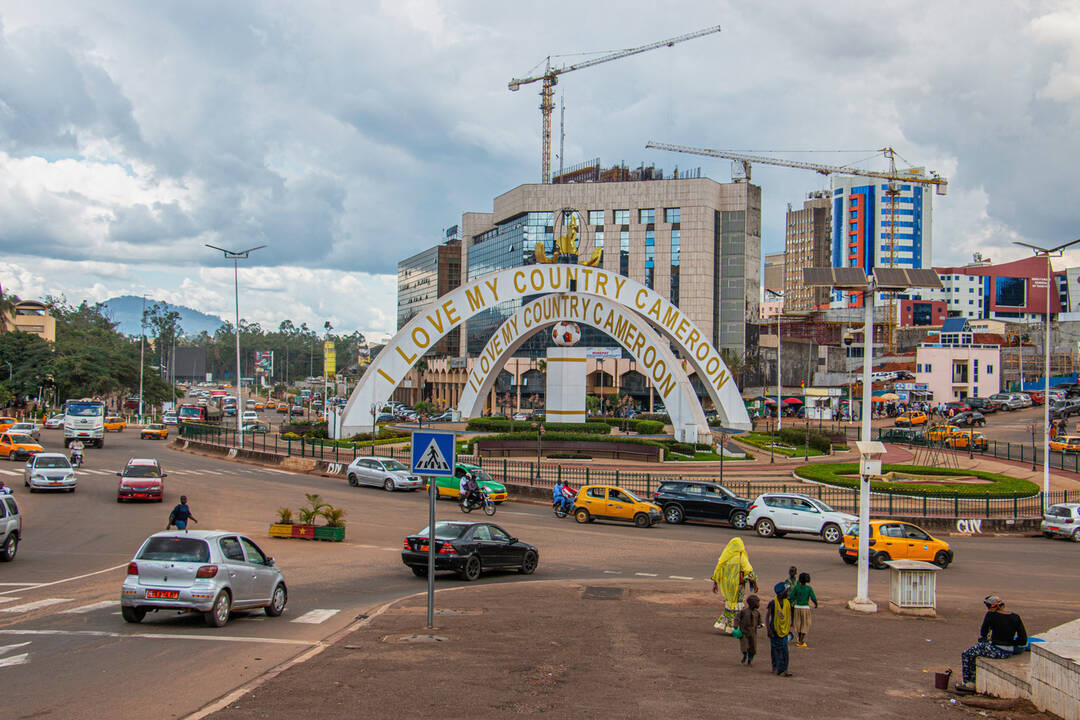
Long-overdue reform of the WTO will be the focus of this week’s ministerial meeting in the Cameroonian capital of Yaoundé. Ministers will have just days to resolve their differences over the scope of plans, or risk going back to their capitals empty handed.
Since June last year, Petter Øllberg, Norway’s ambassador to the World Trade Organization (WTO), has been tasked with one of the most unenviable jobs at the trade body: helping its 166 member states find a consensus on how to overhaul the 30-year-old body amid a deepening crisis in rule-based trading system.
His role as reform facilitator, contrary to what the title suggests, has been anything but easy. After nine months of back-and-forth discussion and debate between WTO delegates in Geneva, Øllberg will have to settle with handing to ministers meeting in Yaoundé this week a draft work plan that is far from reflecting a consensus. “A large majority of members support the plan,” the diplomat told reporters on 11 March at the trade body’s Geneva headquarters overlooking the lake. They all want reform – that much is clear, he assured. Countries recognise that without it, the WTO will sink into irrelevance. But “there is some disagreement,” he added, in comments cited by Agence France Presse.
“Some want more ambition; some want less ambition. Some want more detail; some want less detail,” the Norwegian confirmed, citing the United States and India as the major holdouts.
His frank assessment, which came after a grilling General Council session that was meant to bring WTO members closer to a landing zone ahead of MC14 but instead saw more proposals brought to the table, raises serious concerns about what ministers will be able to achieve, noted one Western trade diplomat who preferred to stay anonymous.
Members had agreed on a ‘Geneva-first’ approach – that is, the need to reach an agreement before submitting a package of decisions to the WTO’s top decision-making body in Cameroon. Instead, ministers – distracted by the war in the Middle East – will have just a few days to pick up where Geneva delegates left off, and try to overcome major differences over which direction to take the embattled organisation.
Substance vs process
Over 100 government ministers will attend the WTO’s biennial conference, taking place from 26-29 March. They’ll not be deliberating actual reforms – this idea was abandoned months ago after it quickly became apparent this would be too ambitious. Instead, ministers are seeking to agree on a programme of work post-MC14.
The plan drafted by Øllberg sets out the three key areas where members want to see change. The first is decision-making, which has long frustrated countries, with the WTO’s consensus rule meaning few deals have been struck over its lifetime. “No member challenges decision-making by consensus,” Øllberg wrote in his report to last week’s General Council. However, many members, including the European Union and the United States, would like to see more flexibility and the organisation being open to more plurilateral negotiations.
Another key focus of the WTO’s reboot is development and the benefits granted to poorer countries to help them prosper – a sensitive topic that involves examining the criteria for special and differential treatment, currently claimed by some of the largest developing countries.
The third – “levelling the playing field” – involves improving transparency and compliance with trade measures, and addressing other concerns “including distortions from state intervention” – a key priority for western countries firmly directed at China and its extensive state subsidies.
Reforming the WTO’s hobbled dispute settlement system – which has effectively been frozen since 2019 when the US blocked the appointment of judges to its top appeal courts – is also a top priority. However, the plan only briefly touches on the complex issue, with countries agreeing that consultations should continue after Cameroon under the Dispute Settlement Body.
The best outcome in Yaoundé, diplomats said, would be ministers agreeing on a version of Øllberg’s plan, which also proposes “timelines and checkpoints” to ensure members stay that course. But huge divisions remain. The United States, which will be represented by its trade secretary Jamieson Greer at the four-day gathering, supports reforms but has said that discussions are not “sufficiently mature” to put forward a substantive, detailed workplan.
Others, including China, the EU, Switzerland and the UK, support a detailed plan and have spoken out against a “process-only” outcome, that would, they warn, undermine the work carried out over the last nine months and see countries effectively agreeing simply to continue to discuss reforms. “Just let that go and start again from scratch after MC14 would be a waste of time and energy,” another western trade delegate said.
US-India deadlock
WTO 2.0 is not the only issue on the table in Cameroon. Member states also want an agreement aimed at helping countries boost foreign direct investment – a plurilateral initiative backed by three-quarters of its members – to be formally integrated into the WTO’s framework.
Adopting the Investment Facilitation for Development Agreement needs consensus of all its members, even those that do not support it. However, India is once understood to be the only country blocking the deal from getting across the finish line.
A US-India deadlock over extending a moratorium on e-commerce transmissions, which expires at the end of the month, also threatens to derail what should be a relatively easy win for ministers to come back with from the conference.
Members will decide whether to keep software and digital content duty-free for another two years – backed by the African, Caribbean, and Pacific group of states – or pursue a permanent moratorium – a proposal being pushed for by the United States. India is so far opposed to any kind of moratorium – a move it also played at the last ministerial in 2024 in Abu Dhabi, only to change its stance at the eleventh hour.
Diplomats in Geneva said the success of the conference will depend on what countries are willing to give up for concessions elsewhere. Some expressed their concerns over whether India will change its stance. Geneva Solutions reached out to India’s permanent mission in Geneva for comment but had not received a response at the time of publishing this article.
Something has to change
After a turbulent year that saw the WTO further sidelined as Donald Trump’s push to impose unilateral tariffs and compel countries to cut bilateral deals shook the foundations of the multilateral trading system, pressure to make the organisation fit for purpose has become even more acute.
Increasing global conflicts have also put the WTO and other multilateral fora in the political crosshairs, making consensus agreements more difficult to reach. The war in the Middle East has further upset the global economy, with the WTO on Friday warning that prolonged energy disruptions risk slowing global trade. The war has upended air travel, also making it difficult for many representatives to reach MC14.
“The fundamental problem is governments unable to agree with each other,” write journalist and former WTO public information officer, Peter Ungphakorn, and Robert Wolfe, a Canadian trade policy expert, in trade β blog. “Events elsewhere mean governments struggle to turn their attention to what’s needed in the WTO. And yet those events mean multilateralism and the WTO are needed more than ever”.
Speaking at the General Council, director general Ngozi Okonjo-Iweala, urged delegates to ensure ministers leave Cameroon with an outcome: “The WTO has long spoken of unfinished negotiations and long-overdue reform, yet too often our promises have outpaced our results,” she said. “This conference must demonstrate that this time is different.”