
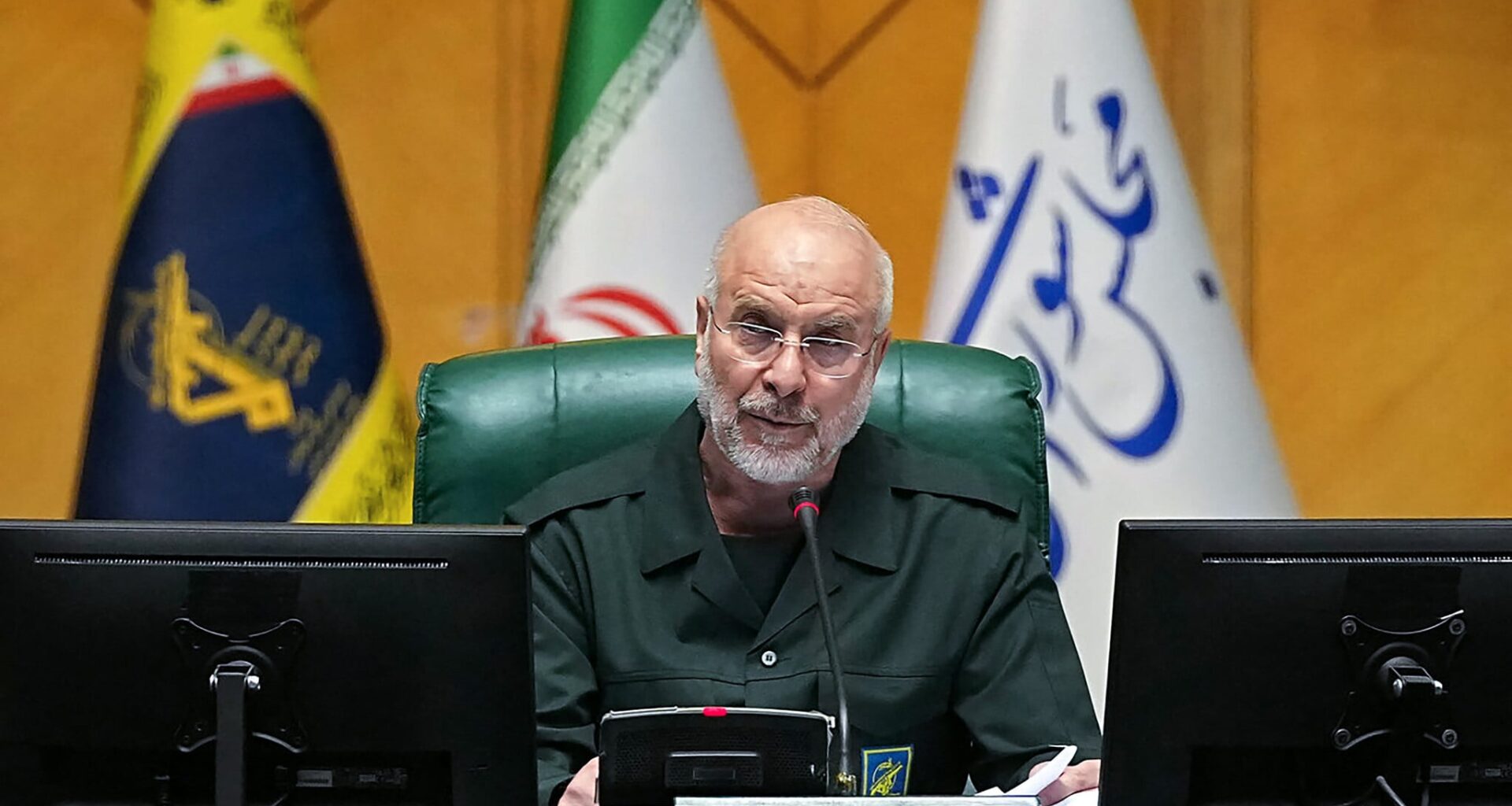
DUBAI, United Arab Emirates (Reuters) — Iran’s parliament speaker, Mohammad Baqer Qalibaf, is taking a more central role, as Israeli and US strikes pick off the Islamic Republic’s political leadership, making him a critical figure at a decisive moment.
An Israeli official and a source familiar with the matter said on Monday that Qalibaf had been negotiating on Iran’s behalf with the United States as the conflict has escalated, a sign of his growing role.
With fewer of Iran’s most prominent figures remaining, the former Islamic Revolutionary Guard Corps (IRGC) commander, Tehran mayor, national police chief, and presidential candidate is now a key node between the political, security, and clerical elites.
Nearly three weeks after the sudden assault on Iran began with the killing of then-supreme leader Ali Khamenei, the leadership in Tehran is engaged in a bitter attritional effort to outlast its assailants.
Qalibaf, long seen as a protégé of Khamenei and a confidant of his son Mojtaba who has inherited the position of supreme leader, has been a leading voice of defiance against Israel and the United States, vowing revenge for their attacks.
Get The Times of Israel’s Daily Edition
by email and never miss our top stories
By signing up, you agree to the terms
Addressing US President Donald Trump and Prime Minister Benjamin Netanyahu after the killing of Khamenei, he promised “such devastating blows that you will be begging.”
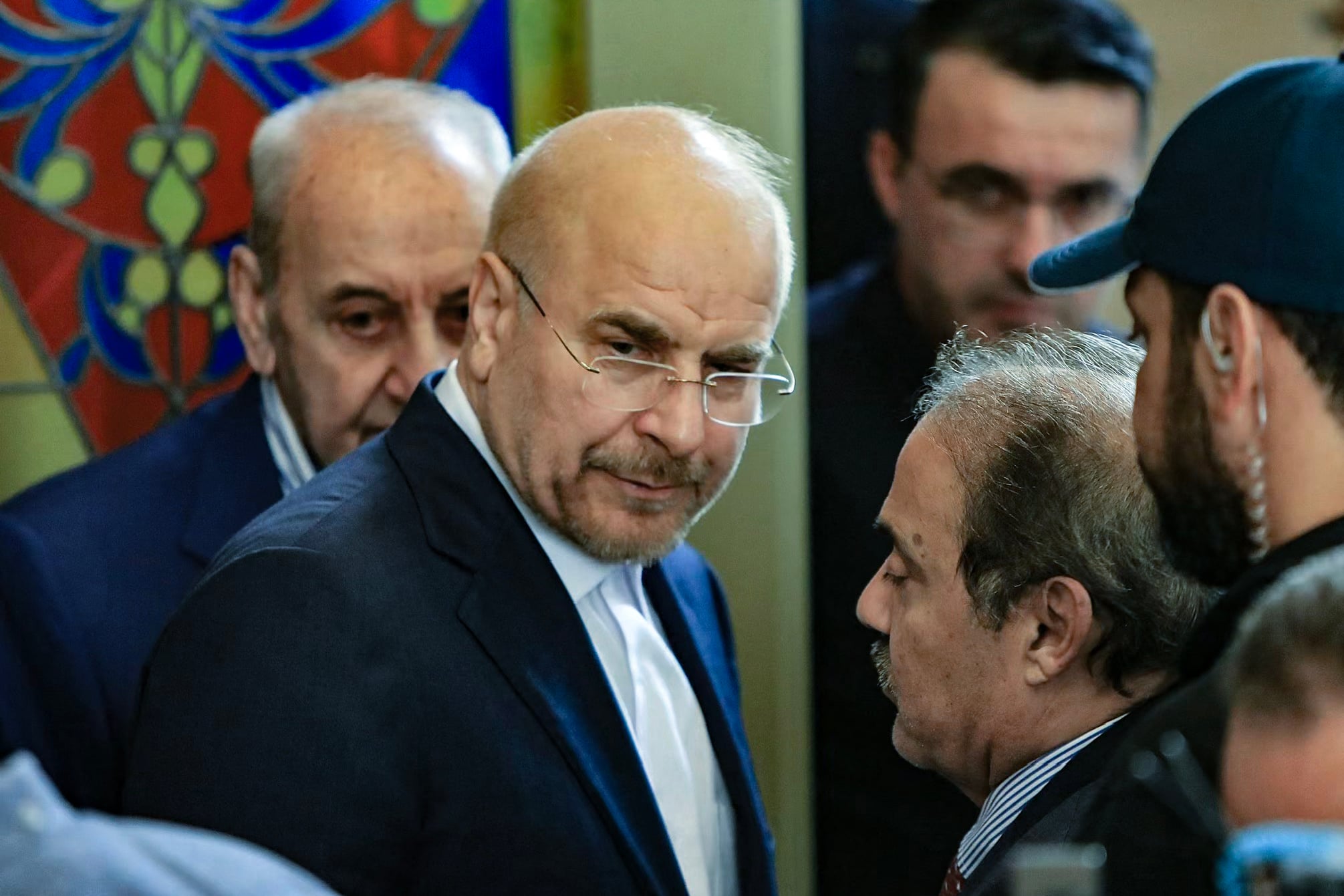
Iran’s Parliament Speaker Mohammad Bagher Qalibaf (2-L)) and his Lebanese counterpart Nabih Berri (L) walk together after their meeting in Beirut, Lebanon, on October 12, 2024. (AFP)
“I say to these two dirty criminals and their agents: you have stepped on our red line, and you have to pay for it,” he declared in a television speech.
That fiery rhetoric reflects his longstanding position as a fierce disciple of the Islamic Republic’s theocratic system of government, a stance he has also demonstrated through helping to crush displays of internal dissent.
Yet despite that hardline, anti-reformist profile, and his direct role in brutally crushing anti-regime protests, Qalibaf has also built a reputation as a potential modernizer and pragmatist, posing during his 2005 presidential run in his uniform as a qualified pilot for campaign advertisements to bolster his image as a professional.
That stance may have helped position him as a useful candidate for backchannel talks with Washington as the conflict continued, though Iran’s Fars news agency has also reported that there have been no communications with the US.
Early life shaped by run-up to Islamic Revolution
Born in the northeastern town of Torqabeh in 1961, Qalibaf’s early life was partly shaped by lectures he attended in mosques as a teenager, according to Iranian media, as the 1979 Islamic Revolution gathered steam.
When Iraq invaded Iran months after the ruling shah was ousted, he joined the IRGC, a new military unit devoted to upholding the country’s new Islamic system, rising to become a general within three years. The IRGC is a US- and EU-designated terrorist organization.
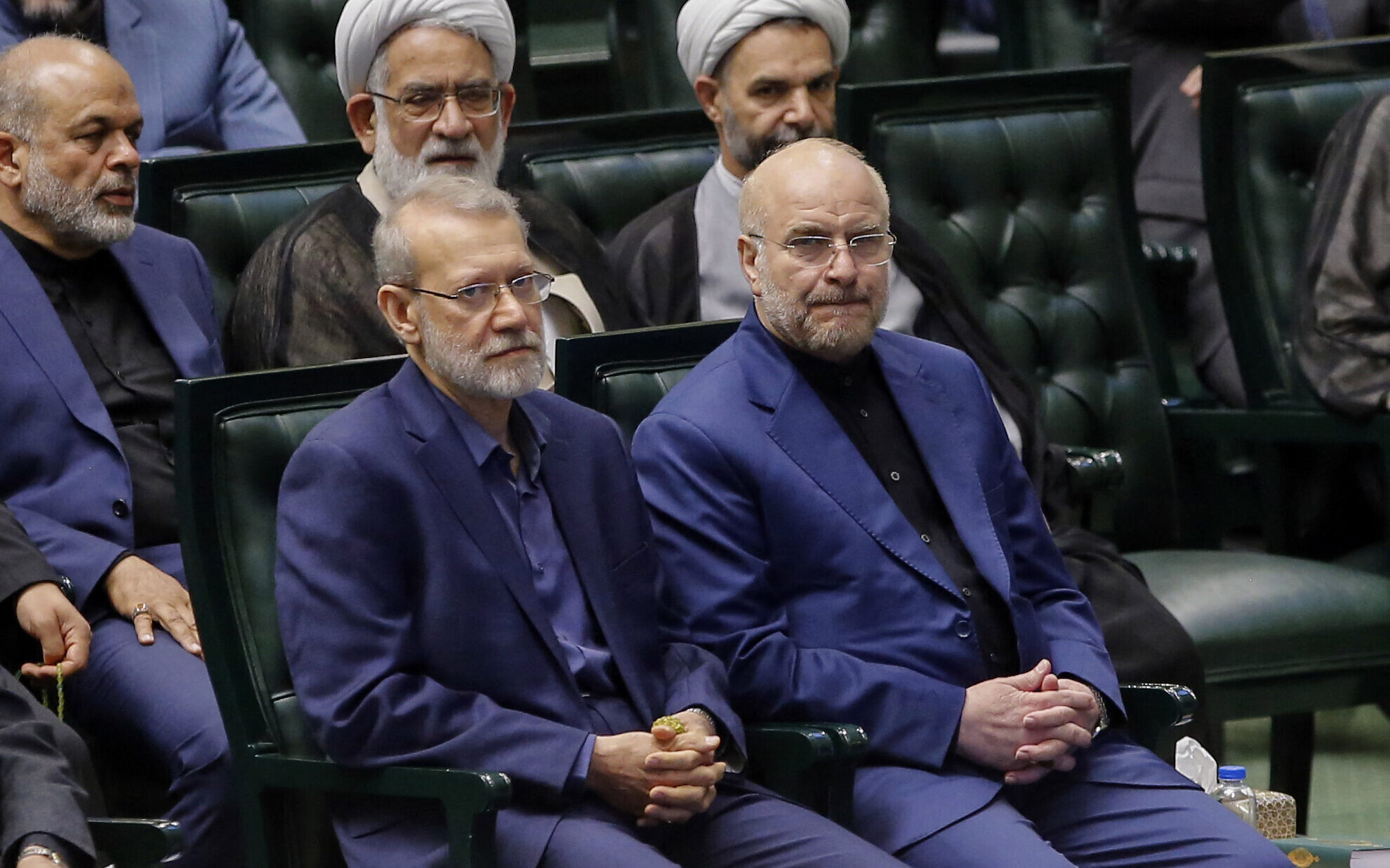
Former Iranian parliament speaker Ali Larijani (L) and reelected speaker Mohammad Bagher Qalibaf (R) attend the inauguration session for the new Parliament in Tehran on May 27, 2024. (AFP)
Pursuing a career with the Guards after the war ended, he qualified as a military pilot and eventually became head of the Guards’ air force unit.
While with the IRGC, he took part in a bloody crackdown on university students in 1999 and joined other commanders in signing a letter to the reformist president, Mohammad Khatami, threatening to oust him if he did not curb protests.
Khamenei, caught between growing discontent at home and foreign pressure over Iran’s nuclear program, increasingly turned to security hawks like Qalibaf as the reformist movement ran out of steam.
As police chief he could be ruthless — ordering his forces to fire on protesters in 2002 — while trying to court modernizers by smartening up the disheveled police with new uniforms.
Yet when he ran for president in 2005, trying to appeal to middle- and lower-income voters, his populist credentials were outdone by the firebrand Tehran mayor Mahmoud Ahmadinejad, and Khamenei eventually swung his support away from his favored former general to the new man.
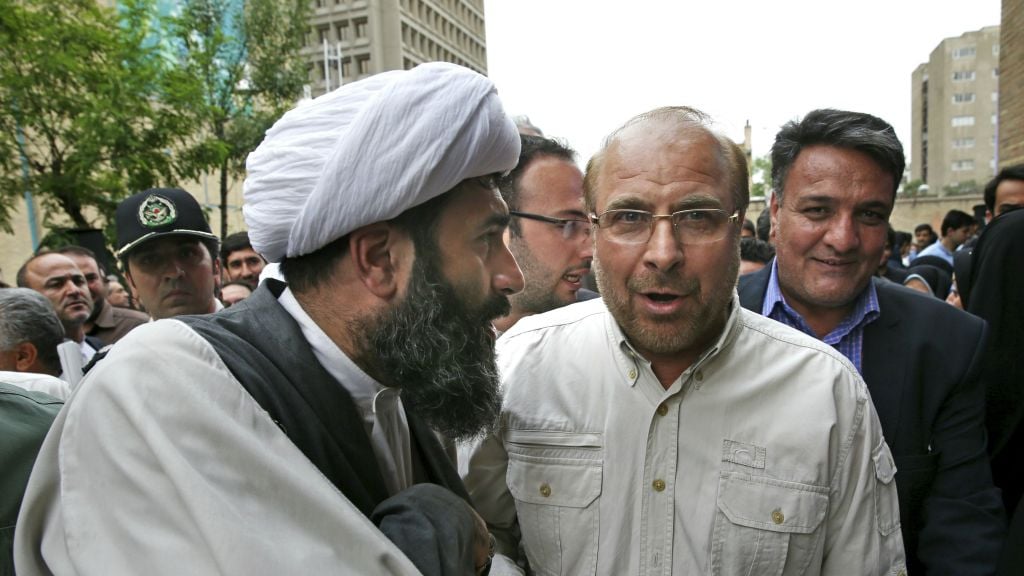
Tehran’s mayor and conservative presidential candidate Mohammad Bagher Qalibaf, center right, listens to a cleric on his arrival to attend a campaign rally in Tehran, Iran, on May 2, 2017. (AP Photo/Vahid Salemi, File)
Qalibaf never stopped seeking the presidency, running unsuccessfully in 2013 and 2024, and pulling out of the 2017 race to avoid splitting the hardline vote.
He replaced Ahmadinejad as Tehran’s mayor, holding the post for 12 years and taking credit for helping suppress months of unrest that rocked the establishment after his predecessor was declared winner of a disputed election in 2009.
His 12-year stint as mayor was followed by his return to national politics with his election to parliament and installation as speaker in 2020, giving him one of the top posts in Iranian politics.
You appreciate our wartime journalism

You clearly find our careful reporting of the Iran war valuable, at a time when facts are often distorted and news coverage often lacks context.
Your support is essential to continue our work. We want to continue delivering the professional journalism you value, even as the demands on our newsroom have grown dramatically during this ongoing conflict.
So today, please consider joining our reader support group, The Times of Israel Community. For as little as $6 a month you’ll become our partners while enjoying The Times of Israel AD-FREE, as well as accessing exclusive content available only to Times of Israel Community members.
Thank you,
David Horovitz, Founding Editor of The Times of Israel