
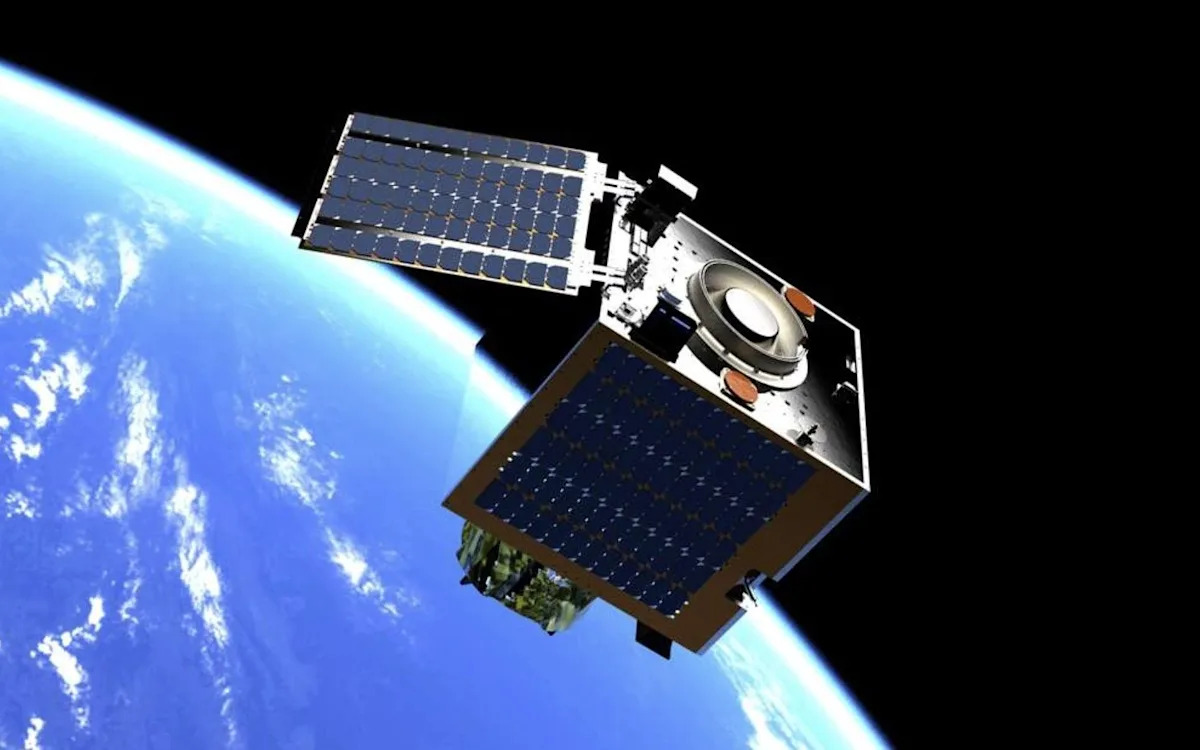
A British-made satellite that can look inside buildings will be launched into space this week.
The satellite, made by London-based SatVu, can pick up detailed heat signatures of human activity even behind roofs and walls.
It could help intelligence services to see “inside” Iran’s nuclear sites and munitions factories to determine whether they are active.
SatVu, which provides high-resolution thermal imagery from space, is firing a satellite into orbit on SpaceX’s Falcon 9 rocket, which is set to take off from California on March 29.
The London-based company uses world-leading infrared cameras that can capture images 30 times more detailed than those used by Nasa’s Landsat satellite.
Satellite imagery from February suggesting Iran was fortifying nuclear sites and missile bases bombed during the 12-day war last year played a role in escalating tensions leading to the current conflict with Israel and the US.
SatVu’s satellites promise to provide transparent information to intelligence agencies and commercial clients about the prospect of nuclear build-up.
The company previously captured images indicating increased levels of activity at the Yongbyon Nuclear Scientific Research Centre in North Korea.
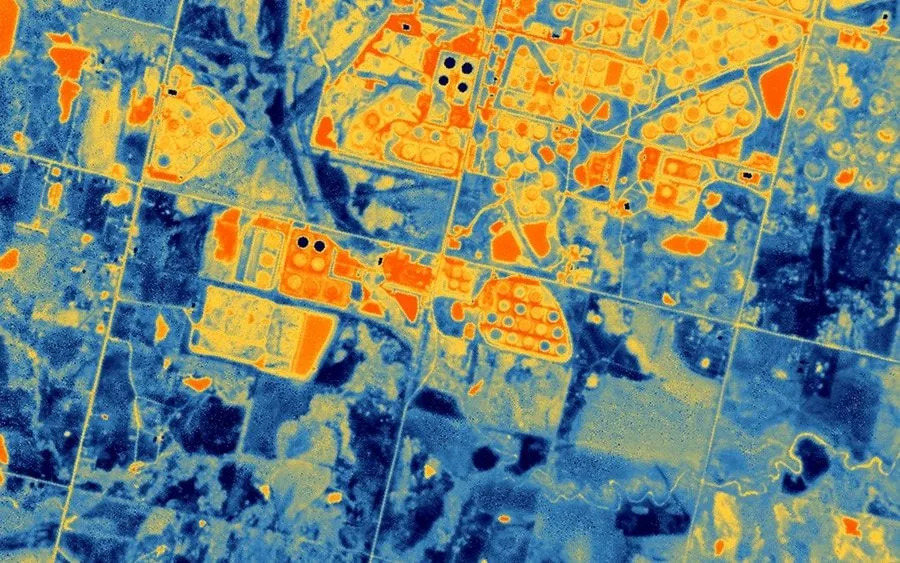
The satellite captures heat variations across the surface of the earth
Although the US is already thought to be able to take high-resolution thermal images from satellites, sharing information beyond the Five Eyes alliance poses security risks as the technology is highly classified.
Taking these from a commercial provider such as SatVu could therefore enable increased intelligence sharing to allies in the Middle East without raising the same security concerns.
The company, which is backed by £30m in Nato funding, could also help to reduce volatility in fuel prices by giving energy traders a clearer picture of the extent of the damage to infrastructure in the Middle East.
Oil facilities in Saudi Arabia and Kuwait, a desalination plant in Bahrain and Qatar’s Ras Laffan Industrial City – the world’s largest liquefied natural gas export facility – have all been struck by Iran in recent days, causing the price of oil to surge to more than $100 a barrel.
“If you see a big explosion at Ras Laffan in Qatar, you don’t know how much of it has gone up in flames,” said Anthony Baker, SatVu’s chief executive. “Our imagery lets you know with much more certainty what part has been hit and has gone offline.”
The imagery is so detailed, he said, that it can show whether individual pumps on a nuclear reactor are switched on and whether a ship is being loaded based on the thermal signature of oil being pumped into its cargo.
SatVu will soon have two satellites in orbit and plans to launch a constellation of eight in total, enabling it to recapture any location on earth every two hours, potentially helping to track military build-ups and night-time exercises.
The company currently has deals with the US government, Japan and a number of European nations including Poland. However, despite government backing, it does not yet have a contract with the UK.
With the firm looking to scale up in size, Mr Baker said the UK Government “needs to be further behind us”.
“HotSat-2 is designed to measure what’s operating, what’s idle and how these patterns change over time, whether it is day or night. With the satellite now integrated for launch, we are moving closer to delivering a dependable new intelligence layer from orbit,” he said.
“We need that capability in the UK.”
Liz Lloyd, the UK space minister, said: “SatVu is a shining example of British innovation at its best – and proof that government investment in our space sector pays dividends.
“The ability to monitor thermal activity from orbit, around the clock, opens up remarkable possibilities for national security, climate resilience and market intelligence. This is exactly the kind of bold, ambitious technology Britain is leading the world on.”