
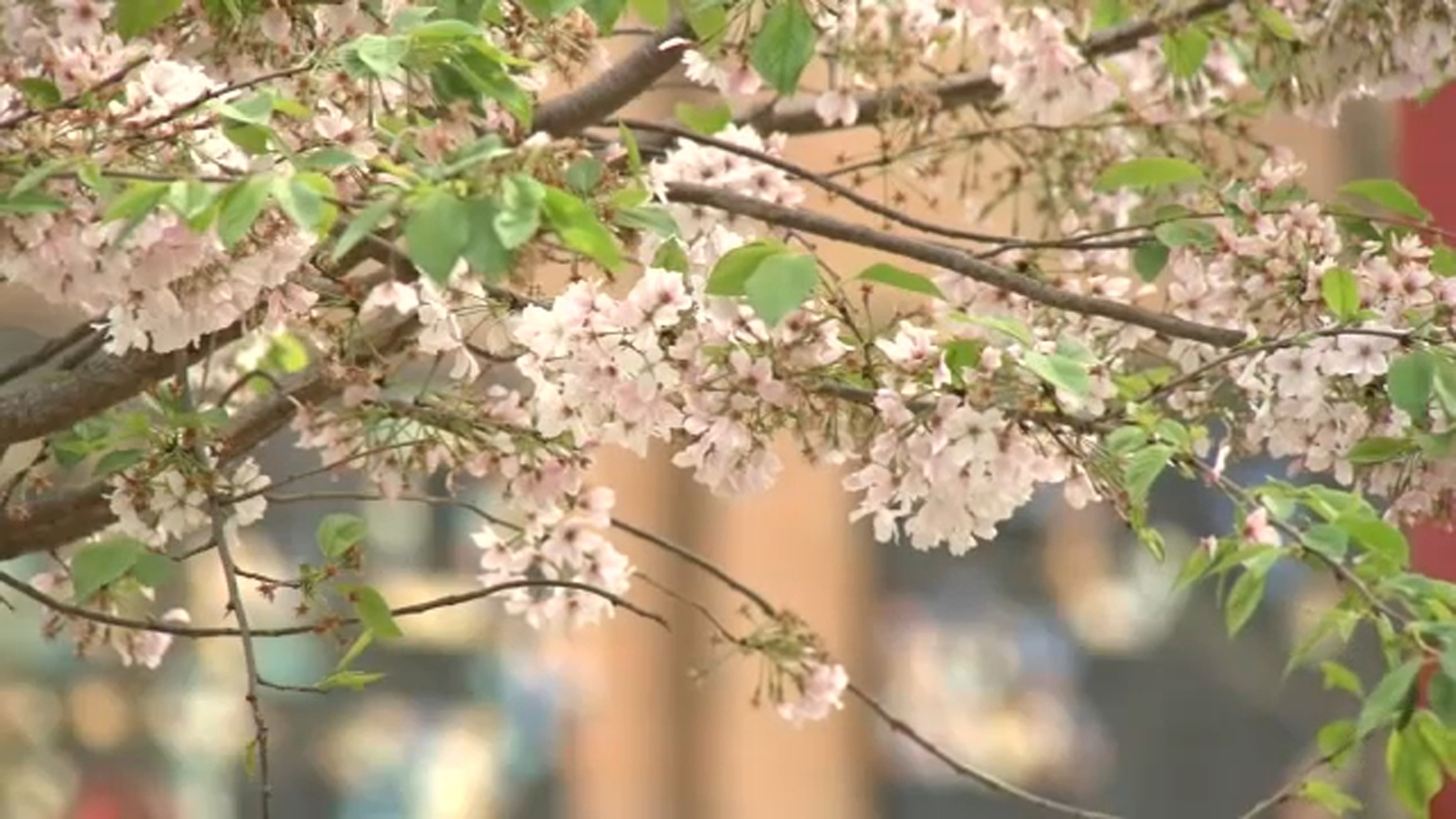
RALEIGH, N.C. (WTVD) — After a cold and at times dreary winter, sunny skies and warm weather are a welcome sight at the start of spring.
“Every morning, me and my son go to the park, and we hang with other kids and just get that good sun in the morning,” said Adon Bey.
Though he’s grateful for the improved conditions, the pollen that has come alongside it has been a nuisance.
“It clogs up my nose, and it gives me headaches,” said Bey.
A UNC Health expert isn’t surprised.
“Pollen season is absolutely here, and the tree pollen is out with a vengeance. We’ve got the pine pollen that you see, the yellow stuff, but there’s also oak and maple pollen, which is kind of more invisible, but it’s out there causing all manner of symptoms — itchy eyes, runny nose. For people with asthma, it’s actually causing some asthma flares as well,” said Dr. Edwin Kim, the Chief of Pediatric Allergy at UNC Health.
Last year, a report from the Asthma and Allergy Foundation of America ranked Raleigh seventh in “Allergy Capitals” nationally.
“I wish that our country didn’t just plant male trees. That’s what makes the (overproduction) of pollen. We don’t have enough female trees,” Bey said.
Raleigh was one of four cities in North Carolina to crack the Top 20, the most of any state.
“(People with asthma) are getting hit with this big burst of pollen that causes inflammation in the lungs and can trigger that asthma. And so suddenly they may need their inhaler two or three times a day. That’s definitely one of those (situations) where they want to make sure they’re in close contact with their primary care doctor or with their allergist of what they should do next, whether they should increase the dose of their inhalers or even come on in and get seen,” said Kim.
He recommends people minimize exposure, including keeping windows at home and your car up, wearing long sleeves when possible, rinsing off once back inside, and even wearing a mask, particularly for those who may be outside cutting grass or gardening.
“The nose sprays are going to be that, the best medicine when it comes to allergies, and really, because it’s going right at the source. All of the symptoms you have, the runny nose, the drainage, even the itchy eyes, all that starts with congestion and swelling in the nose,” said Kim.
The pollen may be most visible on roads with cars coated in yellow.
“This Saturday was really busy. We open at nine (a.m.), and usually people start coming in 8:30. I literally had a number of cars coming in before we opened up,” said Walter Farrow, business manager at Perfect Touch Car Wash and Detail Solutions in Durham.
Farrow said the pollen is not only a visual nuisance but can also damage your vehicle if left unaddressed.
“It does have some corrosive periods, especially when it gets into the door jambs or anything. If it rains and it just rinses, you think it rinsed off, but it’s all in the door jambs, in the trunk jambs or in between the trunk, or if you pop the hood on the vehicle and you see it all around there, that’s where you need to really get it rinsed off,” Farrow said.
He said consistent rinses to avoid pollen build-up are important to try to limit long-lasting effects. Beyond the clear effects on the outside of the car, Farrow urged drivers not to neglect the interior.
“If you have allergies, just like your air filters in the house during this time … you want to change them more, it’s the same thing with the in-cabin air filters that’s inside of a car,” Farrow said.
Copyright © 2026 WTVD-TV. All Rights Reserved.