
This week’s mailbag mostly returned to being a college football column, but I couldn’t help squeezing in one timely March Madness question. It may or may not have anything to do with the fact I’m currently leading our college football staff’s pool.
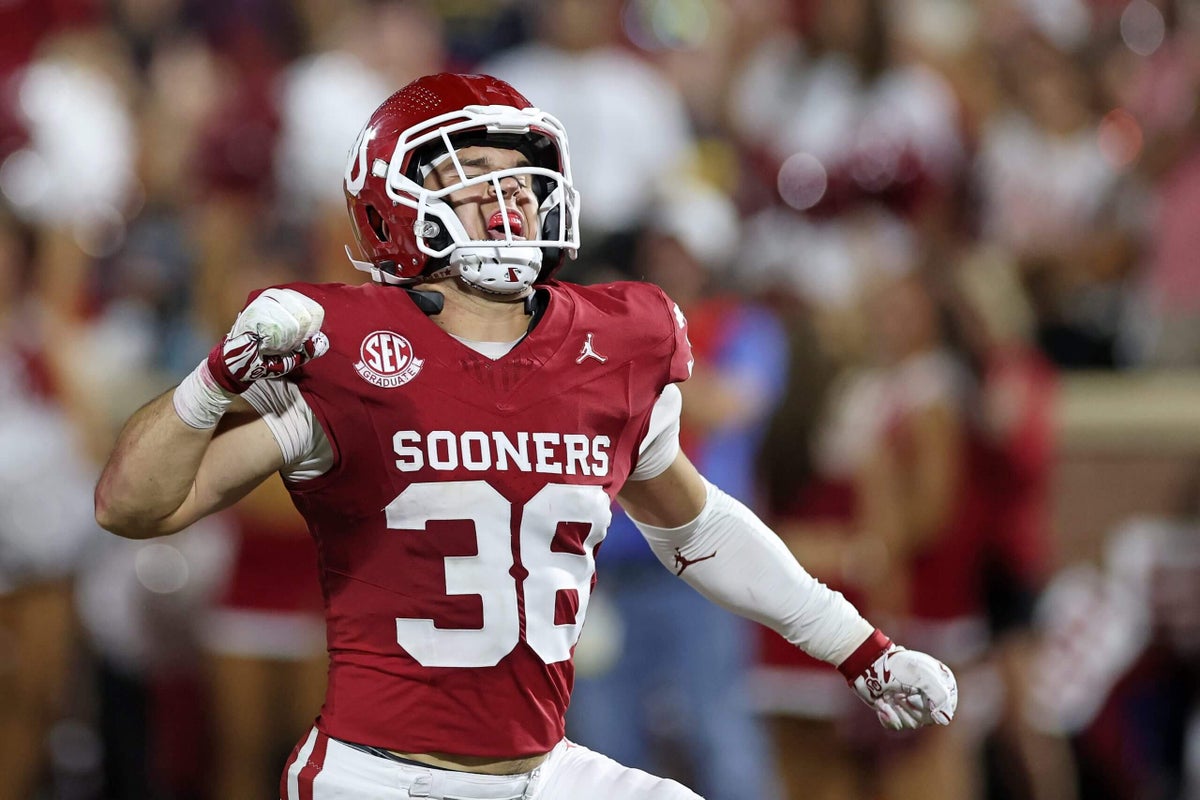
Oklahoma linebacker Owen Heinecke’s lawsuit seems like the next logical step in player empowerment. Coaches past and present have advocated for players returning to school if they’re not satisfied with their projections in the pre-draft process. Do you think this the logical next step in player empowerment or it’s not that consequential? — Anonymous
There is no doubt in my mind that come July or August we are going to see at least one player in this draft class file a lawsuit attempting to return to college — importantly, if they have eligibility remaining — because they either went undrafted or got cut in training camp. They’ll argue the NCAA is costing them money they would be able to make from NIL/revenue sharing, and that the rule that keeps players from pulling out of the NFL Draft is “arbitrary and capricious.” After all, basketball players can withdraw from the NBA Draft up until about a month beforehand. (Note: The NFL would also have to change its own rule by which players renounce their remaining eligibility upon entering the draft.)
Whether they would receive a favorable court ruling is hard to say, as the NCAA has won several eligibility challenges lately. Alabama basketball player Charles Bediako initially won a temporary restraining order and played in five games earlier this season before a different judge shut him back down in rejecting his injunction claim. Two big differences in the football scenario, though: Bediako was three years removed from college, not one, and he’d played in G League games, not just gone to training camp.
Heinecke’s lawsuit has its own unique circumstances. He played one year of lacrosse at Ohio State before transferring to Oklahoma and spending four years on the football team, redshirting his first season in 2022 due to injuries. His lawyers argue that three games of lacrosse his first year should not count against his football eligibility and thus he should have one year remaining. I’m not sure I buy that, because an athlete’s five-year clock begins when they enroll in college, regardless of whether they play a sport the first year, and he’s already been in school for five academic years.
The most compelling argument in Heinecke’s complaint is that he didn’t have the opportunity to play football his first year because Ohio State did not hold walk-on tryouts that season. It’s possible the judge in Oklahoma would buy that. It’s also possible he’d say there was nothing stopping Heinecke from walking on somewhere else.
Long story short, his might not be the most suitable test case for a draft prospect returning to school because as of now he’s exhausted his eligibility. The more compelling case would be someone who turns pro after his junior season but later decides he’s changed his mind and wants to return. I used undersized Indiana cornerback D’Angelo Ponds as my hypothetical example in my January column, but he’s since shot up to a second-round projection. He’ll be all right.
But I looked at a few seven-round mock drafts. Some early entrants projected to go in the later rounds: Texas tight end Jack Endries, Utah edge Logan Fano and Duke edge Wesley Williams. I wonder if they’ve already been contacted by prospective attorneys.
You regularly reference college football’s high TV ratings as a sign that the sport is healthy. I would suggest the changes have made the sport more accessible to the casual fan at the expense of us 40-plus-year hardcore fans. History shows (ahem NASCAR) that turning off your base can have long-term detriments. Do college presidents and league commissioners truly care about the sport long-term? — Jared J.
I don’t think there’s any question that’s happening. Conference realignment in particular has mostly been a big middle finger in the face of loyal fans. The USC and UCLA administrations saw big flashing dollar signs in their eyes and jumped at the chance to join the Big Ten without stopping to consider how their own fans would feel about joining a conference where attending their teams’ road games would be virtually impossible. But it’s great for Fox/CBS/NBC — they get to show a USC-Michigan game.
And while I continue to believe NIL and the portal have made college football a better product — more parity, more hope — I fully realize it’s made it much harder for fans to keep up with their teams’ rosters from year to year. And that it may feel like a betrayal when your star player bolts for a bigger paycheck somewhere else.
The NASCAR cautionary tale* comes up a lot, but there’s a significant difference between the two sports: College football fans are inherently more loyal to their schools than motorsports fans are to their favorite drivers. Alabama was playing football long before Jeff Gordon and Dale Earnhardt Jr. began their careers, and Alabama will keep playing football long after they ended. And because of that, the powers-that-be just assume those decades-long attachments will never fray.
*I always hear people cite NASCAR’s faded popularity, but I’d never looked up any data until now. … Holy smokes! The Daytona 500 fell from 19.4 million viewers in 2006 to 7.5 million in 2026. Where is Ricky Bobby when you need him?
Obviously, we’re only a few years into this new era. None of us can possibly predict what the TV ratings and attendance will look like for any sport 10/20/30 years from now. But even if the broader landscape starts shifting, college football has one big advantage the others don’t: Tens of millions of potential TV viewers and spectators who attended/graduated from the participating schools.
The “coach in waiting” tag never seems to work out. This is top of mind for me as a Texas fan, with Will Muschamp returning to Austin this year, and of course the details coming out about Kyle Whittingham’s departure from Utah. How often do schools do this and does it ever work out smoothly? — Aaron H.
It’s the definition of insanity that schools keep attempting this. It rarely goes well. Either the soon-to-be retiring coach didn’t want to retire yet (Whittingham, Mack Brown at Texas, Bobby Bowden at Florida State), or he leaked unsavory allegations about the guy replacing him (Bill Stewart at West Virginia), or the AD didn’t honor the agreement (James Franklin at Maryland), or the next-in-line guy turned out to be a disaster (Danny Hope at Purdue, Joker Phillips at Kentucky).
But there have been a few notable exceptions:
• While the Bowden-Jimbo Fisher transition was awkward — Fisher had to wait three seasons to take over, and even then Bowden didn’t want to leave — it paid off when Fisher won the 2013 national championship.
• Oregon’s Mike Bellotti named then-OC Chip Kelly as his eventual successor, then turned around and retired a few months later. Kelly went 46-7.
• Though Ohio State never publicly announced Ryan Day as coach-in-waiting, the plans were in the works almost as soon as Urban Meyer returned from his three-game suspension in 2018, and the baton got passed that December.
While the trend first became en vogue in the late 2000s, it had largely died prior to Utah’s longstanding arrangement for Morgan Scalley. It mostly worked in that Whittingham was able to hang on to his renowned defensive coordinator long past the point Scalley could have gotten a head-coaching job somewhere else. The problem was, Whittingham just kept putting off retirement again and again.
Now it’s been revealed that Whittingham originally wanted to coach Utah again this season but was effectively run out by AD Mark Harlan (albeit with a $13.5 million going away present). Had Harlan agreed, I don’t believe Whittingham would have taken the Michigan job. He had plenty of chances to leave for other jobs over the past two decades and always stayed put. The craziest part of this to me is that this all took place right after Whittingham produced a 10-2 season. Clearly Harlan feared losing Scalley if he kept him waiting for the umpteenth straight year, but c’mon. Wherever Scalley went, you know the Utah lifer would have come running back the second the job opened.
Moral of the story: Don’t do it, ADs. Unless you really enjoy back-stabbing, broken promises and FOIA requests.
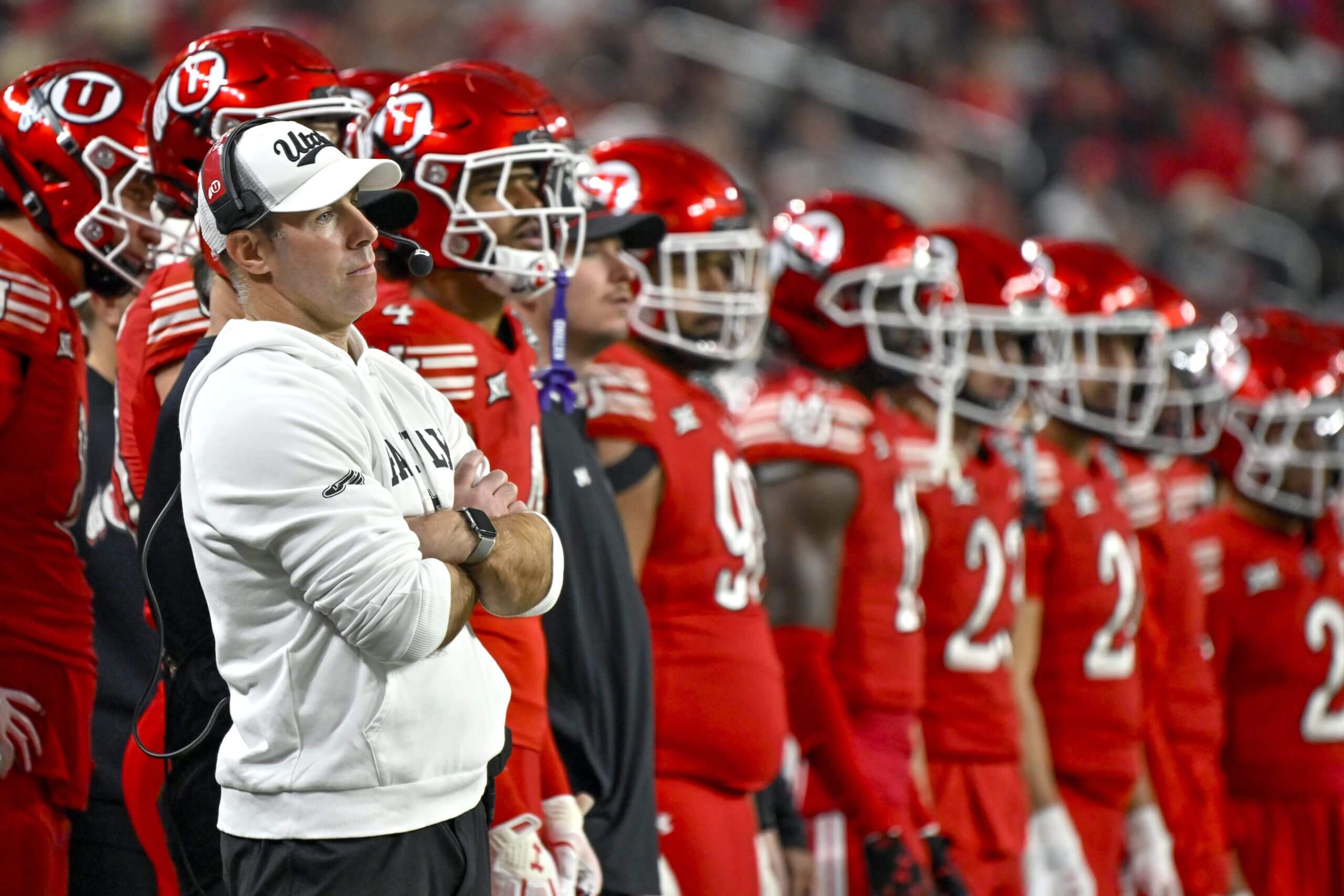
New Utah coach Morgan Scalley had been on Kyle Whittingham’s staff since 2007. (David Becker / Getty Images)
We are hearing so much about teams getting “older,” yet every year a few true freshmen are impactful enough, and in the right situation, to affect the Playoff race and outcomes (e.g. Jeremiah Smith in 2024, Malachi Toney in 2025). Which incoming freshmen are capable of helping shape the Playoff landscape for the 2026 season? — Neil D.
The most obvious impact freshmen tend to be skill players like Smith and Toney. But the 2026 recruit carrying the highest immediate expectations is Miami offensive tackle Jackson Cantwell, the No. 2 player in the country in the 247Sports Composite. The Missouri native — who, according to ESPN, will be making upward of $2 million a year — would fill an immediate need for the Canes, which lost both starting tackles (Markel Bell and Francis Mauigoa) from their run to the national championship game. But that will depend on how quickly the freshman can adjust to the speed and skill of college D-linemen.
Alabama and USC may be the two teams most dependent on their incoming freshman to make a run, but it’s too early to say which ones. Kalen DeBoer needs an upgrade at running back, for one. In an ideal world, five-star running back EJ Crowell would emerge at least as a solid No. 2 behind Daniel Hill. The Trojans, meanwhile, just signed the No. 1 class in the country. Many are already penciling in top-50 prospect Mark Bowman as a starting tight end. Either of two receivers, Kayden Dixon-Wyatt or Trent Mosley, could emerge as well.
But a friendly reminder: It’s not always the most obvious freshmen who burst on the scene the fastest. Several of last season’s standouts on CFP teams — Miami receiver Toney, Ohio State running back Bo Jackson, Oregon running back Jordon Davison — were ranked in the middle to the bottom of their team’s classes. And it will happen again.
When talking about what schools might have the best chance at winning the natty in both sports the soonest, you left off an obvious good chance with BYU. If not for injuries, both the highly ranked football and basketball programs could have very well won the Big 12 championship and been high seeds in both the CFP and March Madness. You, like so many media writers, should stop disrespecting BYU. — Dennis M
Hey, take it easy Dennis. No one outside of BYU respects BYU more than I do. In defending Notre Dame in the Notre Dame-USC cancellation brouhaha, I often point out that the Irish actually upgraded their schedule in pivoting to the Cougars.
But you’re right, I should have given BYU more consideration in the football/basketball combo question. The Crumbl Cookies guy alone (Jason McGowan) gives that school a fighting chance. In addition to football’s 23-4 record the past two seasons, basketball just landed yet another top-10 recruit (Bruce Branch III) right on the heels of potential No. 1 pick AJ Dybantsa.
But I still give my original choices, Michigan and Alabama, better odds than BYU, simply because they are in the Big Ten/SEC and BYU is not. That doesn’t matter as much in basketball, as the Big 12 may well produce this season’s national champion in Arizona. (My bracket certainly hopes so.) But no current Big 12 member has won a national championship since Colorado in 1990, in the pre-BCS/CFP days. TCU got to the title game in 2022 only to get obliterated by SEC champion Georgia. Texas Tech bought itself a Georgia-caliber defense last season and ran roughshod over the Big 12, only to get shut out by Oregon in its first CFP game.
I’m not going to say it will never happen for BYU (I learned my lesson with Indiana), but it’s certainly more attainable for recent national champs Michigan and Alabama.
Do you sense that Florida has a top-level QB on the roster? Or are they in the place of having two or three QBs and therefore not having any? — Ken, Rome, Ga.
New offensive coordinator Buster Faulkner must believe Aaron Philo can be a top-level QB or he wouldn’t have brought the two-year backup with him from Georgia Tech. Florida, mind you, likely paid good money to Philo, because he almost certainly would have been the Yellow Jackets’ starter. Whereas in Gainesville, he is spending the spring competing with second-year QB Tramell Jones Jr., a member of Billy Napier’s last signing class. Successor Jon Sumrall has given no indication either quarterback is leading the other.
One of the most intriguing stories going into Sumrall’s first season is the fact he chose Faulkner to be his OC. He has a unique background, having played and coached in the Mike Leach Air Raid system at Valdosta State before eventually learning from pro-style coordinator Todd Monken at Georgia. He ran a unique offense at Georgia Tech the past couple of years that married those concepts, along with some others. You saw Faulkner use QB Haynes King as a runner quite a bit but with lots of downfield passing mixed in.
Philo is seen as a natural fit for the scheme, but Jones now has a chance to prove he’s an even better one. I expect whichever player emerges to do just fine. It helps that they won’t be carrying the massive expectations that hovered over DJ Lagway, who’s now at Baylor.
For consecutive years, we have zero mid-majors in the Sweet 16 and only one double-digit seed (from a power conference, no less). While there are still plenty of great games to be had, is it fair to say March is officially losing some of its madness when it comes to Cinderellas? — Nicholas R., Sioux Falls
It’s definitely disappointing and concerning, especially because it was the second straight year where no No. 13, No. 14 or 15 seed won a game. Which had happened only five times in 39 years before that. And what exactly changed a little more than two years ago? A judge in West Virginia ruled there should be unlimited transfers.
What a shocking coincidence.
But I’m not going full-on panic mode just yet because, in addition to High Point knocking off Wisconsin in Round 1, there were so many Cinderella near-misses this year. (Note: I don’t consider VCU a Cinderella.)
No. 16 seed Siena and No. 1 seed Duke were tied with five minutes remaining.
Arkansas-High Point was a two-point game with two minutes left.
Santa Clara came within a miracle 3-pointer of knocking off Kentucky.
Cal Baptist roared back to get within 6 of Kansas with a minute left.
If even a couple of those (especially Siena) had gone the other way, the narrative today would be “Cinderella is back!”
Halfway through Saturday, it felt like a relatively boring first weekend by tournament standards. But then Nebraska and Vandy staged an all-time classic, St. John’s beat Kansas on a buzzer-beater and No. 9 seed Iowa stunned No. 1 seed Florida.
Since this question came in, CBS/Turner announced Tuesday that the first weekend of the tourney drew the highest TV audience in the history of the event.
As always, March Madness delivered.