
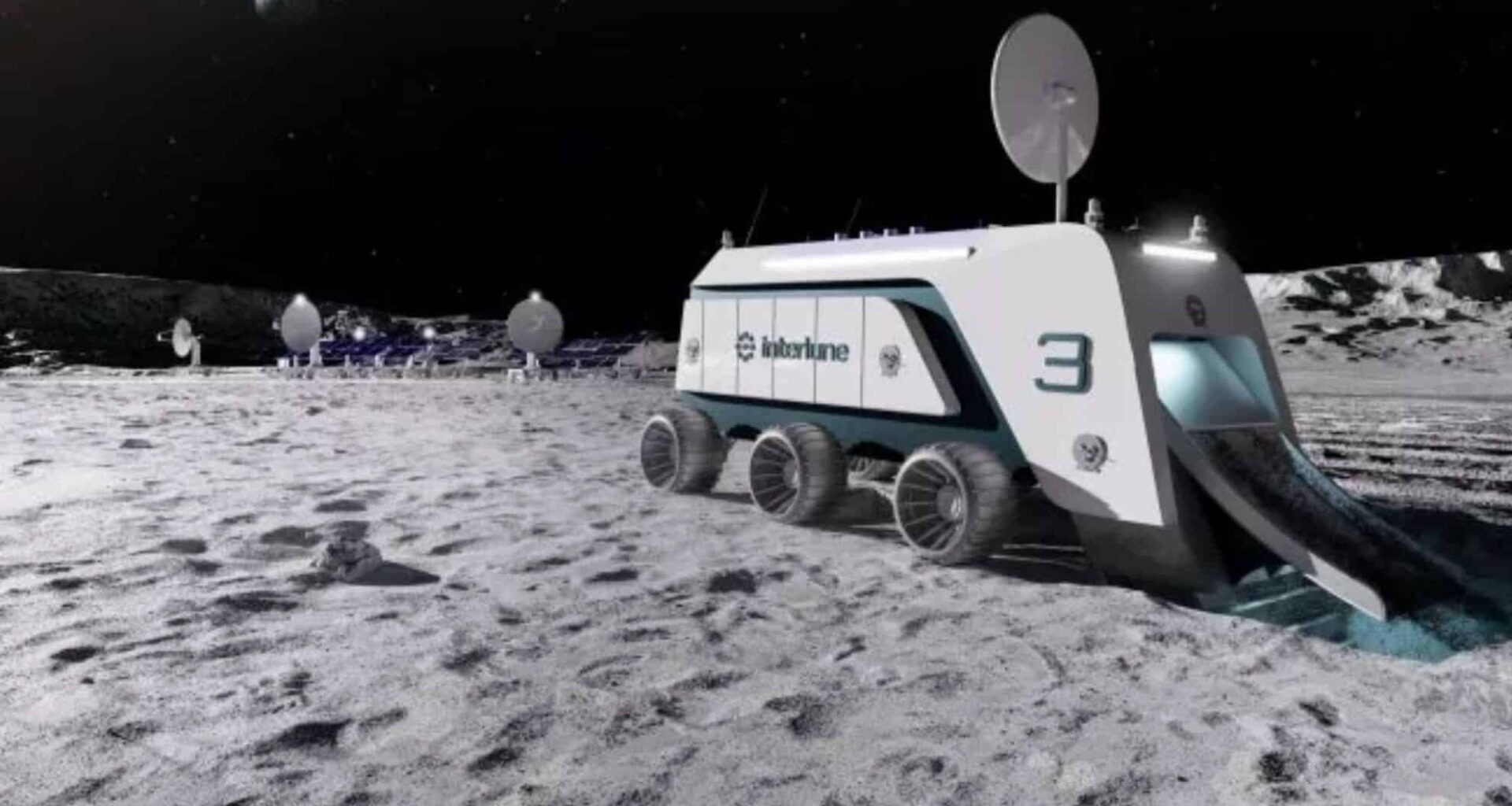
As humanity’s reach into space expands, a new frontier is emerging that could reshape the future of energy, technology, and even our daily lives. Interlune, a Seattle-based startup founded by former Blue Origin executives, is taking the bold step of making lunar mining a reality. Their mission: to mine helium-3, a rare isotope worth $20 million per kilogram, from the surface of the Moon. If successful, this project could unlock unprecedented technological advancements, from nuclear fusion energy to cutting-edge quantum computing.
Interlune’s vision is clear: to extract helium-3 from the Moon’s regolith (lunar soil) and return it to Earth, where it could fuel critical industries. The company has already made significant strides toward achieving this ambitious goal, and with partners like Vermeer Corporation, the groundwork for a lunar mining mission is quickly taking shape. As Rob Meyerson, Interlune’s CEO, shared with Newsweek, “At $20 million dollars a kilogram, helium-3 is the only resource in the universe that is priced high enough to warrant going to space and bringing it back to Earth.” This bold statement highlights the immense potential of helium-3, a commodity that could transform several industries, from clean energy to medical applications.
The Critical Role of Helium-3 in Future Technologies
Helium-3’s potential is vast, and its value extends far beyond its rarity. Unlike the conventional fuels used in nuclear fusion today, helium-3 offers a cleaner, safer alternative. When used in fusion reactors, it produces little to no radioactive waste, making it an ideal fuel for a sustainable energy future. The isotope also plays a critical role in quantum computing, where it is used for cooling superconducting materials to near absolute zero, enabling faster and more powerful quantum processors. Additionally, helium-3 is essential in various medical imaging applications, particularly in MRI machines, which require specialized cooling techniques to function.
Because helium-3 is so scarce on Earth, the Moon’s abundant supply has caught the attention of researchers, energy companies, and governments. With estimates suggesting that over 1 million metric tons of helium-3 are scattered across the lunar surface, the Moon represents an untapped treasure trove of potential energy. Interlune is positioning itself to be at the forefront of this new industry, paving the way for a future where lunar resources could become as integral to Earth’s economy as those found on our home planet.
Interlune’s Groundbreaking Lunar Mining Technology
To bring this vision to life, Interlune is developing a suite of cutting-edge technologies designed to operate in the harsh environment of the Moon. The centerpiece of this mission is a lunar harvester, a machine capable of excavating and processing lunar regolith at a scale never before seen. These harvesters will not only dig into the lunar soil but also separate, extract, and refine helium-3 from the Moon’s dust and rocks.
“We work backwards from an aspirational vision and that vision is a fleet of five harvesters that are machines that will excavate, sort, extract and separate the helium-3 from the lunar regolith and produce tens of kilograms of helium-3 per year,” said Rob Meyerson. Achieving this will require overcoming significant technical challenges, from designing autonomous machines that can function in the Moon’s gravity and temperature extremes to perfecting the complex process of isolating helium-3 from the regolith. These harvesters will process up to 100 metric tons of Moon dirt per hour, providing the continuous extraction necessary to meet the demand for helium-3.
The success of this project will depend not only on Interlune’s technology but also on securing the necessary private financing and collaboration from other space-faring entities. “It’s challenging and dependent on private financing. It’s also dependent on a lot of other companies,” Meyerson noted, acknowledging the critical role that partnerships will play in achieving Interlune’s ambitious goals.
Building Strategic Partnerships with Government and Industry
Interlune’s lunar mining project has already garnered significant attention and support from both government and private sectors. The company recently secured a contract with the U.S. Department of Energy (DOE), which will purchase helium-3 extracted from the Moon for use in national security and technological research. According to the contract, the DOE plans to buy three liters of helium-3 by 2029, making Interlune one of the first companies to secure such a deal for space resources. This partnership underscores the growing importance of helium-3 to the U.S. government and its efforts to maintain leadership in fields like quantum computing and fusion energy.
In addition to government contracts, Interlune has also signed agreements with Maybell Quantum, a leading quantum infrastructure company. This collaboration highlights the demand for helium-3 in the quantum computing space, where it is used for ultra-cold cooling systems necessary for the operation of dilution refrigerators. Maybell Quantum has agreed to purchase thousands of liters of helium-3, further solidifying the commercial viability of Interlune’s mining efforts.
These contracts are a testament to the growing recognition of lunar resources as a valuable commodity. As the demand for helium-3 continues to rise, Interlune’s ability to deliver this isotope could help establish the company as a key player in the space resources market.
Technological Challenges and Milestones Ahead
While the potential rewards of lunar mining are enormous, the challenges facing Interlune are equally significant. One of the major hurdles is developing the technology to extract helium-3 from the lunar regolith, which is measured in parts per billion. This means that the harvesters must operate continuously and efficiently to collect even small amounts of the isotope. Furthermore, the extraction process involves separating helium-3 from other elements and gases present in the lunar soil—a task that requires specialized equipment and techniques.
Interlune’s harvester prototype is already being tested in Earth-like conditions, and the company is refining it to operate in the zero-gravity environment of the Moon. This process will require careful calibration, as well as ensuring the machinery can withstand the extreme temperatures and vacuum of space. The company is also working on technologies to liquefy helium-3 on the Moon, which will be essential for transportation back to Earth.
Despite these challenges, Interlune is confident that the first prospecting mission, scheduled for 2027, will be a key milestone toward their ultimate goal of establishing a full-scale mining operation on the Moon by 2029.
A Future Powered by Helium-3
The implications of successful lunar mining go far beyond just the extraction of helium-3. If Interlune is able to establish a reliable supply of this isotope, it could have a profound impact on several industries. Fusion energy powered by helium-3 could provide a nearly limitless and clean energy source, addressing the world’s growing demand for sustainable power. Additionally, helium-3’s role in quantum computing could accelerate the development of next-generation technologies that are currently limited by the challenges of traditional computing.
As humanity ventures deeper into space, the extraction of resources like helium-3 from the Moon could become a crucial part of our future economy. Interlune’s efforts represent just the beginning of what could be a new space race—this time, not for dominance, but for resources that will sustain future generations on Earth.
In the words of Gary Lai, Interlune’s cofounder and chief technology officer, “When there’s an abundance of any material on Earth, humans find a way to use it. It has so many unique physical properties. It has many uses and I’m pretty confident that when it is more available, people will find even more uses for it because it’s such a unique isotope.”