
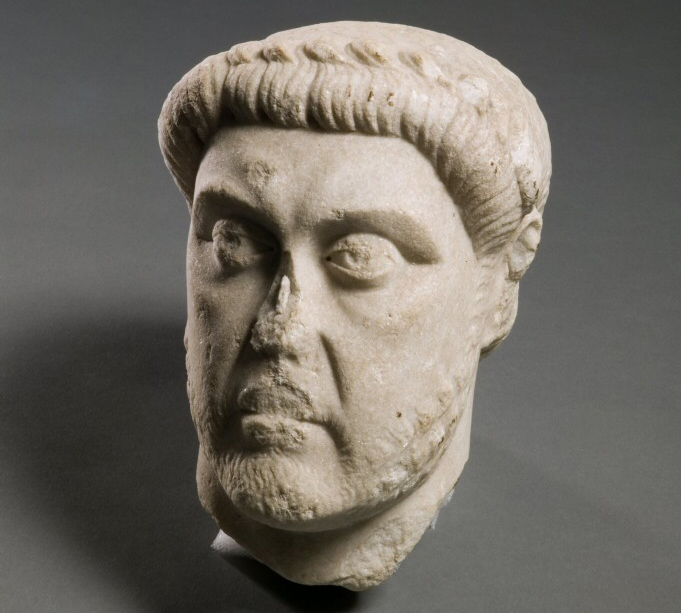
The Denver Art Museum recently returned a sixth-century marble head to Turkey after an investigation revealed that it had been excavated nearly a century ago and remained missing from the country’s national collections.
The museum formally removed the object from its collection in September and returned it to the Turkish government in December, DAM officials told The Denver Post.
The object originated from a basilica in the ancient city of Smyrna — now known as İzmir — on the Aegean coast. The Izmir Museum Directorate and the Historical Society conducted excavations at the site in the 1930s and early 1940s, with the marble head dug up in 1934 and published in scholarly sources.
Then the relic went missing for decades.
The Denver Art Museum acquired the piece as a gift in 1989 from the estate of Marie Thérèse Macy, the wife of a former U.S. foreign service officer who served as consul general in Istanbul in the 1940s. It remained on long-term loan until the museum in 2005 formally added it to its collection.
In 2013, Denver museum officials say, they first reached out to the Izmir Museum, letting them know they had the marble head and requesting information about whether it had once been part of the Turkish institution’s collection.
Nothing happened until last year when Turkish cultural authorities confirmed that the marble head was missing from its national collections and submitted an official request for its return. Months later, it was back in Turkish hands.
“The marble head’s repatriation stands as an example of how museums can responsibly address complex histories and strengthen relationships with source communities and nations,” Andy Sinclair, a Denver Art Museum spokesperson, said in an email.
The repatriation comes amid a renewed push by Turkish authorities to reclaim their plundered cultural history.
The country, which boasts more than 20 UNESCO World Heritage sites, received 180 cultural artifacts last year, adding to the more than 13,000 relics it has repatriated over the past 23 years, according to Turkish media reports.
Turkish officials developed a new artificial intelligence tool to identify cultural assets of Turkish origin on sales platforms, auctions and social media.
The country has also worked with American law enforcement to retrieve looted works. In December, the Manhattan District Attorney’s Office in New York, which boasts a specialized antiquities trafficking unit, announced the return of 43 relics, valued at more than $2.5 million.
Looters for decades targeted the ancient city of Bubon, a Roman site in southwestern Turkey. Many of these pieces fetched significant sums from collectors.
In recent years, the Denver Art Museum has sought to rehabilitate its reputation after scandals involving the collection of looted artworks.
The Post, in a three-part investigation in 2022, found a longtime museum consultant and art scholar, Emma C. Bunker, helped the DAM acquire a host of antiquities that had been pillaged from ancient temples in Southeast Asia. Her relationship to one disgraced dealer in particular, Douglas Latchford, allowed the museum to become a way station for plundered works, The Post found.
In 2023, the museum removed Bunker’s name from its gallery wall and returned a six-figure donation to her family. DAM has also returned pieces connected to Bunker to Vietnam, Thailand and Cambodia.
Denver museum officials have also come under fire for their dealings with Native American tribes and source countries.
Get more Colorado news by signing up for our daily Your Morning Dozen email newsletter.