
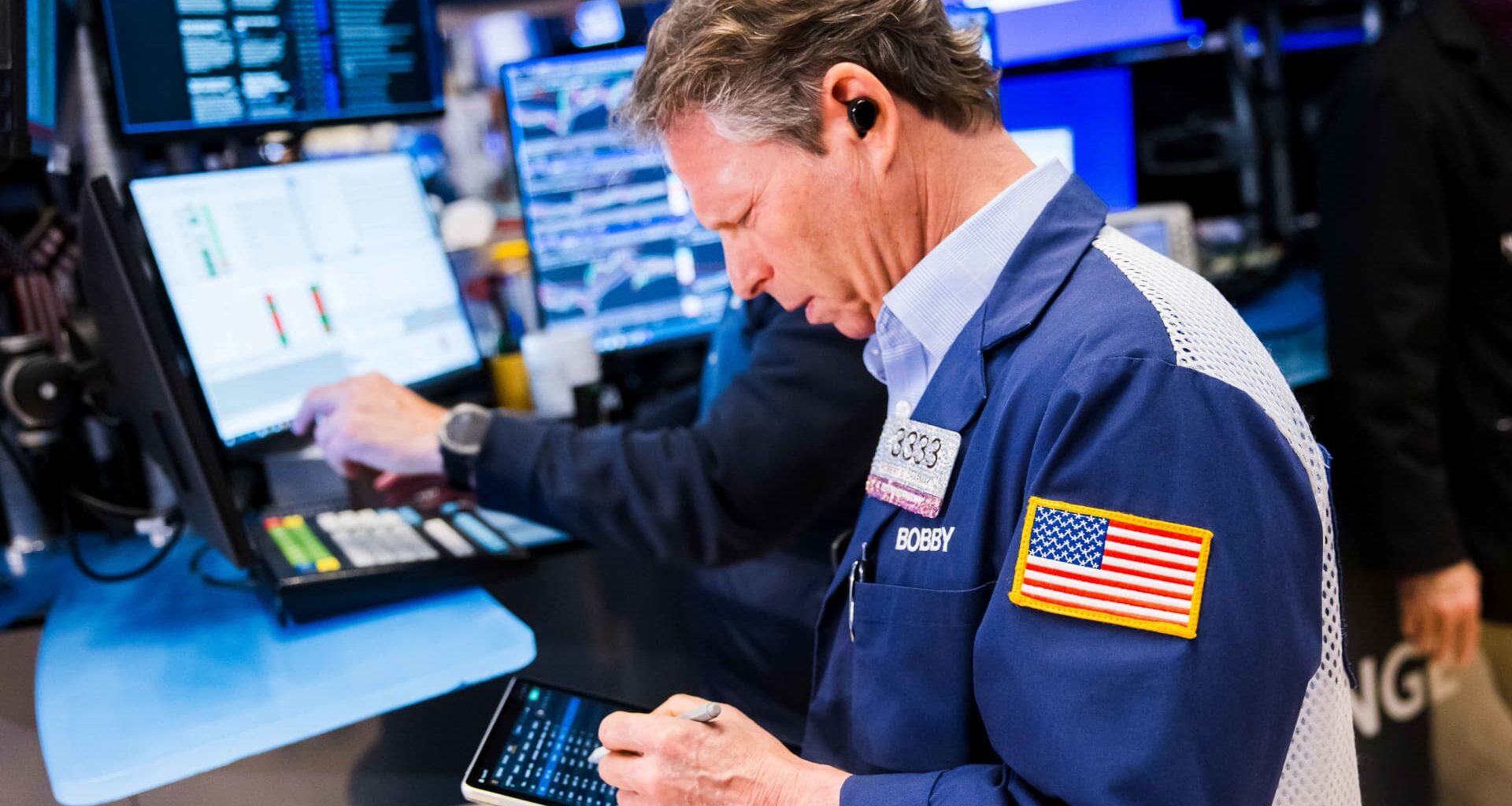
Traders work on the floor of the New York Stock Exchange.
NYSE
U.S. stock futures inched lower on Wednesday night as traders followed the latest developments out of the Middle East, hoping for progress toward ending the war in Iran.
S&P 500 futures and Nasdaq 100 futures traded 0.2% lower. Futures tied to the Dow Jones Industrial Average fell by 101 points, or 0.2%.
All three major indexes ended Wednesday’s regular session higher. The S&P 500 added 0.54%, while the Nasdaq Composite jumped 0.77%. The Dow surged 305.43 points, or 0.66%.
Iran’s foreign minister reportedly told state media on Wednesday that top authorities in the Middle Eastern nation are reviewing an American proposal to end the war, but Tehran has no intention of having talks with the U.S.
Earlier Wednesday, Iran state media reported that the nation would reject a U.S. ceasefire offer, instead countering with its five-point list that would give Tehran control over the Strait of Hormuz.
Oil prices cooled slightly during Wednesday’s session as traders bet that the conflict was on its way to a resolution. U.S. oil futures dropped 2.2% to settle at $90.32 a barrel, while international Brent crude futures slid 2.17% to close at $102.22.
The major averages are all up week to date after contending with a major meltdown last week on the back of ramping tensions from the Middle East. But Kate Moore, chief investment officer of Citi Wealth, believes that investors seem too sanguine that a resolution is coming.
“Some of the price action we’ve experienced, especially in the last two trading days, is basically showing, I think, a huge amount of optimism that we’re going to have a resolution and not a broad-based inflationary impact from the shock in energy,” she said on CNBC’s “Closing Bell: Overtime” on Wednesday afternoon. “That makes me a little bit nervous, if I’m honest.”
She added, “I want to be very, very thoughtful about how we construct portfolios because we want to build for resilience right now, and we want to make sure that we’re shored up against both the inflationary risks and what might be more kind of prolonged conflict than I think the optimists in the markets were pricing in today.”
On Thursday morning, traders will watch out for initial jobless claims data from the week ending March 21.
—CNBC’s Kevin Breuninger contributed reporting.