
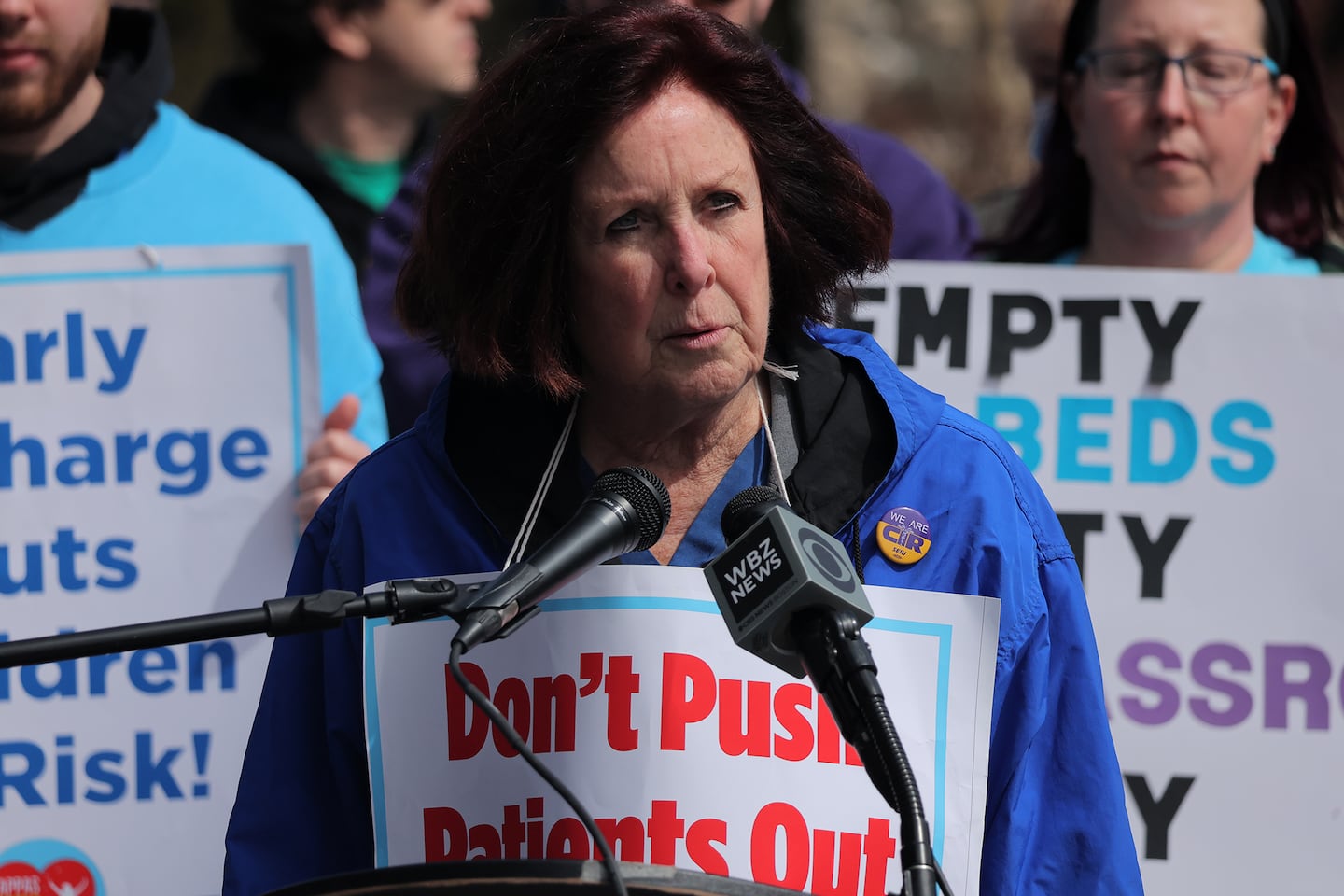
At the news conference, workers with the MNA and two other unions representing Pappas staff announced an overwhelming vote of no confidence in Dr. Robbie Goldstein, the state’s public health commissioner.
State officials said union workers were misrepresenting the routine turnover of a facility basing admission and discharge decisions on standards mandated for accredited hospitals.
DPH has made efforts to refer children to Pappas, including through the Department of Children and Families, Goldstein wrote in a letter to the unions on Wednesday. The department has also hired a behavioral health therapist for the facility and is in the process of hiring two social workers and a psychiatry nurse practitioner, according to the letter, which was also signed by Dr. Kiame Mahaniah, Massachusetts’ health and human services secretary.
The 122-year-old facility, formerly called the Massachusetts Hospital School, offers a unique combination of medical care and education for people ages 7 to 22 with developmental or physical disabilities who need significant medical support. Yet it is aging and in serious need of repair. Last year, Governor Healey proposed saving $31 million by vacating the campus and transferring many residents to another facility in western Massachusetts more than 100 miles away. The proposal caused an uproar. Many of Pappas’s 225 workers either couldn’t move or weren’t willing to relocate. Families of Pappas residents said the closure would put a significant distance between them and their loved ones.
 The staff rallied outside Pappas Rehabilitation Hospital for Children.Lane Turner/Globe Staff
Within weeks, Healey relented. A legislative commission assembled to evaluate options for the campus had its first meeting in March and is scheduled to submit a report in December. The commission’s founding legislation states Pappas’s services cannot be “reduced or eliminated” until it has delivered its report.
“These accusations represent an inaccurate, unhelpful escalation at a time when our administration is trying to work together with legislators, providers, families, and labor to determine the best steps forward for Pappas,” Jacqueline Manning, a spokesperson for Governor Healey, said in a statement.
Healey’s 2027 budget proposal includes funding for Pappas.
Goldstein has been a central figure in Massachusetts’ efforts to combat federal cuts to health and medical services and anti-vaccine ideology over the past year, and the governor has confidence in his leadership, Manning said.
“Commissioner Goldstein goes above and beyond to protect the health and well-being of Massachusetts residents, especially our children, every single day,” she said.
Pappas’s resources are sorely needed, according to a report issued in October by a working group commissioned by the Department of Public Health to review care there. About 12,000 children in Massachusetts have medically complex conditions, but less than 2,000 residential beds are available for their care, the working group found.
“We’ve heard repeatedly of children in emergency departments occupying beds for months at a time,” said Kim Daley, a member of SEIU Local 509 and a special education teacher at Pappas, at Wednesday’s news conference.
Despite being uniquely equipped to provide a long-term home for children with significant medical needs, most Pappas admissions have been for respite stays of less than a month since 2024, workers said.
Alma Alisch, of Seeconk, said Wednesday she moved to Massachusetts from Rhode Island a decade ago specifically so her son Billy, who was born with cerebral palsy, could attend Pappas.
Alisch was overwhelmed caring for him and his brother while her husband experienced serious medical challenges. Billy was frequently hospitalized, she said, due to asthma, gastrointestinal complications, and neurological conditions. Now, she said, his health has stabilized, and he recently wrote a book about his relationship with his father.
“If he wasn’t here he wouldn’t have been able to accomplish all these things,” she said.
Billy is now 23, and has aged out of Pappas. He’ll return to living with his family this summer, but Alisch is concerned about children like her son who need settings like Pappas.
“I don’t think they really thought this through,” she said. “What about the future children of Massachusetts?”
Pappas itself, though, has serious deficiencies. Its newest residential facility, Nelson Building, is 60 years old, and doors and hallways in some buildings aren’t wide enough to accommodate beds or mobility devices. Some parts of campus aren’t wheelchair accessible. The October working group report noted that within the past year, a backup generator failed, leaving the hospital without power; the Nelson building’s HVAC system temporarily broke down; and clogged drains caused flooding in Nelson’s mechanical room.
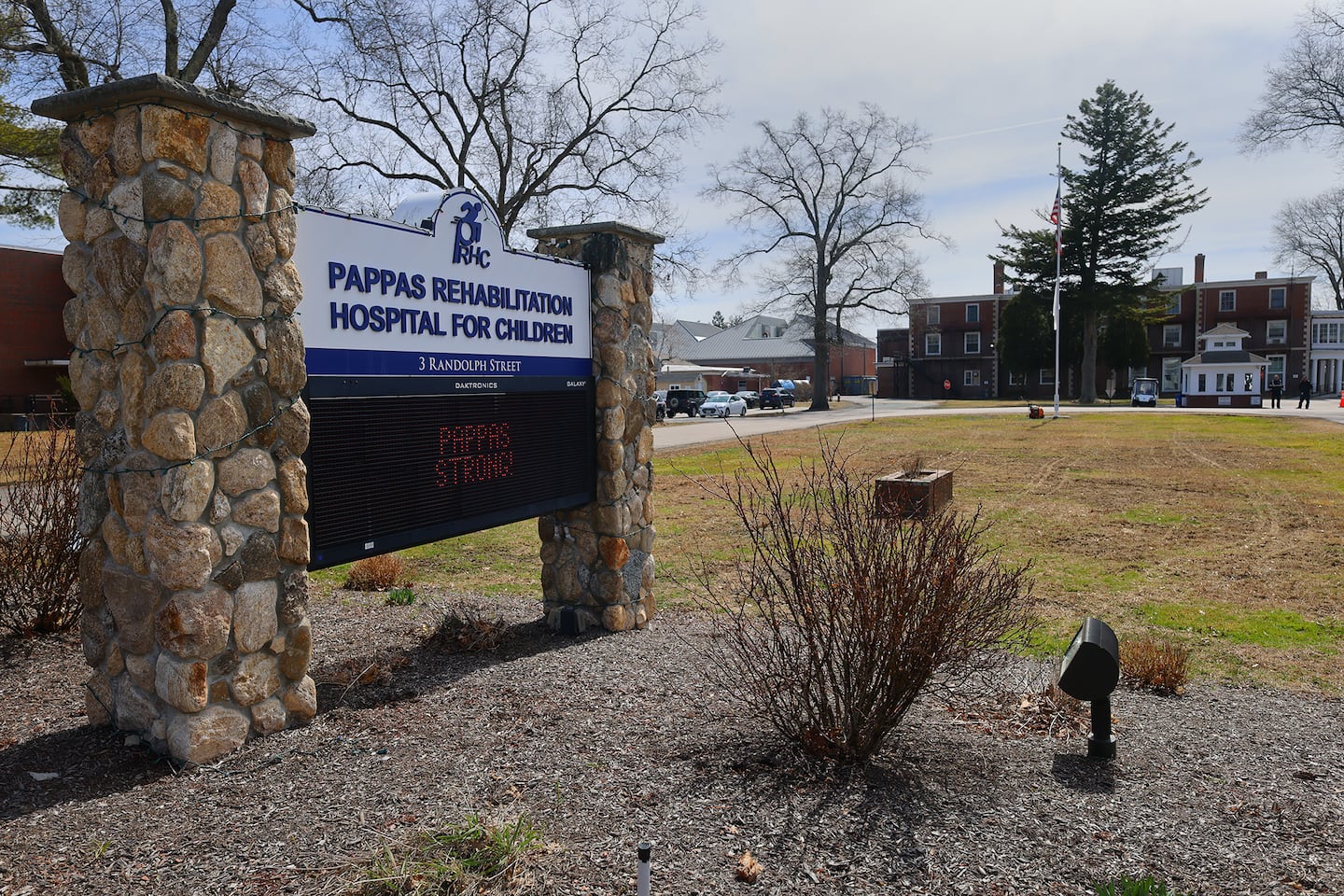 Pappas Rehabilitation Hospital for Children is seen in Canton.Lane Turner/Globe Staff
Options discussed in the working group report included a total overhaul of the campus with a new long-term care hospital, more incremental renovations, reducing the level of care Pappas is equipped to provide, or closing the facility entirely. Those options were only discussed broadly, though, said Sweeney, a member of the legislative commission.
Workers and families of residents are open to the reality that changes are needed but said protecting the core mission at Pappas, to provide care, education, and community for children with significant disabilities, is essential.
In a February letter, workers noted the facility had no staff dedicated to behavioral health or prepared to conduct competency assessments relevant for some admissions. A relationship with the Department of Children and Families that had been a pipeline for admission has withered.
The letter described the state as using an overly restrictive interpretation of the admissions standard for Pappas, resulting in fewer admissions and more discharges. State law says a DPH-operated hospital must demonstrate it is admitting patients who need “hospital level care.” Those same regulations state a patient should be admitted if there is “no effective, less costly alternative,” but that stipulation is often ignored, workers said.
“We’ve had to say goodbye to students who should never have been required to leave,” Daley said.
The state disputes the workers’ assertion that admissions and discharges have been driven by an effort to depopulate the facility. Two conditions dictate admissions to Pappas, DPH said. Does the patient need care with 24-hour oversight from a physician, and can that be safely delivered at Pappas?
DPH officials noted in 2025 that five patients were discharged after aging out of Pappas, and nine others were discharged to their homes or a level of care more appropriate to their needs.
The letter from Mahaniah and Goldstein also noted care for children with complex medical conditions has improved dramatically.
“Many — although certainly not all — who could never have lived in the community several decades ago are now able to do so because of direct supports for them and their families,“ the letter stated.
Jason Laughlin can be reached at jason.laughlin@globe.com. Follow him @jasmlaughlin.