
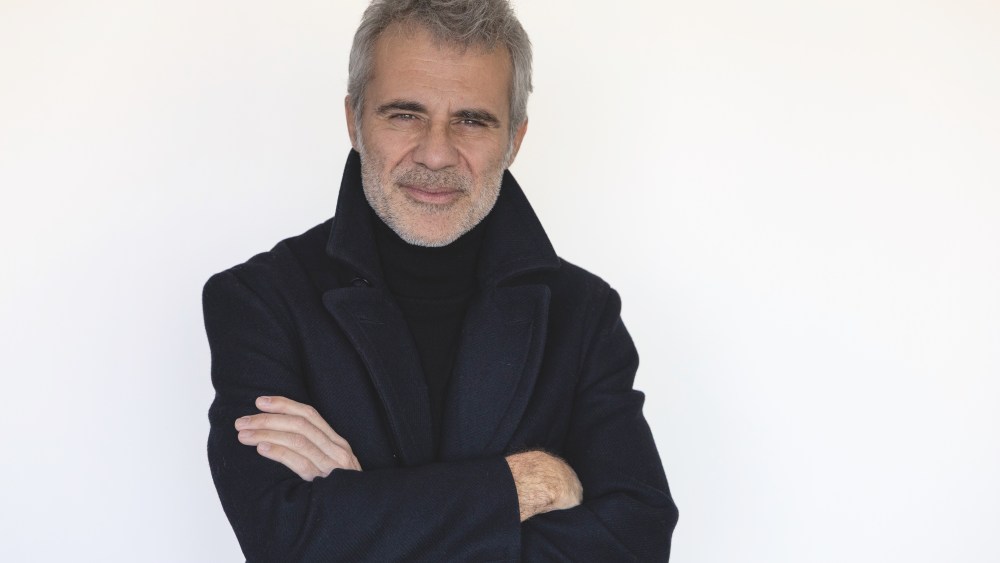
Early last May, nearly 150 of the good and great in Spain’s film and TV industries led by Pedro and Agustín Almodóvar, Javier Bardem, Penélope Cruz, and Alejandro Amenábar signed a joint open letter expressing their gratitude to Domingo Corral, who has just been removed by giant Spanish telco Telefónica as the director of fiction and entertainment of Movistar Plus+, the biggest Spanish pay TV/SVOD service.
They also expressed their concern about the future of Movistar Plus+ which under Corral’s groundbreaking creative stewardship came to produce series and films that placed Spain on an international stage scoring just in 2025 the top prize at Series Mania – Alauda Ruíz de Azúa’s “Querer” – and a top prize at Cannes – Oliver Laxe’s Jury Prize laureate “Sirāt” which went on to garner two Oscar nominations. Movistar Plus+ won the top plaudit again at September’s San Sebastián – with “Sundays,” once more from Ruíz de Azúa.
Now, nearly 11 months later, Corral is again moving waves. On Tuesday, in some of the biggest news at this year’s Series Mania, HBO Max Head of Original Content Sarah Aubrey announced a first-look deal with Corral for “exclusive television services in Spain.”
First project up, she said at her Series Mania masterclass, is a series turning on El Nani, a young petty criminal who disappeared in police custody in 1983. The court case involving the Francoist throwback police culprits became a show trial for Spain’s young democracy. The Nani series is written and directed by Alberto Rodríguez alongside Rafael Cobos, who, in another success, are in Series Mania main competition this week with “The Anatomy of a Moment,” again from Movistar Plus+ under Corral.
Under Aubrey, HBO Max is charged with being HBO. Allying with HBO Max, all signs are that Domingo Corral will be able to continue being Domingo Corral.
“What are you looking for?” Aubrey was asked at her masterclass. “The answer always is the best stories from the best creators,” she answered.
Corral’s C.V. certainly fits that, having produced Rodrigo Sorogoyen’s “Riot Police” and “The New Years” – the later selected for Venice alongside series from Alfonso Cuarón, Joe Wright and Thomas Vinterberg – as well as Javier Ambrossi and Javier Calvo’s “La Mesías,” a series which again won at Series Mania and dazzled French critics, being hailed by newspaper Liberation in 2024 as “one of the most beautiful series of the year.”
Given series which travel internationally, such as “The Last of Us,” Aubrey said at Series Mania, “there is not the same pressure on a local show to kind of retrofit itself into being a global lead, which is frankly a recipe for disaster. I believe strongly in making a show for its audience and making it specific. And if it is, then it will resonate in success no matter where you watch it,”
During the near 10 years when Corral made series at Movistar Plus, they have set out to discover Spain, its settings, styles, concerns, history and talents. At the same time, they celebrate auteurist voices and were made at a budgetary level which proved competitive with production levels in France and Italy.
The artistic ambitions of series made by Corral can be stunning. Each episode for instance of “The Anatomy of a Moment,” co-produced with Arte France, is tinged by a different genre or genres. Episode 1, for example, comes over as a political thriller with horror tropes where Prime Minister Adolfo Saúrez battles in 1976 to persuade – or bribe – a Francoist parliament to vote itself out of existence.
That’s not to say that “Anatomy” is high art niche fare. Late last year, it gave Movistar Plus+ the biggest bow of any Movistar Plus+ Original in history.
As Spanish broadcasters and pay TV operators scrimp on budgets, look ever more to non-fiction or pull out of scripted production entirely – public broadcaster RTVE – it may well be that only a global streaming service has the pocket to make the series how Corral wants to make them. That includes deep development. But, as noted in Series Mania’s masterclass, one of the one of the first things Aubrey did in her role was to increase the development budgets.
The HBO Max-Corral deal does, however, raise two large questions.
So far, the Nani series, is well within Rodríguez and Cobos’ comfort zone. They have spent much of their career as director and writer examining in a highly nuanced fashion the concept of transition in Spanish history: How cops with a Francoist past worked side by side with forward-leaning colleagues well after Spain became a democracy in 1977 (“Marshland”); how Spain could have taken a turn towards modernity but didn’t (“The Plague”) or did, though democracy came to hang on a thread (“The Anatomy of a Moment”).
Also, Cobos has just released his first feature as a director, the superbly stylish “Golpes,” set in 1982 and spangled with historical doc footage of the period and featuring in its anti-hero Migueli another quinqui like El Nani: marginalized working class criminals who pulled heists in the early ‘80s, driven by a vague sense of desire for freedom and visceral contempt for authority and middle-class convention.
The Nani project is more, however, than just one project. It’s the high-profile collaboration of two creatives who gave Movistar Plus+ its first big signature series in the 1580 Seville-set “The Plague,” as well as one of its early Spanish movie hits in “Prison 1977,” a standout episode in innovative lock-down collective series “Offworld” and Movistar Plus+’s second big prize at a French TV festival, in Canneseries’ best short format plaudit for the Cobos’-directed “The Left-Handed Son,” a touching portrait of a mother and son in Seville, knit by their sense of failure and search for human warmth and respect.
So a first question, after this signature collaboration between Rodríguez, Cobos and Corral, is how many others in Spain’s superb youngish cadre of film and TV creators – Sorogoyen, Ruiz de Azúa, the Javis and Laxe, to name just a few – may end up working with Corral.
“It just made sense to us that someone with all these deep talent relationships and this great kind of track record and taste would partner with us on looking for new projects,” Aubrey said at her masterclass.
How many projects Corral can shepherd may depend on a second question, however: Under Paramount ownership via its purchase of WBD, how long will HBO Max go on being HBO? The easy answer to that is nobody knows. The answer, however, will determine part of the future in international of a truly groundbreaking auteur-empowering TV production for which both HBO and Corral have come to be renowned.