

Many of us enjoy a cup of coffee as an early morning pick-me-up, but caffeine‘s powers could extend far beyond an alertness boost.
Researchers have found that the stimulant can protect against and reverse memory deficits brought on by sleep deprivation in mice.
The researchers, from the National University of Singapore (NUS), focused on the CA2 region of the hippocampus part of the brain, known to be important in social memory – in this case, a mouse’s ability to recognize another mouse they’d seen before.
As predicted, mice who were deliberately kept awake proved much worse at identifying other mice they’d previously encountered. However, when a group of mice were given steady doses of caffeine for a week before being sleep deprived, there wasn’t the same poor performance in terms of social memory.
What’s more, when caffeine was applied to brain tissue taken from sleep-deprived mice – even if they’d not been given caffeine beforehand – the researchers found the drug helped to improve signaling in the CA2 region.
“Sleep deprivation does not just make you tired,” says NUS physiologist Lik-Wei Wong. “It selectively disrupts important memory circuits.”
“We found that caffeine can reverse these disruptions at both the molecular and behavioral levels. Its ability to do so suggests that caffeine’s benefits may extend beyond simply helping us stay awake.”
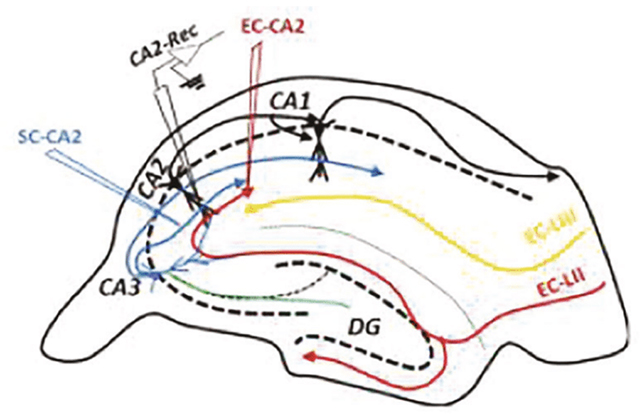 The researchers used electrodes to measure mouse brain activity in the CA2 region. (Wong et al., Neuropsychopharmacology, 2026)
It’s been well established that a lack of sleep can interfere with memory consolidation, as well as increasing the risk of a host of other negative effects on our health, but the links between social memory and sleep haven’t been extensively studied before.
The analysis carried out by the researchers showed that sleep deprivation increased brain signaling relating to a chemical called adenosine, which both encourages sleep and, as shown in other mouse studies, may dial down memory-making circuits.
Past research has shown caffeine can dampen this signaling, which was shown to be the case here too.
What this study adds is a more precise look at how sleep deprivation and caffeine influence social memory, and the specific brain wiring involved. That gives scientists a much better idea of the interplay between sleep, memory, and caffeine.
“Our findings position the CA2 region as a critical hub linking sleep and social memory,” says NSU neuroscientist Sreedharan Sajikumar.

It’s important to bear in mind that these were only mouse experiments. While mice and humans share a lot of biology, the findings still need to be confirmed in a study of people, and their sleeping and caffeine consumption habits.
The suggestion is that our ability to recognize people and recall details about them can be impacted even after a brief spell of sleep deprivation, and that a regular caffeine habit might protect against those memory losses – though further research will be required to know for sure.
Looking further ahead, the research could be useful in investigating the links that have been found between a lack of sleep and a higher risk of dementia. Part of that connection might be due to brain circuits related to memory, which have been shown to rely on a decent sleep routine, and which are often impaired in dementia cases.
Related: Memory Loss in Alzheimer’s Linked to Problems With The Brain’s ‘Replay Mode’
Past studies have suggested that a regular coffee habit could protect against dementia, and this latest research may provide a mechanism for why. Even better, it identifies a specific pathway in the brain that could be targeted by treatments, at least in regards to social memory.
The brain is a hugely sophisticated biological machine, which makes studying it – and brain diseases like dementia – very challenging for scientists. However, each new discovery gets us closer to a full picture of what’s happening when we go without sleep, and what the countermeasures might be.
“This research enhances our understanding towards the biological mechanisms underlying sleep-related cognitive decline,” says Sajikumar. “This could inform future approaches to preserving cognitive performance.”
The research has been published in Neuropsychopharmacology.