
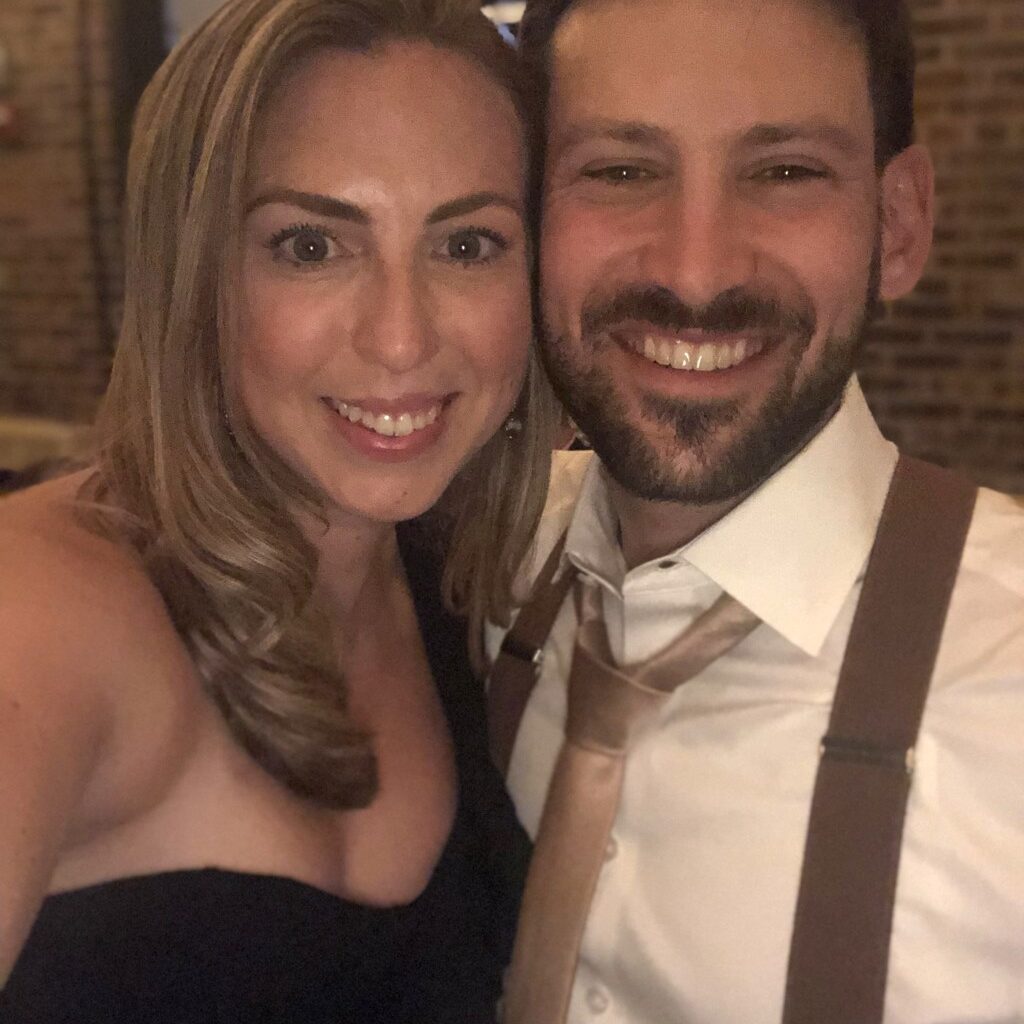
Registered nurse Alison Cubbellotti has her “dream job” caring for the most fragile patients in a Connecticut hospital’s neo-natal intensive care unit.
But 16 years ago she was the one dying, until a stranger stepped up.
That’s when Cubbellotti, now 36, received a life-saving liver transplant from a live donor and stranger at Yale New Haven Hospital.
Her donor, John, wishes to remain anonymous to the public so asked that his last name not be used, but has become like family to her.
“God chose me to live this life and tell my story,” Cubbellotti said. “I’m just grateful to be alive and I know all of this has purpose.”
Cubbellotti, who shares her story all year through Donate Life Connecticut as a way to promote organ donation, will be extra busy in April as it is National Donate Life Month.
Cubbellotti was flagged with health problems at age 9 when she was diagnosed with Crohn’s Disease, an inflammatory bowel condition with many impacts on people who have it, as well as a liver condition and she was told she would likely need a liver transplant in 10 years.
As predicted, at 19, she grew ill as a freshman nursing student at Sacred Heart University and couldn’t do her second year at the time because she became so ill. She had primary sclerosing cholangitis, which the Mayo Clinic calls a rare disease, and needed a transplant from a live donor as soon as possible, doctors told her.
Family and friends were tested, but there was no match. They ruled out her parents and sister. Her brother was a possibility, but further testing showed he had a blood vessel situation that could have made it deadly for him.
There was no time to wait, so in desperation, her mother sent out a message to everyone in her email directory. The message caught the eye of the president of Sacred Heart at the time who put the message out in an email blast to students.
To Cubbellotti’s surprise and awe more than 100 students inquired, including one, a 21-year-old name John, who wound up being a match. She didn’t know him and she didn’t meet him before the surgery because he wanted to stay anonymous.
He simply told her family that if he had a little sister in that situation he would want someone to reach out and help her.
John was so determined to keep it anonymous that they had separate medical teams that were not to let them cross paths.
But then, on the day that he was to be released from the hospital while she stayed for further recovery, he asked, last minute, to meet her.
Cubbellotti said she “panicked.” As a young woman about his age, all she could think about was that she was not wearing make-up, and had glasses on instead of contacts.
When the meeting occurred, however, none of that mattered.
“He took my hand, my mom hugged his mom, my dad hugged his dad and we all cried,” she said. “It was such a beautiful day.”
The two and their families became fast friends. For the first 10 years they gathered yearly and and still see each other and text one another. Cubbellotti was at John’s wedding and he and his wife have two children.
He declined to speak with The Courant and didn’t want his full name used, but gave his permission for Cubbellotti to tell their story and share a photograph.
“I’m so grateful I get to have this whole another family along with my own, ” Cubbellotti said. “I attended his wedding, his sister’s wedding.”
A huge commonality is they both have a deep faith and belief in God, she said.
“A piece of him is in my body. We don’t have to talk about it. We have a unique connection.”
Cubbellotti said when she’s not working with her favorite category of patients at Bridgeport Hospital, she is traveling for leisure or sharing her story to let the public know about the importance of organ donation.
“At Yale, living donor liver transplantation represents the highest expression of our mission—leading with passion, compassion, and empathy to push the boundaries of what is possible,” said Dr. Hiroshi Sogawa, surgical director of liver transplantation at Yale New Haven Hospital. “By expanding access to living donation, we are not only advancing surgical excellence but fundamentally transforming how we save lives—moving from scarcity-driven care to proactive, patient-centered innovation.”
In 2025 at YNHH there were 114 kidney transplants, 40 liver transplants and 15 heart transplants. In the United States last year there were 49,000 transplants and 100,000-108,000 people are waiting for organs, experts at YNHH said. There are 17 deaths a day of people waiting and a new patient added every eight minutes.
In her talks on organ donation, Cubbellotti likes to dispel myths such as the one spread that, if one is a donor, doctors won’t try as hard to save them if they get into an accident and the myth that age is a barrier to becoming a donor.
One of her favorite sayings in the donation world, Cubbellotti said, is: “If you’re not going to use your organs when you go to heaven, heaven knows someone needs them here. ”
Cubbellotti returned to nursing school after the surgery and graduated in 2014.
“My donor gave me life back,” Cubbellotti said. “We say God did it, but God gave us free will and he (John) chose to do it. It’s so uniquely strung together, there’s no other explanation than God did it.”
Working in the NICU at Bridgeport Hospital is her “dream job,” she said.
“God not only saved my life, but he gave me the gift to save countless lives,” she said.
Cubbellotti said that, throughout the turmoil of her health ordeals as a child and adult, she could see, “hope, joy and love.”
“The good and bad have shaped me into the nurse I am. I have empathy,” she said.