
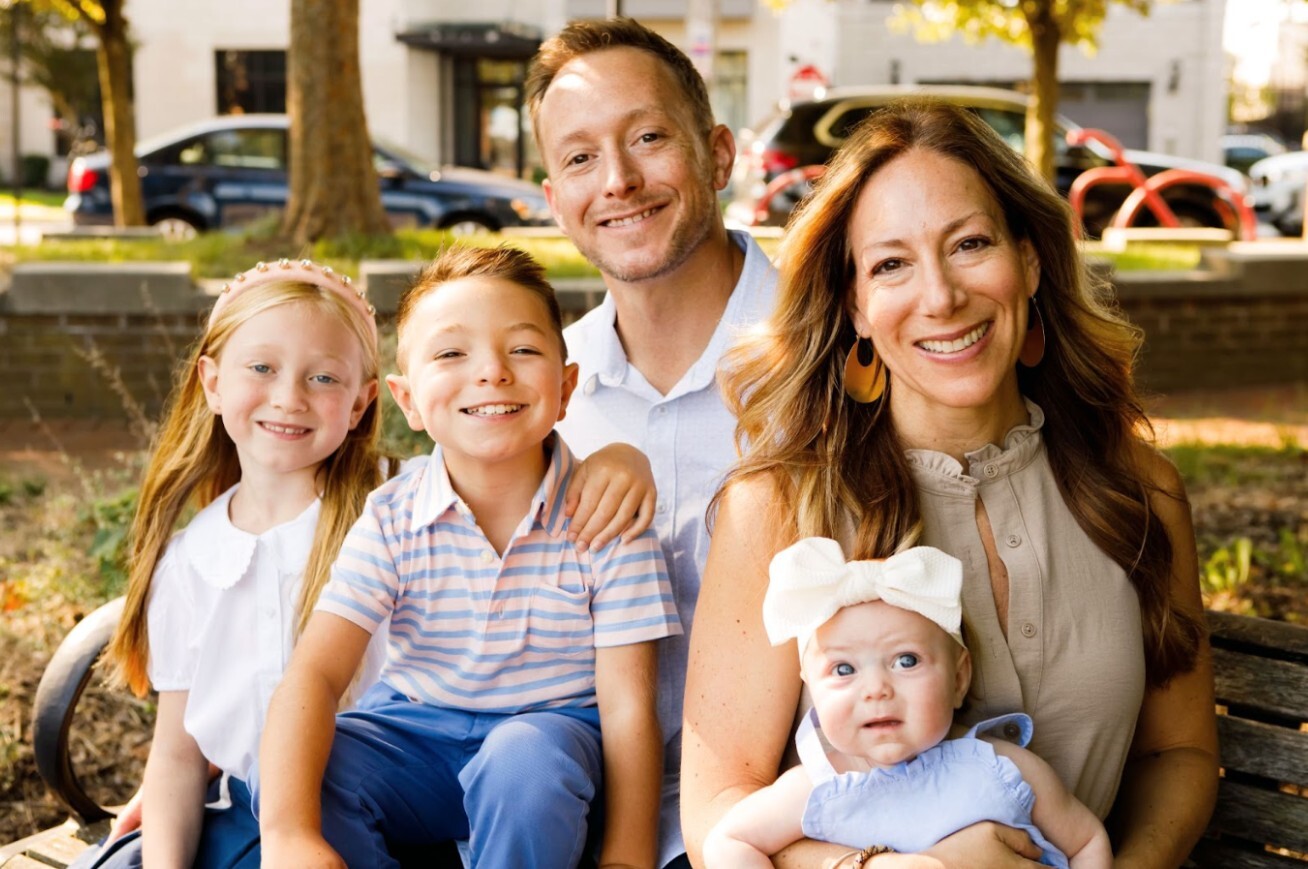
POINT PLEASANT — For the Boyer family, the road to starting a family has been anything but normal, with their first son being diagnosed with a rare genetic disorder. However, with time and planning, the family has begun a new group to help other families navigate a path forward when it comes to the challenges of genetic disorders.
Melissa White Boyer and her husband, Donny Boyer, are the co-founders of Rare Genes Movement, a nonprofit dedicated to uplifting families who are navigating life with rare genetic disorders. Their son Parker, now 11, was diagnosed with Wiedemann-Steiner syndrome (WSS), which is characterized by developmental delays, intellectual disability and distinctive facial features. It is a random genetic mutation and was not inherited from either parent.
The Boyers launched their organization to raise awareness, promote inclusion and provide tangible support to families who often feel unseen by traditional systems.
“We exist to amplify voices, build connections and fill gaps where resources are limited so no family faces rare disorders alone,” said White Boyer.
Through awareness campaigns, storytelling, advocacy and inclusive community projects, Rare Genes aims to help families feel seen, supported and empowered, “Because every voice matters. And no one should feel invisible,” according to White Boyer.
PARKER’S EARLY LIFE
The story begins 11 years ago when their first son Parker was born on time, but lifeless and small, weighing about five pounds. Luckily, doctors were able to resuscitate Parker quickly.
Fast forward a few weeks, and the Boyers realized their baby was just not growing. White Boyer said, “At first, we were putting a lot of guilt on ourselves as parents, thinking we were doing something wrong. We thought we weren’t feeding him enough or something like that.”
As the situation continued, the Boyers had to face the reality that something was wrong with their son, despite the advice from doctors that he was fine and he would “catch up” in size eventually.
Due to his frequent vomiting, White Boyer said the first specialist they visited was a gastroenterologist (GI), who wanted to prescribe the 12-month-old infant adult level growth hormone.
“This was when I knew we had to go to CHOP (Children’s Hospital of Philadelphia) because when I was little, I had some medical things with asthma and they really helped me figure that all out,” said White Boyer. “Something told me we needed to go to a place that could help us figure out what was going on with our son.”
Once at CHOP, testing indicated something was amiss with Parker’s DNA. He also was sent to the endocrinologist, based on the theory that Parker was lacking in growth hormones. The Boyers learned their son’s body was incapable of producing growth hormones, but they were concerned about other possible health issues.
To add to their challenges, the Boyers, who were living in White House Station, now moved to Chicago for work, which required them to find new doctors and hospitals for their son.
This is an excerpt of the print article. For more on this story, read The Ocean Star—on newsstands Friday or online in our e-Edition.
Check out our other Point Pleasant Boro stories, updated daily. And remember to pick up a copy of The Ocean Star—on newsstands Friday or online in our e-Edition.
Subscribe today! If you’re not already an annual subscriber to The Ocean Star, get your subscription today! For just $38 per year, you will receive local mail delivery weekly, with pages and pages of local news and online access to our e-edition on Starnewsgroup.com.