
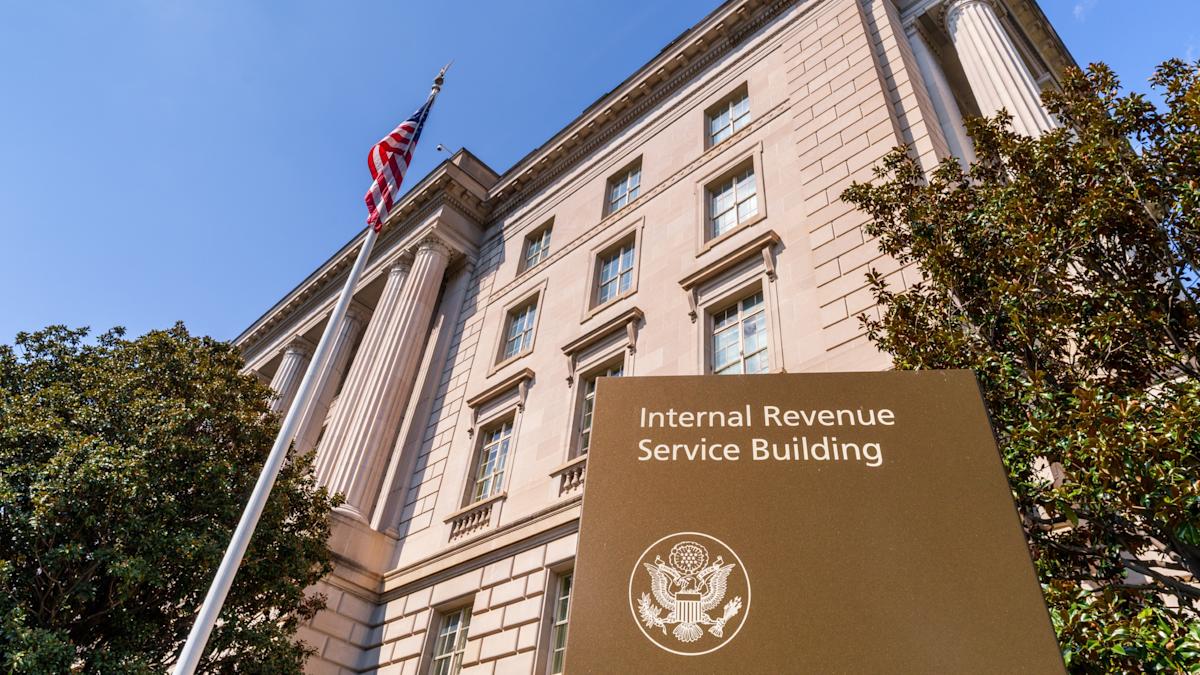
 J. David Ake / Getty
Moneywise and Yahoo Finance LLC may earn commission or revenue through links in the content below.
Spending decades to build up a robust IRA or 401(k) feels like one of the smartest financial moves you can make.
And for the most part, it is.
But there is a catch that many diligent savers may overlook. The larger your tax-advantaged retirement account, the larger your eventual tax bill can be in retirement.
To put it another way, your money gets a tax advantage on the way into a 401(k) plan or traditional IRA, but it is typically taxed as ordinary income on the way out. If you wait too long to prepare for this eventual toll, it can balloon into a sizable ‘tax bomb’ that could derail your retirement plan.
Fortunately, you can defuse the bomb if you understand its key trigger.
There’s a hidden time limit built into tax-advantaged accounts such as the 401(k) and IRA. Generally, the Internal Revenue Service (IRS) requires most retirees to start taking Required Minimum Distributions (RMDs) at age 73, rising to age 75 for those born in 1960 or later (1). In other words, the government compels withdrawals at this age.
In most cases, the RMD amount is calculated by dividing the account balance by a life expectancy factor — the IRS’s Uniform Lifetime Table. The older you are and the larger your retirement nest egg, the higher your RMD.
For instance, a 75-year-old with an account balance of $1.5 million would face a RMD of roughly $60,975, according to Investor.gov calculations (2). All of that is taxable income.
For many wealthy seniors, this forced withdrawal could be enough to push them into a higher tax bracket or even trigger additional payments such as the IRMAA (Income-Related Monthly Adjustment Amount) surcharge on Medicare Part B and Part D premiums (3).
The good news is that proactive tax planning can help you mitigate this issue.
Read More: I’m almost 50 years old and don’t have retirement savings. Is it too late?
If you’re on track for a higher tax bill in retirement, there are two ways to minimize the costs before you get there: planning and diversification.
Story Continues
Tax planning is an essential component of retirement planning. It can be just as important as saving and investing. But unlike saving and investing, there aren’t obvious rules you can count on since the tax code is in constant flux.
Existing strategies can be complicated — if you’re not keen on digging into over 6,000 pages of U.S. tax law, it’s probably a good idea to hire a professional (4).
Advisor.com can connect you with an experienced tax planner for free, and their network is full of fiduciaries, who are legally required to act in your best interest.
Advisor.com has made it simple to speak with licensed financial professionals in your area who can provide personalized guidance — including ways to potentially lower your tax burden.
Schedule a free, no-obligation consultation today to discuss your retirement tax options and find the best path forward.
Once connected, an expert advisor can help you navigate complex tax maneuvers like Roth conversion ladders, Qualified Charitable Distributions (QCDs) or 72(t) Substantially Equal Periodic Payments (SEPP) to reduce RMDs efficiently.
Diversifying into other assets beyond the stock market may also prove to be beneficial. Precious metals like gold and silver, for example, have unique properties that can make them appealing for investors seeking a hedge against inflation or global turmoil.
Gold experienced a record breaking 65% increase in 2025, as investors flocked to it during the economic uncertainty tariffs created (5).
One way to invest in gold that can provide significant tax advantages is to open a gold IRA with the help of Priority Gold.
Gold IRAs allow investors to hold physical gold or gold-related assets within a retirement account, which combines the tax advantages of an IRA with the protective benefits of investing in gold, making it an attractive option for those looking to potentially hedge their retirement funds against the RMD amount.
If you structure the account as a Roth rather than a traditional IRA — the investment can potentially grow tax-free.
Download your free information guide today to learn how to get up to $10,000 in free silver on qualifying purchases.
For those heading into retirement with a sizable nest egg, you’re probably looking at a comfortable retirement, even with the potential tax bill.
Preparation is the key. Take advantage of the strategies available to you to help reduce this eventual ‘tax bomb’ and minimize its consequences.
For most savers, regardless of income and wealth, the best time to start planning is today.
Join 250,000+ readers and get Moneywise’s best stories and exclusive interviews first — clear insights curated and delivered weekly. Subscribe now.
We rely only on vetted sources and credible third-party reporting. For details, see our editorial ethics and guidelines.
IRS (1); Investor.gov (2); Medicare Resources (3); Intuit (4); CNN (5)
This article provides information only and should not be construed as advice. It is provided without warranty of any kind.