
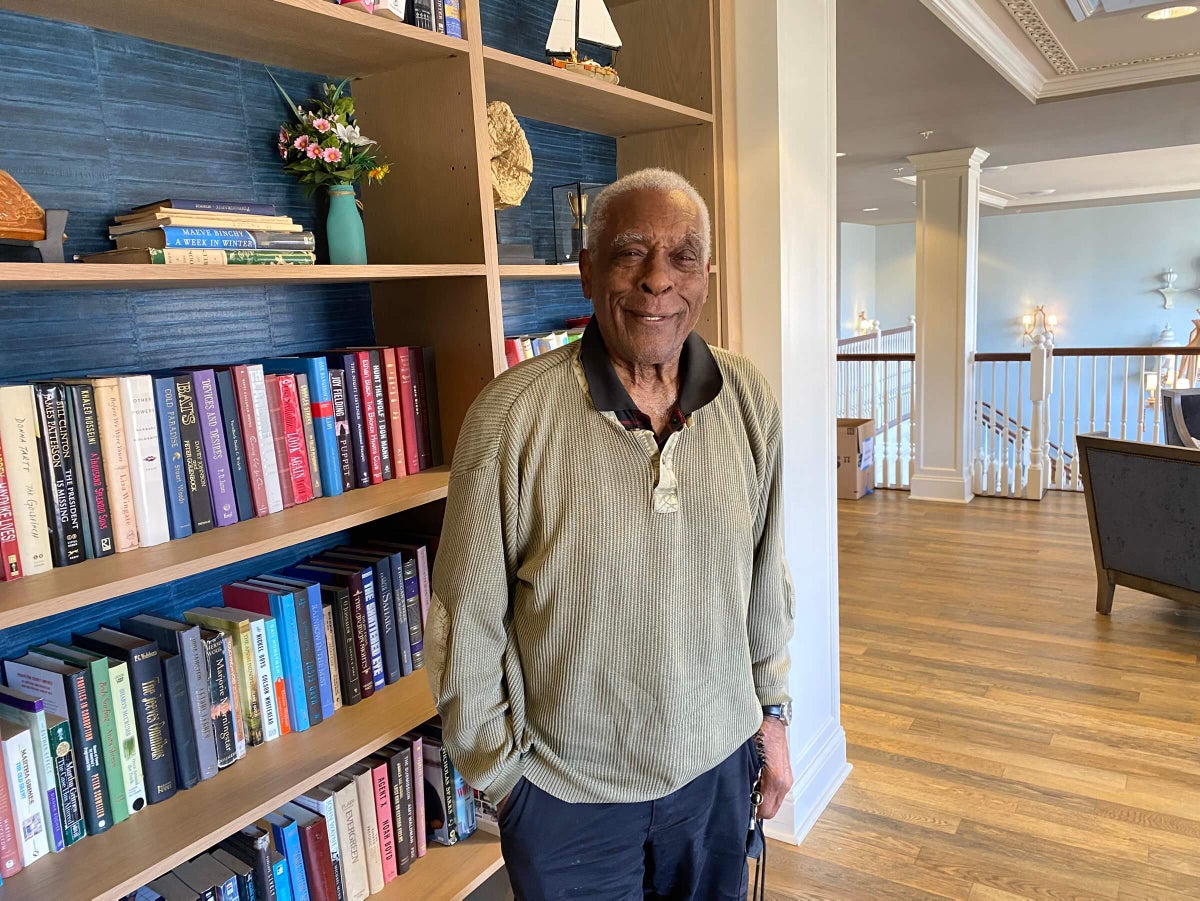
On March 9, the National Baseball Hall of Fame and Museum’s Board of Directors selected longtime MLB first baseman, broadcaster and baseball leader Bill White as the sixth recipient of the John Jordan “Buck” O’Neil Lifetime Achievement Award, presented “to an individual for extraordinary efforts to enhance baseball’s positive impact on society.” I recently had the honor of speaking with White about his career and the award, which will be presented to him on July 25 in Cooperstown as part of Baseball Hall of Fame Weekend.
Bill White, 92 years young, belonged in the Hall of Fame long before now, with a multi-faceted career in the sport that spanned four decades. He played in the majors for 13 years, missing one year due to military service, then spent 20 years as a broadcaster, most notably for the New York Yankees, before finishing his career in baseball with five years as President of the National League. He appeared on the Hall of Fame ballot just three times, never garnering 2 percent of the vote, and at least twice was under consideration by the Veterans Committee without earning enshrinement.
The Hall has generally not had any idea what to do with candidates like White, whose careers encompassed multiple roles. While their production as players may not have merited induction — White finished with 38.6 bWAR, which would put him near the bottom end of all first basemen in the Hall — their contributions to the game as a whole deserve some kind of honor. The Buck O’Neil Lifetime Achievement Award, named for its first recipient, is the closest we get to that sort of all-encompassing recognition of an individual’s life in baseball.
White began his professional career in 1953 in the Class-B Carolina League, playing for the Danville Leafs, where he hit .298/.369/.465 as a 19-year-old; his 20 home runs tied for fourth among all hitters in the league, which featured a few other teenagers and some regular position players in their 30s as well. He was also the only Black player in the league at that time, playing in Danville, located on the southern border of segregation-era Virginia. Fans subjected White to abuse and racial slurs.
He persevered, playing the next two years in A-ball and Double A, while continuing to take classes at Hiram College in the offseason, as he was studying to be a doctor and saw baseball primarily as a way to help fund his education.
“I wanted to be a doctor,” White told me when I spoke with him a few days after the Hall’s announcement. “I always wondered, ‘Did I make a mistake?’ but I’ve gotten over that now. I’m very proud to be honored by this (award).”
“My people didn’t want me to play baseball,” he continued. “I wanted to be a doctor, and I needed money to go to school, so I played in high school and college. I said I’ll save the money and I’ll become a doctor. Then I was successful as a player. To be quite honest, I think about what would happen if I had become a doctor. I would still be taking part in what I wanted to be.”
White made his MLB debut for the New York Giants on May 7, 1956, playing nearly every day the rest of that season, mostly at first base. He was drafted by the Army after his rookie year ended, and he missed all of 1957 and half of 1958 while he was serving in Fort Knox. He played on the base’s baseball team briefly, but quit after he was refused service in a restaurant because of his skin color, while his white teammates received service and said nothing.
When he returned to MLB, he played only 26 games in the second half of 1958 for the Giants (now in San Francisco), as he’d been supplanted at first base by 20-year-old Orlando Cepeda.
The Giants then traded White to St. Louis, a move he later said in his autobiography Uppity “would turn out to be one of the best moves of my life.” He spent seven years with the Cardinals, hitting 140 homers and amassing 28.1 bWAR in that span while making five All-Star teams, back when that was a more prestigious honor.
He developed a reputation as a strong defender at first base as well, with managers and coaches awarding him six Gold Gloves with St. Louis and one more after the Cardinals traded him to Philadelphia before the 1966 season. His last year as a player came in 1969, back with the Cardinals one last time, where he played sparingly as a pinch hitter.
White’s broadcasting career began while he was still a player, first for KMOX in St. Louis, then later for WFIL-TV (now WPVI) in Philadelphia, where he hosted a pregame show and also worked as a sports reporter in the offseason. When he retired, he became WFIL’s sports director for a year before the Yankees hired him as the first Black broadcaster for any MLB team — perhaps ironic for a franchise that was last to integrate its playing roster. He called games for the Bronx Bombers for almost 20 years, most of that time working as part of a trio with Frank Messer and Phil Rizzuto.
That’s where I come into the picture: I grew up listening to White, Messer and the Scooter on WABC radio and WPIX-11 on television, and those remain some of my core memories of my baseball fandom. Rizzuto was the character, but we all loved him in my family because he was Italian like we are. Messer was the just-the-facts guy who rarely altered his tone or inflection. White painted more of a picture for the listeners or viewers, with a mellifluous baritone voice and a style that showed more emotion than Messer without relying on histrionics.
“Those are many happy memories for me,” White says now. “A lot of guys at work don’t get along, but we got along very well, me, Frank, Rizzuter, that’s what I called (Rizzuto).”
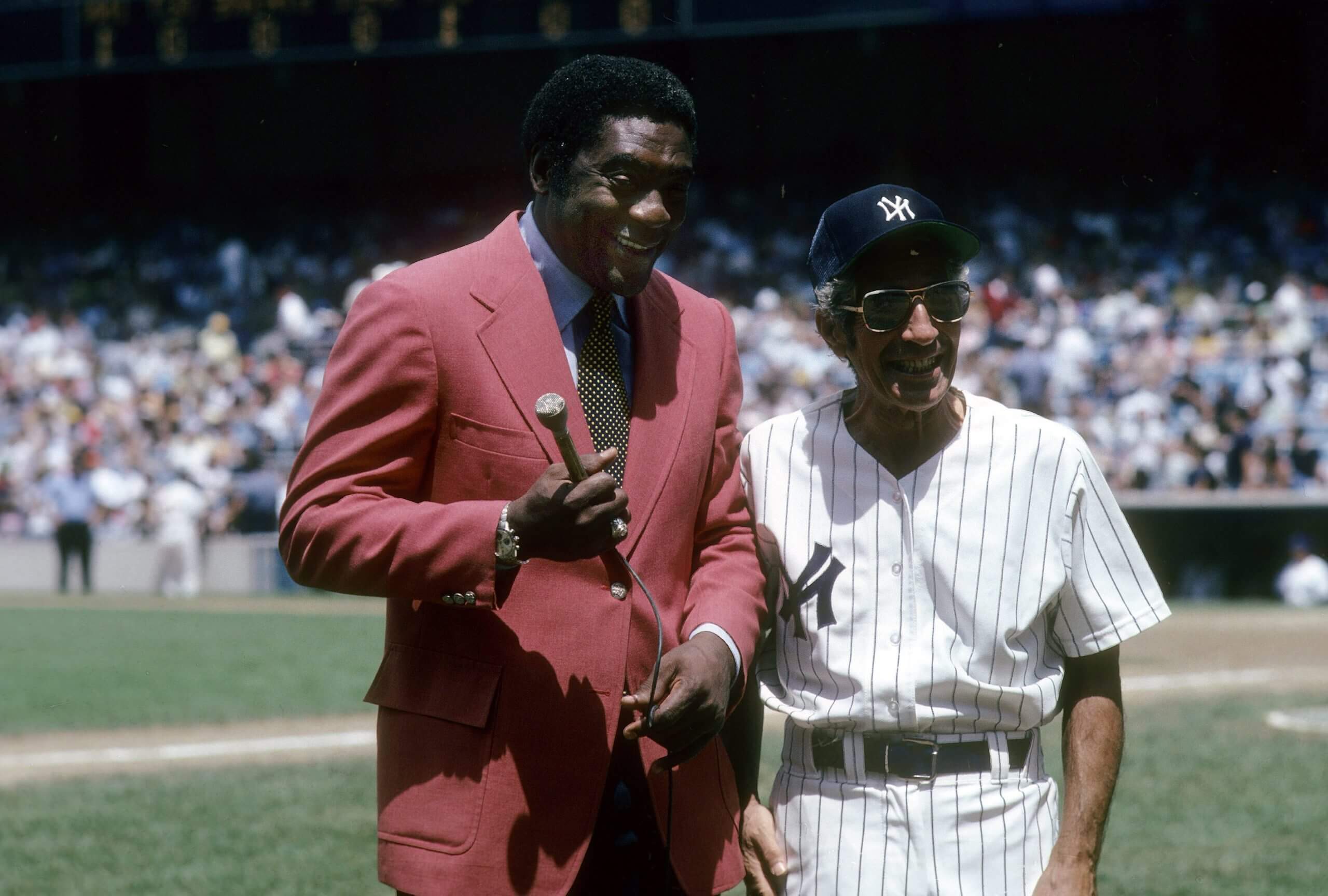
Bill White and Phil Rizzuto together at a Yankees Old-Timers Game. (Focus on Sport / Getty Images)
When asked about how he learned his style of announcing, he said, “I think I was just lucky. If you play baseball, you’re sitting on the bench, your guy does something, so you go up and watch it. Being up there and watching it happen, made it easy for me to describe it. I think that helped, I really don’t know. I just did it!”
White describes himself as an attentive player, and says that’s part of how he became such a successful hitter.
“You better know your pitchers — they spend time knowing you,” he said. “No. 1, you’ve got to know their best pitch. Some guys can’t throw a curveball well. This guy throws harder than somebody else. So you pay attention to how he’s pitching to you, and you sit down and watch how he pitches to other people, too. If you’re going to be successful you’ve got to spend a lot of time really looking at what people do, even when you’re sitting on the bench. Some guys don’t do that, but I did.”
He also noted that his mother encouraged him to read as part of her emphasis on school.
“I’m still a big reader,” he says, “Sometimes, I forget what I have read, but my mother made me a big reader, so I got to be fairly decent in school.”
I asked White if he had any advice for young people looking to play professionally, especially to young Black players given their declining participation in youth baseball and declining numbers within the majors.
“You’ve got to want to play,” White said. “If you don’t want to, it doesn’t make a difference if you’re black, green, white, yellow. I was just thinking about that today. I was fortunate to make the right decision from a financial standpoint. I’ve used that to do other things, to broadcast, to write a book. It’s important not just to depend on baseball, to invest after you’re done playing.
“I’ve had a pretty good life. The man upstairs has been great to me, I’ve always got to thank him. (The award) is an excellent thing that has happened. I’m very proud.”