
Doug Hibbard noticed something odd for this time of year at San Onofre State Beach: A surfer riding waves without a winter wetsuit, instead sporting just swim trunks.
“Really? In March?”
The Laguna Niguel surfer who has been catching waves for nearly six decades wasn’t totally surprised; he, too, has noticed this winter that the water feels more like a lukewarm bath than the toe-numbing, frigid cold plunge typical for this time of year.
“The water never got cold,” Hibbard, 69, said of this winter season. “I don’t think it ever dropped below 60.”
Marine scientists, researchers and the fishing community are also buzzing about yet another marine heatwave some are saying could rival “The Blob” from a decade ago that had big impacts on the coast.
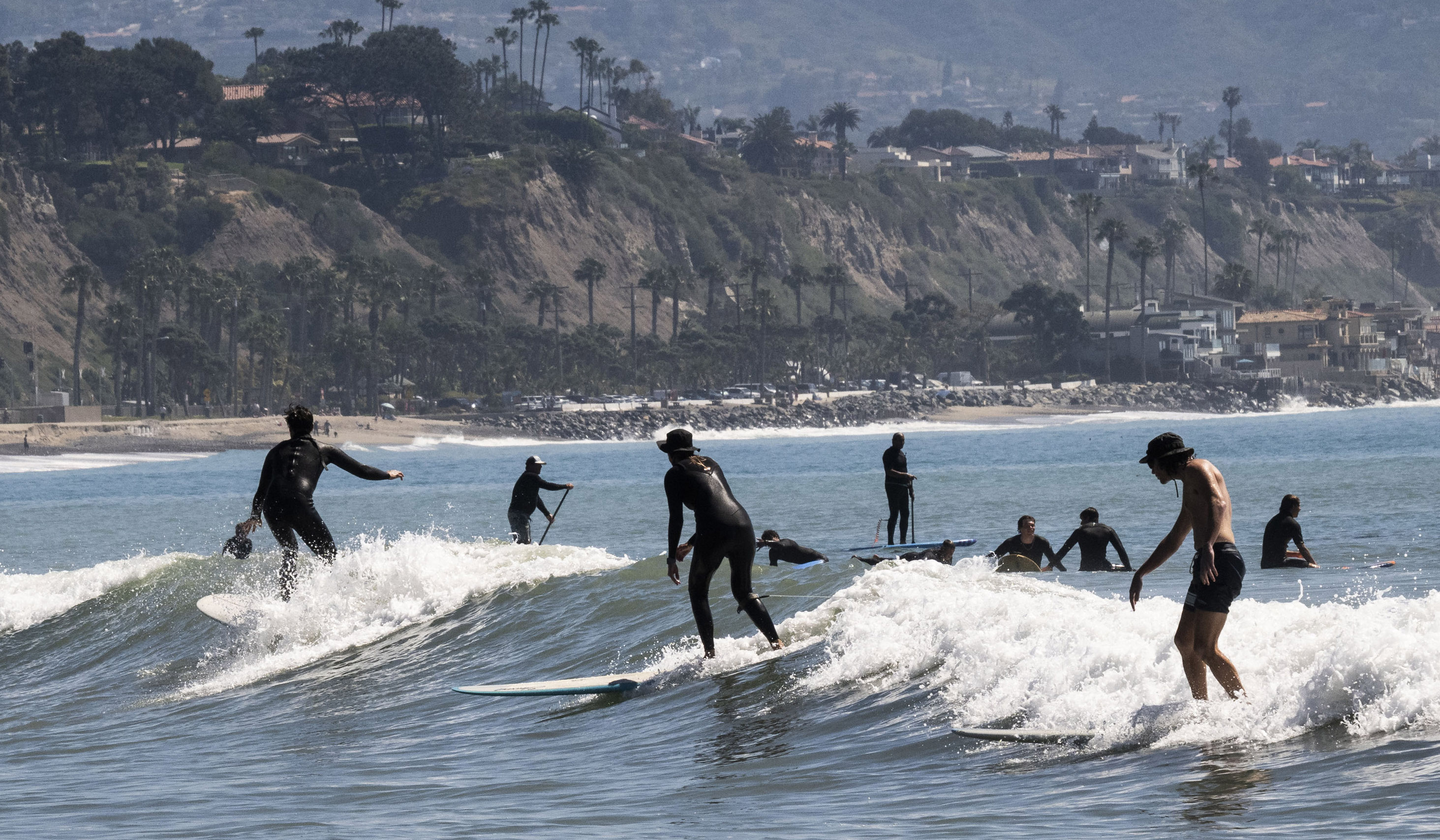
Surfers glide across the waves at Doheny State Beach in Dana Point on Thursday, March 19, 2026. The unusually warm water is not typical for this time of year. (Photo by Paul Bersebach, Orange County Register/SCNG)
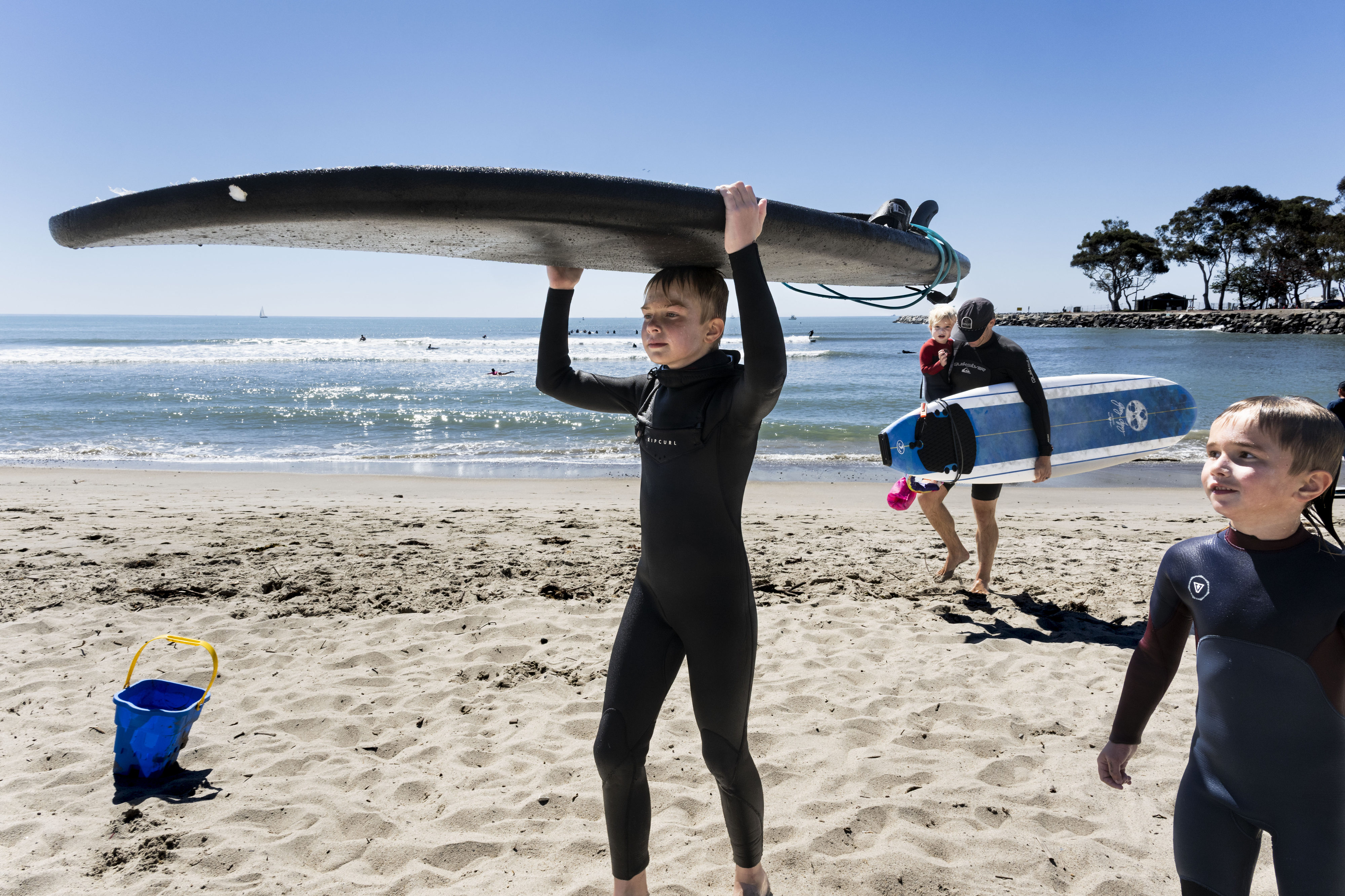
Malachi, Livia, Micah and Luke Carlson, from left, come out of the water after surfing at Doheny State Beach in Dana Point, CA on Thursday, March 19, 2026. (Photo by Paul Bersebach, Orange County Register/SCNG)
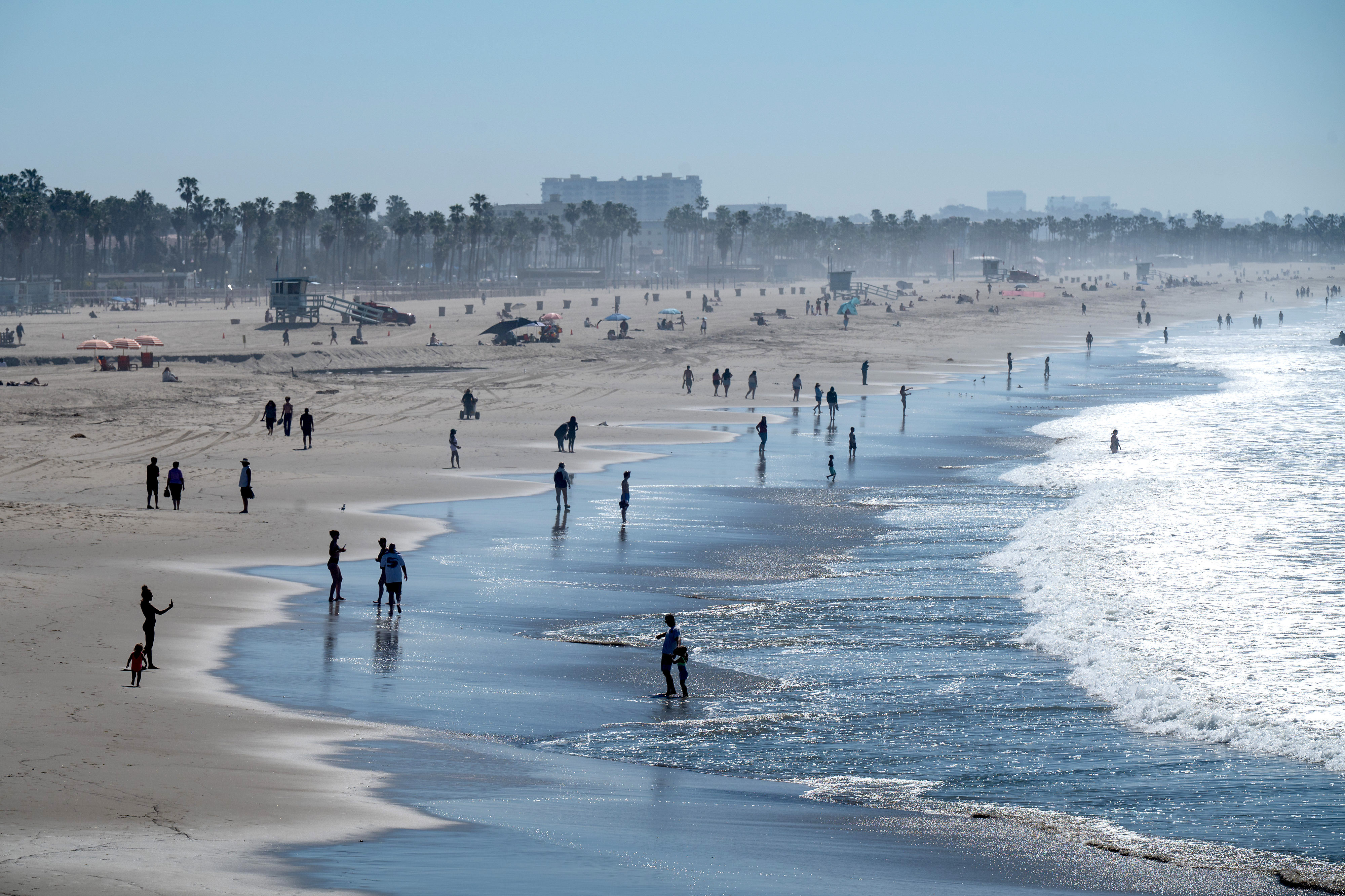
Visitors cool off in the ocean near the Santa Monica Pier in March, 2026. (Photo by David Crane, Los Angeles Daily News/SCNG)
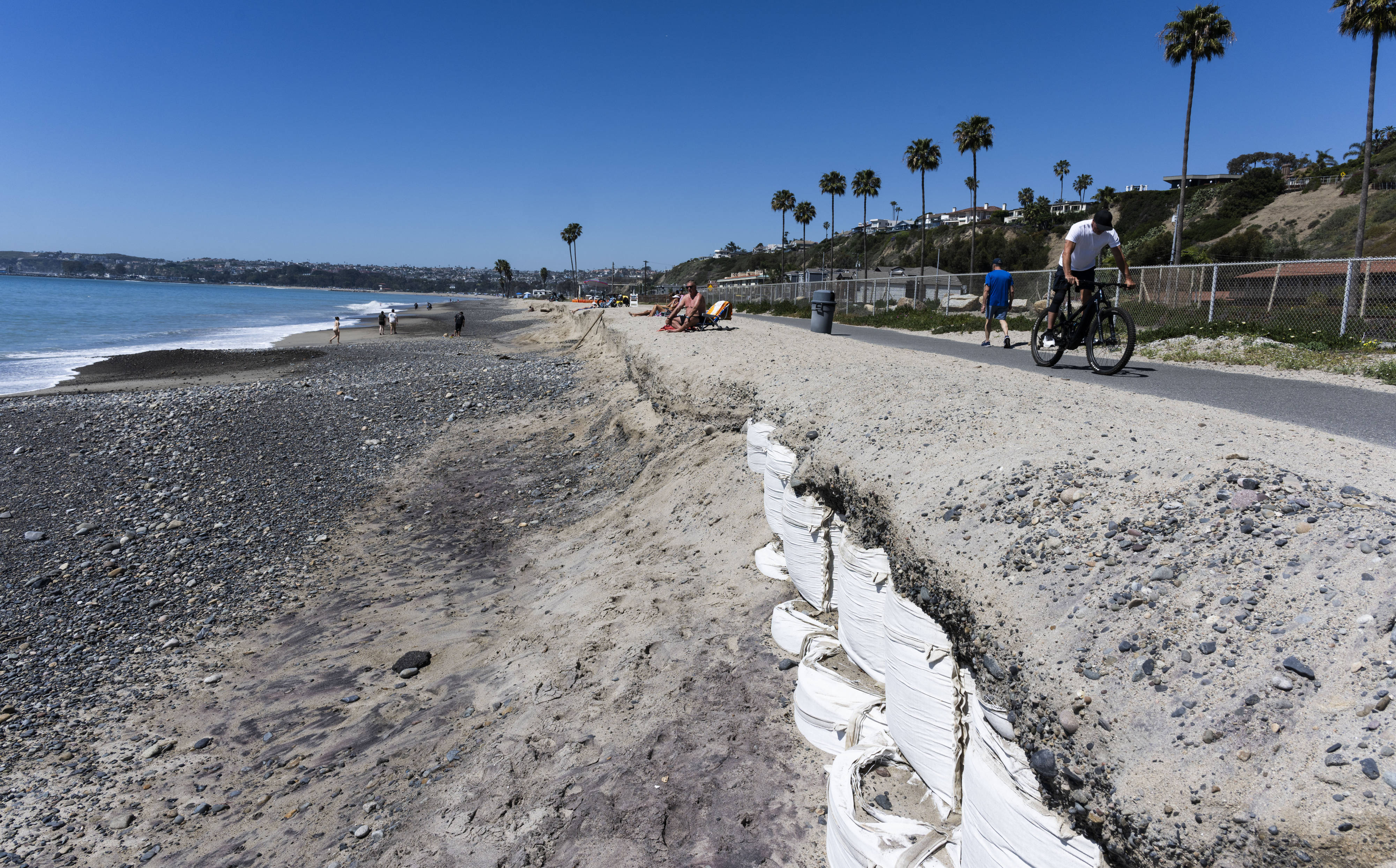
Sandbags help shore up the bike path at Capistrano Beach in Dana Point, CA on Thursday, March 19, 2026. (Photo by Paul Bersebach, Orange County Register/SCNG)
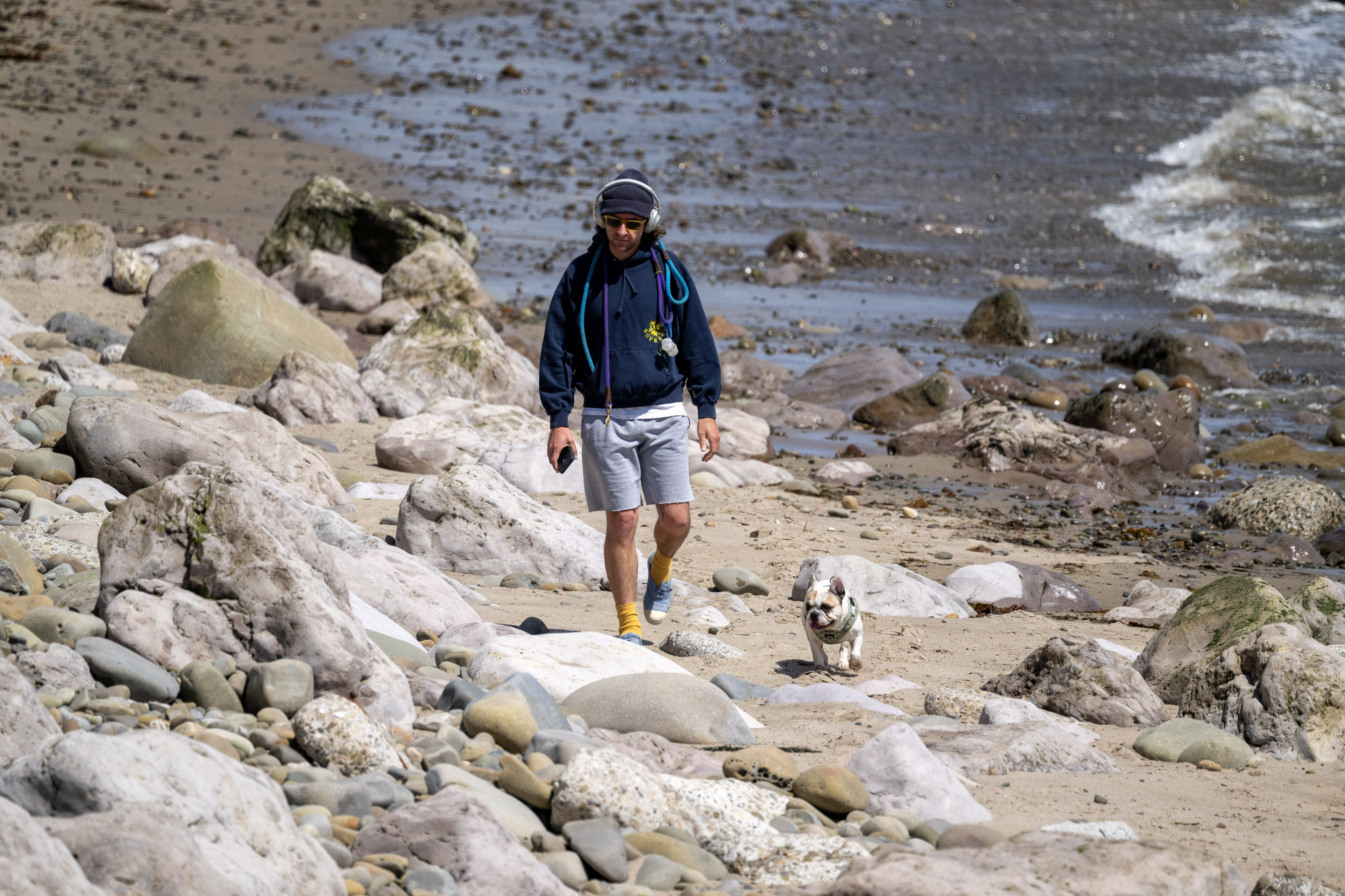
A man walks his dog at Ventura Beach in Ventura in April, 2025. (Photo by Hans Gutknecht, Los Angeles Daily News/SCNG)
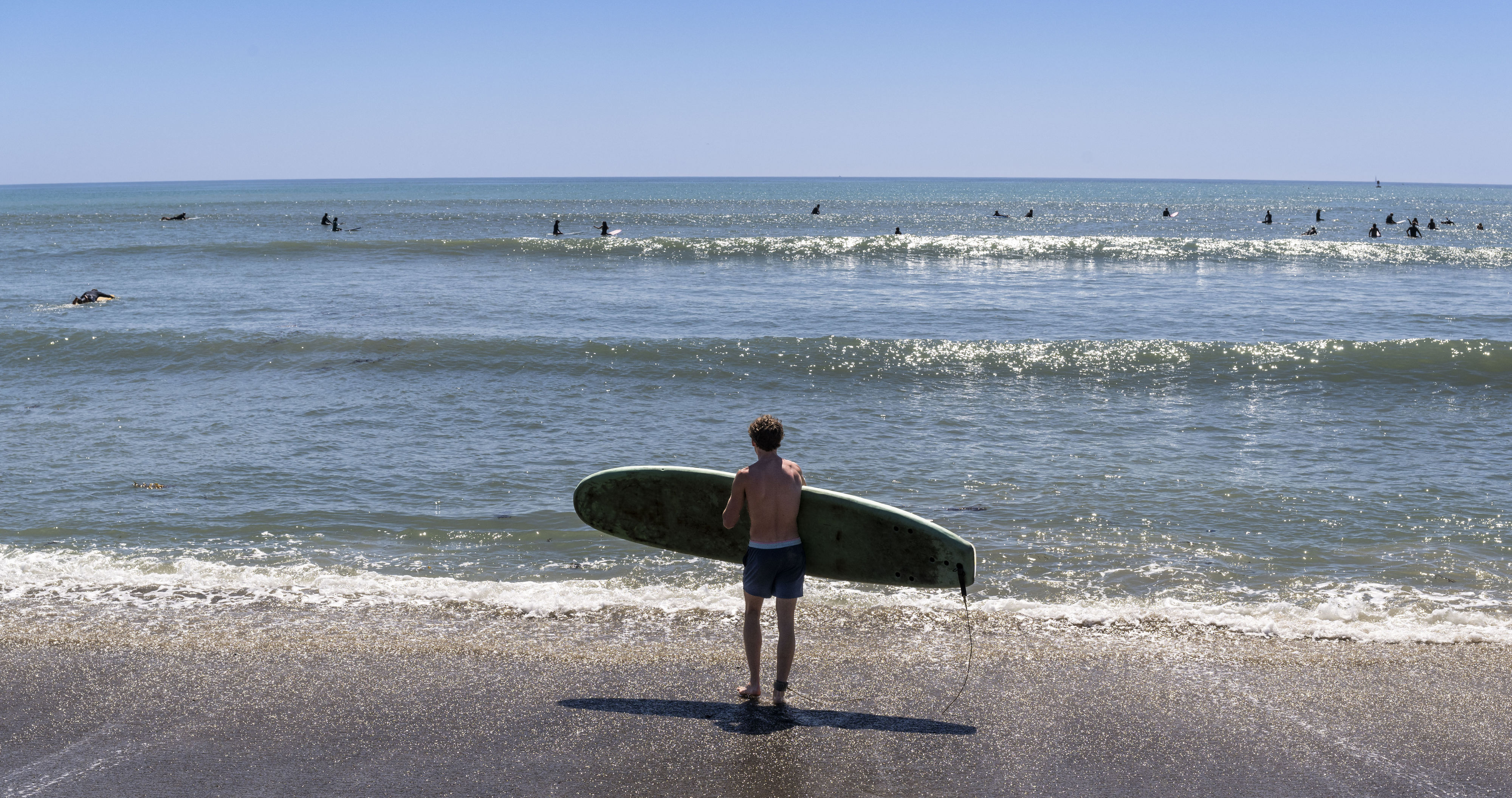
A surfer heads to the waves at Doheny State Beach in Dana Point, CA on Thursday, March 19, 2026. (Photo by Paul Bersebach, Orange County Register/SCNG)
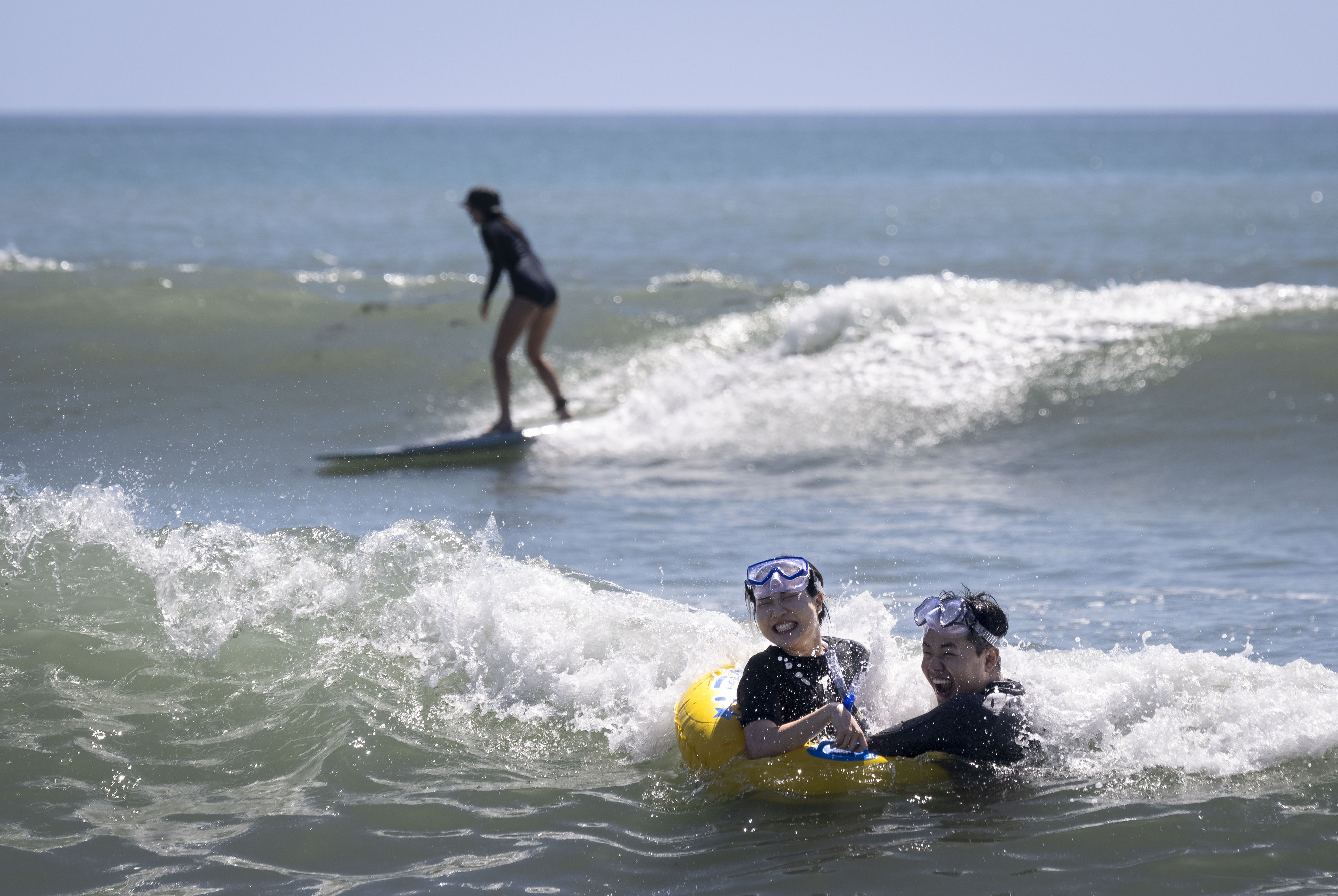
Cody and Lily Kim use a float in the waves at Doheny State Beach in Dana Point, CA on Thursday, March 19, 2026. (Photo by Paul Bersebach, Orange County Register/SCNG)
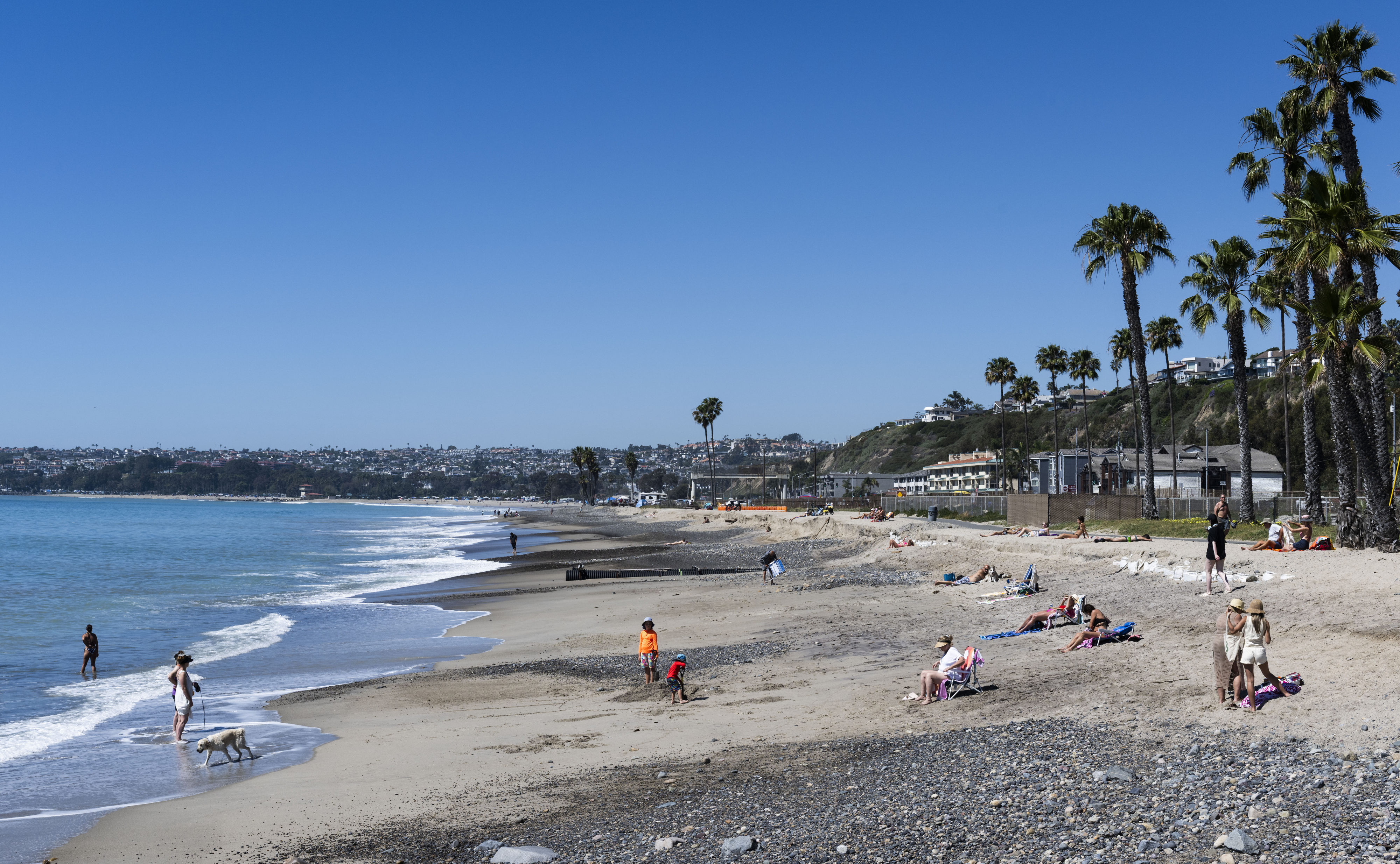
Poeple use the beach at Capistrano Beach in Dana Point, CA on Thursday, March 19, 2026. (Photo by Paul Bersebach, Orange County Register/SCNG)
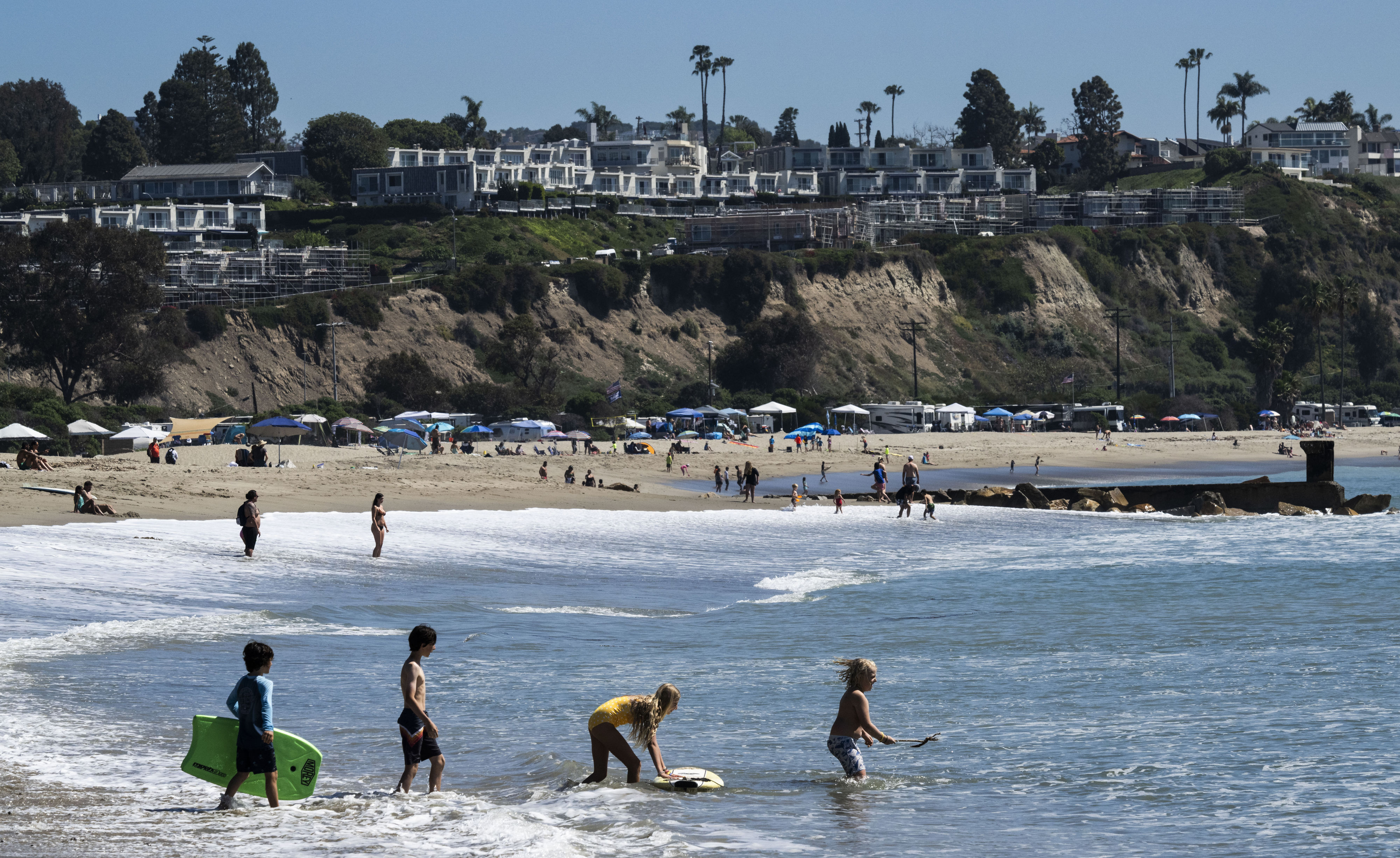
Kids play in the waves at Doheny State Beach in Dana Point, CA on Thursday, March 19, 2026. (Photo by Paul Bersebach, Orange County Register/SCNG)
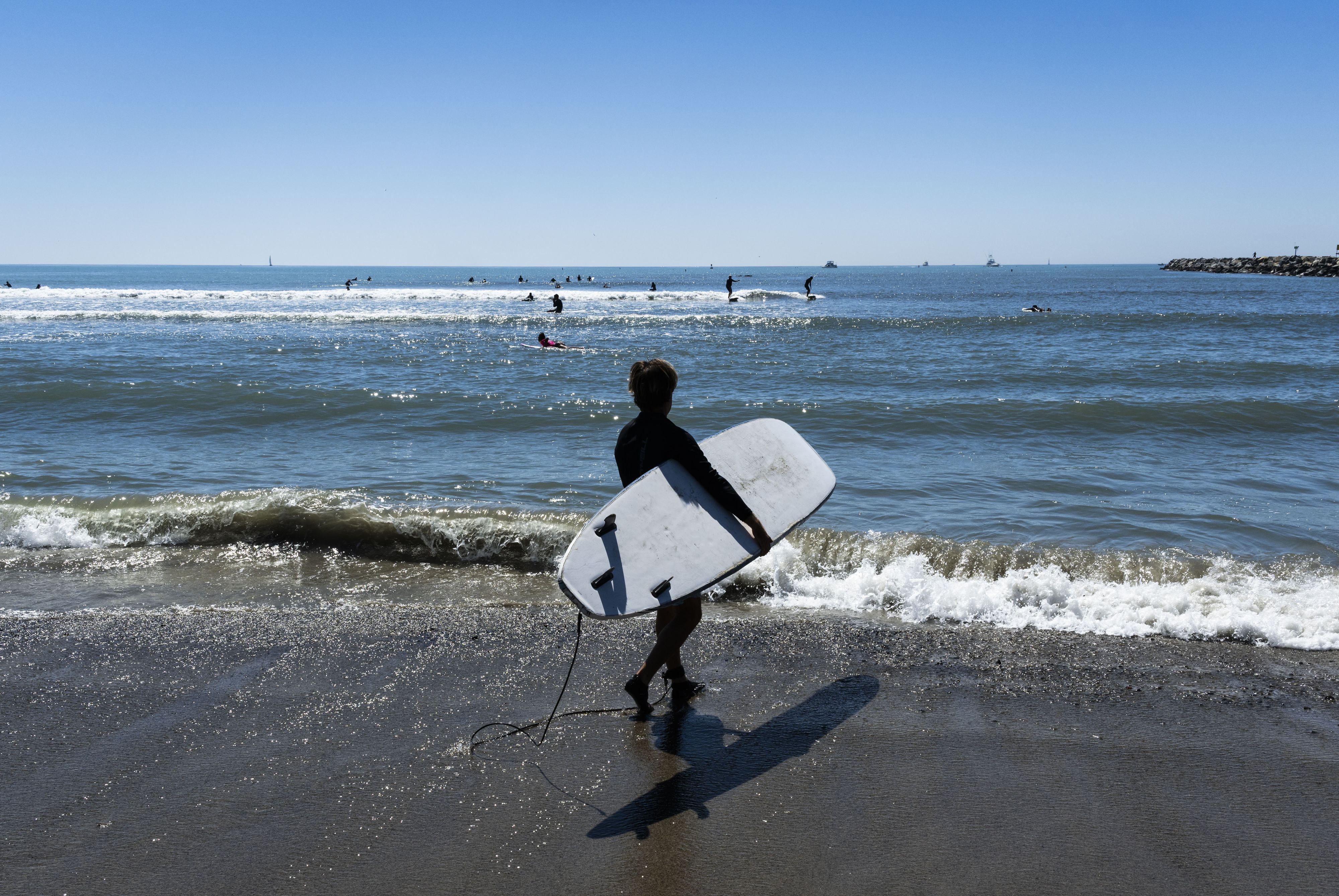
A surfer heads to the waves at Doheny State Beach in Dana Point, CA on Thursday, March 19, 2026. (Photo by Paul Bersebach, Orange County Register/SCNG)
Show Caption
1 of 10
Surfers glide across the waves at Doheny State Beach in Dana Point on Thursday, March 19, 2026. The unusually warm water is not typical for this time of year. (Photo by Paul Bersebach, Orange County Register/SCNG)
And it could turn out there is a double whammy of weather phenomena in 2026, as forecasters are calling for a likely El Niño later in the year — news headlines touting it as a “Godzilla” or “Super” El Niño year —and that could also bring out-of-the-ordinary weather conditions, including a wet and wild winter for Southern California.
Such anomalies bring both excitement and concern about what could happen if both occur with strength: big swells to thrill surfers and rarely seen sea creatures to fish, but also storm surges that could ravage shorelines and lasting impacts on the local ecosystem.
Forecasting, however, can be tricky, with conditions and weather that can shift as swiftly as a changing wind.
“We have forecast tools that provide some insight,” said Andrew Leising, a research oceanographer at the National Oceanic and Atmospheric Administration’s Southwest Fisheries Science Center based in Long Beach. “But we are also watching carefully for implications on the marine ecosystem.”
Repeat of ‘The Blob?’
A marine heatwave has kept the ocean warmer than usual since last summer, with heat maps showing readings that rival “The Blob” that started being tracked in fall 2013 in Alaska and swelled all the way to Mexico by late 2015.
That was the first recorded big, unprecedented marine heatwave to cover most of the North Pacific, Leising said.
“The Blob” refers to that specific event, named by a scientist whose catchy term caught on in news headlines about the unusual warm-water event.
An El Niño also developed in 2016, keeping waters unusually warm. Another marine heatwave in 2019 was dubbed “Blob 2.0.”
Now, some are saying the ocean is experiencing “Blob 3.0,” marking only the third time on record that such a large section of the coastal ocean has remained so warm, for so long into winter months, without it being an El Niño, according to NOAA.
It was an interesting few years across Southern California’s coastline when the first marine heatwave and an El Niño combined a decade ago, shifting species to areas they are normally not found, causing die-offs and other disruptions of ecosystems.
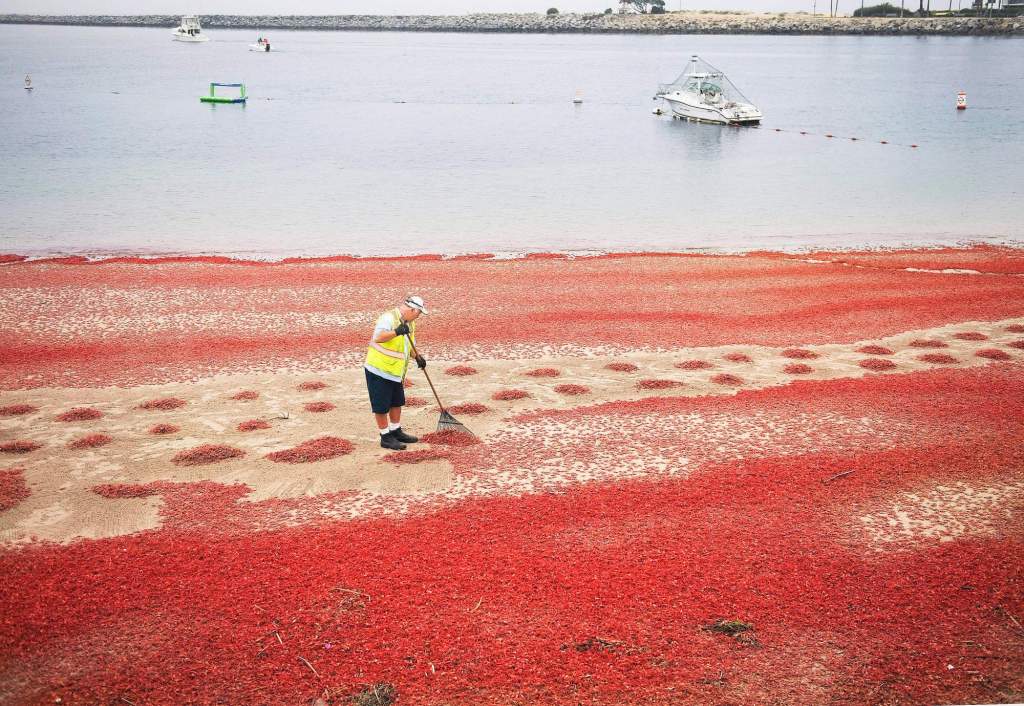
Millions of dead red crabs, normally found further south, washed up on local shores, making a stinky mess. Exotic species such as whale sharks, hammerhead sharks and bluefin tuna were seen by boaters and anglers who marveled at the sea creatures more common in tropical waters.
“It was amazing, I went out and caught a wahoo. I caught hundreds of tuna. We couldn’t find enough boats to charter,” said longtime boat captain Todd Mansur. “Every boat that was available was booked. We were going 2 to 3 miles offshore and catching an unlimited amount of different fish.
“We were getting tuna every day,” he added. “You could blindfold yourself and catch tuna.”
The warmth in shallow waters also drew an aggregation of great white shark juveniles — dominating headlines as they hung out for months off Huntington Beach, Newport Beach, Long Beach and the South Bay.
Their presence prompted nervousness among beachgoers and surfers sharing the water, but marveled researchers who were perplexed by the abnormally longer stay close to shore. Historically, after being born, the great whites would leave the area for warmer waters elsewhere.
The current marine heatwave has raised the temperature of waters along the West Coast roughly 3 to 4 degrees above normal. In September, the northeast Pacific reached its highest average temperature of 69 degrees, half a degree warmer than ever before, according to NOAA.
This month, water temps were in the mid-to-upper 60s, at a time when the thermometer typically dips to the 50s.
An El Niño creates a much narrower band of warm water, Leising explained, bringing species such as tropical sea snakes or red crabs up the coast. The Blob, on the other hand, pulled species from further offshore, such as bluefin tuna or whale sharks, closer to shore.
Already, there have been signs of species in unusual areas, such as tuna caught in large numbers near Alaska last fall and just a few weeks ago off Monterey, regions where they are not normally found.
“We know these marine heatwaves alter ecosystem conditions, which affects fish and other marine life,” Leising said. “We’re very interested in what the fishing fleet and others who are out on the water are seeing and are looking into new ways to collect this information.”
Mansur, also a board member of the Coastal Conservation Association, said the warm-water conditions and El Niño forecasts are the buzz at all the angler tradeshows, meetings and on the charter boats.
“It’s one of those things where a lot of people look forward to an El Niño or ocean heatwave, because it’s an opportunity to bring tropical species — yellowfin, mahi mahi, even wahoo — off local waters,” Mansur said. “It’s exciting for the fishing community, because when they think of El Niño, they think exotic fish.”
But there’s a downside, he acknowledged.
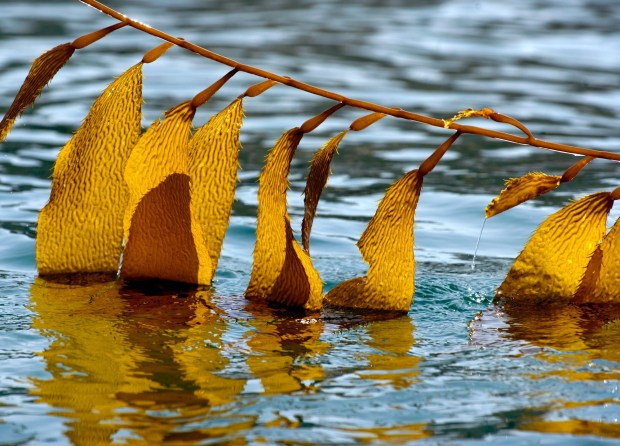 Some of the kelp takes on a golden beauty while back-lit in the morning sun off Laguna Beach in 2013. Ocean seaweed, or kelp, is very vulnerable to warm water and invasive species that thrive in those conditions take over. (Photo by MICHAEL GOULDING,ORANGE COUNTY REGISTER/SCNG)
Salmon fisheries struggle because the fish have trouble reproducing and making it back into rivers. Ocean seaweed, or kelp, is also very vulnerable to warm water and invasive species that thrive in those conditions take over.
“There’s a give and take,” Mansur said. “We get tropical fish, but it harms our ecosystem.”
Marine biologists and researchers are keeping a close eye on harmful algae blooms that thrive in warm water — extended blooms last year produced toxins that sickened and killed thousands of sea lions, birds and dolphins.
“That’s something to worry about,” Leising said.
Nancy Caruso, who has studied and replanted kelp off the coast with her nonprofit Get Inspired, said in recent kelp surveys, she’s only seen about 100th of what she normally sees, the warm water likely impacting the reproduction of the sea forest.
“Normally, the reefs are covered in thousands of baby kelps,” she said. “We’ll see how it plays out. We don’t see the babies, but hopefully the adult kelp will be able to withstand and make it through the summer — if it doesn’t get really warm like it’s projected.”
A decade ago, the warm ocean was a “disaster,” with 600 miles of kelp forests destroyed, she said.
“We’re still recovering from that,” she said. “It definitely affects the blooms of algae, the larval fish that don’t have anything to eat, and affects the sea life and the whales. It makes its way up the food chain, but we don’t see the effects of it for years.”
The marine heatwaves have huge repercussions on the ecosystem, the impacts sometimes not seen for years later, she said.
This latest Blob-like event is looking comparable to the one about a decade ago, but it’s not yet as hot or deep, Mansur said, and could be vulnerable to cold water upwelling and dissipating through spring.
Or, it could stick around for years and rival “The Blob.”
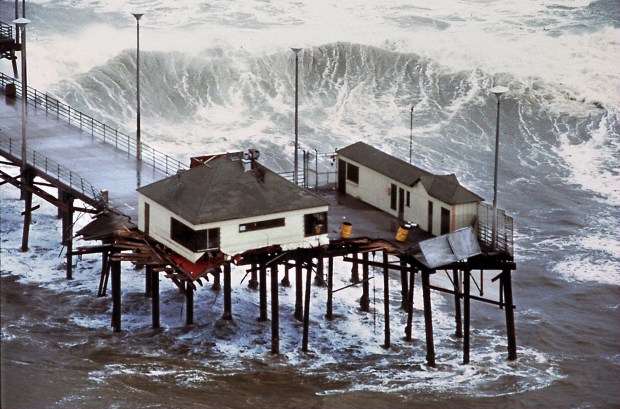 Huntington Beach Pier and its End Cafe are destroyed by El Nino’s huge waves in 1983. Warm water could bring exotic sea life, but also kill kelp, and more frequent storms could spell trouble for the region. (Photo by H. Lorren Au Jr., Orange County Register/SCNG)
Double whammy
El Niño events are natural climate patterns that tend to occur every two to seven years and can have impacts across the globe. On the West Coast, it typically means drier, warmer weather for Northern California and wetter conditions for the southern region.
“We get all the rain we want, but it falls in our southern parts where we don’t have ways to trap and use it,” Mansur said. “It’s hard on everything on the coastline when we have that kind of rainfall.”
He has been around long enough to remember the 1983-84 El Niño that destroyed the San Clemente Pier. That same storm severely damaged the Huntington Beach Pier.
Leising remembers the big El Niño in the ’90s when the windows of a restaurant on a pier in San Diego were shattered by the raging sea. Strong storms flooded streets and overwhelmed infrastructure.
“That was the last really, really big one,” he said.
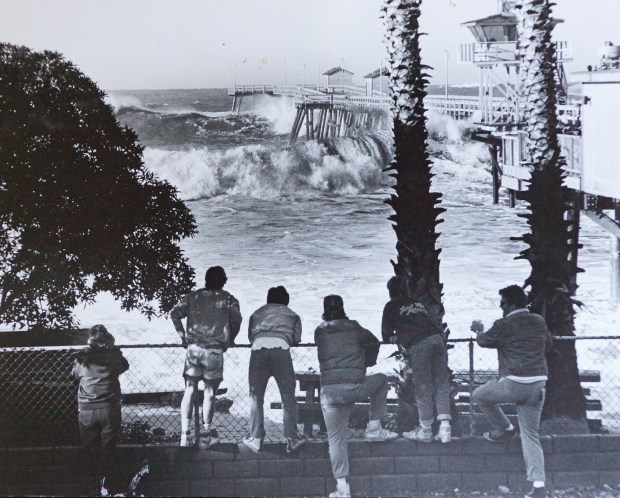 San Clemente redesigned and rebuilt its pier after El Niño storm surf knocked much of it down in1983. In another El Niño year, 1988, the pier took some major hits but survived. (Photo by FRED SWEGLES, ORANGE COUNTY REGISTER/SCNG)
The El Niño in 2016 was sizable, but not the largest, and then in 2023-24, a moderate El Niño fueled storms and significant rainfall.
A European forecast model is saying the upcoming El Niño could be a strong one. Most models are calling for a 60% chance of an El Niño year. Some headlines are dubbing it a “Super El Niño.”
“It’s not 100%, it’s a little far away for us to predict,” Leising said, noting another assessment will likely be out in April.
Warm water also has impacts on the coastal landscape. When ocean water warms, it “expands,” Leising explained. When combined with mega high tides and big swells, waves may batter beaches, causing severe erosion.
Doheny State Beach and Capistrano Beach are among stretches that saw severe loss of sand around 2016, and it’s still unknown if the beaches will ever recover. That was also about the time when Cottons Beach in south San Clemente saw its shore disappear.
Hurricane activity can also ramp up, Mansur said. The most notable, as ocean temperatures rose in 2014, was Hurricane Marie, which brought massive waves that added to the fun for surfers, but chomped away at the coast.
“If we do have very warm water, we’re going to see a lot of storm activity in Mexico and Baja,” Mansur said. “There’s a chance we see storms creep up Southern California and threaten the coast with rain, moisture, wind and waves, big surf.”