

“I’ll always find a way to keep my daughter safe,” said Lisa Thornton, who has considered leaving the country for Colombia. She spent her life savings moving herself and her daughter to Boston from Florida in 2024 after that state banned gender-affirming care for minors.
The issue escalated in December, when the Trump administration proposed a federal rule change to bar hospitals from providing gender-affirming procedures and hormone treatments for patients under 18 or risk losing their Medicaid and Medicare funds. A separate rule would block federal funding for those treatments for youths 19 and younger.
More than 40 hospitals and health systems nationwide have stopped providing gender-affirming treatments since January 2025, a STAT report found. That includes systems in neighboring states such as Yale New Haven Health in Connecticut and NYU Langone in New York, though New York’s attorney general ordered services to resume. Earlier this year, New Hampshire became the only state in New England to ban the care for minors.
US Health and Human Services did not respond to a request for comment.
“We will not stop until every single child is protected from the destruction of the integrity of God’s chosen human body,” Mike Stuart, HHS general counsel, posted on X last month while announcing investigations into Johns Hopkins Hospital and Health System in Baltimore for continuing to provide gender-affirming care.
Another mother who lives in the Cambridge area sought care for her transgender child at Fenway Health after leaving Florida. Ruth, who is going by her middle name to protect the privacy of her 16-year-old daughter, is prepared to fly to Canada to access the medications, or even move abroad.
 An illustration by Lisa Thornton shows herself shielding her daughter from arrows flying through the air.Erin Clark/Globe Staff
Both families found other providers who prescribe gender-affirming medications after Fenway ended its offerings, but the situation feel tenuous.
“As goes Florida, so will go the rest of the country. So on the one hand, I’m not surprised at all that we’re seeing all of this,” Ruth said. “On the other hand, it’s terrifying.”
Earlier this month, a US district judge in Oregon struck down a declaration by HHS Secretary Robert F. Kennedy Jr. that claimed gender-affirming care for minors does not meet medical standards, dealing a setback to the Trump administration. The judge said Kennedy didn’t go through the proper administrative procedures when issuing the declaration.
Still, the administration is pursuing other avenues, including attaching restrictions to federal legislation and launching investigations into hospitals such as Boston Children’s Hospital.
The proposed rules have no legal authority yet and, if implemented, would face legal challenges, said Jennifer Levi, an attorney with GLAD Law, a Boston-based LGBTQ legal rights organization. Even so, she said, the threats are still having an impact.
“The federal government has taken steps with the express goal of trying to shut down care,” Levi said. “There have been threats to research funding, threats to federal contracts, threats to health care programs. Even when courts stop them, the threats alone open the door to care being restricted.”
Hospitals and clinics that halt services face potential discrimination lawsuits from patients and attorneys general. Already, hospitals in Connecticut, Colorado, and California are facing legal challenges after suspending services.
Kristen Dattoli, a spokesperson for Boston Children’s Health, which still provides this care, said the hospital understands that patients and families are worried and feeling anxious right now.
“We remain committed to making sure they feel supported,” Dattoli said.
Gender-affirming care — including counseling, puberty blockers, and hormone therapy — is considered medically necessary by major professional organizations, including the American Academy of Pediatrics. Critics argue minors may be too young to make decisions with long-term consequences.
Massachusetts’ Shield Law explicitly protects providers offering the care, and Governor Maura Healey and Attorney General Andrea Campbell have reassured they will fight to protect access to care.
“My office is in contact with Fenway Health and Baystate Medical to help support the continuity of care for patients at other facilities across the Commonwealth, and I will continue to fight back against the Trump Administration’s illegal policies that harm our residents and violate their rights,” Campbell said in a statement.
State legal protections have not shielded providers from pressure from Washington, leaving hospitals to navigate an increasingly precarious legal landscape.
“We believe hospitals may be at risk of a ‘secret shopper’ looking to report hospitals that offer this type of care,” Kyle Faget, attorney with the Massachusetts Health & Hospital Association’s external law firm, Foley & Lardner, said in an association webinar.
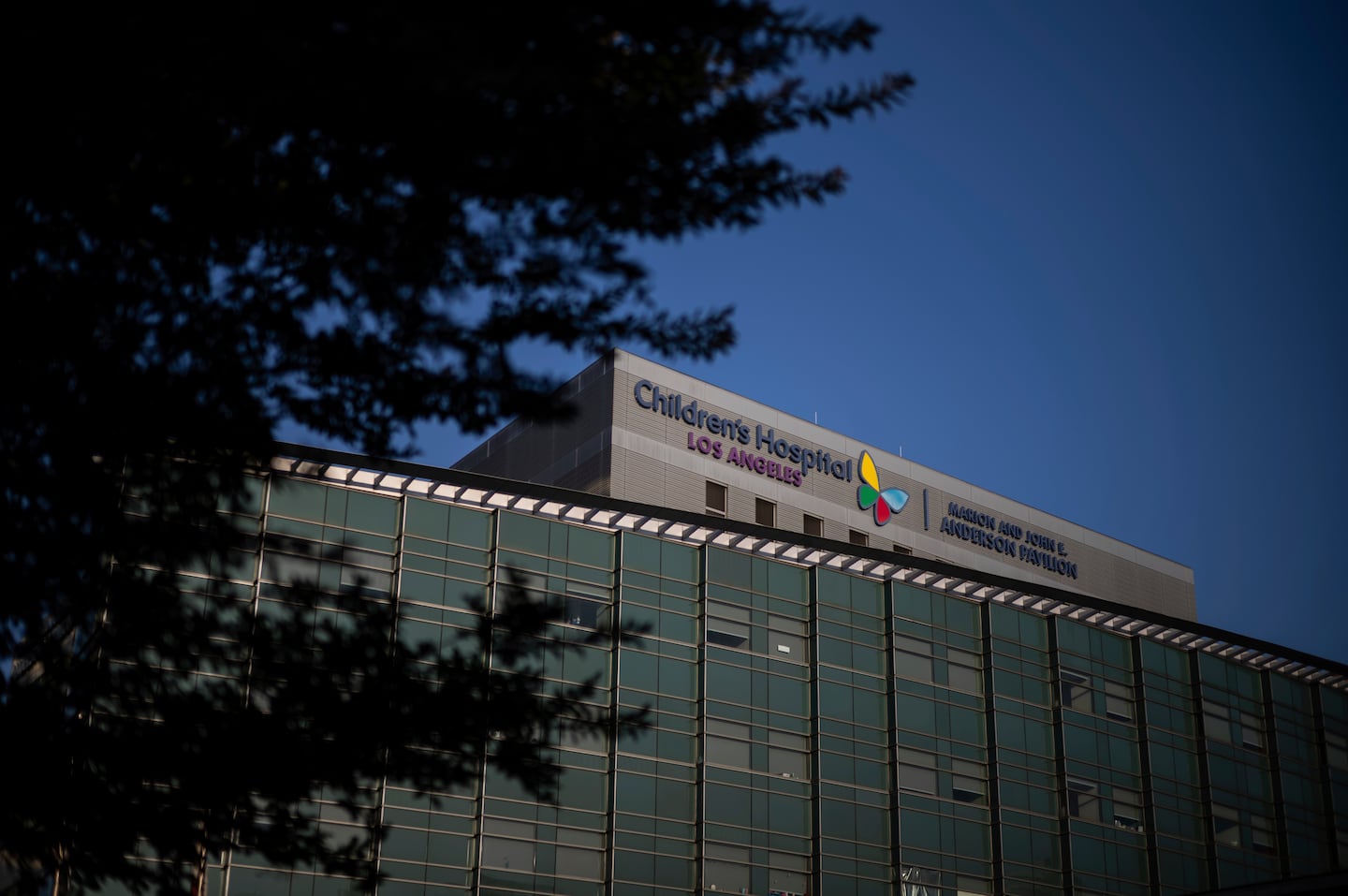 Children’s Hospital Los Angeles closed its Center for Transyouth Health and Development last year, citing Trump administration pressures.Jae C. Hong/Associated Press
In the webinar, the lawyers advised that the federal government can sue providers and terminate research grants.
Fenway Health CEO Jordina Shanks said the organization still provides a majority of gender-affirming care for youth and adults despite halting certain prescriptions.
“It’s an untenable position that we did not ask to be put in,” said Shanks, who couldn’t quantify how many adolescent transgender patients Fenway still serves. “We’ll just keep showing up in the ways that we can and not back down.”
A network of health centers including Planned Parenthood and Transhealth, a gender-affirming care provider in the Western part of the state, have so far managed to fill the gaps left by large hospital programs. But that won’t be possible if more clinics close.
Dr. Luu Ireland, chief medical officer of Planned Parenthood League of Massachusetts, said since Fenway announced it would stop providing prescription care in October, they’ve seen an uptick of 57 new patients seeking gender-affirming care between 16 and 18 years old, twice the number in this age group from six months prior. Planned Parenthood only provides hormone therapy for ages 16 and older.
“We’re getting calls from parents and teens interested in receiving this care and how they access this care before it’s taken away,” said Ireland. “We’ve definitely seen a rise in anxiety about the restrictions of care.”
Matthew Cortland, a nonbinary attorney licensed in Massachusetts who has worked with transgender youth and their families, said people are “rightfully terrified.” Many worry the administration will next pursue bans on gender-affirming care for adults, Cortland added.
“The largest payer for health care in the U.S. is weaponizing its payment authority to attempt to reach into Massachusetts and every other state to ban gender-affirming care for transgender youth to start with,” they said. “There’s little reason to believe that if they are successful, they will stop there.”
Thornton and Ruth are hunkering down, at least for now.
“It is scary,” Thornton said, but, “If you’re going to survive an attack on care, I still think this is the place to do it.”
Sarah Rahal can be reached at sarah.rahal@globe.com. Follow her on X @SarahRahal_ or Instagram @sarah.rahal. Marin Wolf can be reached at marin.wolf@globe.com.