

With March Madness underway, many people are placing bets on their favorite games. Colorado sports betting set a record in January, and the revenue helps fund water projects across our state.
Work wrapped up this week at the Lower North Fork Sediment Stabilization Project in Jefferson County. It’s an area at elevated risk of erosion due to its steep, rocky terrain and its proximity to the 1996 Buffalo Creek Wildfire site.
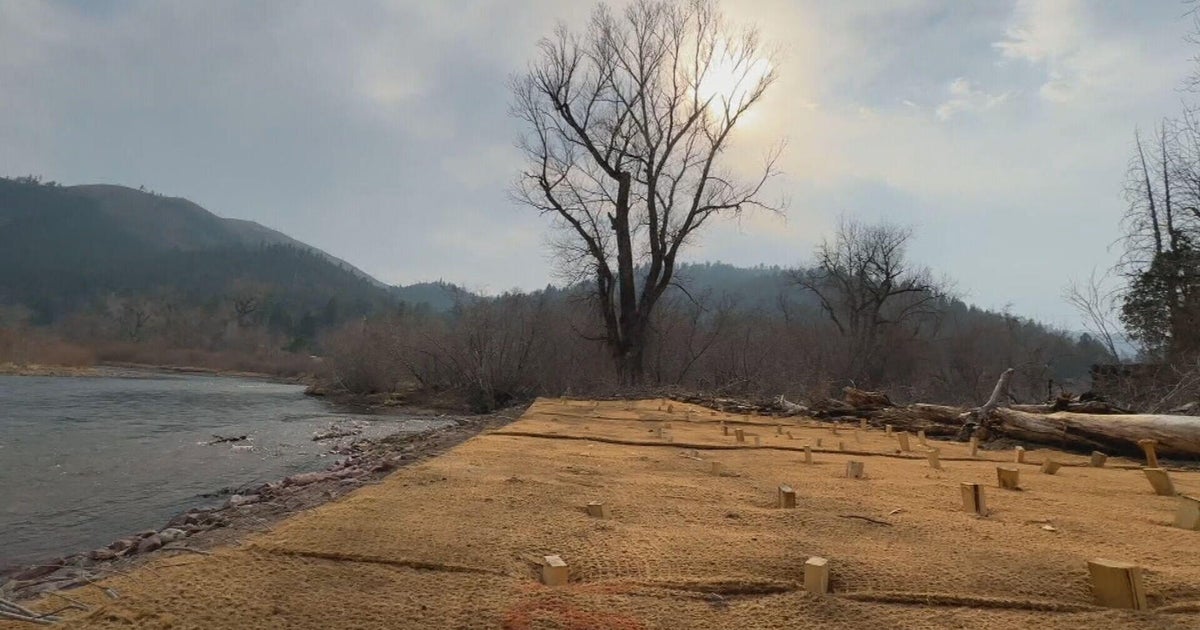
Lower North Fork Sediment Stabilization Project in Jefferson County
CBS
“Sports betting has really been instrumental to getting this project going,” said Margo Yousee with the Jefferson Conservation District. “From that fire, we saw all of this sediment and debris just come flowing into the stream and then getting dumped.”
Yousee said the goal of the project is to keep the sediment in place by slowing water down with anti-erosion structures as well as seeding and planting trees.
“The more work that we can do to protect the watershed higher up in the hills, then it’s ultimately going to benefit everyone downstream with healthier, cleaner water to drink,” explained Yousee.

Site of 1996 Buffalo Creek Wildfire
CBS
It’s important environmental work, but it can be costly.
Colorado sports betting broke a record in January, generating over $5 million in tax revenue. Colorado Division of Gaming Director Christopher Schroder said that means more funding for Colorado’s vital water projects.
“We definitely support all the different projects that they work on, and are pleased to see that the tax revenue goes to such a worthy cause,” said Schroder. “Since 2019, state proceeds from sports betting have raised a total of over $104 million for water projects.”
Sports betting revenue supports Colorado’s Water Plan Grant Program, in which local communities bring projects forward to address water risk and resiliency. The grant program has helped fund projects related to agriculture and land use planning.

Barriers slow the flow of water to reduce erosion along the riverbank
CBS
Jeannine Shaw with the Colorado Conservation Board said the projects are, “making sure that we’re fire smart, and that we really do have healthy watersheds, so that we’re more resilient to flood, fire, drought and all of those things as well as water and storage supply.
Shaw said that last fiscal year, the grant program awarded $37 million, and that demand is high.
“Organizations are ready to implement these things, and again, especially in years like this where water really is more front of mind for folks,” Shaw said.
More from CBS News