

A baby whale’s first moments in the ocean reveal more than just a birth. They show a level of care, teamwork, and communication that scientists are only beginning to understand.
A global research group called Project CETI, also known as the Cetacean Translation Initiative, has reported one of the most detailed sperm whale births ever recorded.

This event took place near Dominica on July 8, 2023. Researchers captured over six hours of underwater audio and drone footage. The findings offer new insights into whale behavior.
Rare look at sperm whale birth
Sperm whale births are very difficult to observe in the wild. Scientists have recorded such events in less than 10 percent of whale species. This makes the new study extremely valuable.
The research team has followed these whales for more than 20 years. This long-term work helped identify each individual during the birth. The footage showed a full social group coming together.
This group included grandmothers, mothers, sisters, and daughters. Some females were related, while others were not. Even unrelated whales joined in to support the mother.
How whales help during birth
The study showed clear teamwork among the whales. Female whales supported the mother during labor. Some helped lift her body, while others guided the newborn calf toward the surface to take its first breath.
Each whale seemed to follow a role. This was not random movement. The research team used tools like computer vision and network analysis to study these actions in detail.
The results gave the first strong evidence that animals outside humans and a few primates assist during birth in a coordinated way.
This discovery highlights how organized and aware these marine animals are during critical moments.
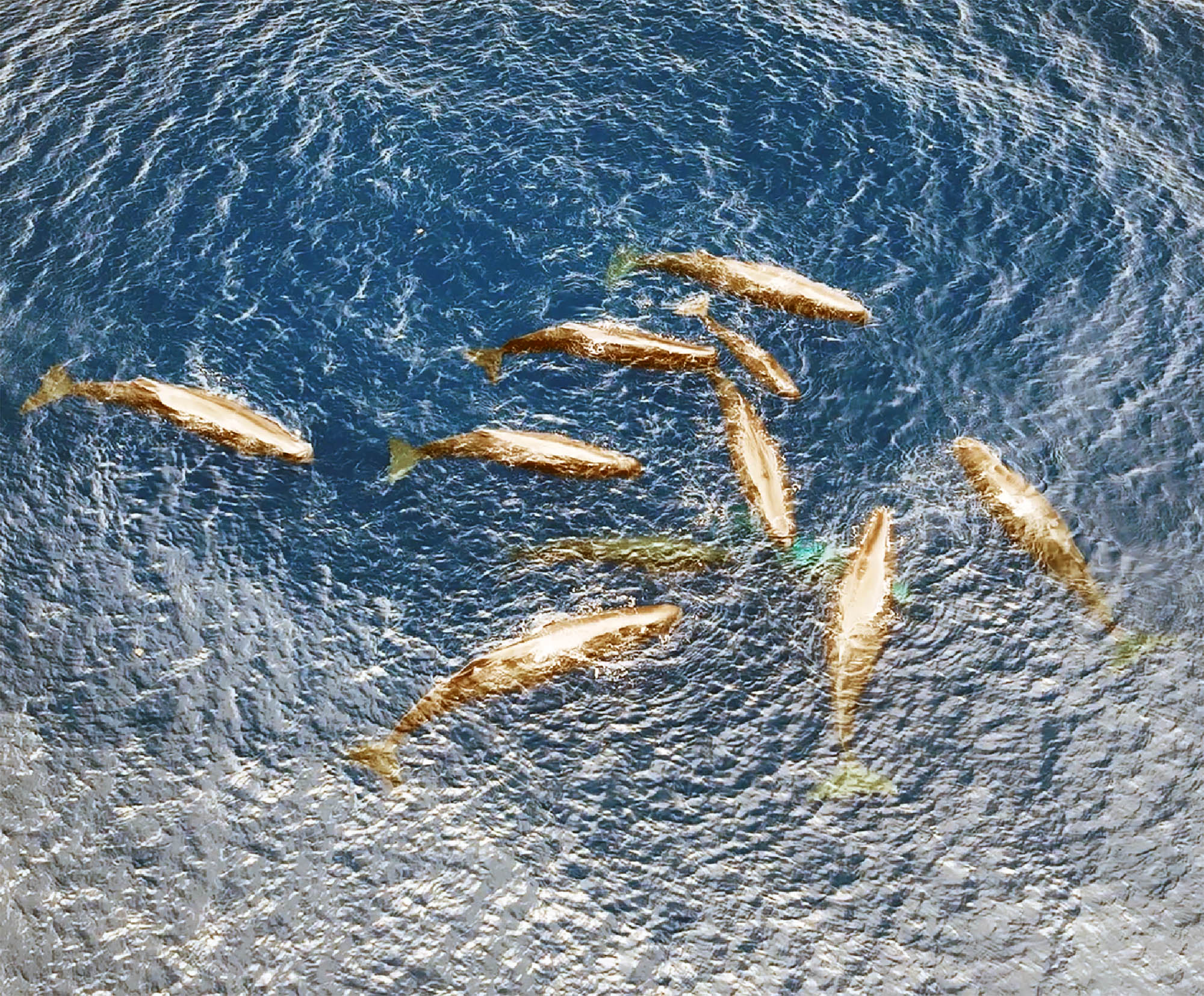 Pre-birth gathering of the sperm whales of Unit A. Credit: Scientific Reports. Click image to enlarge.Communication during key moments
The second study focused on whale sounds. Sperm whales communicate using clicking patterns called codas. During the birth, scientists noticed clear changes in these sounds.
Some patterns even showed vowel-like structures. These changes appeared during key moments of the birth process. This suggests that whales may use sound to coordinate actions or respond to what is happening around them.
Project CETI has been working to decode whale communication. This new finding adds more depth to that effort. It shows that communication may play an important role during major life events.
A deep social bond
The research suggests that helping during birth builds strong social connections. When one whale helps another, it creates trust within the group. This support may be returned in the future.
Scientists believe this behavior is very old. It may have existed for more than 36 million years. This means cooperation during birth could be a basic part of whale society. These actions help maintain strong, stable social groups.
“These findings fundamentally reshape how we understand whale society,” said David Gruber, Founder and President of Project CETI and Distinguished Professor of Biology at the City University of New York.
“What we’re seeing is deeply coordinated social care during one of the most vulnerable moments of life.”
![Newborn sperm whale taking its first breath of air (bottom right highlighted by yellow box) while swimming to mother’s head taken at 11:47 [00:01:15]. Note blood from birth still visible at the center of the image. Credit: Scientific Reports](https://cff2.earth.com/uploads/2026/03/28161035/sperm-whale_newborn_first-breath_SciReports_1m.jpg) Newborn sperm whale taking its first breath of air (bottom right highlighted by yellow box) while swimming to mother’s head taken at 11:47 [00:01:15]. Note blood from birth still visible at the center of the image. Credit: Scientific Reports. Click image to enlarge.Trust between whales and researchers
Newborn sperm whale taking its first breath of air (bottom right highlighted by yellow box) while swimming to mother’s head taken at 11:47 [00:01:15]. Note blood from birth still visible at the center of the image. Credit: Scientific Reports. Click image to enlarge.Trust between whales and researchers
Another important part of this study is the trust between whales and scientists. The whales allowed researchers to observe closely during a sensitive moment. This is rare in the wild.
“This work speaks to the fact that longitudinal studies are critical,” added researcher Dr. Diana Reiss from Hunter College, part of the City University of New York.
“When you’re as familiar with the individual animals as the CETI team is with this unit of whales, the trust these whales have with their team is unique. I’m not sure this unit would tolerate observers being so close in any other instance.”
Years of observation helped build this trust. It allowed scientists to witness a moment that is usually hidden in the ocean.
Sperm whale birth family connections
The birth also showed strong family connections. The mother whale, known as Rounder, gave birth with her mother, Lady Oracle, and her daughter, Accra, nearby.
This means three generations were present during the event. Each played a role in helping the mother and the newborn calf.
“This is the most detailed window we’ve ever had into one of the most important moments in a whale’s life,” said Shane Gero, biology lead for Project CETI and scientist in residence at Carleton University.
“Because this family unit has been studied for decades, we could see what the grandmother was doing, how the new big sister acted, and how each helped the mother and newborn, placing this rare birth within a deep social and behavioral context.”
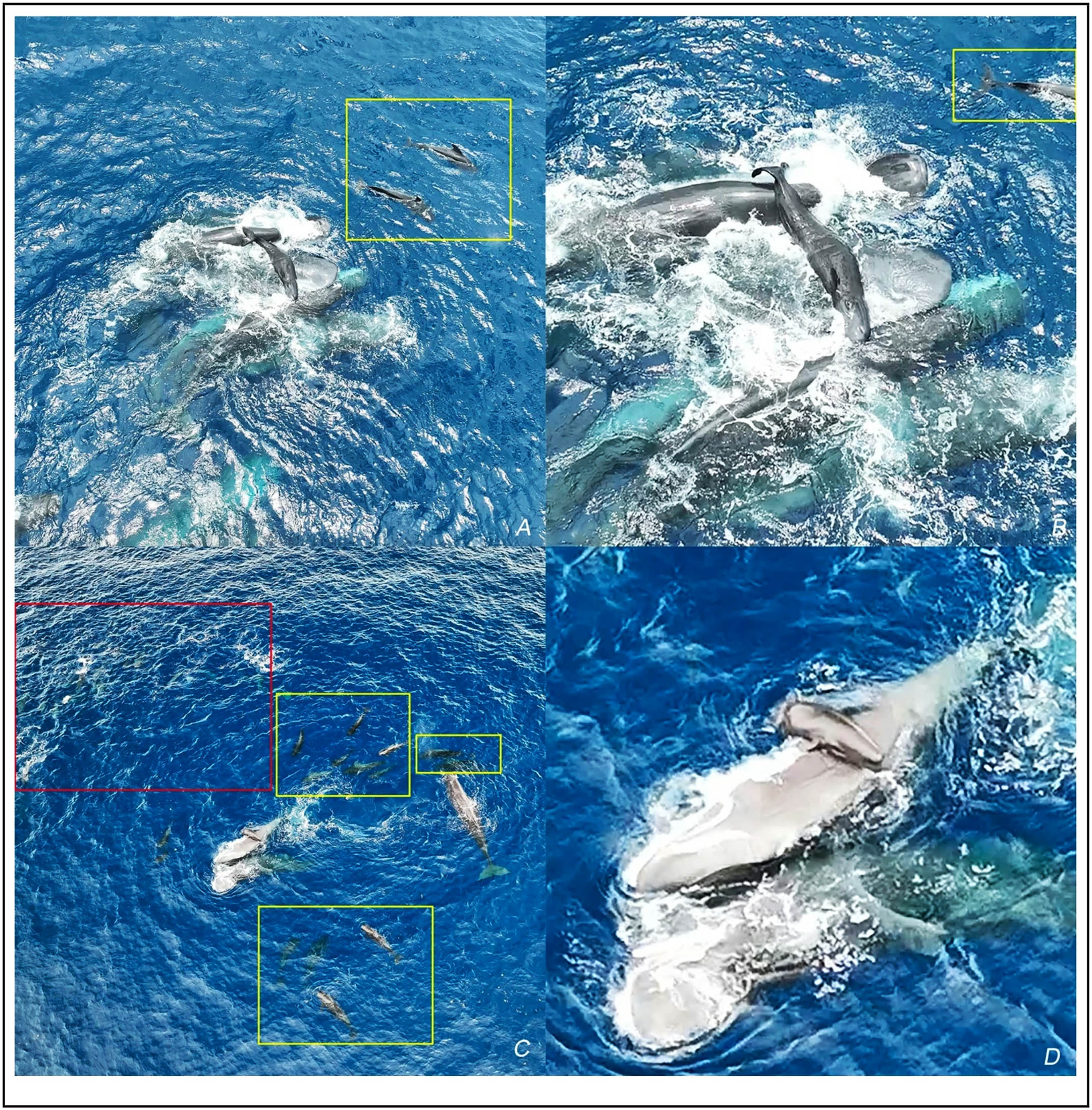 The newborn sperm whale was lifted out of water, while short-finned pilot whales were within one adult body length (yellow boxes); and a school of Fraser’s dolphins were present farther outside of the pilot whales (in the top left of the image, red box). Credit: Scientific Reports. Click image to enlarge.What this means for science
This discovery changes how scientists view animal intelligence and social life. Sperm whales show planning, cooperation, and communication during birth. These qualities are often linked to humans and a few other animals.
The findings also raise new questions. How do whales learn these behaviors? How do sound patterns guide their actions? Project CETI will continue to explore these ideas.
This rare event shows that life in the ocean is more connected and complex than it first appears.
Click here here to watch the Project CETI video of the sperm whale birth event…
The study is published in the journal Science.
—–
Like what you read? Subscribe to our newsletter for engaging articles, exclusive content, and the latest updates.
Check us out on EarthSnap, a free app brought to you by Eric Ralls and Earth.com.
—–