
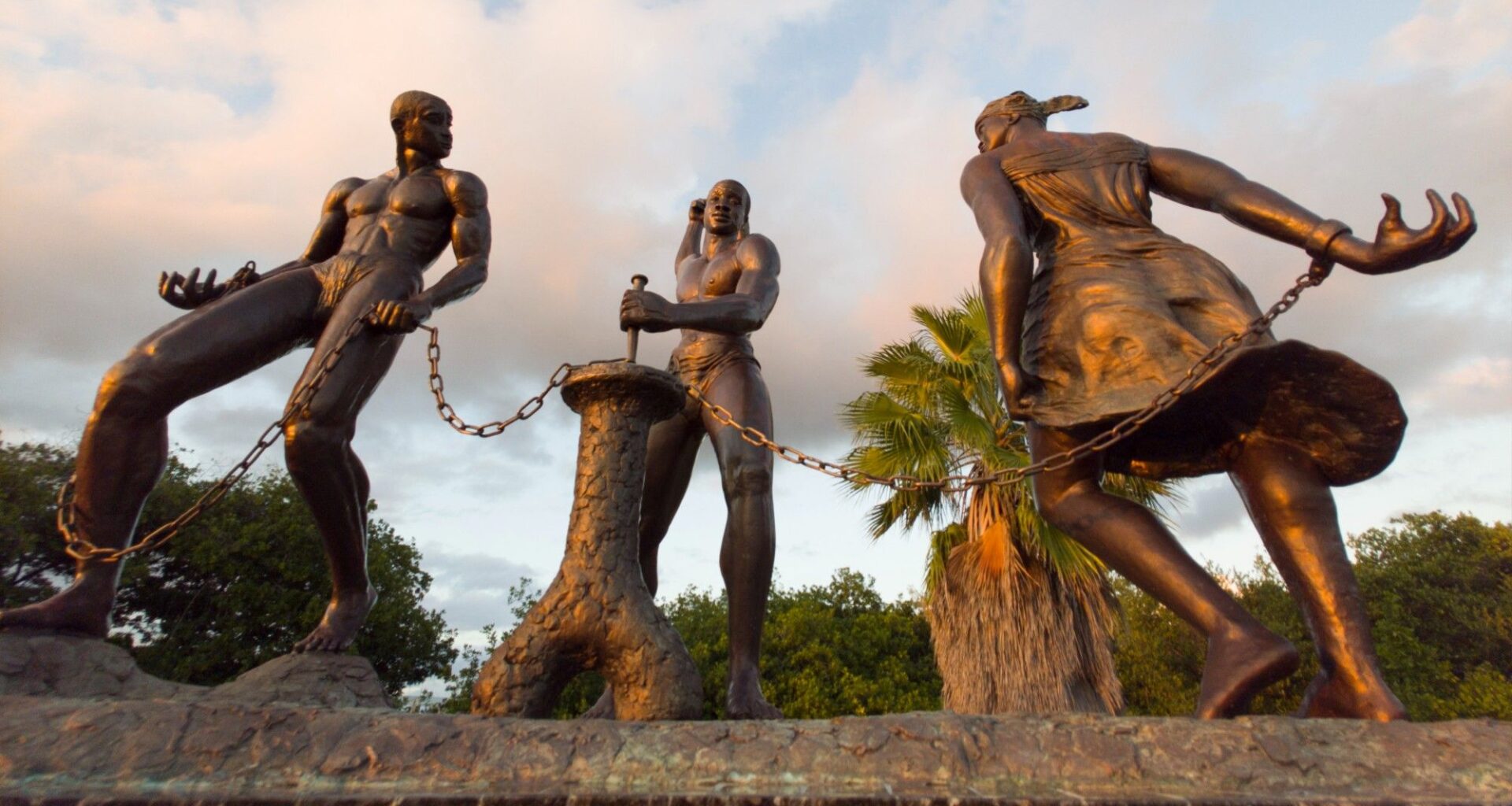
The United Nations has taken a major step in trying to correct a historic wrong. It has called for reparations for African nations that were subjected to the transatlantic slave trade and voted to recognize slavery as a crime against humanity. Though African countries welcomed the U.N.’s resolution, other nations, including the United States, viewed the vote with skepticism.
Ghana’s president, John Mahama, “called on U.N. members to ‘engage in inclusive, good-faith dialogue on reparatory justice, including a full and formal apology’ as well as measures of restitution and compensation,” said Bloomberg. The full scope of these reparations remains unclear, and a specific dollar amount wasn’t noted. Some believe reparations “should go beyond direct financial payments to also include developmental aid for countries, the return of colonized resources and the systemic correction of oppressive policies and laws,” said The Associated Press.
Article continues below
You may like
The Week
Escape your echo chamber. Get the facts behind the news, plus analysis from multiple perspectives.
SUBSCRIBE & SAVE
Sign up for The Week’s Free Newsletters
From our morning news briefing to a weekly Good News Newsletter, get the best of The Week delivered directly to your inbox.
From our morning news briefing to a weekly Good News Newsletter, get the best of The Week delivered directly to your inbox.
Why are some countries against this?
The resolution was largely well-received, passing 123-3. But the three countries to vote “no” were significant: Argentina, Israel and the United States. There were also 52 abstentions, including the United Kingdom and all members of the European Union. The U.S. vote comes as “policy groups, human rights organizations and academics have accused President Donald Trump of minimizing Black history,” said The New York Times.
Critics often point to Trump’s gripe against the Smithsonian, which the president has accused of “focusing too much on ‘how bad slavery was’ and not enough on the ‘brightness,’” said the Times. U.S. officials claim the decision to vote “no” on the resolution was not about race. The U.S. “strongly objects to the cynical usage of historical wrongs as a leverage point in an attempt to reallocate modern resources to people and nations who are distantly related to the historical victims,” Deputy U.S. Ambassador Dan Negrea said in a speech to the U.N.
The White House also “strongly objects to the resolution’s attempt to rank crimes against humanity in any type of hierarchy,” said Negrea. British officials used almost identical language: The U.K. is “firmly of the view that we must not create a hierarchy of historical atrocities,” British Ambassador James Kariuki said in his U.N. speech. The U.N. “should approach all historical injustices with the same seriousness, empathy and respect.”
Others felt the move by the United Nations was a necessary one. The resolution was “significant as it represented the furthest the U.N. has gone in recognizing transatlantic slavery as a crime against humanity and in calling for reparations,” Justin Hansford, a law professor at Howard University, said to Reuters. The action “marks the first vote on the floor of the U.N. I cannot overemphasize how large of a step that is.” And despite the backlash from some Western nations, the “longstanding calls for reparations,” said Reuters, have “gained momentum in recent years.”
Explore More