
First impressions can be misleading. A generation ago, as a rookie with his hometown Philadelphia Phillies, Rubén Amaro Jr. doubled twice and homered in his first start of the season. After a week he was hitting .304 with three home runs — and for the rest of April, he was 2 for 42.
“I was insane for about a minute, and people thought I was going to be good,” Amaro said on Monday, laughing over the phone from Philadelphia. “Then reality struck – ‘Mom, they started throwing me breaking balls!’ — and that was it.”
So far this season, major-league pitchers have found nothing to solve rookie hitters, who are asserting their presence like never before. Through the first weekend (three or four games for every team), rookies were batting .309, compared to .226 for non-rookies.
Rookies had also bashed 15 homers with a .622 slugging percentage and a 1.008 OPS; according to the Elias Sports Bureau, those are all records since 1900 through every team’s first three games.
The hitters responsible include Chase DeLauter of the Cleveland Guardians, Kevin McGonigle of the Detroit Tigers, Owen Caissie of the Miami Marlins, JJ Wetherholt of the St. Louis Cardinals, Carson Benge of the New York Mets, Sal Stewart of the Cincinnati Reds, Justin Crawford of the Phillies — and more.
Add in a couple of veterans from Japan — Munetaka Murakami of the Chicago White Sox and Kazuma Okamoto of the Toronto Blue Jays — and this could be one of the deepest rookie classes in recent history. And that is without the consensus No. 1 prospect, 19-year-old shortstop Konnor Griffin, who struggled in spring training with the Pittsburgh Pirates but has started 5 for 10 in Triple A.
To Amaro, who settled into a utility role and eventually became Phillies general manager for seven years, the immediate impact is a natural outgrowth of how players train as amateurs. Teams have more reason to trust their rookies.
“Guys train differently in this day and age, so athletically, they’re better-suited and more prepared to be able to make adjustments,” Amaro said. “That doesn’t necessarily mean they’ll make them, but they’re seeing velocities and overall stuff (as amateurs) that’s different than it once was. They’re seeing a 95- to 97-mph fastball a lot more often than you would have when I played in college, or even 10 or 15 years ago.”
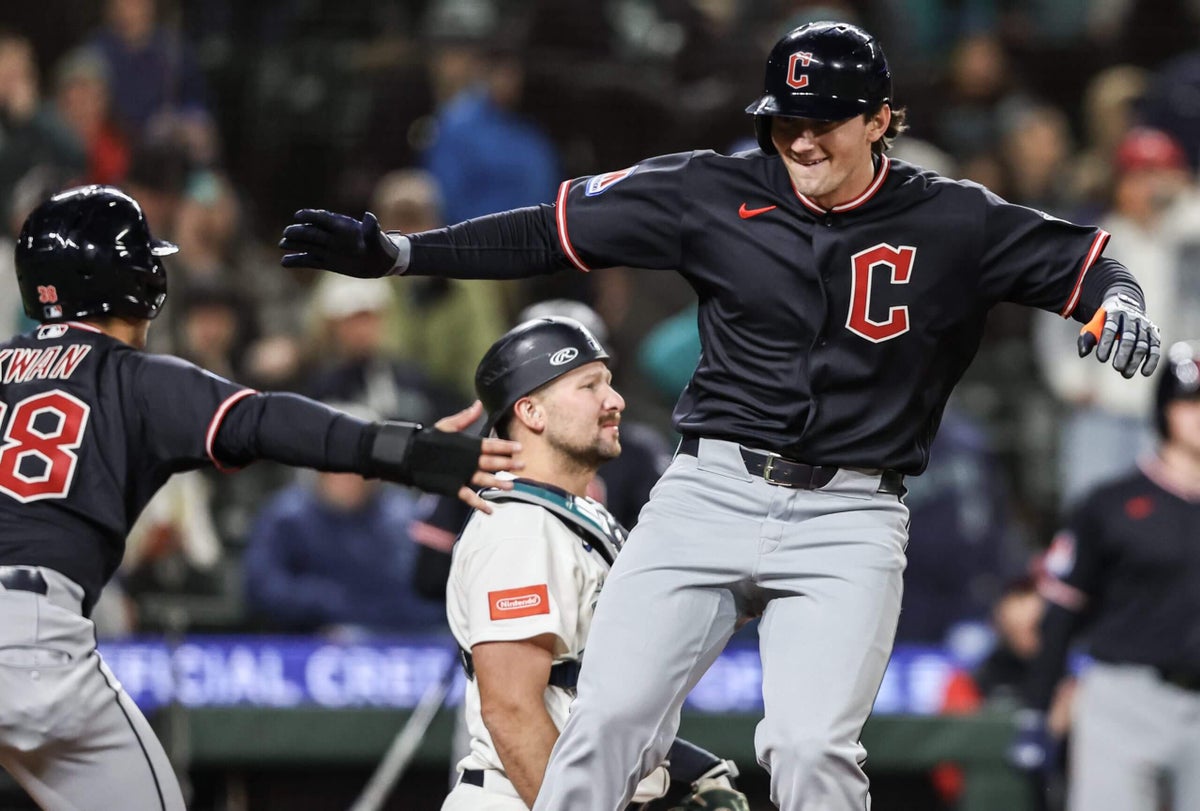
DeLauter was named American League Player of the Week after hitting four homers in Seattle, and Stewart won the National League honor after going 7 for 10 against Boston. It’s the first time in a decade that rookies have won both awards for the opening week.
One of those 2016 honorees, Trevor Story, then with the Colorado Rockies, is still a star. The other, Tyler White, then with the Houston Astros, played only four seasons. White, though, was an overachiever as a 33rd-round draft pick. Story, as a first-rounder, was more like this year’s group.
Benge, Crawford, DeLauter, McGonigle, Stewart and Wetherholt were all drafted in the first round, and Cassie in the second. Benge (Oklahoma State), DeLauter (James Madison) and Wetherholt (West Virginia) came from Division I baseball programs, Stewart played for a prestigious high school program (Westminster Christian School, near Miami) and Crawford’s father was a four-time All-Star.
Each of them also earned their lineup spots with strong performances in the minors last year. Of the seven, DeLauter (who missed most of the season with injuries) had the lowest OPS, at .852, and McGonigle had the highest, at .991.
In other words, these guys could have staying power. They’ve already posted some indelible highlights, like McGonigle’s four-hit debut on Thursday, Wetherholt’s game-winning single on Saturday and Caissie’s walk-off homer to finish a sweep on Sunday.
“He’s not going to make much of any situation, and I love that about him,” Cardinals manager Oliver Marmol told reporters about Wetherholt, who also homered in his debut on Thursday. “He doesn’t scare, and his personality really lends itself well to do this for a long time.”
The rebuilding Cardinals signed no major free agents, so it was natural to give the second base job to a rookie with no major-league experience. The Phillies, though, have a high payroll and high expectations. But Crawford had a full season in Triple A — hitting .334 with 46 steals — and fits the dynamic they need.
“You have to rely on the young players, even a team like the Phillies,” said Amaro, now an analyst on the team’s telecasts. “They’re a team that’s aging a little bit, so it makes some sense for them to give those young players an opportunity to play.
“You look at what Crawford did last year at Triple A — the man made contact, puts the ball in play, he’s got game-changing speed, and he brings a different element to the team. It’s not necessarily power, but speed plays, too.”
Some of the rookie surge traces to a rule from the 2022 collective bargaining agreement designed to discourage service-time manipulation. It’s been a refreshing change from the old sham of starting a top prospect in the minors for some vague reason — working on his defense, say — only to call him up as soon as he could not accrue a year of service (effectively giving the team an extra year of control before free agency).
Now, if a player finishes first or second in Rookie of the Year voting, he gets a full year of service time, no matter how much time he spends on the roster. And teams are incentivized to call up top prospects for opening day (or within two weeks, technically) by the lure of high draft picks tied to the major awards.
If such a player wins Rookie of the Year, or finishes in the top three for MVP or Cy Young before becoming eligible for arbitration, his team receives a draft pick. According to MLB, six teams have gotten picks this way — four because of early call-ups who won the Rookie of the Year award.
The other two were the Kansas City Royals, who got an extra pick in 2025 after Bobby Witt Jr. was runner-up for the AL MVP award in 2024, and the Houston Astros, who hold the 28th overall pick in this summer’s draft thanks to Hunter Brown, who was third in the AL Cy Young voting last year.
The service-time workaround was a win-win innovation that required some creative thinking. So if you’re looking for optimism about next season — imperiled as it is by the lack of a collective bargaining agreement — those rookies are a sign that MLB and the union actually can find solutions that work.