
“Everything changed so fast. From just going to the golf course, getting ready to play a tournament – and then you are just fighting for your life.”
They are the words of Italian golfer Andrea Pavan who is recounting the day he fell three stories down an elevator shaft — and survived.
It was February 25 and Pavan was staying in an apartment in Stellenbosch, South Africa, a 45-minute drive east of Cape Town, with his caddie Francisco Mateo, Spanish golfer Manuel Elvira and Takashi Ohagen, the caddie of German golfer Freddy Schott.
It was a “normal” Wednesday morning, one day out from the start of the DP World Tour’s Investec South African Open at Stellenbosch Golf Club. Pavan, then ranked the 249th best men’s player in the world, was scheduled to tee off in the pro-am late in the afternoon, so he was having a slower morning than usual.
Mateo was waiting in the garage downstairs when Pavan returned to his apartment. When he went back to use the manual lift to leave the apartment, Pavan’s life changed.
“I had opened the door of the apartment and the lift wasn’t there and I just fell,” Pavan tells The Athletic via a video call from South Africa, where he has spent the past month recovering.
“I was obviously happy not to lose consciousness and managed to call for help. And the response came in a very decent amount of time but it was difficult.”
Pavan does not remember the fall itself, something a psychologist he has been working with says is normal for anyone who has experienced such a traumatic event. What he can recall is the excruciating pain he felt after his body crashed to the bottom of the lift shaft. He screamed not only in agonising pain but for help.
The 36-year-old father of three could see the elevator above him, which set off an instant dread that it could start moving down and crush him. It felt like a race against time for the two-time DP World Tour winner, who says his survival instincts kicked in.
His right shoulder was so badly injured he could not move his arm at all. He reached over into his pocket with his left hand and grabbed his phone to shakily call Mateo, who answered and rushed to the scene.
“I was shouting and to be honest, I’m not too sure how long it took (to be rescued). I remember being in excruciating pain and just trying to stay there and hold onto it,” Pavan says.
After the fire and ambulance service pulled him out, Pavan was rushed to Mediclinic Stellenbosch, where he remained for one week before being discharged.
His injuries included severe shoulder damage and fractures to several vertebrae in his spine, both of which required surgery. There was extensive bruising to his lower back, thighs and his right knee was damaged. Remarkably, Pavan did not suffer any trauma to his head.
“I had wounds, like abrasions on my hands,” he explains. “It’s just a guess … I probably tried to hold onto something to try to slow down. But I landed probably in a way that means I’m still here, so I’m thankful. Miraculously, I was very hurt but I’m alive.
“I don’t know how many accidents like this happen in general, but I feel extremely lucky just to be able to walk and to not have hit my head or lost consciousness and to be able to call for help. I’m just thankful to hug my friends, hug my wife, hug my kids. I guess life can change in a split second.”
It was Pavan who broke the news to his wife, Audra. Pavan was eight hours ahead in time difference to Audra, at home with the children in Texas — when the accident happened it was around 9am in South Africa. By the time he was able to call Audra it was around 4am her time.
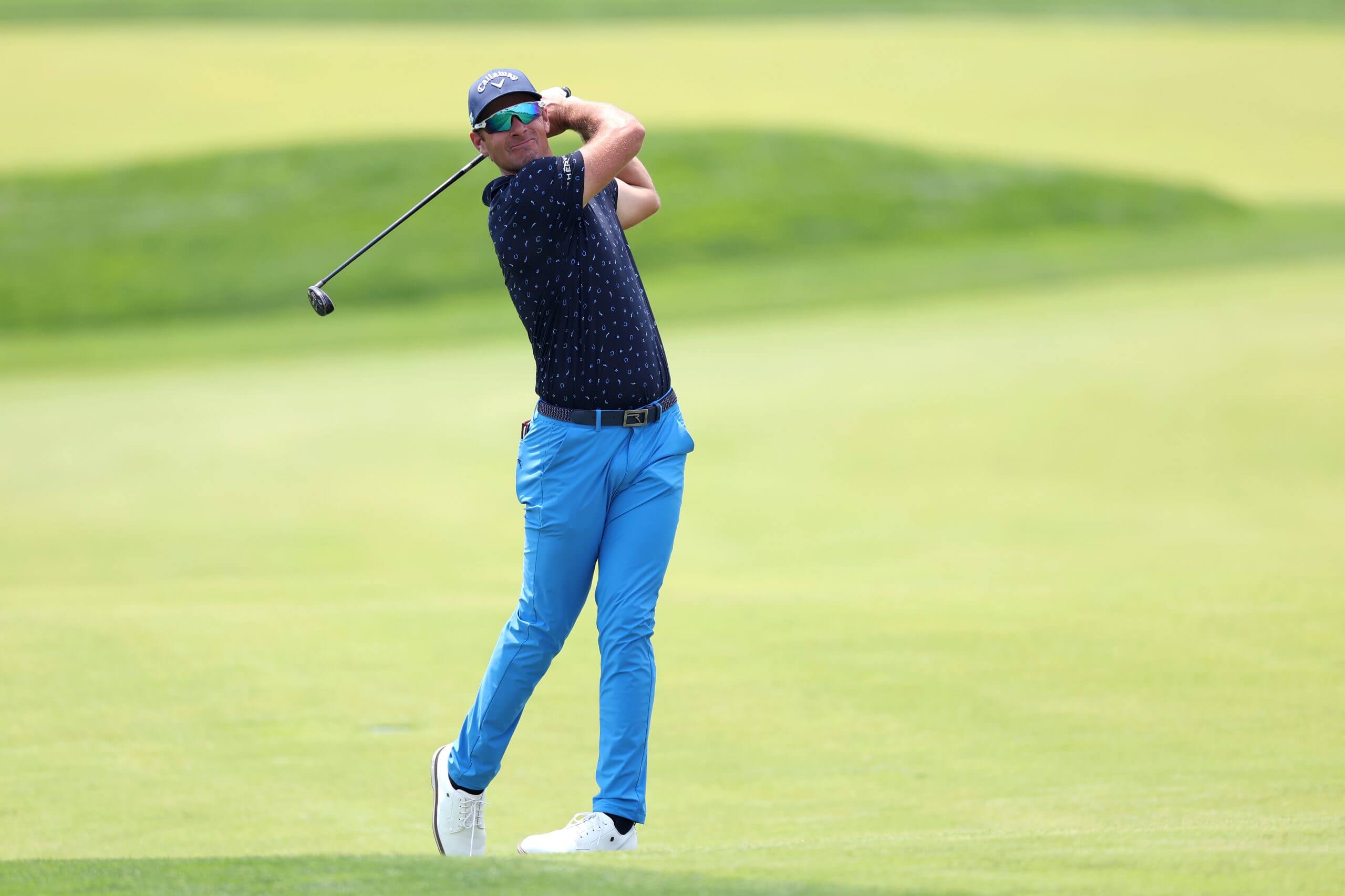
Pavan has played in three majors. He missed the cut at the US Open at Oakmont last year (Warren Little/Getty Images)
By Saturday afternoon, Audra had made the 27-hour trip from the family home in Dallas to be by his bedside.
“It was not easy but luckily by then I knew that I didn’t have any head (injuries) or concussion,” he says. “So there was some positive things to say. It was difficult. I tried to tell her that I was gonna be OK, that I’m gonna survive.
“Well, that I survived but again I needed to go through surgery. There were a lot of uncertainties, it was so unexpected and she was so far away. It was a massive shock for everybody but luckily she had a friend come over immediately. She had friends and her parents were right there to truly help during that day of figuring out eventually how she could come here.”
Pavan is still wearing a sling on his right side and has just started to dress himself again. He has to wait six weeks post-op before he can make the transatlantic trip home.
Their three children — Luca, 9, Sofia, 7, and Julia, 4 — are eagerly awaiting their parents’ return on April 9.
“I have to be careful because they usually run at me and jump on me,” he smiles, knowing those special moments he almost lost are inching closer.
The Texas A&M alumnus is looking forward to returning to parenthood. As to whether he will return to golf, Pavan, who turned professional 16 years ago, is unclear on his future.
“The care I’ve received has been fantastic,” he adds. “The recovery is going to be very long and with a lot of uncertainties ahead, but I can walk and I can live a normal life. I’m doing OK, but there’s a lot uncertainties on the other side, but I’ll give it my best. And just like always (I will) try hard to come back but we just don’t know.”
The golf community has rallied around Pavan and his family. There were so many golfers and caddies wanting to visit Pavan, a shuttle bus was put on between the course and the hospital, a 10-minute ride away.
Sebastian Garcia, a Spanish golfer on the European Tour, was a reserve that week and not playing at the tournament. When Pavan was in the intensive care unit with only two visitors allowed in at a time, it was Garcia who took on the role of visitation manager. “He was there the whole time,” Pavan says.
At home in Texas, it was former college team-mate Matt van Zandt who set up a GoFundMe page for his friend which in the past month has raised more than $85,000 and received donations from the likes of Masters winner Sergio Garcia, PGA Tour stalwart Billy Horschel and many more professionals.
“That was very unexpected,” he says. “There’s a lot of uncertainty on the financial part as well. It’s one of those things that it definitely makes a big difference right now to know. Well, just to know that so many people have been willing to step up and help me it’s been a true blessing.
“And I’m forever grateful for each one of them and to know that I don’t have to worry about that side of it. The expenses are coming in quite high because you know I’m not sure if and when I’ll get to play golf again.”
When Johann Rupert, a businessman worth $14.1 billion dollars according to Forbes and financial backer of the DP World Tour, found out about Pavan’s freak accident, he and his wife Gaynor wanted to help.
Pavan was released from the hospital a week after his fall and was invited, with Audra, to spend the next three weeks resting and recovering at accommodation in Somerset West organised by the Ruperts.
“Not having to worry about where we had to stay and what we had to cook, it was a true blessing to spend this time at such an amazing place,” says Pavan. “We got treated like royalty and got to know all the staff in the house.
“I was really thankful for this time that helped me heal and get better and not worry about a lot of uncertainties. It was almost like one less thing to worry about because the more I look ahead in the future, the more what ifs (there are).”
Alongside his two wins on the DP World Tour, Pavan has eight victories overall. His biggest victory was the BMW International Open in Munich, Germany in 2019 when he defeated Matt Fitzpatrick in a play-off.
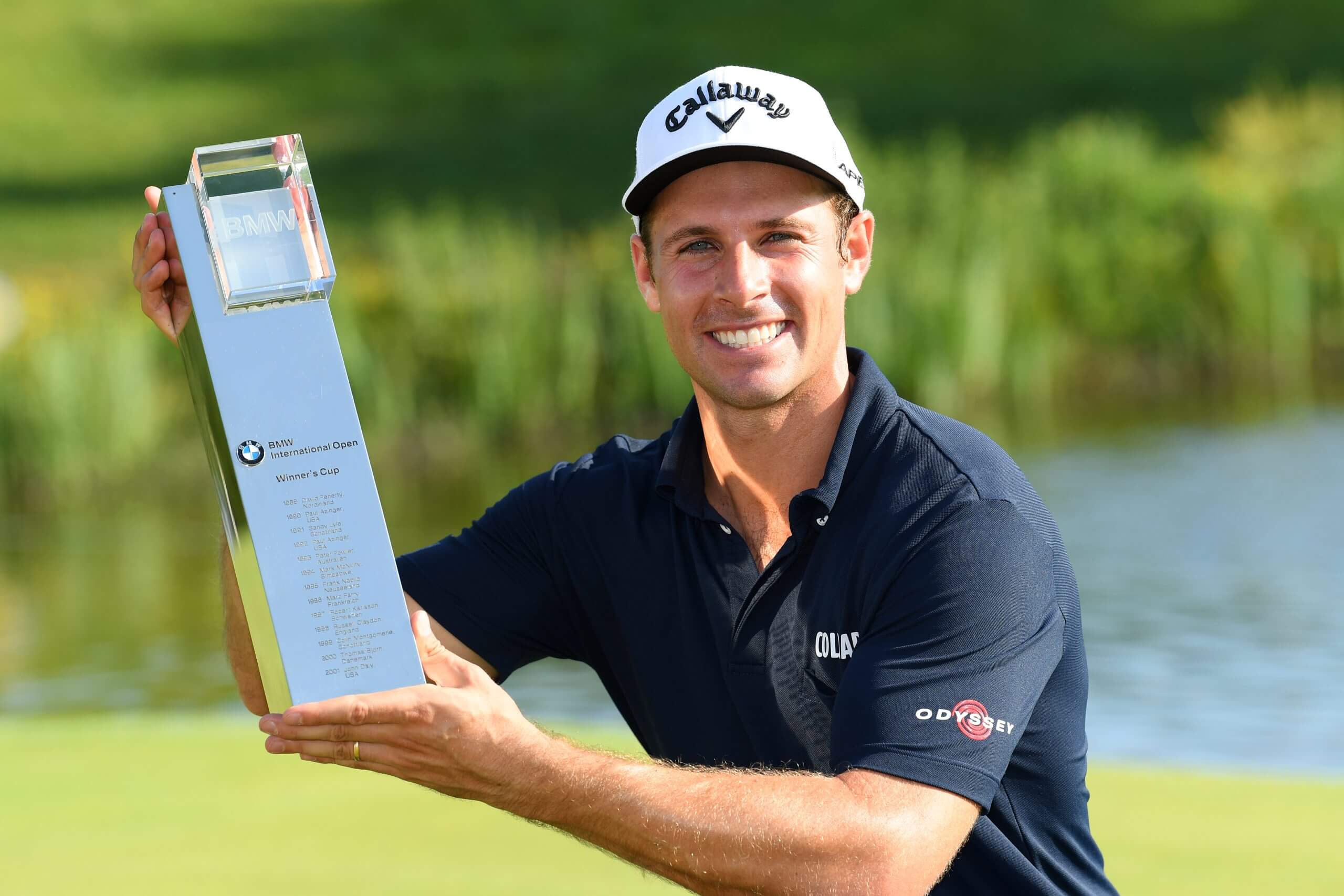
Pavan won the German Open in 2019 (Stuart Franklin/Getty Images)
As he speaks to The Athletic from south of Stellenbosch, Pavan is proudly wearing a U.S. Open t-shirt from last year’s 125th anniversary at Oakmont in Pennsylvania — one of his two U.S. Open appearances. The other came in 2014 at Pinehurst No 2.
Having appeared at the 2019 Open at Royal Portrush, Pavan knows how difficult it is to make it to competing at the top of the sport — now he just wants to make it back home to his children. The golf, which he says he misses, can wait. His health and family are his top priorities.
“I’m hopeful I can just slowly keep pushing myself into just managing the pain and just improving a little bit day by day, which is how you become a great athlete in general,” he says. “Now it’s more about how do I get back to just being like a normal person and then we keep pushing from there.”