
olafur eliasson shapes shared experience through perception
Olafur Eliasson’s work is based on a simple but important idea: perception is not passive, but something we actively construct. From this perspective, art is not only about creating objects, but about setting up situations where people can together experience and rethink the world that surrounds them. What emerges is not a fixed vision of a better future, but a shared condition shaped through perception, participation, and responsibility.
A key concept in Eliasson’s practice is what he describes as seeing yourself seeing. This is not just a poetic idea, but a way of making viewers aware of their own role in perception. By introducing reflection and subtle disorientation, his work creates a distance within the act of seeing, allowing people to recognize that what they experience is not fixed, but constructed.
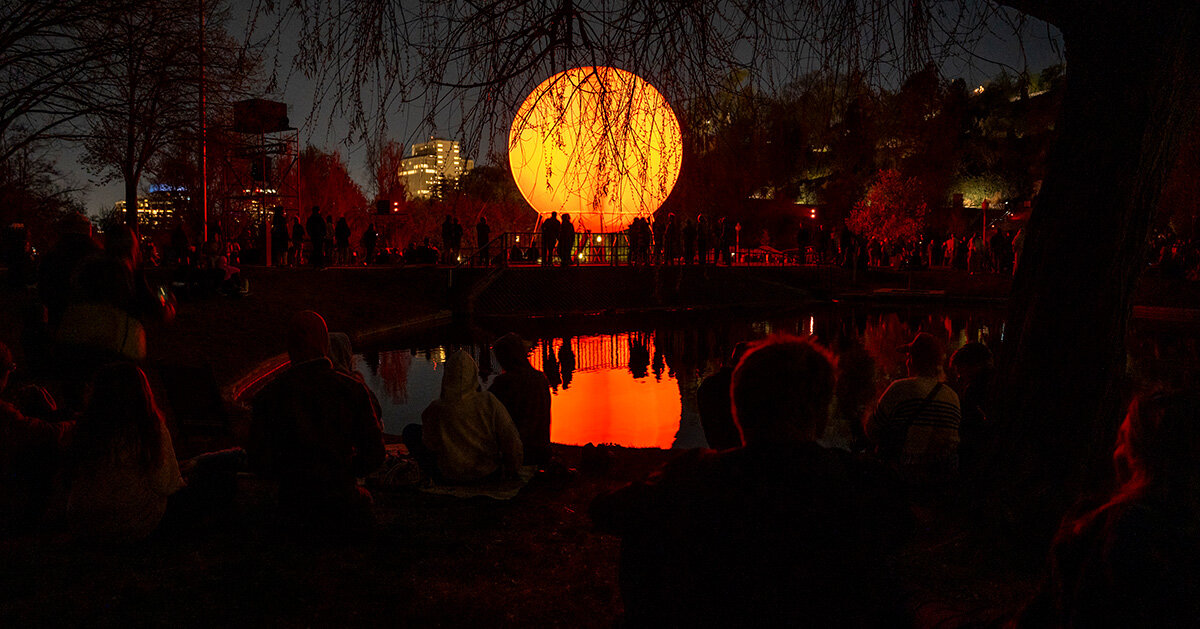
In the context of climate instability, this focus becomes more urgent. Eliasson often suggests that the climate crisis is not only a scientific or political issue, but also a perceptual one. What feels distant is easier to ignore. His works therefore aim to make environmental processes immediate and tangible, translating abstract data into shared experience. This approach is clearly expressed in his recent project, A symphony of disappearing sounds for the Great Salt Lake (2026), presented in Salt Lake City through April 4th, 2026. The installation brings together more than 150 field recordings of animals that depend on the lake and transforms them into a composed sound piece, accompanied by evolving light projections on a large spherical structure.
Rather than reproducing nature, the sounds are rearranged into rhythms that can be perceived differently, drawing attention to the fragile system they belong to. Here, the work shifts from observing nature to listening to what may soon be lost. The focus is not on representing the landscape, but on making its vulnerability perceptible through the voices of the species connected to it. Listening becomes a form of awareness, and awareness a first step toward responsibility. Perception, in this sense, becomes central to how we engage with the possibility of change.
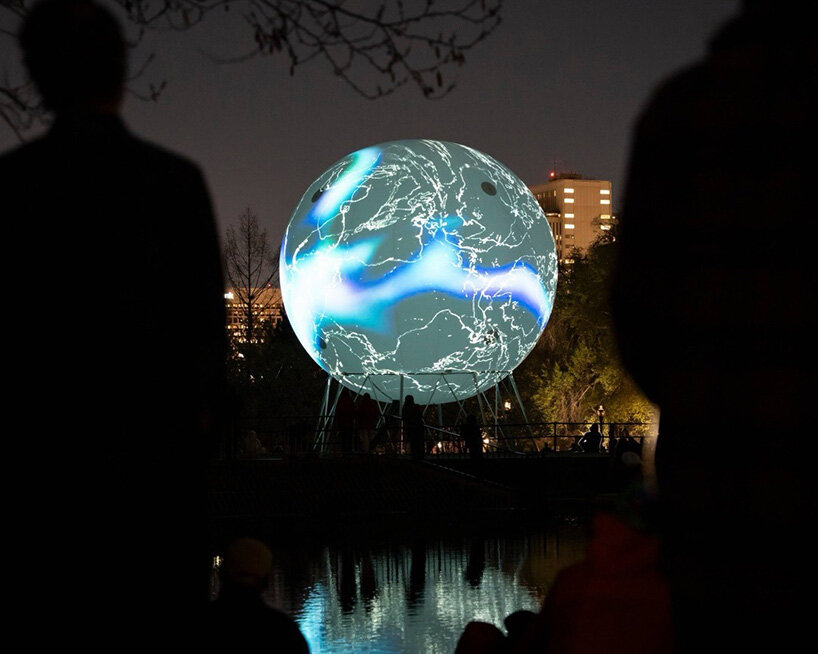
Olafur Eliasson A symphony of disappearing sounds for the Great Salt Lake, 2026 Installation view: Memory Grove, Salt Lake City, Utah, United States | image by Kim Raff Commissioned for Wake the Great Salt Lake. Supported by Salt Lake City Arts Council, Salt Lake City Mayor’s Office, and the Bloomberg Philanthropies Public Art Challenge © 2026 Olafur Eliasson
embodied experience and the destabilized viewer
Eliasson’s installations are designed to challenge the idea of the viewer as a passive observer. Instead of presenting something to simply look at, they require people to move, adjust, and actively engage with their surroundings. Space is not fixed, but something that unfolds over time, meaning perception has to be constantly reconsidered.
In The weather project (2003), the Turbine Hall of Tate Modern is transformed into a large, immersive environment. A glowing artificial sun, combined with mist and a mirrored ceiling, creates a space where visitors become part of the work itself. People lie on the floor, gather in groups, and interact with one another. The reflections above multiply these interactions, making everyone aware of both themselves and the larger crowd. The installation turns the museum into a shared, social space rather than a place for quiet observation.
By contrast, Din blinde passager (2010) removes visual clarity almost completely. Visitors walk through a long corridor filled with dense, colored fog, where it becomes difficult to see even a short distance ahead. Movement becomes uncertain, and people have to rely on their bodies rather than their vision to navigate. There is a noticeable delay between moving and understanding where you are, which brings attention to how perception actually works. Through these kinds of environments, Eliasson shifts the role of the viewer. Instead of passively looking at an artwork, people become active participants within it. The focus is less on what is being seen and more on how the act of seeing itself takes place, and how it can change.
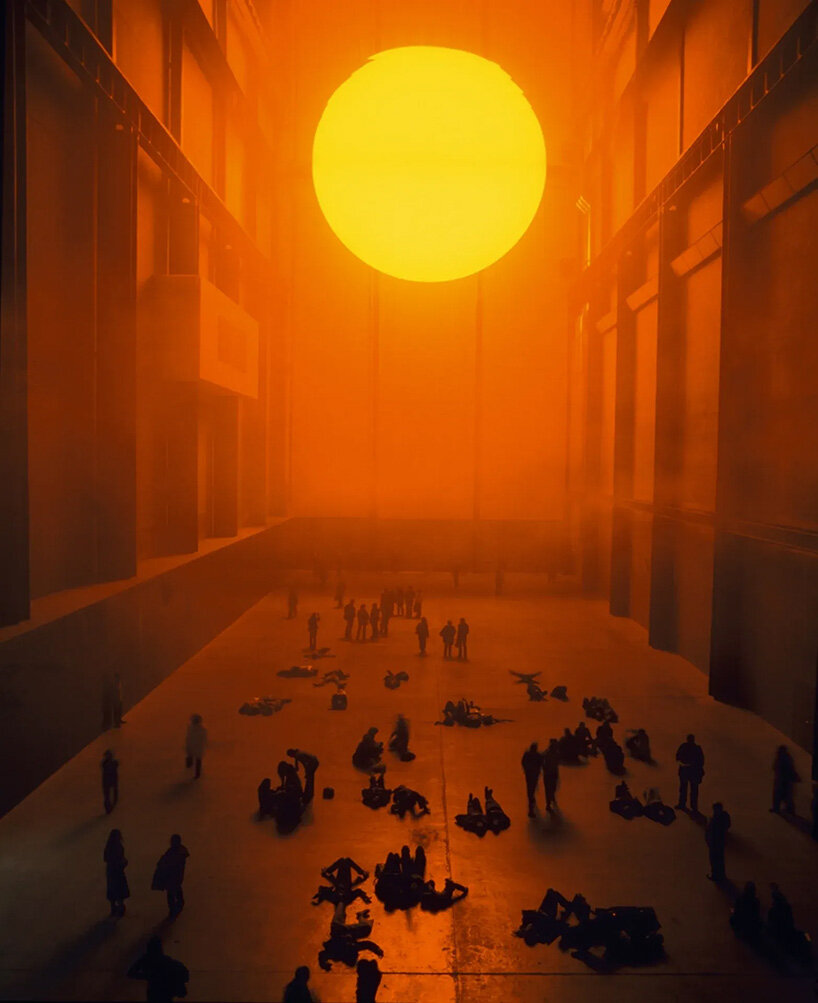
The weather project, 2003 Tate Modern, London – 2003 | image courtesy of Tate Photography (Andrew Dunkley & Marcus Leith)
the studio as a site of knowledge production
The scale and complexity of Eliasson’s work are inseparable from the structure of Studio Olafur Eliasson in Berlin. Functioning as a multidisciplinary laboratory, the studio brings together architects, engineers, historians, programmers, and artisans within a shared framework.
A key influence on the studio’s development was the long-standing collaboration with the late architect Einar Thorsteinn, whose research into geometry and spatial structures informed many of Eliasson’s formal explorations. Polyhedrons, spirals, and non-orthogonal systems emerge as perceptual tools that challenge the dominance of rectilinear space and introduce alternative ways of orienting oneself within an environment.
In Model Room (2023), hundreds of physical studies, made from simple materials, accumulate as a form of thinking in space. These models are not representations of finished works but active participants in the design process. They allow ideas to be tested, modified, and reconfigured.
Internal workshops on topics ranging from robotics to social analysis reinforce the studio’s role as a knowledge-producing environment. This structure enables a form of distributed authorship, where ideas circulate across disciplines and projects evolve through collective input. The studio becomes a microcosm of the kind of interconnected thinking Eliasson advocates for at a global scale.
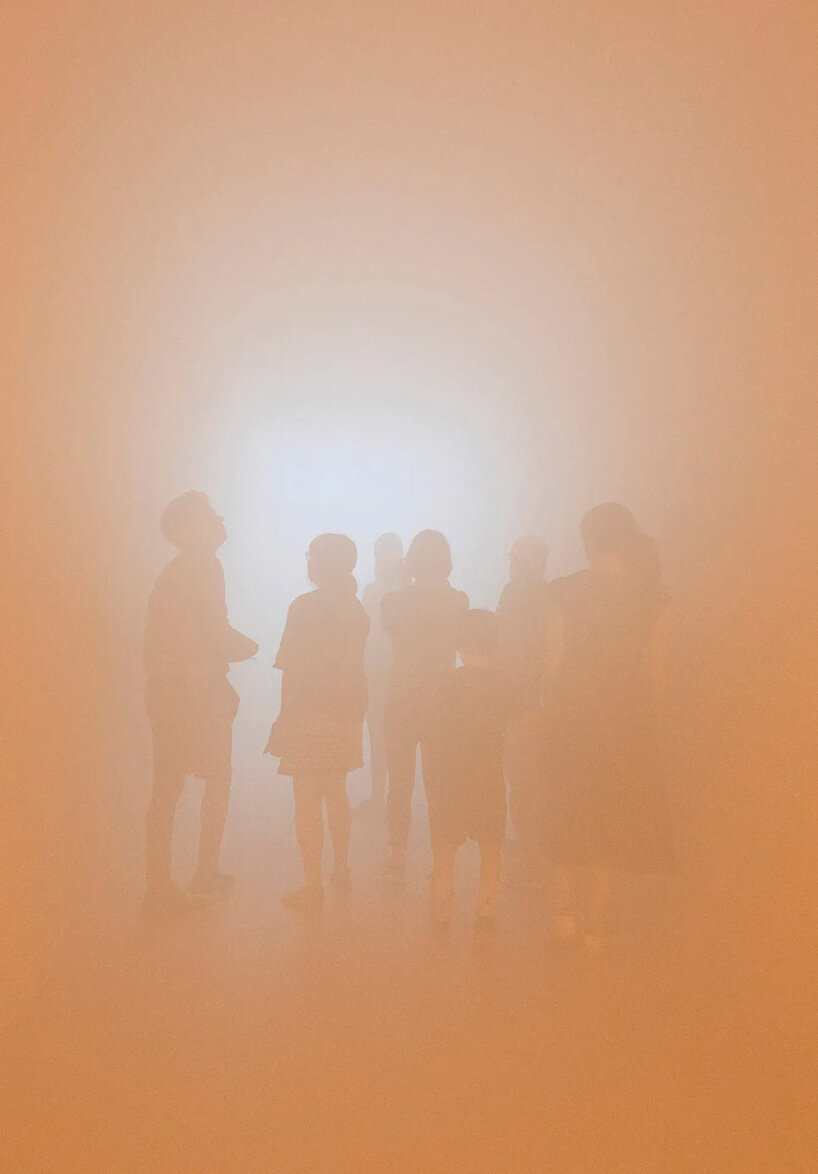
Din blinde passager, 2010 Tate Modern, London – 2019 | image by Anders Sune Berg
aligning process with environmental values
For Eliasson, sustainability is not something that can be added onto a project at the end. It is tied directly to how the work is made. If an artwork speaks about environmental issues but is produced in a way that contradicts those values, then, for him, there is a clear disconnect. Because of this, Studio Olafur Eliasson integrates environmental thinking into its everyday operations.
One of the ways this is structured is through the Five Per Cent model, where part of the studio’s time, budget, and effort is dedicated specifically to researching and reducing its environmental impact. This affects practical decisions, such as choosing sea freight instead of air transport, even if it requires more time and planning, or prioritizing train travel over flying whenever possible. These choices inevitably slow down the process, but that slower pace becomes part of the way the studio works rather than a limitation.
This approach extends beyond logistics into daily habits. The studio’s shift to a fully vegan kitchen reflects an effort to align collective behavior with environmental goals. Instead of seeing these changes as restrictions, Eliasson treats them as opportunities to rethink how things are done and to develop new ways of working.
In this sense, the way a project is produced becomes inseparable from what it represents. Eliasson often refers to this alignment as synchronicity, where the values behind a work and the process of making it support each other. The artwork becomes part of a wider system that includes decisions, resources, and their broader impact.
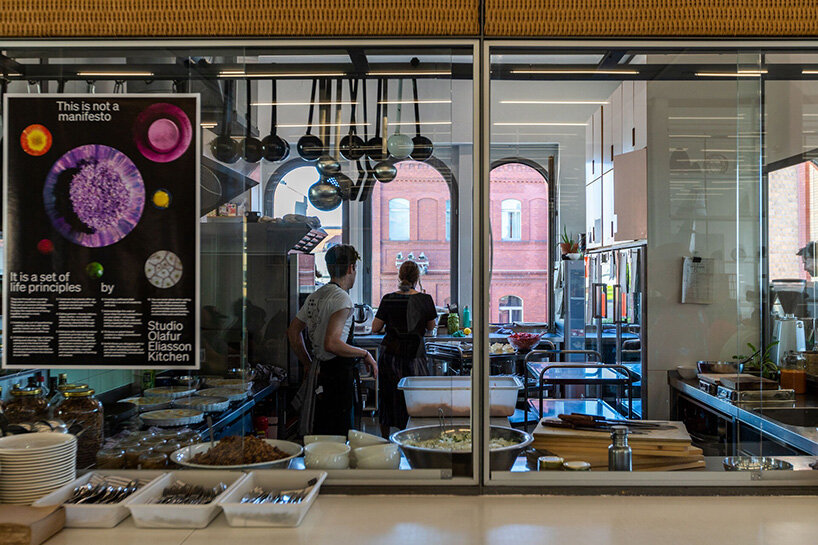
Kitchen Studio Olafur Eliasson
expanding art into systems and economies
Eliasson’s work often expands into areas like design, infrastructure, and social initiatives. Little Sun (2012), developed with Frederik Ottesen, addresses the issue of energy poverty through solar-powered products. The project combines design with a distribution model that helps make clean energy more accessible, especially in off-grid communities.
The design of the lamp itself plays an important role. Instead of being purely functional, it has a bright, flower-like form that makes it visually engaging and approachable. In this way, energy is not presented as something abstract or technical, but as something people can connect with on a more personal level. This reflects Eliasson’s broader interest in perception, even within practical, real-world applications.
Over time, Little Sun has grown beyond individual products into larger systems. This includes community energy hubs, particularly in places like Zambia, where solar-powered technologies are used to support agriculture. For example, milk can be stored and preserved, allowing farmers to access wider markets and secure more stable incomes. In this way, the project moves from a single object to a broader infrastructure that supports everyday life.
Alongside this, Eliasson has developed works such as Ice Watch (2014) and The glacier series (1999), which focus on climate change. These projects make environmental data more tangible by turning it into something people can directly experience. Whether by bringing melting ice into city centers or showing photographic comparisons of glaciers over time, they help bridge the gap between distant information and immediate understanding. Climate change, in this context, becomes something visible, physical, and harder to ignore.
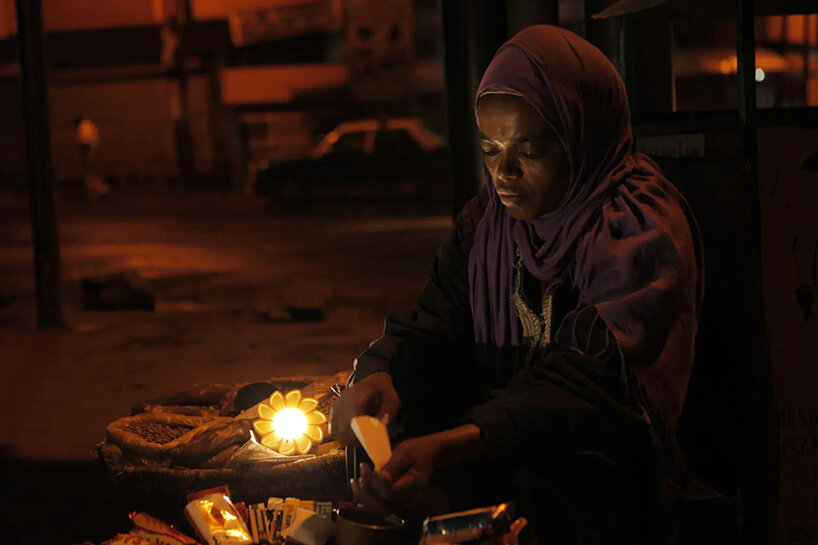
Little Sun, 2012 Addis Ababa, 2012 | image by Terhas Berhe
architecture, public space, and the global we
Through Studio Other Spaces, co-founded with architect Sebastian Behmanas, as well as his collaborations with international organizations, Eliasson expands his work into architecture and larger public platforms. In these projects, buildings and infrastructures are not only designed for function, but also to shape how people experience and relate to space.
Fjordenhus in Vejle is a good example of this approach. The building rises directly from the water and is defined by a combination of curved forms, shifting light, and carefully detailed materials. Its ground floor is open to the public, which challenges the typical separation between private and public space. Rather than being just an office building, it also works as a place people can move through, explore, and experience.
Cirkelbroen in Copenhagen takes a similar approach on a smaller scale. The bridge is made up of a series of circular platforms, which naturally slow people down as they cross. Instead of simply moving from one side to the other, visitors are encouraged to pause, look around, and interact with others. In this way, the bridge becomes more than infrastructure, it becomes a space for everyday social interaction. Eliasson’s work also extends beyond physical space into global initiatives.
Through his role with the United Nations Development Programme and projects like UN Live and EarthSpeakr, he explores how art and technology can create connections between people in different parts of the world. These platforms focus on participation, giving individuals ways to engage with global issues and with each other. Across all these projects, the approach remains consistent. Eliasson is less interested in providing clear answers and more focused on making people aware of how they experience the world. By changing perception, even in small ways, his work creates the possibility for people to think and act differently.
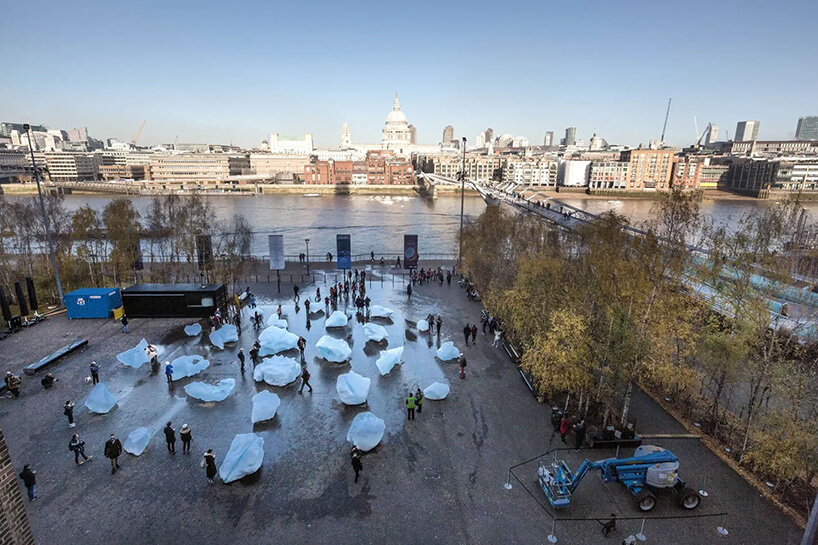
ce Watch, 2014 Bankside, outside Tate Modern, London, 2018 | image by Justin Sutcliffe
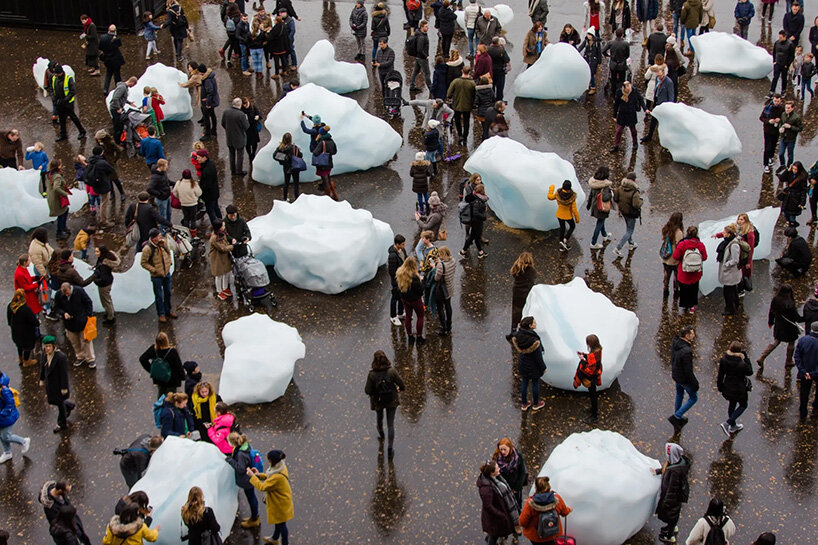
Ice Watch, 2014 Bankside, outside Tate Modern, London, 2018 | image by Charlie Forgham-Bailey
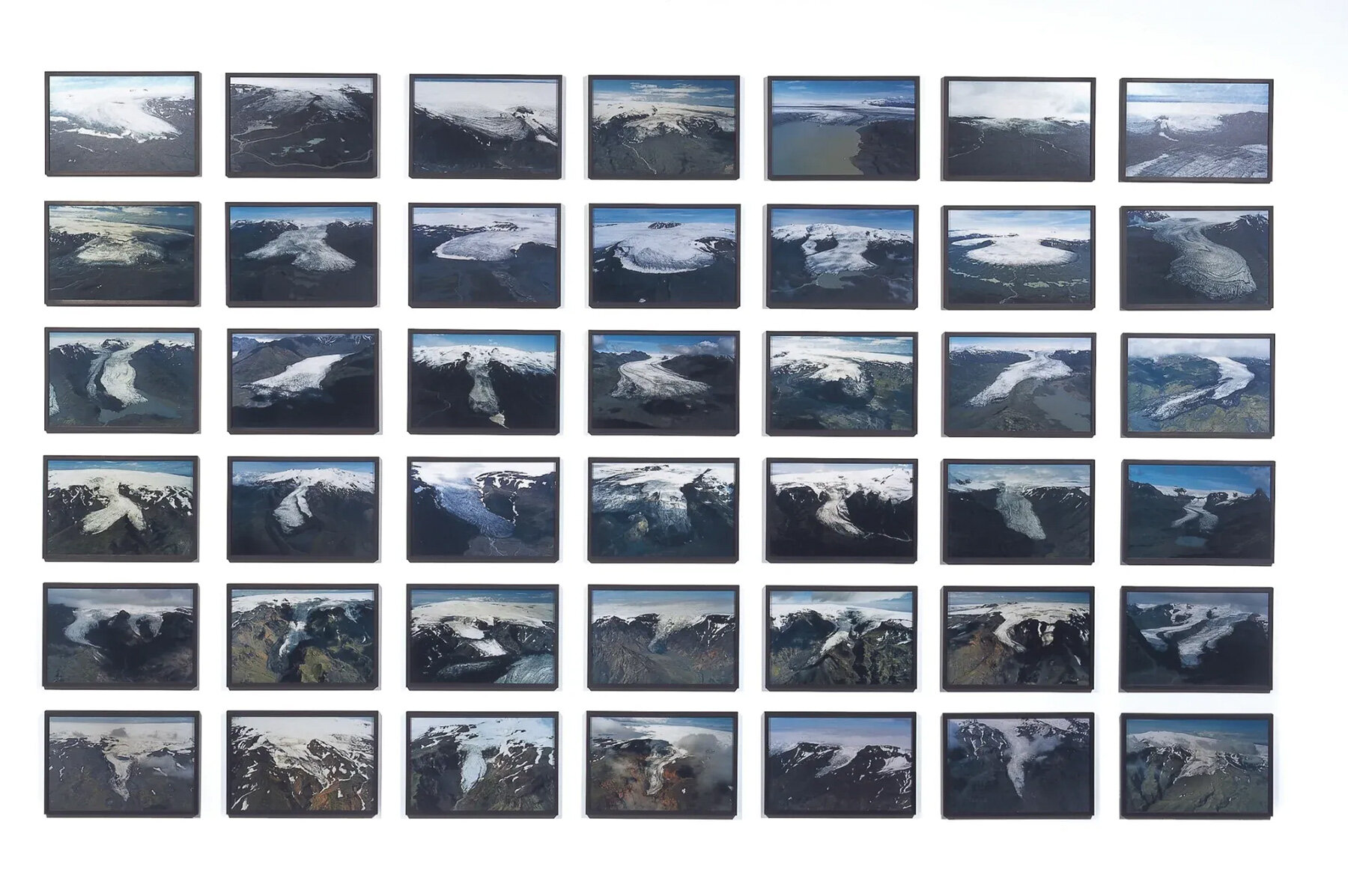
The glacier series, 1999 Neugerriemschneider, Berlin, 1999 | image via Jens Ziehe
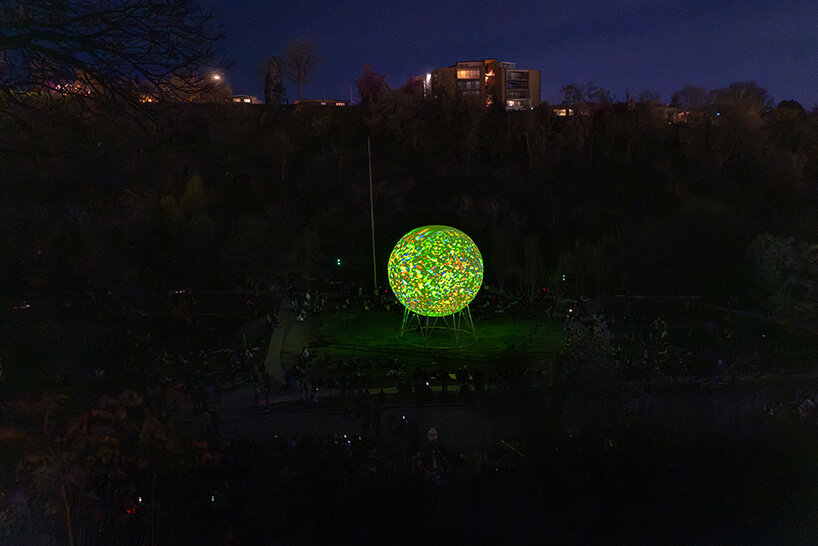
the installation brings together more than 150 field recordings of animals that depend on the lake | image by Kim Raff Commissioned for Wake the Great Salt Lake. Supported by Salt Lake City Arts Council, Salt Lake City Mayor’s Office, and the Bloomberg Philanthropies Public Art Challenge © 2026 Olafur Eliasson
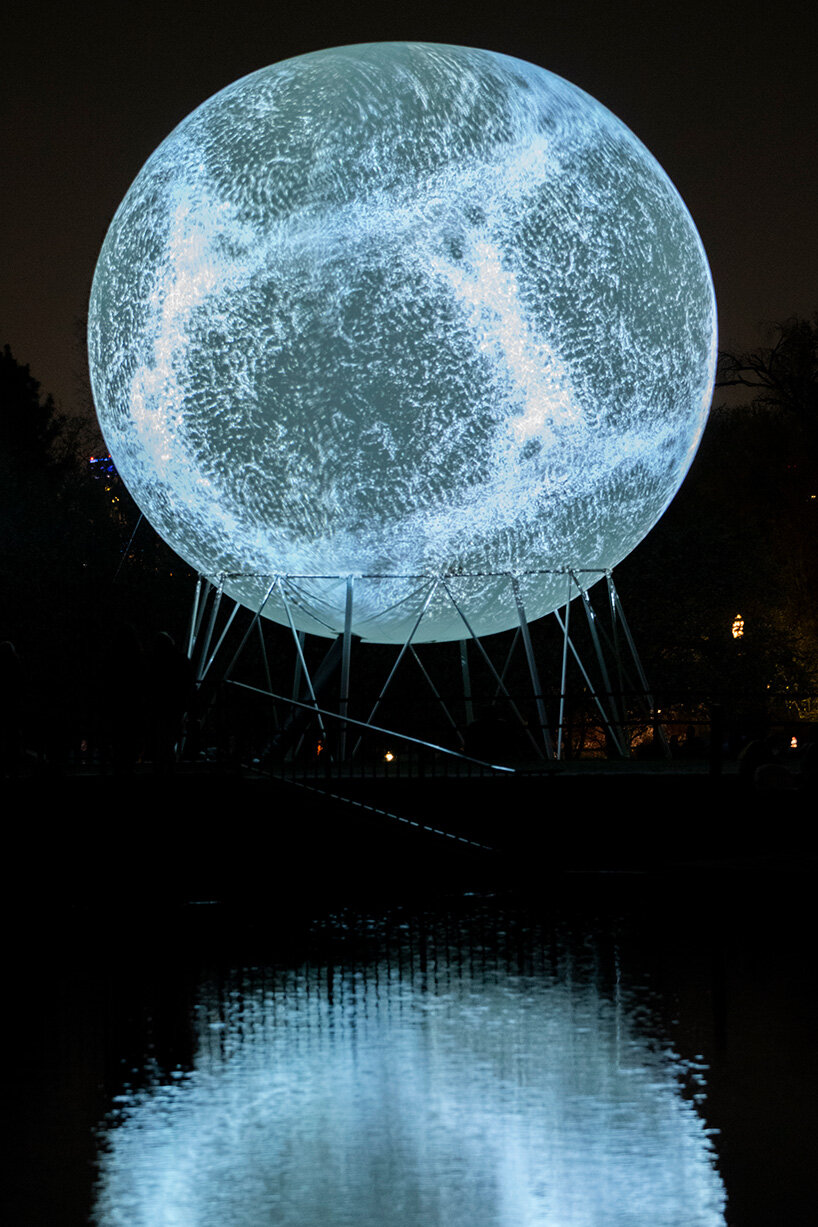
evolving light projections on a large spherical structure | image by Kim Raff Commissioned for Wake the Great Salt Lake. Supported by Salt Lake City Arts Council, Salt Lake City Mayor’s Office, and the Bloomberg Philanthropies Public Art Challenge © 2026 Olafur Eliasson
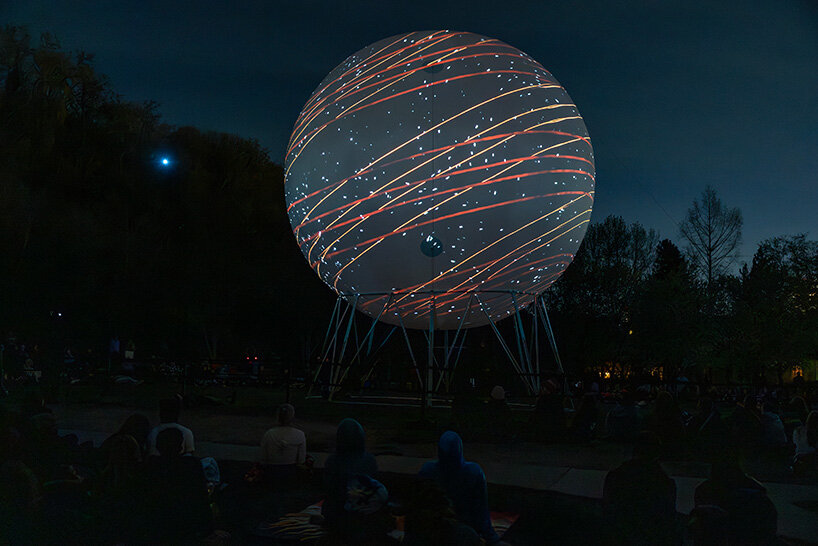
the sounds are rearranged into rhythms that can be perceived differently | image by Kim Raff Commissioned for Wake the Great Salt Lake. Supported by Salt Lake City Arts Council, Salt Lake City Mayor’s Office, and the Bloomberg Philanthropies Public Art Challenge © 2026 Olafur Eliasson
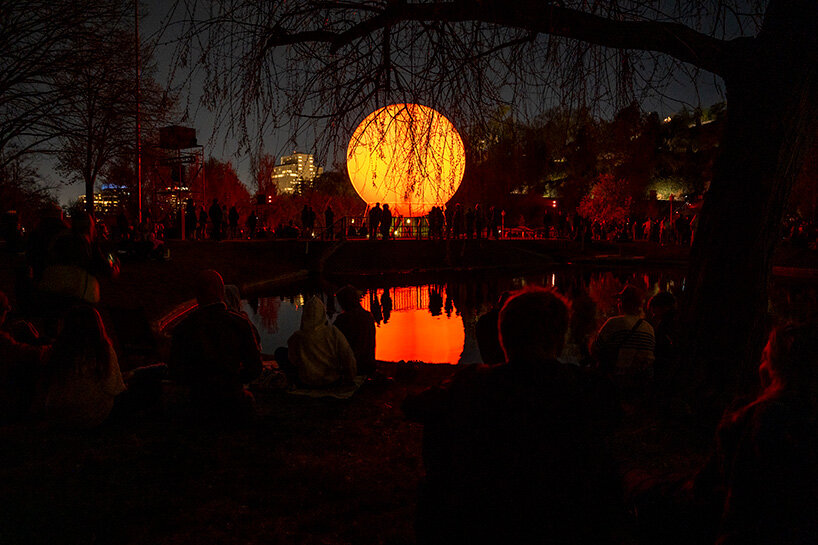
the work shifts from observing nature to listening to what may soon be lost | image by Kim Raff Commissioned for Wake the Great Salt Lake. Supported by Salt Lake City Arts Council, Salt Lake City Mayor’s Office, and the Bloomberg Philanthropies Public Art Challenge © 2026 Olafur Eliasson