
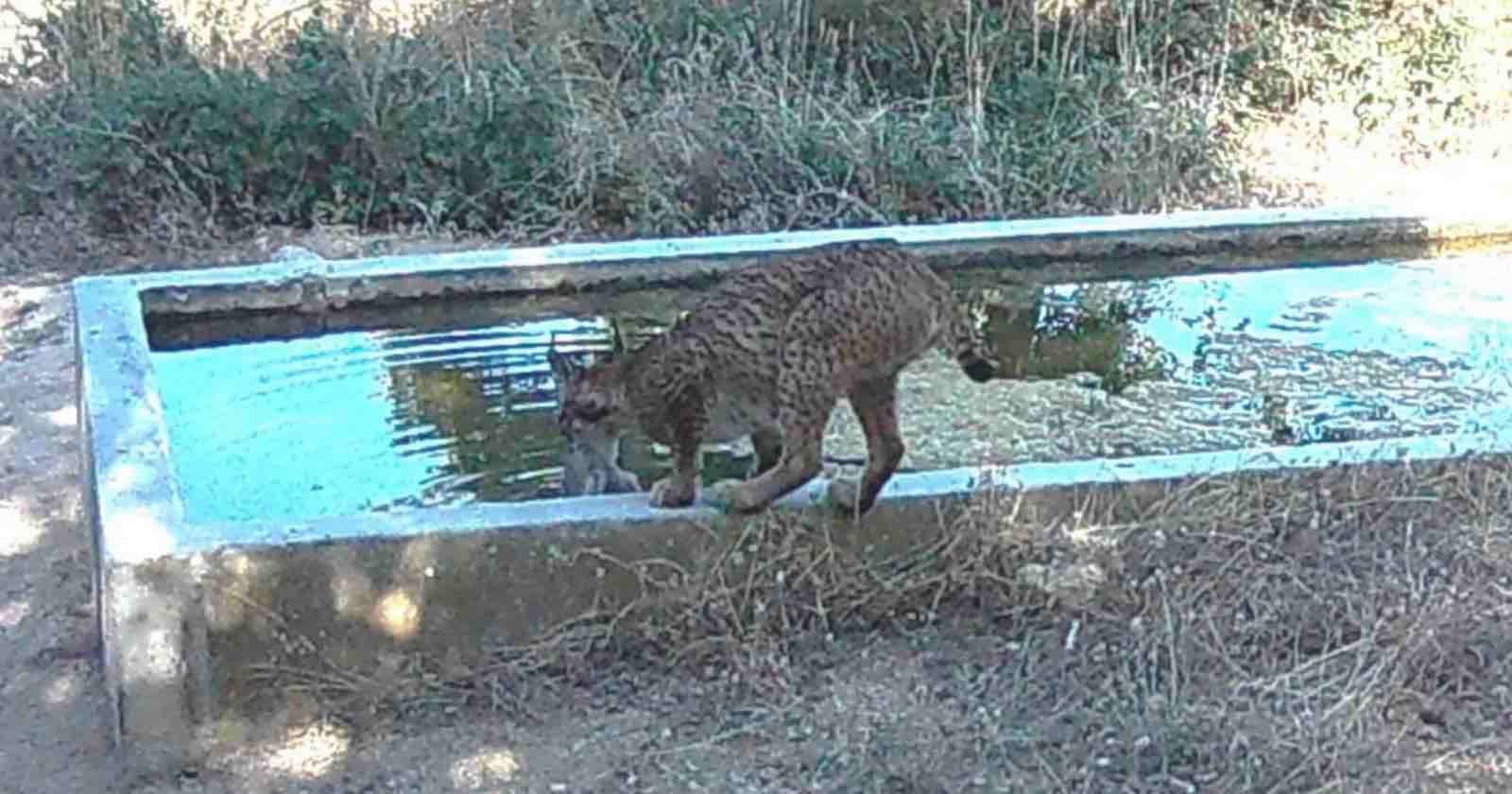
 Image credit: Rafael Finat via Jiménez, J., et al, Ecology (2026);
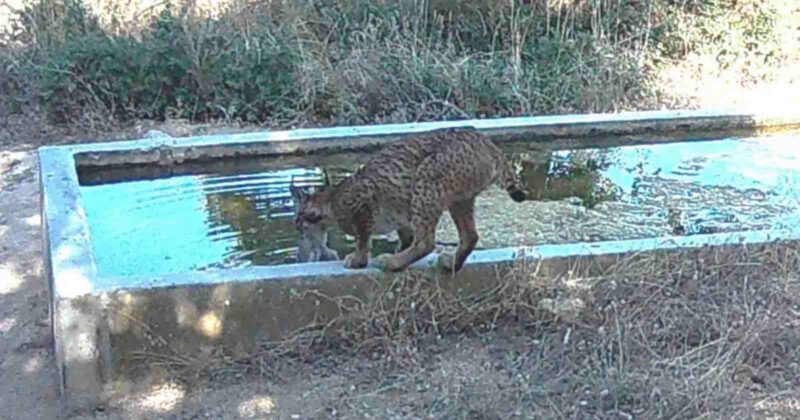
Camera traps captured an Iberian Lynx bathing their prey in a water trough — in the first instance of pre-soaking behavior being recorded in carnivores.
According to a report by IFLScience, researchers captured the unusual behavior in the Montes de Toledo region of central Spain. In a study published in Ecology this month, a female Iberian lynx was filmed near a water trough not to drink, but to dunk a freshly caught rabbit.
IFLScience reports that while washing food items has been observed in primates, birds, and raccoons, it is typically associated with species that eat fruit or have a more omnivorous diet, and most observations occur in captivity. In carnivores, prey is usually eaten soon after death, with any manipulation done to aid consumption or storage. Soaking prey, as shown by the lynx, has not previously been reported in any carnivore species.
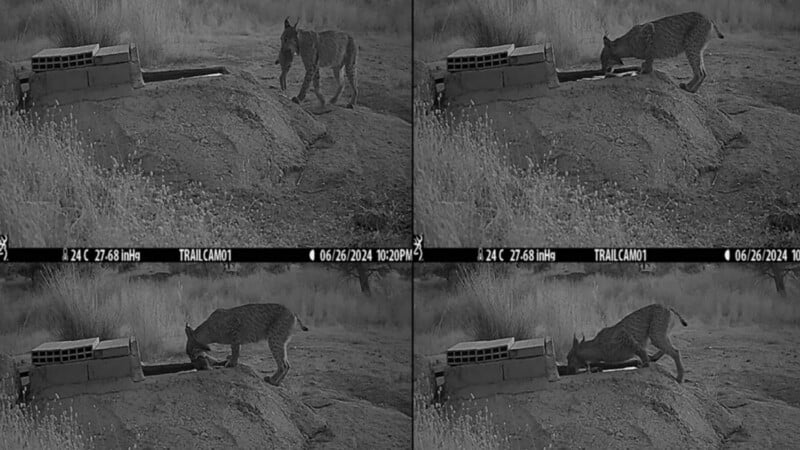 Image credit: Rafael Finat via Jiménez, J., et al, Ecology (2026)
According to the report by IFLScience, the researchers noted that this pre-soaking behavior has been seen in more than one lynx in the area. In Montes de Toledo, females Luna and Naia were recorded soaking rabbits on camera traps almost exactly three years apart. The first instance occurred in 2020, and since then, researchers have documented eight cases of prey-soaking by five different females at five separate water troughs.
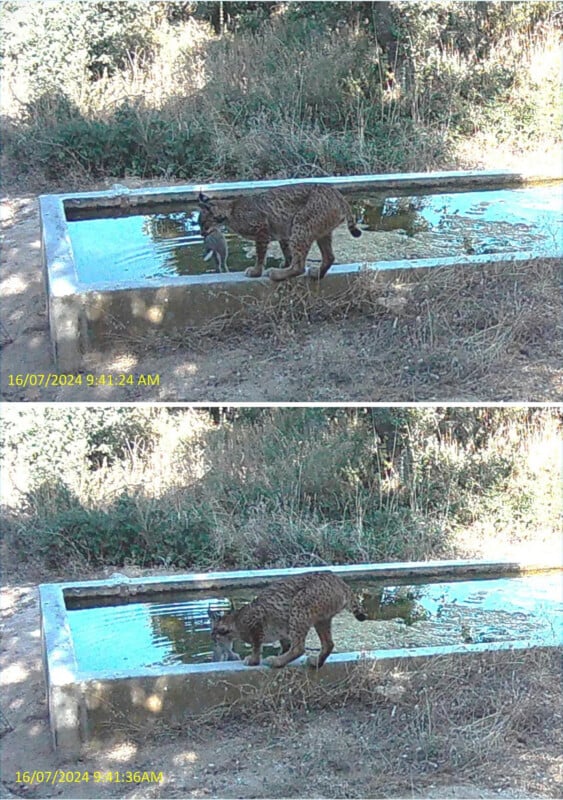 Image credit: Rafael Finat via Jiménez, J., et al, Ecology (2026)
The reason for this behavior remains unclear to researchers. Camera trap records show no consistent pattern in temperatures, suggesting it is not a response to heat or drought. The lynxes in Montes de Toledo appear to be the only ones exhibiting this behavior, with no other wild or captive records known. Researchers suggest it may be a rare local tradition shared among related or overlapping females, and it could help cubs transition from milk to solid food.
The findings come after trail cameras in Minnesota captured rare and unexpected interactions between wolves and a black bear around a fresh catch of fish. The trail camera recorded a wolf leaving the fish behind. A black bear then entered the frame, sniffed the potential meal, and ultimately walked away. Two days later, another wolf, identified as the breeding female of the Half-Moon Pack and the older sister of the first wolf, retrieved the fish. This behavior was unexpected by researchers, as bears would typically consume an easy meal.
Image credits: All photos by Rafael Finat via Jiménez, J., et al, Ecology (2026); CC BY 4.0.