
In August 1969, a secret diplomatic cable from the United States embassy in Islamabad reported on a conversation between Henry Kissinger, then National Security Advisor to President Richard Nixon, and the head of Pakistan’s air force, Air Marshal Nur Khan. According to the cable, both Kissinger and Nur Khan agreed that China’s then premier Zhou Enlai might be willing to negotiate with the United States, provided that Washington withdrew its military forces from Taiwan.
The cable gave rise to a flurry of secret diplomacy seeking to broker detente between two Cold War rivals, drawing in the White House and the highest levels of the Pakistani and Chinese governments.
The thrust of this old cable has a new relevance in the Iran conflict, with Pakistan again seeking to play a mediating role in talks involving America and an adversary. There is talk that US Vice President J.D. Vance might soon travel to Pakistan for a lead role in negotiations. He should be sure to read this history.
The stakes could hardly be higher. The United States and Israel have prosecuted a military campaign that decapitated Iran’s senior leadership, stymied its nuclear weapons program and degraded its ballistic missile capability. In response, Iran has pushed the global economy to the brink of recession by shuttering the Strait of Hormuz, sending global oil prices soaring.
That Pakistan has once again positioned itself at the centre of global politics demonstrates the country’s ambition to be a consequential actor. The idea that Pakistan can even be considered a viable location for hosting talks between the US and Iran shows its diplomatic convening power should not be underestimated.
Pakistan knows no way of prosecuting its interests without hedging against the powers it seeks to court.
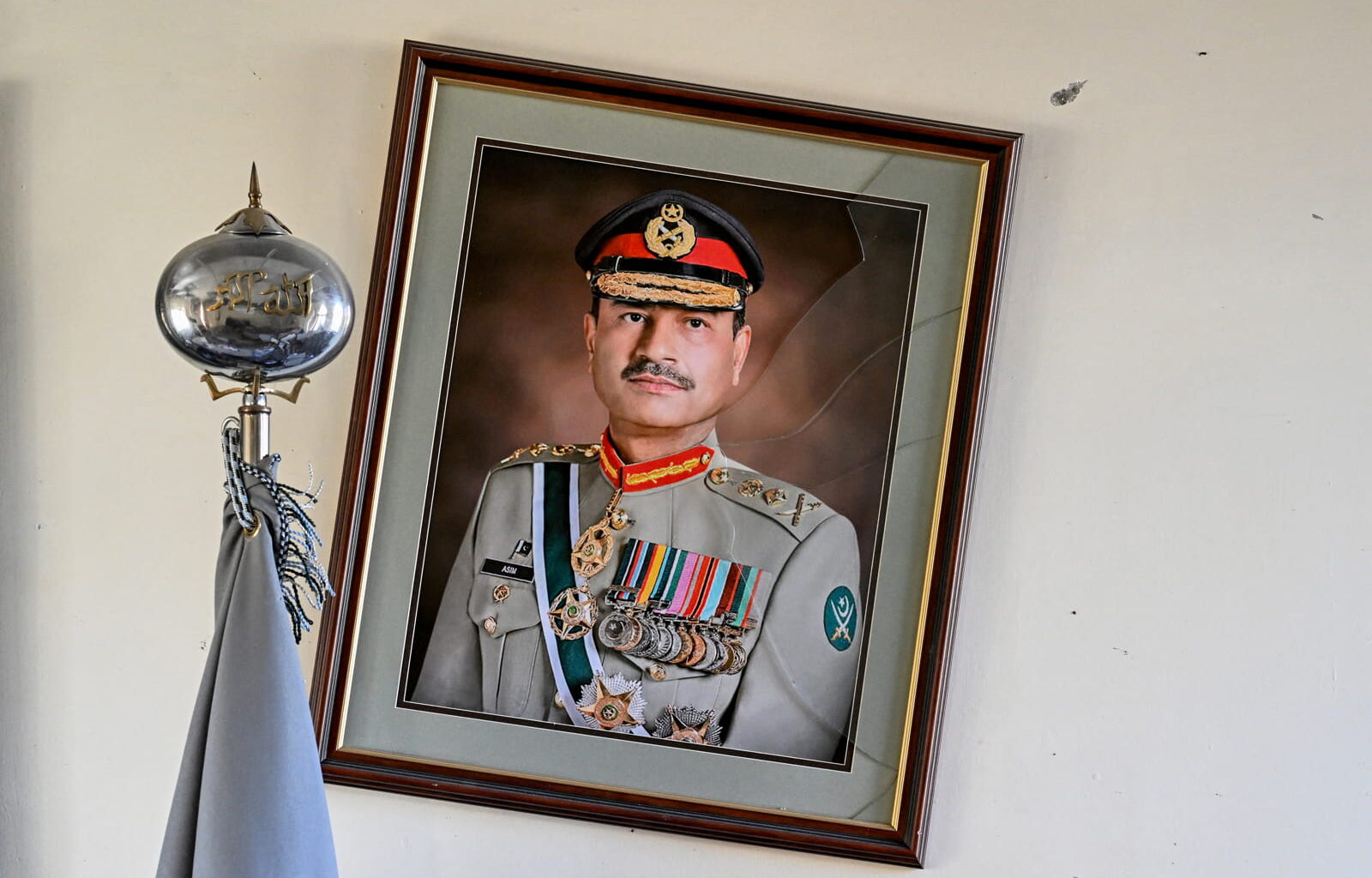
Like in the 1960s, a powerful Pakistani military man acts as a driving force. Since assuming the role of Pakistan’s Chief of the Army Staff in November 2022, Asim Munir has consolidated power, sidelining rivals in the military and silencing democratic critics such as former prime minister Imran Khan. Munir serves as the country’s de facto ruler.
Munir’s status in Pakistan rose during the brief, but intense armed conflict with India in May 2025, following the Pahalgam terrorist attack. Pakistan’s air force – operating Chinese-designed J-10C fighters – shot down a number of Indian fast jets, including the French-made Rafales, in what came to be the first deployment of Chinese military equipment in combat.
Beijing seemed pleased with the results. Shortly before the ceasefire was brokered with India, China’s Foreign Minister Wang Yi called Pakistan’s Foreign Minister Ishaq Dar on 10 May 2025, reportedly saying that “China supports Pakistan in safeguarding its national sovereignty and dignity”.
Munir soon promoted himself to the five-star rank of Field Marshal, last held by military dictator Ayub Khan (1958–69). Munir later created a new, more senior position as Chief of Defence Forces in a move that signalled his status as the most powerful Pakistani leader since Pervez Musharraf (1999–2008).
He shrewdly matched these domestic power plays abroad. With President Donald Trump, Munir has reportedly developed warm rapport, nominating the president for a Nobel Peace Prize, endorsing his Gaza peace plan and pitching the development of Pasni seaport to American investors (three-and-a-half hours by road from China’s own port at Gwadar). Clearly, as the prospect of hosting talks between the US and Iran demonstrates, Munir has managed to keep Islamabad’s fickle relationship with Tehran intact, despite concluding a mutual defence treaty with Saudi Arabia in September last year. (A major achievement, given that Pakistan and Iran exchanged missile strikes in January 2024.)
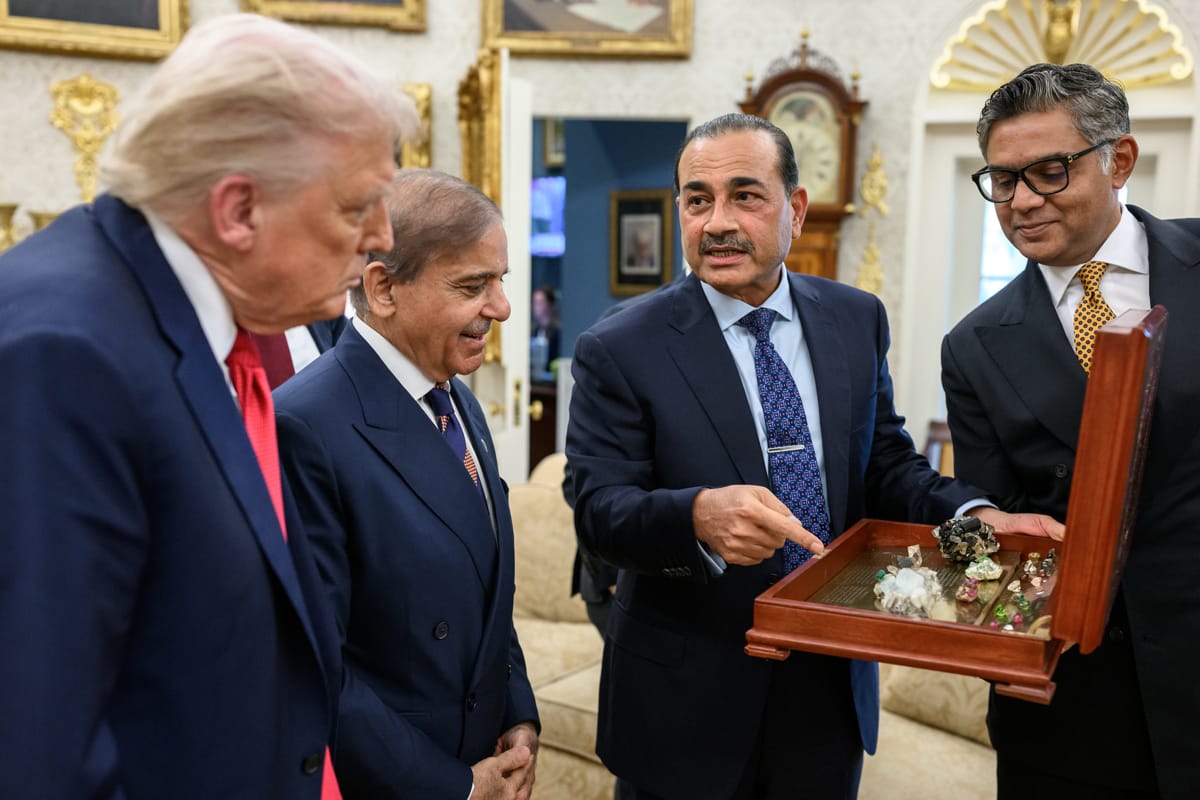
Field Marshal Asim Munir, second right, presented gifts along side Pakistan’s Prime Minister Shehbaz Sharif to US President Donald Trump during an Oval Office meeting in September (Daniel Torok/Official White House Photo)
Munir’s dexterous diplomacy belongs to a long history of Pakistani statecraft, which has built the country’s reputation as a wily actor capable of playing great powers off against each other.
Yet Pakistan has a knack for finding trouble. The military’s Inter-Services Intelligence (ISI) propped up the Afghan Taliban during the years following the 2001 US invasion, all the while insisting to the United States and its allies in NATO and Australia that it was doing the reverse. Pakistan has since declared “open war” against the Taliban regime it once supported, this year launching airstrikes on Kabul and Kandahar.
Pakistan knows no way of prosecuting its interests without hedging against the powers it seeks to court. On 19 March, the United States Office of the Director of National Intelligence released its annual threat assessment, which stated: “Pakistan continues to develop increasingly sophisticated missile technology that provides its military the means to develop missile systems with the capability to strike targets beyond South Asia [including] ICBMs that would threaten the United States.”
More than half a century of Pakistani statecraft has shown that the country’s ability to convene great power rivals is one of its most treasured strategic assets. It is this convening power, alongside the country’s arsenal of nuclear weapons and ballistic missiles, that is jealously guarded by the generals who run Pakistan.
The lesson for political leaders in Washington is simple and echoes history – Pakistan’s offers to convene are often made genuinely. Equally genuine, though, is the willingness of Pakistan’s generals to hold great powers to ransom.