
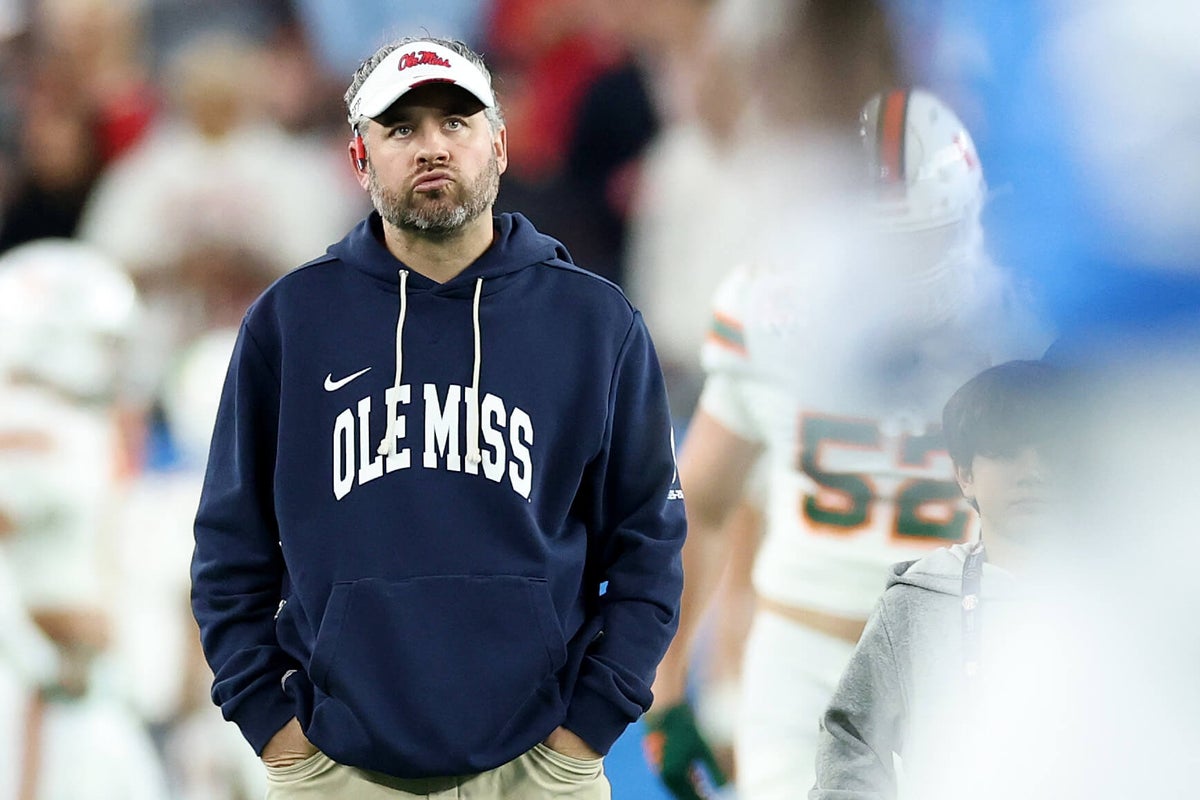
Ole Miss coach Pete Golding commented publicly for the first time Tuesday on the transfer of linebacker Luke Ferrelli, whose flip from Clemson to Ole Miss in January prompted Tigers’ coach Dabo Swinney to go public with tampering accusations. Golding did not directly address any of Swinney’s allegations, however.
Golding, speaking to local reporters at a news conference to kick off spring football practice, was asked for his version of events and reaction to Swinney’s claims, which included an accusation that Golding directly texted Ferrelli while he was in class at Clemson after already signing with the Tigers.
Per NCAA rules, athletic department staff members are prohibited from contacting players (or their family members, advisors or others associated with the player) at other Division I schools directly or indirectly unless those players are in the transfer portal.
“I mean, obviously, I think there’s two sides to every story, right? And so, I’m not going to sit up here and use the podium as a grandstand and all that,” Golding said Tuesday. “I mean, that’s why there is enforcement, that’s why we have a compliance office, right? They do all that.
“So, bottom line on the recruitment of Luke: he came on an official visit prior to the Fiesta Bowl and I told him, ‘Hey, I want you to be our green-dot Mike (linebacker). But right now, we have a green-dot Mike. And that spot’s not going to be available until we have one available.’”
The “green-dot Mike” linebacker Golding referenced was TJ Dottery, who started 27 games in the last two seasons for the Rebels. Both seasons, Dottery sported a green dot on his helmet, which means he could hear direct presnap radio communication from the coaches’ headsets. Dottery, who led Ole Miss with 98 tackles in 2025, officially entered the transfer portal on Jan. 15, a day before the transfer portal window closed. Dottery signed with LSU the next day.
Golding said he told Ferrelli on the official visit: “I want you,” and that Ferrelli wanted to be at Ole Miss, “but right now there isn’t a spot available. So, if that spot becomes available, it’s yours.’”
Dottery’s transfer opened that roster spot.
“So, it’s a kid that wanted to be here, that we wanted to be here, that at the end of it (a spot) came open and he’s here and we’re happy to have him.”
Swinney’s version of events, which he spelled out in a news conference on Jan. 23, indicated that Ferrelli signed with Clemson on Jan. 7 and moved to town and began attending classes on Jan. 11. Swinney said his general manager, Jordan Sorrells, informed him on Jan. 14 that Ole Miss had been “coming hard” after Ferrelli and that Ferrelli told Sorrells that Golding texted him that morning, saying “I know you’re signed, what’s the buyout?” along with a picture of a $1 million contract.
Swinney said that on Jan. 16, the last day the portal was open, Ferrelli informed Swinney and other Clemson staffers of his intention to re-enter the portal and sign with Ole Miss, which Ferrelli eventually did.
The NCAA confirmed to The Athletic on Jan. 26 that it had become involved in the matter and had been in direct contact with Clemson about Swinney’s allegations.
“The NCAA will investigate any credible allegations of tampering and expect full cooperation from all involved as is required by NCAA rules,” NCAA vice president of enforcement Jon Duncan said then in a statement. “We will not comment further on any ongoing investigation.”
In March, Clemson cited student privacy laws in declining an open records request from The Athletic for documents and communications with Ole Miss, the NCAA and/or the College Sports Commission about the tampering allegations. However, a source familiar with discussions recently said Clemson has been pleased with how the NCAA has handled the allegations since Swinney made them public, though there’s been no resolution to the issue yet.
The Athletic’s David Ubben contributed to this report