
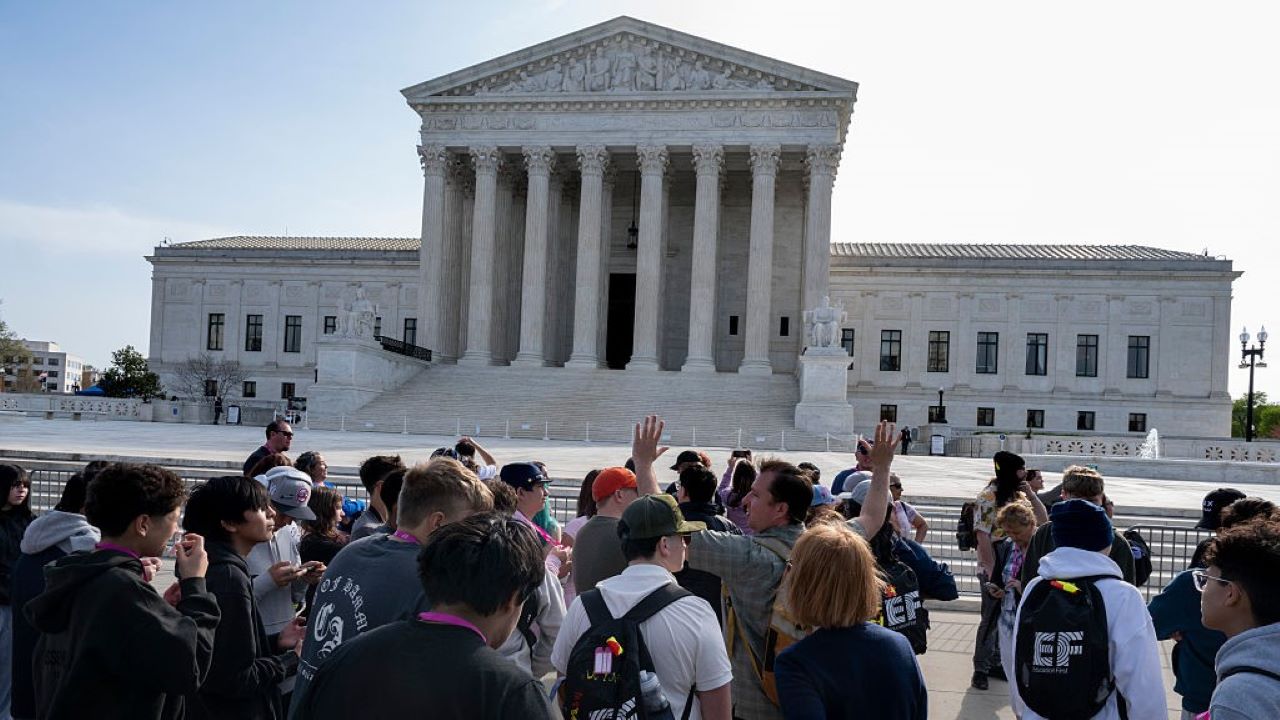
3 hours agoAlito says federal officials have not effectively enforced immigration laws
Supreme Court Justice Samuel Alito argued federal officials have failed to effectively enforce immigration laws on Wednesday.
Alito made the point while questioning Solicitor General John Sauer at oral arguments on birthright citizenship.
“Under the minimum definition of domicile, which I think existed in 1868 and continues to exist today, a person’s domicile is the place where he or she intends to make a permanent home. Now, normally you would think that a person who is subject to arrest at any time and removal could not establish a domicile. But we have an unusual situation here because our immigration laws have been ineffectively and in some instances, enthusiastically enforced by federal officials,” Alito said.
“So, there are people who are subject to removal at any time if they are apprehended and they go through the proper procedures, but they have, in their minds, made a permanent home here and have established roots. And that raises a humanitarian problem. And I wonder if you could you could address that,” Alito added.
“If I make one legal and one humanitarian. The legal point is, if you look at those cases, for example, Park, Carson against Reid, Park against Barr, this court’s decisions in Elkins and against Moreno, they talk about the legal capacity to, you know, to create a domicile, excluding someone who may have the subjective intent, which otherwise would be determinative as being excluded on the humanitarian point,” Sauer responded.
“I would point out, as I said at the beginning, Justice Alito, that the United States rule of nearly unrestricted birthright citizenship is an outlier among modern nations. It’s a very small minority of nations that have that rule. For example, every every nation in Europe has a different role in the notion that they have a huge humanitarian crisis, as a result of not having that restricted birthright citizenship, I don’t think is a strong argument. And I point out, obviously, for, you know, for reliance related,” Sauer added.