
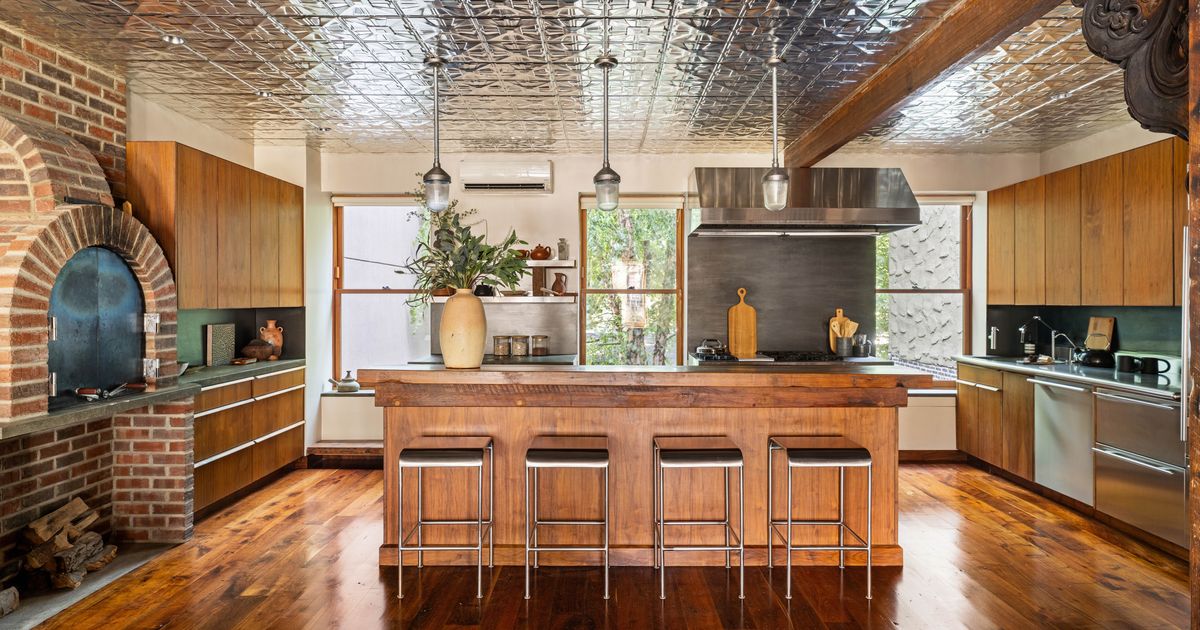
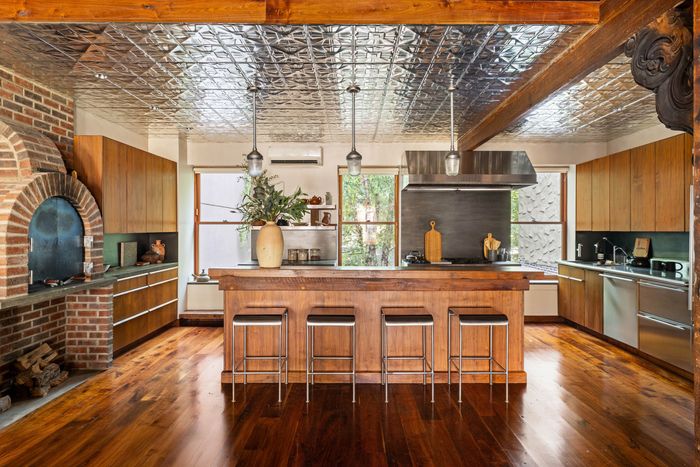
A kitchen for a chef looking over the backyard. Much of the house was built from salvaged materials.
Photo: Hayley Ellen Day/Corcoran
When Colin Faber and Leni Niemegeers-Faber bought their carriage house in 2009, they had been looking for a place to serve two functions: home and showcase. The married architects run a design firm, SHED Studio, and wanted to give clients a sense of what they could do. They had been looking for a building that was begging for a total renovation and where the site itself might turn up treasure behind walls and under floorboards. Their studio is known for clever recycling — like the copper lamp base that Faber found on a sidewalk and twisted into a faucet at their old Greenpoint rental. They found all of it at 497 St. Johns. (It didn’t hurt that the place came with a garage. Faber has been racing for 20 years.)
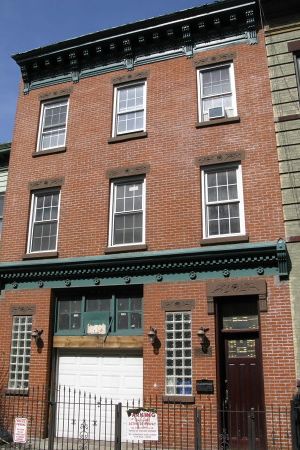
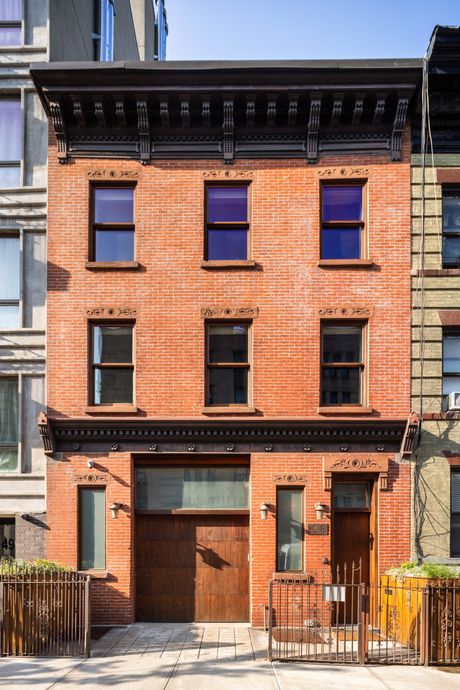
The couple replaced laminate doors with wood pieced together from scrap they collected while building out the rest of the house. Provided by Colin Faber and Leni Niemegeers-Faber / Hayley Ellen Day for Corcoran .
The couple replaced laminate doors with wood pieced together from scrap they collected while building out the rest of the house. Provided by Colin Fab… more
The couple replaced laminate doors with wood pieced together from scrap they collected while building out the rest of the house. Provided by Colin Faber and Leni Niemegeers-Faber / Hayley Ellen Day for Corcoran .
Price: $5.895 million ($585 in monthly taxes)
Specs: Three bedrooms, 2.5 bathrooms in main house; one bedroom and one bathroom in guesthouse.
Extras: Two-car garage, wine cellar, laundry room, storage space, den, two walk-in closets, and a guesthouse with steam room and Japanese soaking tub. Landscaped backyard with deck, shed, and raised beds.
10-minute walking radius: Brooklyn Museum, Cafe Mado, Lincoln Station
Listed by: Linda Peng and Dwayne Powell, Corcoran
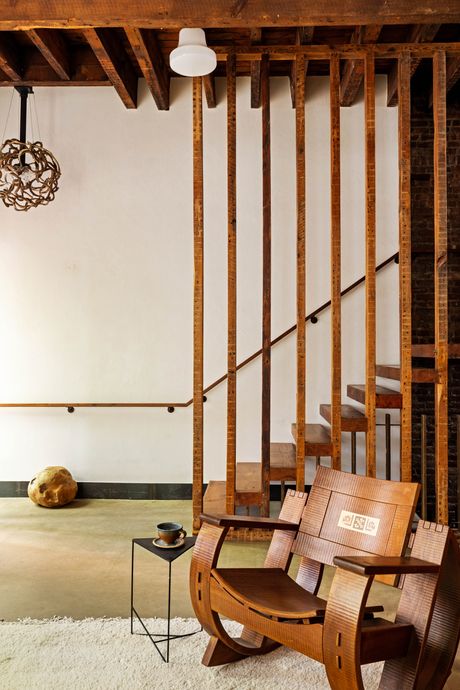
The three-story carriage house dates to the mid 1800s, according to its appearance on old maps, and out back were Belgian block stones peeking through the dirt and a building that seemed like an old stable. But the main house had been split into four rentals with cheap materials and grim, carpeted stairs. The couple hired a crew of 12 for a full gut and tried to spend most of their budget on labor by harvesting every scrap they pulled out during the demolition. Partition walls revealed rust-colored Douglas-fir boards, which became Japanese-inspired screens that set off a floating staircase. Scraps were puzzled together into a new front door, a garage door, and “the most magnificent floors we’ve ever done,” said Faber, referring to the end-cap floors in the former stable out back that they turned into an office.
Between the main house and the back is a vast yard — the lot is 131 feet deep. To landscape, they dug up every Belgian block and reused them for a patio, then made a deck out of sequoia wood stripped from an old water tower. Other wood they brought in was salvaged — giving it a certain patina. Beams left exposed across ceilings and the treads of a floating staircase are yellow pine pulled from a warehouse in Brooklyn that had been torn down. Floorboards were milled from walnut trees felled at a construction site in North Carolina. Rosewood, pulled from the old Concord Hotel in the Catskills, became the paneling of the primary bedroom. (Faber liked to imagine Frank Sinatra, a Concord regular, had danced behind his head.) Even fixtures were recycled, like a line of industrial lamps that came from a prison — “very durable,” said Niemegeers-Faber.
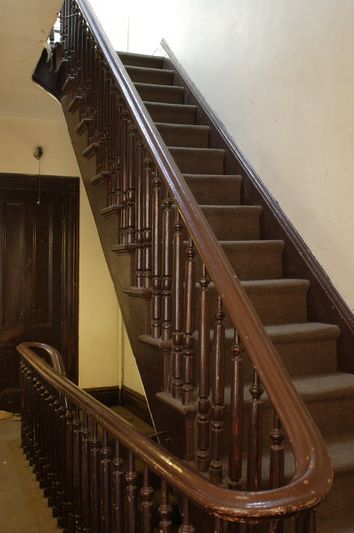
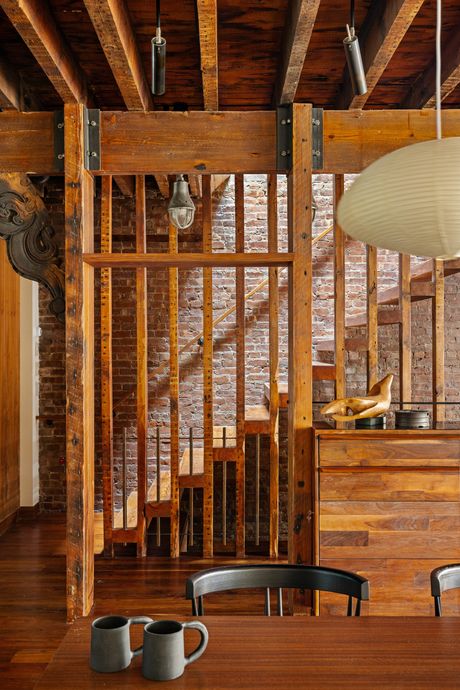
The old stairs of the rental were pulled out. New stairs were built with some of the Douglas-fir boards that were found in partition walls. Provided by Colin Faber and Leni Niemegeers-Faber / Hayley Ellen Day for Corcoran .
The old stairs of the rental were pulled out. New stairs were built with some of the Douglas-fir boards that were found in partition walls. Provided b… more
The old stairs of the rental were pulled out. New stairs were built with some of the Douglas-fir boards that were found in partition walls. Provided by Colin Faber and Leni Niemegeers-Faber / Hayley Ellen Day for Corcoran .
“Our house became a kind of model house, where we’d bring potential clients through and see what materials they gravitated to,” said Faber. It helped that every inch of the place was slightly different: Venetian plaster downstairs but limewash upstairs in two tones, cast concrete sinks in three shapes, and lots of custom details — like a shower whose drain hides beneath the grout lines of the tile, which started a trend. “We had to use that a few times after,” said Niemegeers-Faber. Contemporary metal windows were taken out in favor of broad panes of glass framed by wood and a skylight above the stairs was enlarged, showing ways to bring more light into the dark townhomes they were sometimes tapped to reimagine.
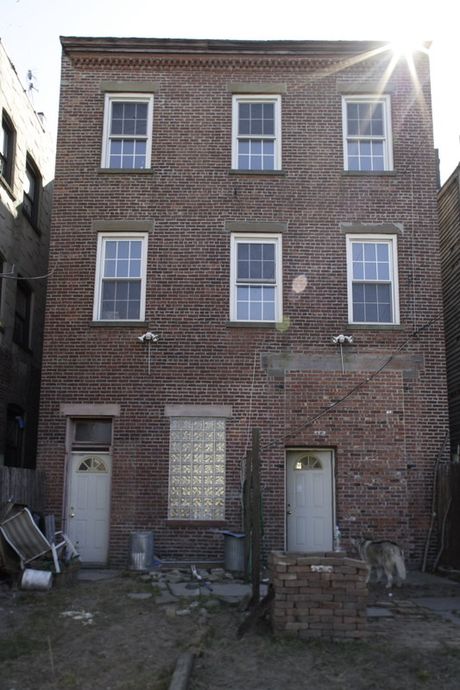
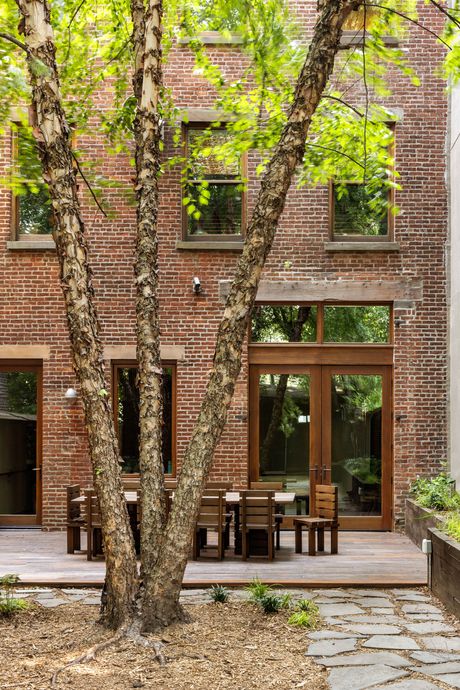
Windows were replaced to bring in more light and allow easier access from the den to the deck, made of sequoia repurposed from a water tower. Provided by Colin Faber and Leni Niemegeers-Faber / Hayley Ellen Day for Corcoran .
Windows were replaced to bring in more light and allow easier access from the den to the deck, made of sequoia repurposed from a water tower. Provided… more
Windows were replaced to bring in more light and allow easier access from the den to the deck, made of sequoia repurposed from a water tower. Provided by Colin Faber and Leni Niemegeers-Faber / Hayley Ellen Day for Corcoran .
But all these experiments were also made with an eye toward their own comfort. Radiant-heat floors are an invisible perk. A laundry chute that leads straight from bedrooms on the top floor to machines in the basement is a rarity, said Linda Peng, their broker. “This is not just some developer special that someone built to flip,” she said. “They thought everything through, and used it, and made decisions over time.”
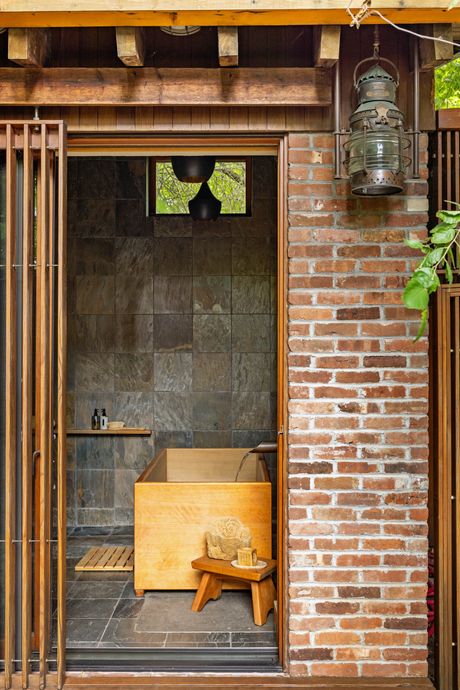
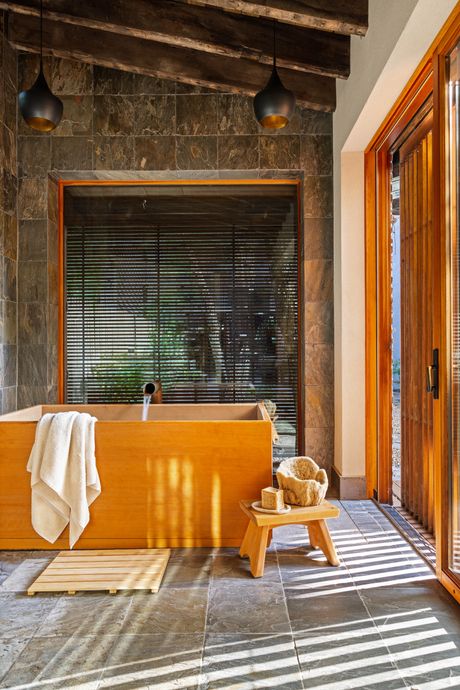
The guesthouse has a steam room and a deep hinoki tub. Slats slide closed for privacy. From left: Photo: Hayley Ellen Day/CorcoranPhoto: Hayley Ellen Day/Corcoran
The guesthouse has a steam room and a deep hinoki tub. Slats slide closed for privacy. From top: Photo: Hayley Ellen Day/CorcoranPhoto: Hayley Ellen D… more
The guesthouse has a steam room and a deep hinoki tub. Slats slide closed for privacy. From top: Photo: Hayley Ellen Day/CorcoranPhoto: Hayley Ellen Day/Corcoran
Two boys eventually arrived to fill the extra bedrooms on the top floor, and the SHED office out back doubled as a dreamy guest suite with a bathroom that’s inspired by a Japanese onsen. There’s a deep hinoki tub, a steam room, and walls of glass shaded from the neighbors by slats of salvaged Douglas fir and the canopy of birch trees that the couple planted when they moved in. “We wanted to bring the forest in there,” said Niemegeers-Faber. Faber, a serious home cook with a Rolodex of chef friends, put in a full chef’s kitchen with a pizza oven and a table that seats 15. In the basement, a storage area became a wine cellar where he could also dry out ducks. And over the kitchen ceiling, they made an exception to their insistence on salvage and put in something brand new: a tin ceiling. Practical for cooking but also maybe slightly romantic, Faber said. “It was a nod to all the apartments we lived in over the years. We left it raw, exposed, unpainted.”
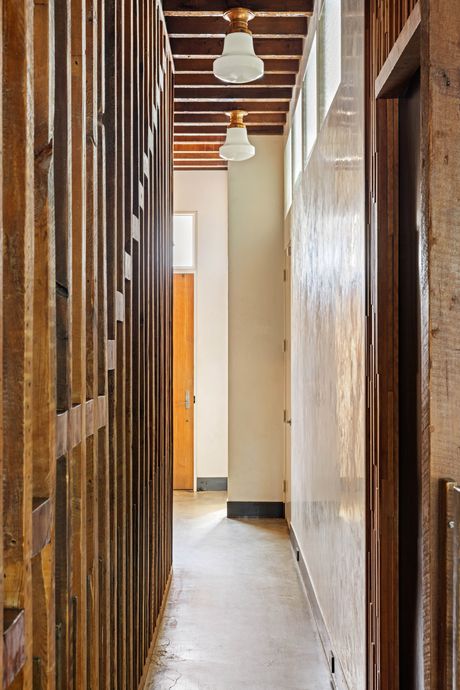
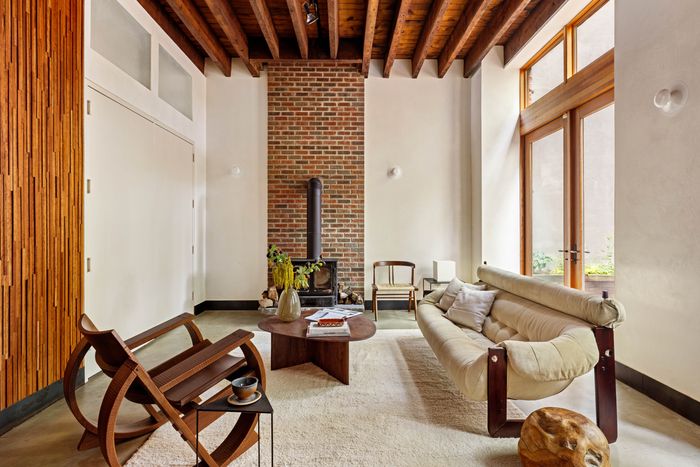
Off the garage, the front door opens to a narrow hall that leads up to a living room and kitchen, or straight back — through a den where the family had a baby grand piano. Hayley Ellen Day for Corcoran .
Off the garage, the front door opens to a narrow hall that leads up to a living room and kitchen, or straight back — through a den where the family ha… more
Off the garage, the front door opens to a narrow hall that leads up to a living room and kitchen, or straight back — through a den where the family had a baby grand piano. Hayley Ellen Day for Corcoran .
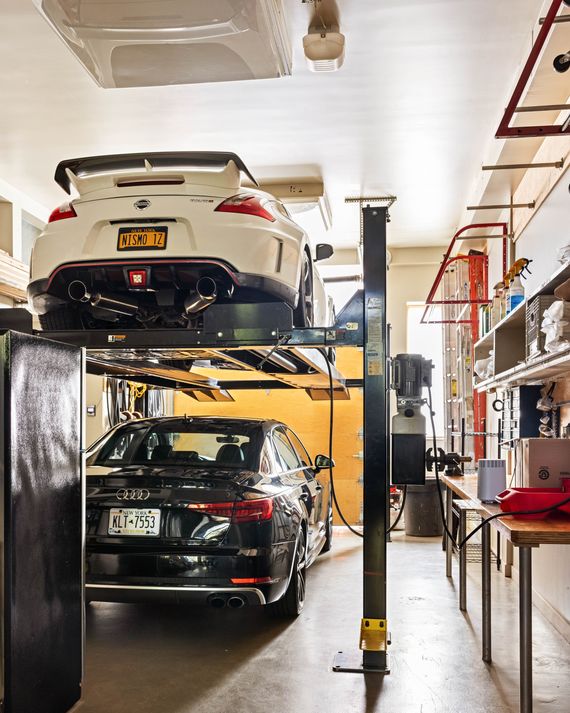
The couple rigged the garage to fit two cars; Colin races as a hobby. The doors in back of the garage open into the family den. Hayley Ellen Day for Corcoran .
The couple rigged the garage to fit two cars; Colin races as a hobby. The doors in back of the garage open into the family den. Hayley Ellen Day for C… more
The couple rigged the garage to fit two cars; Colin races as a hobby. The doors in back of the garage open into the family den. Hayley Ellen Day for Corcoran .
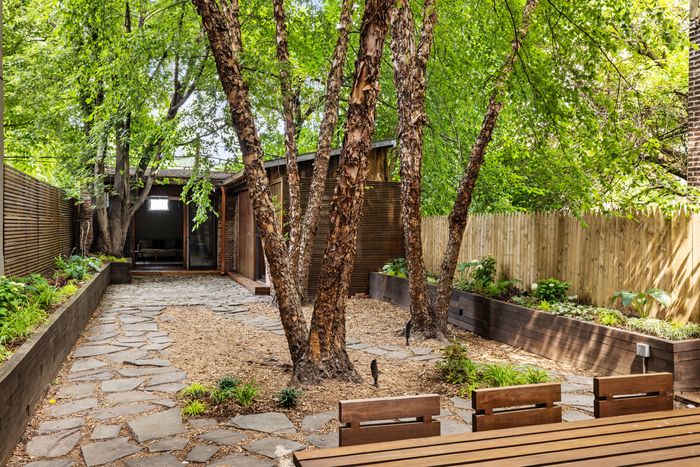
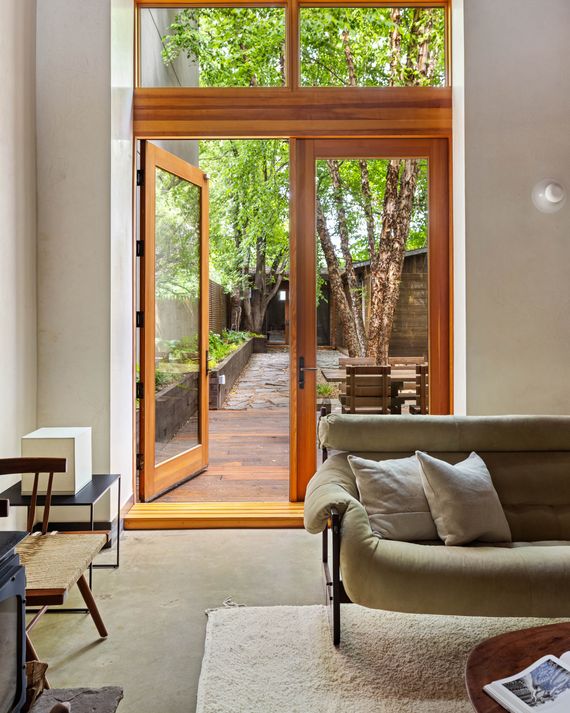
Doors in the family den lead back to a yard where Belgian block and bluestone dug up out of the dirt was reused to create a patio and pathway. Hayley Ellen Day for Corcoran .
Doors in the family den lead back to a yard where Belgian block and bluestone dug up out of the dirt was reused to create a patio and pathway. Hayley … more
Doors in the family den lead back to a yard where Belgian block and bluestone dug up out of the dirt was reused to create a patio and pathway. Hayley Ellen Day for Corcoran .
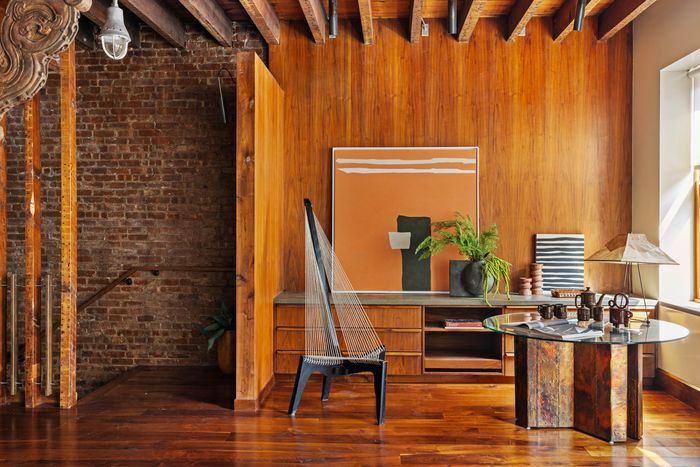
Stairs at the main house lead up to an open kitchen and living area.
Photo: Hayley Ellen Day/Corcoran
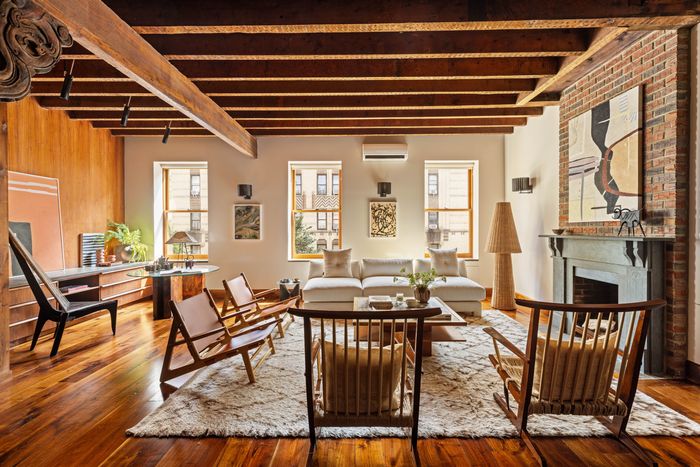
Walnut floors came from a tree felled in North Carolina at a job site. Wood carved with scrolls came from a Chinese temple and embellishes the support beams.
Photo: Hayley Ellen Day/Corcoran
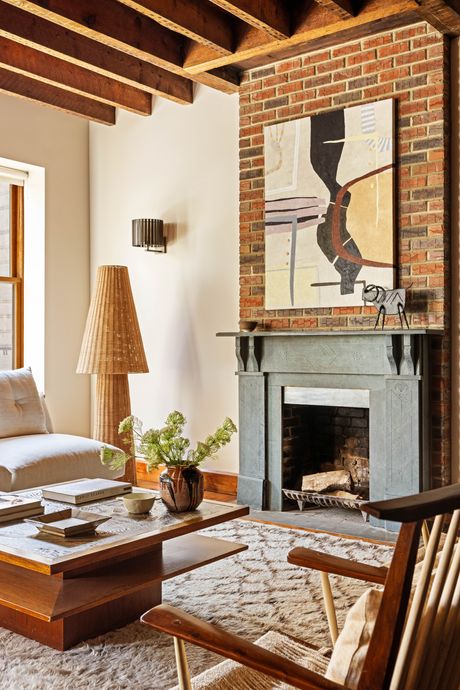
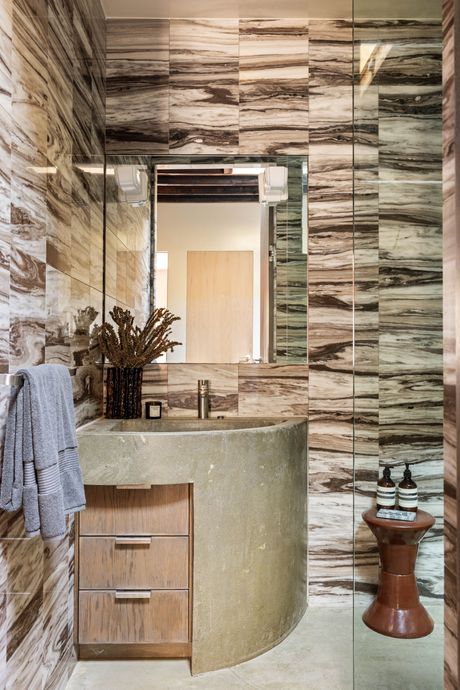
One of three wood-burning fireplaces is in the living room. A powder room for guests. Hayley Ellen Day/Corcoran.
One of three wood-burning fireplaces is in the living room. A powder room for guests. Hayley Ellen Day/Corcoran.
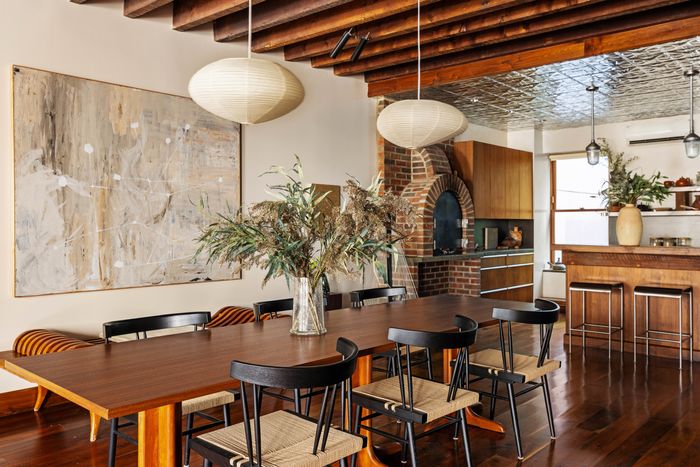
The furniture is staged, but the couple were able to fit a dining table that could seat 15.
Photo: Hayley Ellen Day/Corcoran
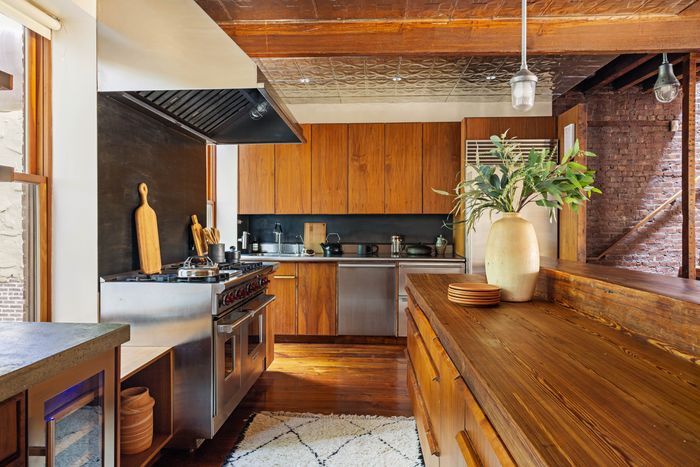
Faber is a serious cook and put in a chef’s kitchen. He wanted a tin ceiling for heat resistance and nostalgia.
Photo: Hayley Ellen Day/Corcoran
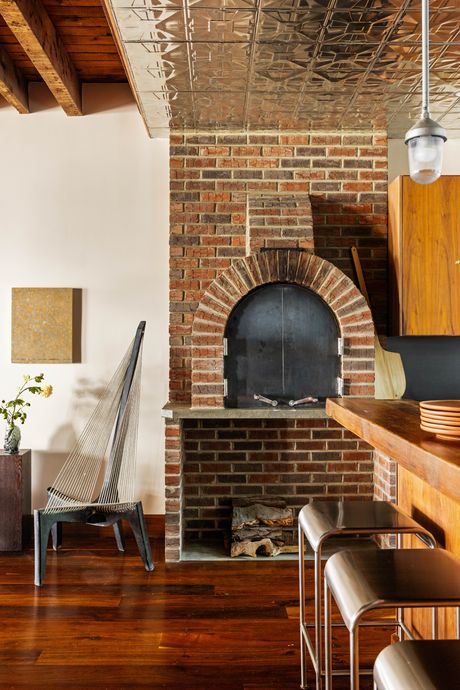
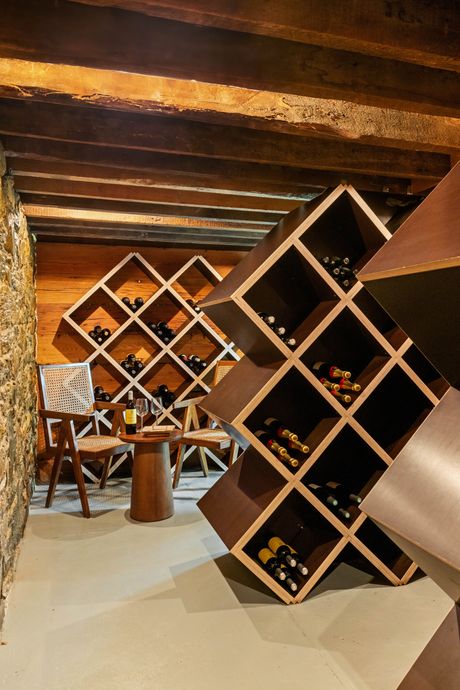
The custom pizza oven and a wine cellar (in the basement) are perks for a chef. Hayley Ellen Day for Corcoran .
The custom pizza oven and a wine cellar (in the basement) are perks for a chef. Hayley Ellen Day for Corcoran .
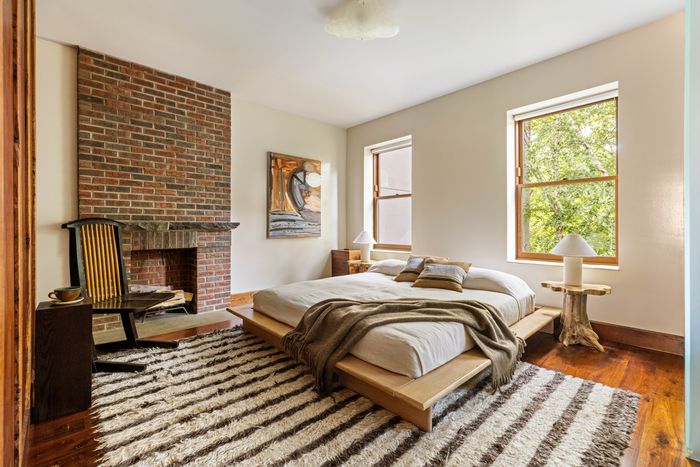
The primary bedroom is in the back of the house with one of the wood-burning fireplaces. The wood out of view on the left is from the Concord Hotel.
Photo: Hayley Ellen Day/Corcoran
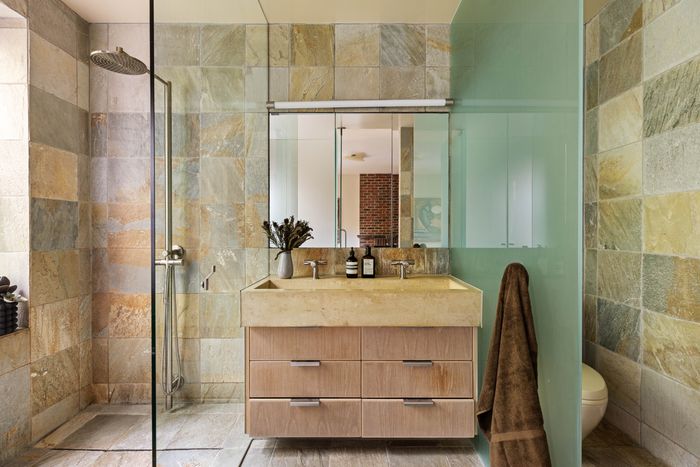
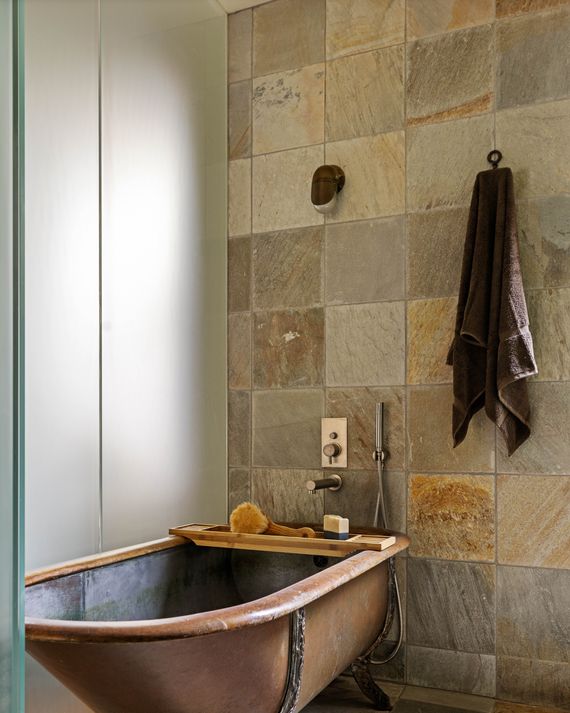
In the primary bath, a 1920s copper tub came from Craigslist. The shower drains invisibly around the grout of tiles. From left: Photo: Hayley Ellen Day/CorcoranPhoto: Hayley Ellen Day/Corcoran
In the primary bath, a 1920s copper tub came from Craigslist. The shower drains invisibly around the grout of tiles. From top: Photo: Hayley Ellen Day… more
In the primary bath, a 1920s copper tub came from Craigslist. The shower drains invisibly around the grout of tiles. From top: Photo: Hayley Ellen Day/CorcoranPhoto: Hayley Ellen Day/Corcoran
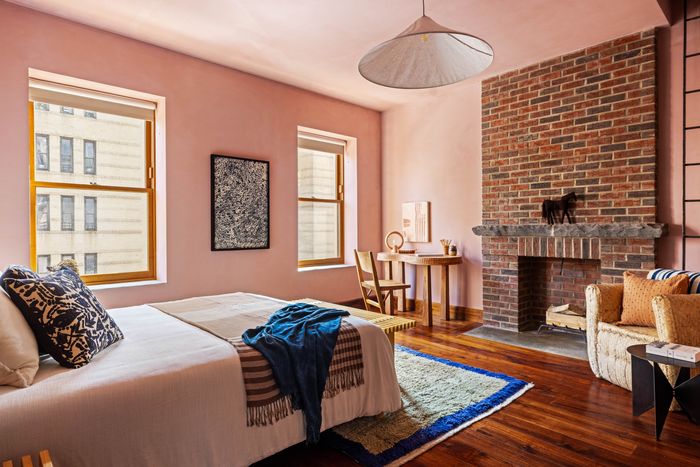
Pink limewash in the larger of two bedrooms where their children grew up.
Photo: Hayley Ellen Day/Corcoran
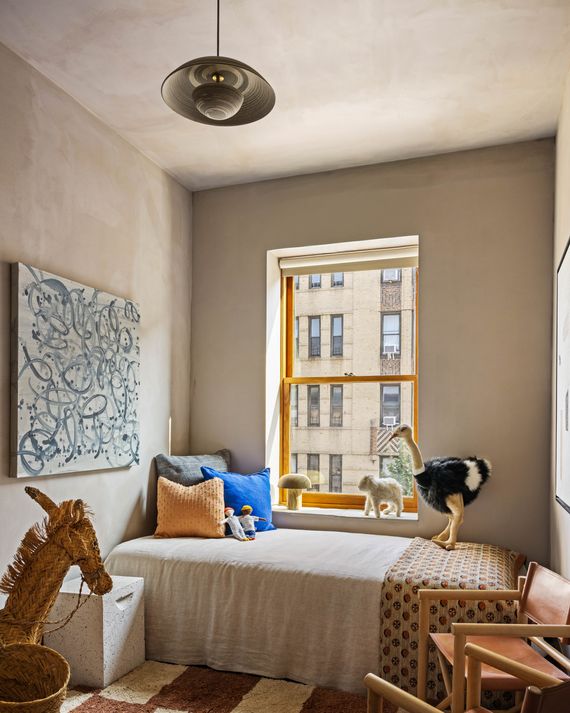
A soft-gray limewash in the smallest bedroom in the main house.
Photo: Hayley Ellen Day/Corcoran
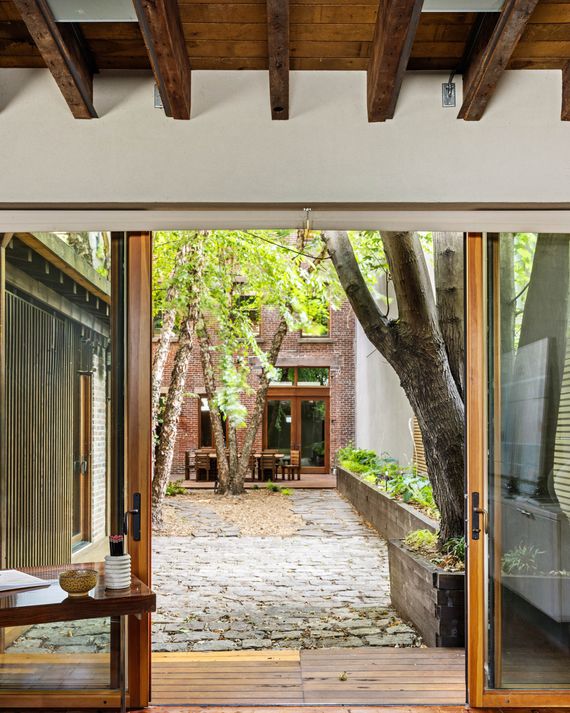
The guesthouse in back has a patio of salvaged Belgian blocks.
Photo: Hayley Ellen Day/Corcoran
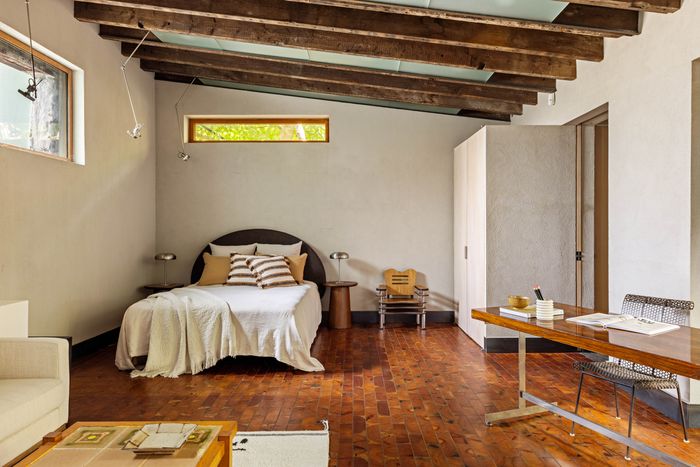
The end-cap wooden flooring was created from scrap and inspired by Faber’s research on carriage houses. This type of flooring is just as durable as conventional wooden floors but has more give — making it popular among carriage-house owners who were thinking about the comfort of their horses.
Photo: Hayley Ellen Day/Corcoran
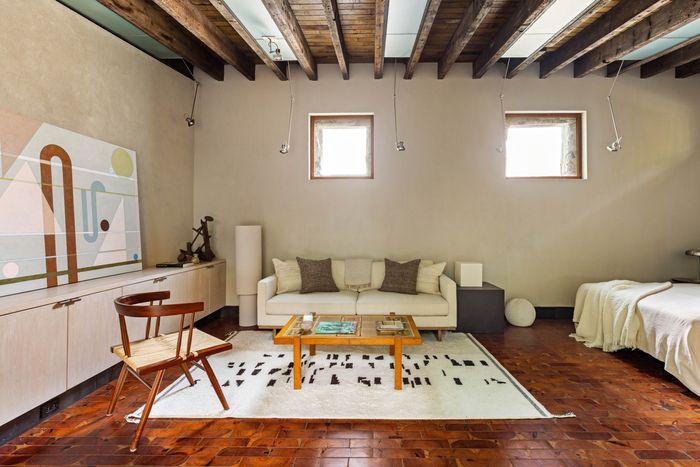
The couple used the space as an office for their design practice, SHED Studio.
Photo: Hayley Ellen Day/Corcoran
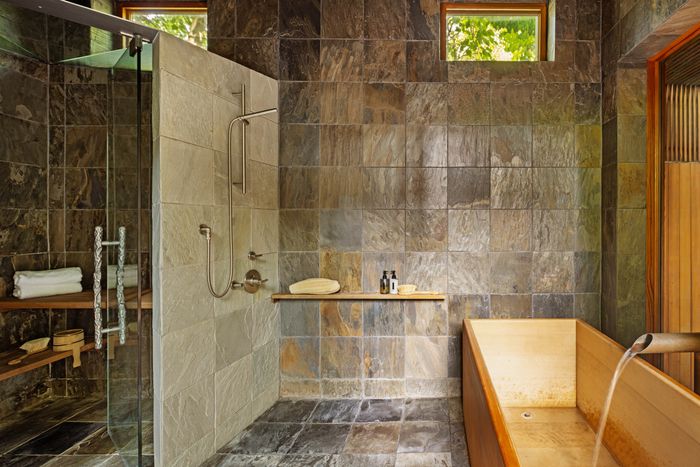
The bathroom is outfitted like a Japanese onsen, with a hinoki-wood tub and a steam room (left).
Photo: Hayley Ellen Day/Corcoran
Sign Up for the Curbed Newsletter
A daily mix of stories about cities, city life, and our always evolving neighborhoods and skylines.
Vox Media, LLC Terms and Privacy Notice
Related