
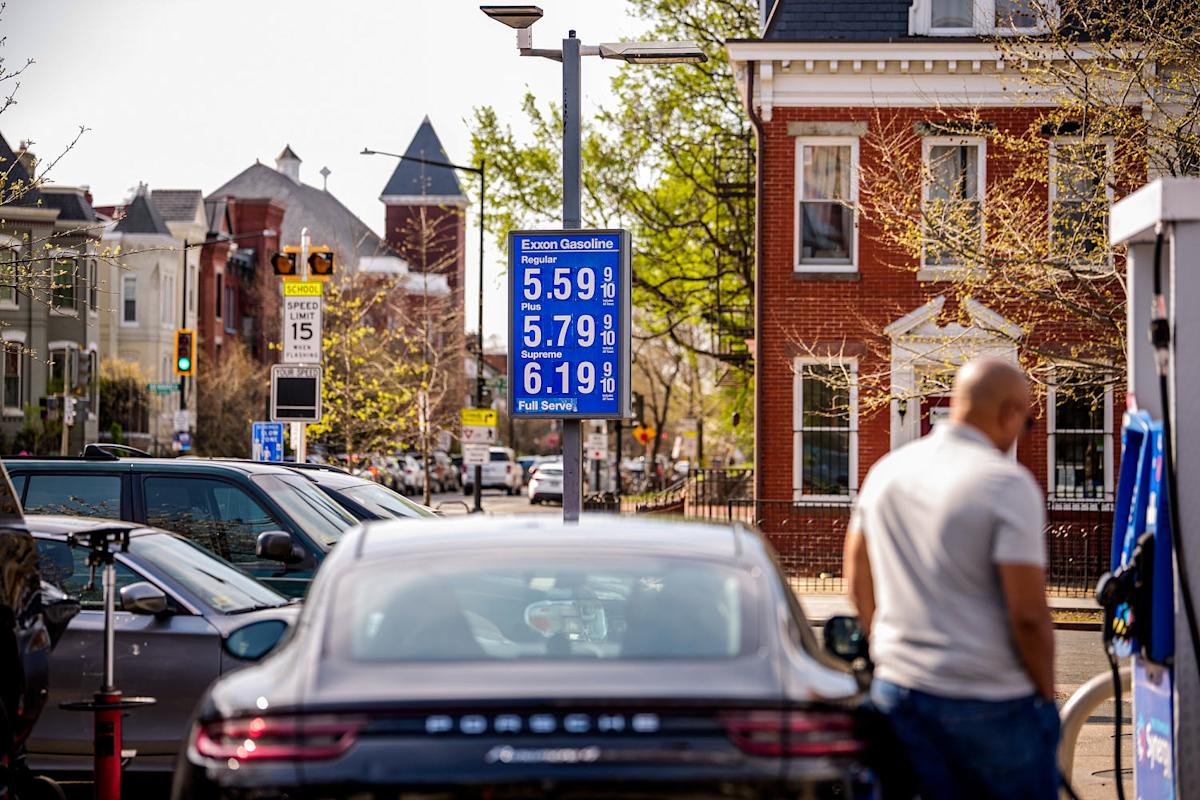
Oil prices surged Thursday, threatening to further drive up the price of gas as hopes for a near-term resolution to the Iran war faded following President Donald Trump’s address to the nation.
Stocks were volatile, with major indexes plunging early in the day before moving higher at the close on shifting headlines about the war in the Middle East.
U.S. indexes recovered their early losses on news that the Iranian deputy foreign minister said his nation would outline a “new navigation regime” in the Strait of Hormuz after the war ended, injecting fresh optimism into markets over the future of the key waterway.
By the closing bell at 4 p.m. ET, the S&P 500 closed up 0.11%, the Nasdaq Composite ended higher by 0.18% and the Dow Jones Industrial Average fell 61 points. The Russell 2000 index, which tracks smaller companies, rose 0.7%.
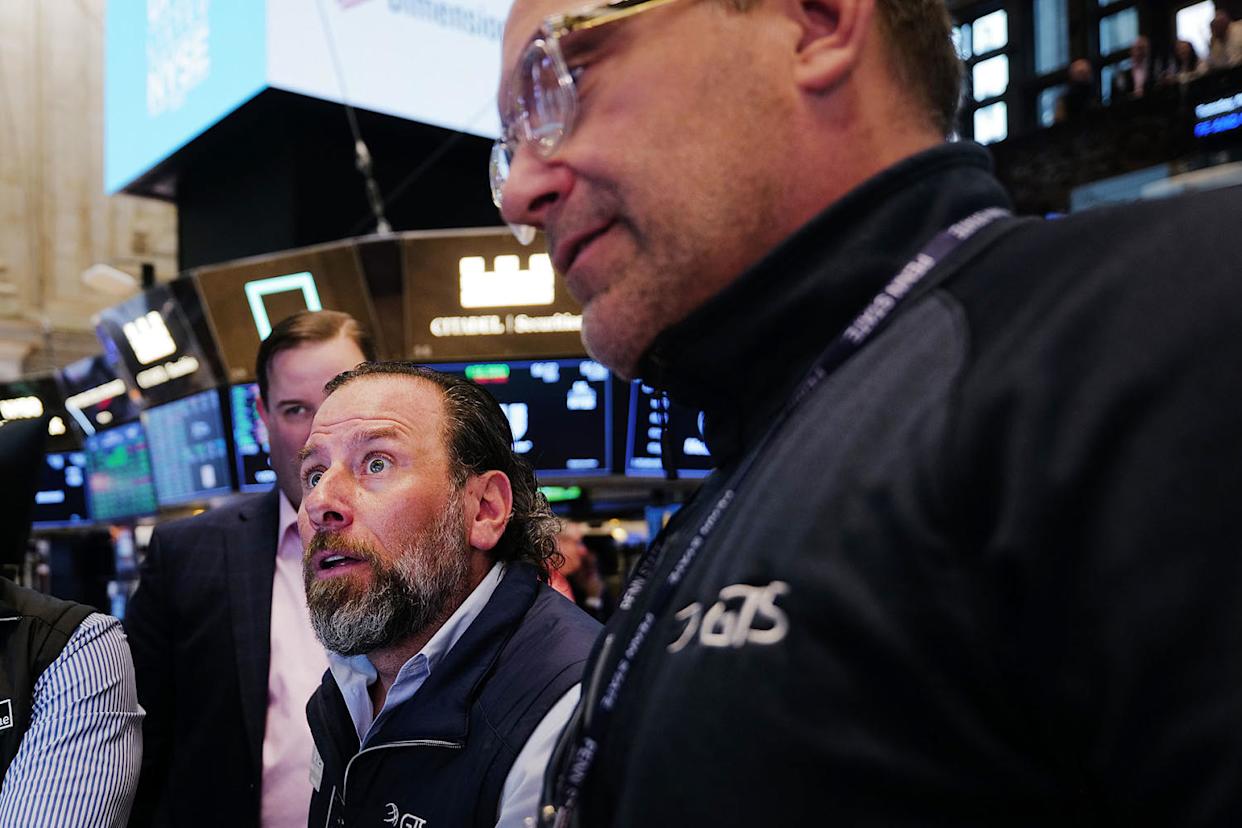
Traders work on the floor of the New York Stock Exchange on Tuesday. (Spencer Platt / Getty Images)
(Spencer Platt)
In a contrast with stocks, oil prices hardly moved on the Iranian official’s comments about the future of the Strait of Hormuz.
The cost of U.S. crude oil continued pushing higher to more than $111 per barrel, up nearly 12% since Wednesday, its biggest one-day price jump in six years, since 2020. For the year, it’s now up 94%.
Brent, the international oil benchmark, rose nearly 8% to more than $109 per barrel. For the year, the price of Brent has now surged nearly 80%.
In his speech Wednesday, Trump said the war would end “shortly,” but he simultaneously pledged to conduct additional “extremely hard” strikes on Iran “over the next two to three weeks.”
Missing from Trump’s address was any structured path to a ceasefire. He likewise did not put forth any plans to reopen the strait, through which more than 20% of the world’s oil supply typically passes.
“The strait will open up naturally,” Trump said at the White House.
The president also emphasized that the war will continue until the U.S. military’s objectives were “fully achieved.”
Oil prices began rising while Trump was speaking Wednesday night and kept climbing, reversing two days of declines.
Global crude oil prices directly impact the price of fuel in the United States, where the average cost of a gallon of unleaded gas was $4.08 Thursday, according to AAA. That’s up from just $2.98 a gallon before the war.
The “markets wanted something different,” UBS Global Wealth Management CIO Paul Donovan wrote in a note Thursday about the president’s address. “U.S. escalation (however short-lived) risks being met with an Iranian response, threatening more infrastructure damage in the Gulf.”
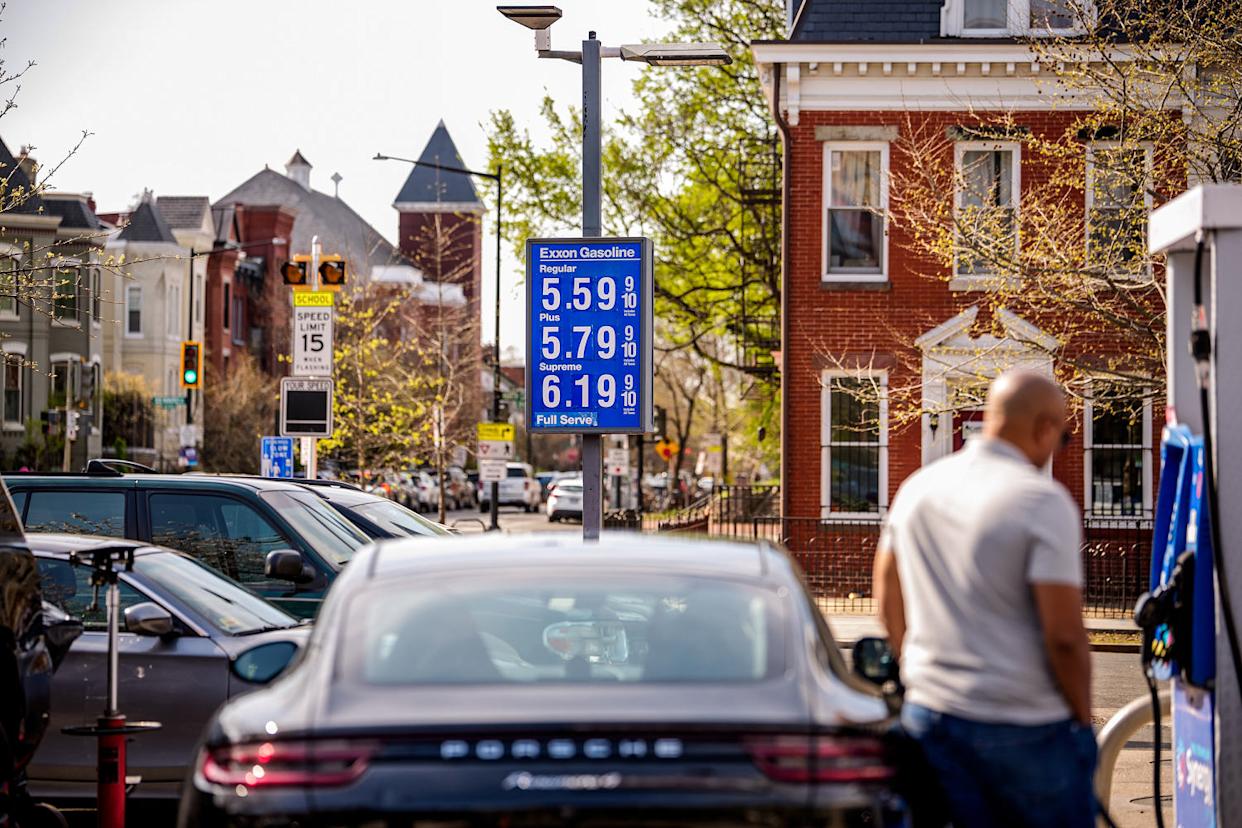
Gas prices over five dollars a gallon are displayed at an Exxon gas station near the U.S. Capitol Building on Tuesday in Washington, DC. (Andrew Harnik / Getty Images)
(Andrew Harnik)
British Foreign Secretary Yvette Cooper hosted a video call Thursday with representatives from 35 nations, including a number of Gulf states, to discuss how to reopen the Strait of Hormuz.
The United States did not participate in the meeting, according to Reuters.
On the call, Cooper indicated that the fighting would need to stop in order for noncombatant nations to consider deploying “our collective defensive military capabilities,” according to NBC News partner Sky News.
U.S. government bonds traded around breakeven, though yields dipped slightly lower. The spike in energy prices continues to feed fears of renewed inflation and yields have risen significantly since it began from around 3.96% on Feb. 27 to about 4.30% on Thursday.
As of Thursday, a 30-year fixed rate mortgage was averaging 6.41%. The day before the war began, the average rate was 5.99%, according to Mortgage News Daily.
Bank of America analysts have predicted that headline inflation as measured by the Federal Reserve’s favored PCE index will “surge imminently” and peak at close to 4% this quarter. PCE was 2.8% in January, its most recent update.
Inflation has already started climbing overseas. In the Eurozone inflation surged to 2.5% in March, up from 1.9% in February.
U.S. markets will be closed for Good Friday, so Thursday marked the final trading session of the week for equities and stock futures.