
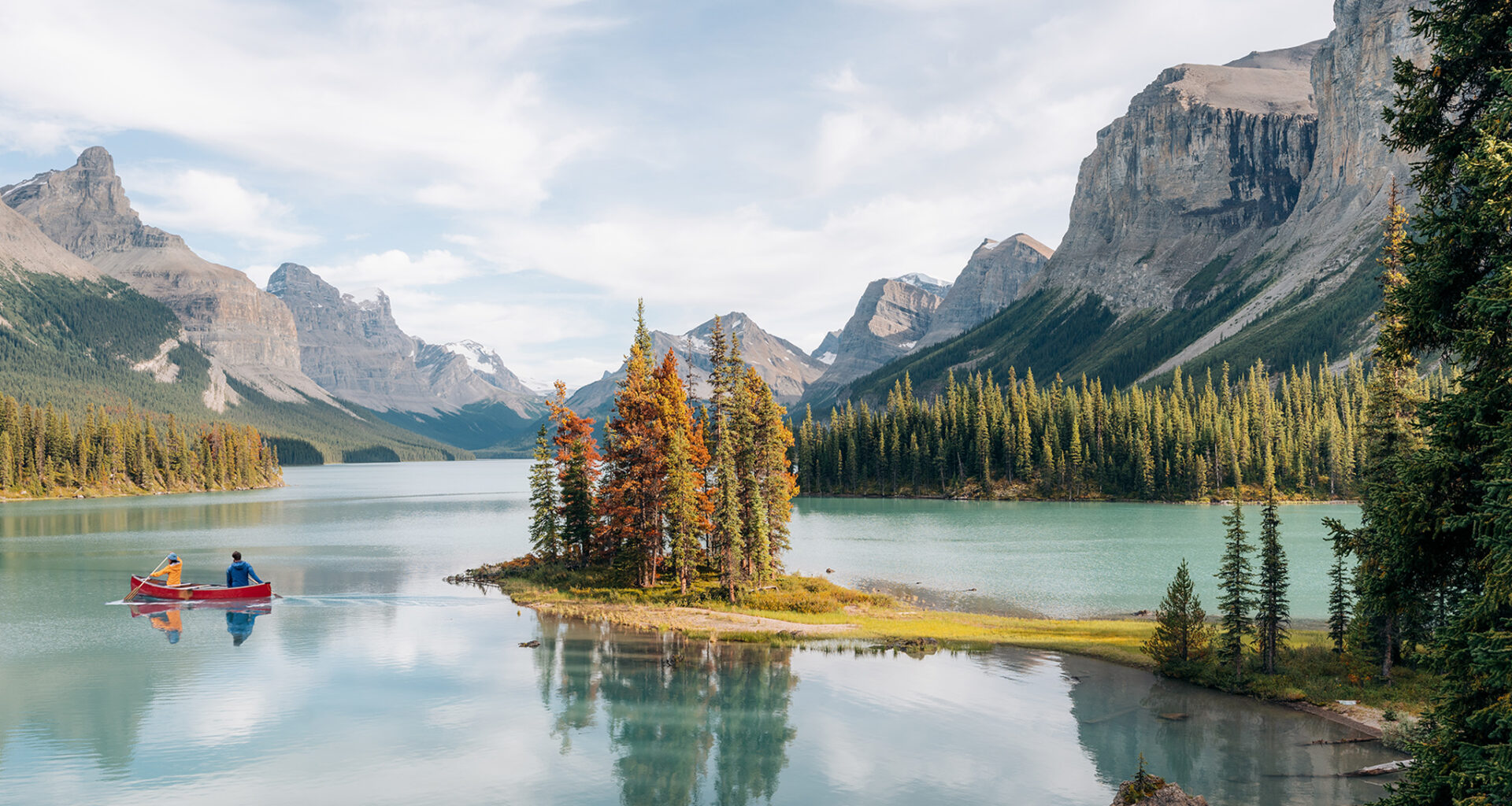
Visitors heading to Canada’s most popular national parks this summer can expect to encounter sweeping new restrictions for paddleboards, kayaks and canoes as officials attempt to slow the spread of aquatic invasive species across the region.
After whirling disease, a parasite-caused sickness capable of devastating fish populations through skeletal deformation and neurological damage, was detected at Lake Louise in Banff National Park in Alberta, Parks Canada is rolling out sweeping new waterway restrictions across Banff, Jasper, Waterton Lakes, Yoho and Kootenay parks to stop the spread.
Beginning this spring, the agency is dividing lakes and rivers across those parks into distinct zones and enforcing new rules on where watercraft and certain fishing gear can be used. Under the new system, waterways fall into two primary categories: recreation zones and preservation zones. Recreation zones — into which fall many of the most heavily visited lakes and rivers — will allow paddling and fishing as long as visitors follow guidelines around cleaning and drying their gear and certifying their watercraft.
Preservation zones, however, mark a significant change. In these areas, watercraft and fishing waders are prohibited entirely.
“We’ve realized that some of the existing measures are not effective enough in mitigating the risk for more sensitive waters,” François Masse, superintendent of the Lake Louise, Yoho and Kootenay field unit, told SFGATE by phone. “In these new preservation zones, you can still swim, you can still fish, you can still ford. But you cannot bring a watercraft or waders, because we know, based on science and on evidence, that these activities greatly increase the risk of an introduction.”
Masse said the biggest challenge is how easily the parasite can hitch a ride between waterways. Even tiny amounts of mud caught in the seams of waders or the folds of inflatable boats can carry whirling disease, and those particles can remain infectious long after a trip ends. Because the organism can survive for extended periods in damp gear, he said, a single missed spot during cleaning is enough to introduce it into a new lake or river.
“It takes one, just one single watercraft that was not properly cleaned,” Masse said. “You need just a pinch of mud there, and it can survive a year in storage and still be alive.”
The restrictions are designed to prevent invasive species from reaching some of the most ecologically sensitive waters in the Canadian Rockies — particularly headwater systems that feed rivers across much of western North America.
“We are at the crown of the continent,” Masse said. “These are very sensitive, very important ecological habitats for fish. We’re the headwaters for most of the water flowing in the western part of the continent.”
Whirling disease, which affects trout, salmon and whitefish, can kill up to 90% of young fish in severe cases. The disease isn’t limited to Canada. The parasite has long been a concern around Yellowstone National Park in Wyoming, and throughout Montana, where it has had an impact on native trout fisheries and prompted similar prevention efforts.
Officials say the zoning system was designed to preserve access where possible. Parks Canada used visitor data to map where most paddling activity already occurs, keeping many of those areas open under the recreation designation. But visitors who had been planning backcountry packrafting trips in the now-restricted areas have been vocal against the new system.
Some paddlers say the restrictions go too far. In a recent report from CBC News, whitewater paddler Andrew Loughlin, based in Jasper, Alberta, described the changes as “soul-crushing,” estimating that a large majority of the park’s navigable waterways could now be off-limits. He argued the policy cuts off access to remote rivers and suggested Parks Canada should have considered stricter permitting, gear inspections or quarantine measures instead of broad backcountry closures.
“Some of the most special places that I’ve been in the park, I’ve got to in a boat,” he told CBC News. “And a lot of those places you can’t get to any other way.”
Masse said Parks Canada understands the frustration, but that trying stricter measures is the only option for prevention right now.
“Aquatic invasive species, once they’re introduced, are extremely difficult, if even possible, to remove,” he said. “Prevention is the key. We love these waters and use these waters — it’ll be a shame not to visit them again in the same way this summer. But we’re doing what we have to do to protect what we love.”
Parks Canada is urging visitors to check regulations before heading out instead of being met with a restriction sign after driving for hours into a remote area. Despite the changes, officials stress that water-based recreation remains a core part of the park experience.
“There’s tons of opportunities available, still within the parks and also right outside the parks,” Masse said. “We really want people to keep paddling.”